

Working dog nutrition: energy, health & grain-free guide

TL;DR:
- Working dogs require high protein and fat levels, with careful carbohydrate balance for optimal performance.
- Grain-free diets can benefit active dogs but must be nutritionally complete to avoid health risks.
- Tailoring nutrition, including supplements for joint health and adjusting for life stages, maximizes working dog performance and longevity.
Working dogs are extraordinary athletes. Whether your dog is tracking scents across open fields, competing in agility, or serving in a protection role, their body is under constant physical and cognitive demand. Many owners assume that buying a premium bag of food is enough, but the truth is that working dogs have nutritional needs that differ significantly from the average family pet. This guide cuts through the marketing noise and gives you clear, evidence-backed steps to fuel your dog’s performance, support recovery, and protect long-term health, with a particular focus on grain-free and specialist diet options.
Table of Contents
- Why working dogs need specialised nutrition
- Macronutrient requirements: protein, fat and carbohydrates explained
- Expert debate: grain-free, raw and premium diets for working dogs
- Supplements, joint support and adapting nutrition for special cases
- Why blanket advice falls short: key mistakes owners make with working dog diets
- Give your working dog the edge with advanced nutrition
- Frequently asked questions
Key Takeaways
| Point | Details |
|---|---|
| Working dogs need more protein and fat | Active dogs require higher levels of protein and fat compared to typical pets to maintain muscle and endurance. |
| Grain-free and premium options can help | Grain-free and high-quality foods may aid sensitive and active breeds, but vet oversight is crucial to avoid nutritional gaps. |
| Supplements and life-stage adjustments matter | Older or high-demand dogs often benefit from targeted supplements and diet changes as they age or face joint strain. |
| Individual factors drive nutrition plans | Activity, body condition, and health status mean owners should adjust nutrition regularly rather than relying on standard labels. |
Why working dogs need specialised nutrition
A working dog’s body is not the same as a couch companion’s. Muscles are recruited more intensely, joints absorb greater impact, and the brain works harder during tasks like scent detection or obedience trials. Energy turnover is far higher, and recovery windows are shorter. If nutrition doesn’t match output, you’ll see it in fatigue, slower recovery times, and eventually in declining performance.
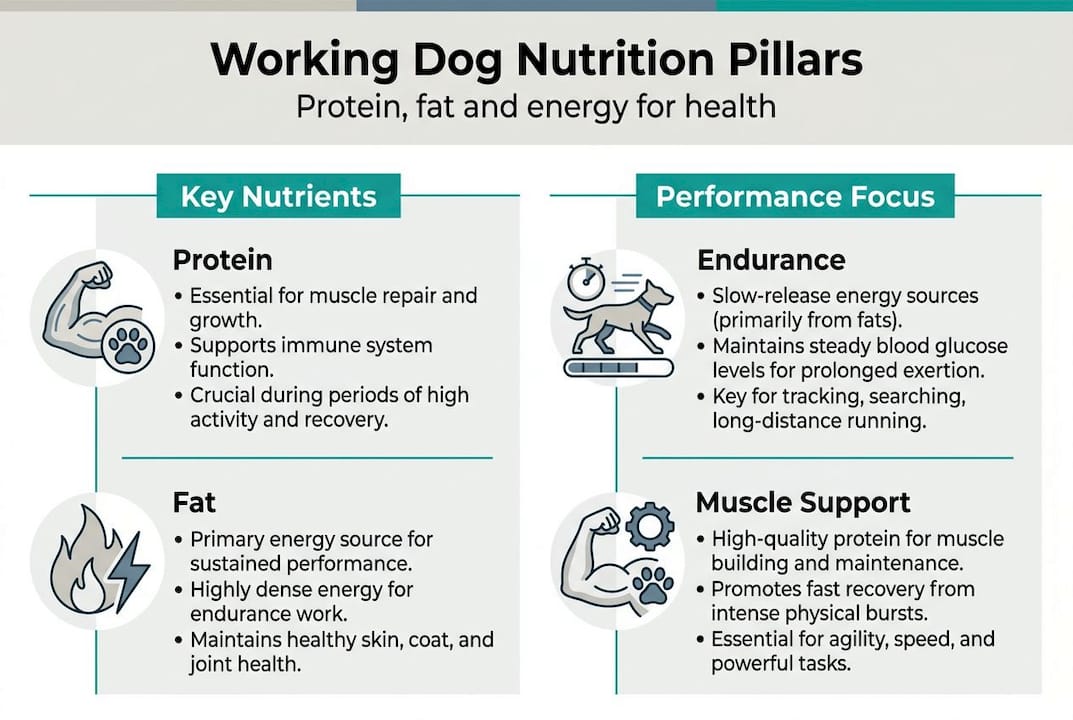
The key nutrients for working dogs centre on three pillars: protein for muscle repair and lean mass, fat for sustained energy, and carbohydrates for quick-burst fuel. Cognitive function also depends on consistent energy supply, making meal timing and macronutrient balance genuinely important.
Calorie needs are calculated using what’s called the Maintenance Energy Requirement (MER). This isn’t a fixed number. MER varies based on neuter status, body condition score, and activity intensity, with clinical equations often producing higher estimates than standard ones. A neutered dog at a healthy weight needs fewer calories per kilogram than an intact dog in peak training.
Top working dog categories and how their needs diverge:
- 🐾 Police and protection dogs: High protein, sustained fat intake, joint support essential
- 🏃 Agility and sport dogs: Rapid energy availability, higher carbohydrate tolerance for bursts
- 🔍 Search and rescue dogs: Endurance-focused, omega-3s for cognitive sharpness
- 🐑 Herding and farm dogs: Steady caloric output over long hours, moderate fat
| Nutrient | Working dog range | Typical adult pet food |
|---|---|---|
| Protein | 24–40% DM | 18–22% DM |
| Fat | 12–30% DM | 8–15% DM |
| Carbohydrates | 30–40% DM | 40–55% DM |
As energy requirements for working dogs confirm, optimal macronutrients sit at protein 24–40%, fats 12–30% for sustained energy and muscular repair. Understanding the grain-free benefits of reducing unnecessary fillers also plays into this, since lower-quality carbohydrates can displace the protein and fat your dog genuinely needs. It’s also worth reading up on the impacts of grains in dog diets to understand how ingredient choices affect digestion and energy availability.
Pro Tip: One of the most common mistakes we see is underestimating fat intake. Fat is the primary fuel source for endurance work. Cutting fat to save calories often leads to early fatigue and slower post-work recovery.
Now that the stakes for proper nutrition are clear, let’s break down exactly what makes up an ideal working dog’s diet.
Macronutrient requirements: protein, fat and carbohydrates explained
Having set out the general nutritional landscape, it’s crucial to get specific with protein, fat and carbohydrate targets.
Protein in the range of 30–40% of dry matter (DM) is where most working dog diets should sit. Protein isn’t just about building muscle. It supports immune function, hormone production, and tissue repair after hard sessions. Fat at 20–30% DM is equally important. High-fat diets (≥20% DM) have been shown to significantly improve muscle maintenance and post-work recovery in working dogs, with research from the University of Illinois and the American College of Veterinary Nutrition supporting this finding.
| Working dogs | Standard adult dogs | |
|---|---|---|
| Protein (% DM) | 30–40% | 18–22% |
| Fat (% DM) | 20–30% | 8–15% |
| Carbohydrates (% DM) | 25–35% | 40–55% |
| Fibre (% DM) | 2–4% | 2–5% |
FEDIAF guidelines recommend a minimum of 25g protein per 1000kcal for adult dogs, and we’d always suggest building in a safety margin above that minimum for active breeds.
How to evaluate a food for your working dog:
- Check the guaranteed analysis panel for crude protein and fat percentages on a dry matter basis
- Scan the ingredient list: named meat proteins (chicken, salmon, lamb) should appear in the first two positions
- Look for identifiable fat sources such as chicken fat or fish oil rather than vague ‘animal fat’ listings
- Confirm FEDIAF or AAFCO compliance on the label, ideally for ‘all life stages’ or ‘active adult’
- Cross-reference with your dog’s current weight, coat condition, and energy levels every 4–6 weeks
Endurance dogs (think sled or farm dogs working long hours) need higher fat ratios, while sprint-focused dogs like those in agility benefit from slightly higher carbohydrate availability for rapid glycogen replenishment. For senior dog macronutrient needs, the picture shifts again, with protein remaining high but total energy often needing to come down. Dogs with skin sensitivity may also benefit from exploring grain-free for sensitive working breeds as a way to reduce inflammatory triggers without sacrificing performance nutrition.

Expert debate: grain-free, raw and premium diets for working dogs
With a foundation in macronutrient needs, let’s address one of the biggest current debates: the role of grain-free and premium diets.
Grain-free diets appeal to working dog owners for good reason. They typically feature higher meat content, fewer fillers, and are often better tolerated by dogs with sensitivities. However, veterinary caution on heart risks around dilated cardiomyopathy (DCM) means this isn’t a decision to take lightly. The research is ongoing, but the message is clear: grain-free must be nutritionally complete, not just grain-absent.
| Diet type | Pros | Cons | Considerations |
|---|---|---|---|
| Grain-free kibble | High protein, fewer fillers, good digestibility | DCM concern if poorly formulated | Choose FEDIAF-compliant brands |
| Standard kibble | Convenient, balanced, affordable | Often lower protein, higher starch | Check protein source quality |
| Balanced raw | Lean, natural, high bioavailability | Often imbalanced micronutrients | Requires vet or nutritionist oversight |
Common pitfalls of poorly balanced raw diets:
- Calcium and phosphorus ratios frequently off, risking bone and joint issues
- Vitamin D and E deficiencies common without supplementation
- Bacterial contamination risk for both dog and handler
- Inconsistent protein quality depending on meat source
‘Veterinary groups caution that while grain-free and natural diets are popular, imbalances and risks must be weighed against benefits, especially in performance dogs.’
We always recommend checking grain-free safety facts before making a switch, and if your dog has known sensitivities, our guide on grain-free and allergy management is a helpful starting point. Owners of younger working dogs may also find our health-focused grain-free choices resource useful for setting the right foundations early.
Pro Tip: If you’re considering raw feeding for a working dog, always consult a registered veterinary nutritionist first. The performance gains are only real if the diet is genuinely balanced, and that’s harder to achieve than most raw feeding guides suggest.
Supplements, joint support and adapting nutrition for special cases
Beyond food ingredients, it’s vital to cover how supplements and life stage adjustments help working dogs thrive.
Joint health is one of the most pressing concerns for active and working breeds. Glucosamine, chondroitin, and omega-3s are the core trio, with omega-3 dosing typically recommended at around 1000mg of EPA and DHA per 25lbs of body weight to meaningfully reduce inflammation. These aren’t optional extras for high-mileage dogs. They’re essential support.
Special populations and their key nutritional priorities:
- 🐕 Senior working dogs: Higher protein to combat muscle loss, increased omega-3s, lower total calories, added fibre for gut motility
- 🛡️ Protection and patrol dogs: Consistent high-protein intake, joint support from early adulthood, stress-related antioxidant support
- 👃 Detection and scent dogs: Cognitive support via DHA, steady energy without blood sugar spikes, lean body condition
A concerning finding from recent research is that 18% of over-the-counter senior foods do not meet AAFCO adult minimum standards. This is a real risk if you’re feeding an older working dog an off-the-shelf senior formula without checking the label carefully.
Steps to adapt nutrition as your working dog’s needs change:
- Reassess body condition score every 6–8 weeks and adjust portion size accordingly
- After neutering, reduce caloric intake by approximately 20–30% to prevent weight gain
- Introduce joint supplements proactively from around 5–6 years in large or high-impact breeds
- When a health condition is diagnosed, seek a diet formulated to that condition rather than relying on general ‘senior’ labelling
- Review the full ingredient and supplement profile annually with your vet
For tailored guidance on older athletes, our special senior dog food resource covers the key transitions well, and our joint supplement guidance page explains exactly what to look for on a product label.
Why blanket advice falls short: key mistakes owners make with working dog diets
We’ve seen it many times: a devoted owner buys the most expensive bag on the shelf, reads ‘natural’ and ‘premium’ on the front, and assumes the job is done. But price and marketing language are not proxies for nutritional adequacy. A food can be expensive and still miss the mark for a dog doing serious physical work.
The most reliable indicators of whether a diet is working are right in front of you. Is your dog maintaining lean muscle without excess fat? Is coat quality good? Is recovery between sessions improving or declining? These physical signals matter far more than the brand on the bag. We’d encourage every working dog owner to track these markers consistently rather than waiting for a vet visit to flag a problem.
Seasonal adjustment is another area where owners often fall short. A dog working intensively through winter trials has different needs in the summer off-season. Feeding the same amount year-round leads to either weight gain or underperformance, depending on which direction the mismatch falls.
The grain-free advantages explained are real, but only when the formulation is clinically sound. Our advice is always to benchmark against FEDIAF or AAFCO standards, monitor your individual dog, and adjust proactively rather than reactively.
Give your working dog the edge with advanced nutrition
If you’re seeking nutrition that actually translates science to bowl, explore these proven options. At Ultimate Pet Foods, we’ve built our range around the real demands of active and working dogs. Our grain-free formulas are high in named meat proteins, carefully balanced for fat and digestibility, and free from the fillers that dilute performance nutrition.
Explore the full case for grain-free dog food benefits to understand why our approach differs from standard pet food. Use our dry working dog food comparison tool to find the right formula for your dog’s role and life stage. And if gut health is a concern alongside performance, our advanced digestive care range supports the foundation that every strong working dog needs. 🐾

Frequently asked questions
How much protein do working dogs need daily?
Aim for 30–40% of calories from protein, or at least 25g per 1000kcal as per FEDIAF guidelines, with higher-end targets for dogs in intensive roles.
Is a grain-free diet better for working dogs?
Grain-free can benefit sensitive and active dogs, but it must be nutritionally complete. Veterinary caution on DCM means professional guidance is always recommended before switching.
What supplements are best for a senior working dog?
Key supplements include glucosamine, chondroitin, and omega-3s for inflammation, alongside higher protein and fibre to support muscle retention and gut health as energy needs decrease.
How do I calculate calorie needs for a working dog?
Start with clinical MER equations (95–130 x bodyweight in kg^0.75), but adjust for neuter status and body condition score, then fine-tune based on your dog’s real-world performance and weight trends.
Are raw diets suitable for working dogs?
Raw diets can be lean and high in bioavailable protein, but often lack key micronutrients unless professionally formulated. Always work with a veterinary nutritionist before committing to a raw feeding plan.


