
Premium grain-free dog treats: health and nutrition guide
Many dog owners believe grain-free treats are dangerous or nutritionally inferior, but this misconception stems from misunderstood research and incomplete information. The truth is that premium grain-free dog treats, when properly formulated, offer excellent nutritional support for dogs with dietary sensitivities whilst providing the quality protein and micronutrients your pet needs. Understanding how to evaluate these treats and integrate them into your dog’s diet empowers you to make informed choices that genuinely benefit your companion’s health and wellbeing.
Table of Contents
- Understanding Grain-Free Dog Treats And Their Nutritional Role
- Debunking Myths And Safety Concerns Around Grain-Free Diets
- How To Evaluate Premium Grain-Free Dog Treats For Your Dog’s Nutrition
- Trends And Growth In The Grain-Free Dog Treats Market
- Practical Tips For Feeding Your Dog Premium Grain-Free Treats
- Discover Premium Grain-Free Dog Treats At Ultimate Pet Foods
Key takeaways
| Point | Details |
|---|---|
| Balanced formulation matters most | Premium grain-free treats with complete nutrition profiles and adequate taurine levels support canine health safely |
| Novel proteins reduce allergic responses | Venison, duck, and salmon alternatives help manage food sensitivities in dogs prone to reactions |
| Safety concerns are often misunderstood | Recent research shows balanced grain-free diets pose no cardiac risks when nutritionally adequate |
| Market growth reflects quality demand | The grain-free pet food sector exceeds USD 92 billion globally as owners prioritise premium nutrition |
| Ingredient transparency builds trust | AAFCO-compliant brands with clear sourcing and veterinary backing offer the most reliable options |
Understanding grain-free dog treats and their nutritional role
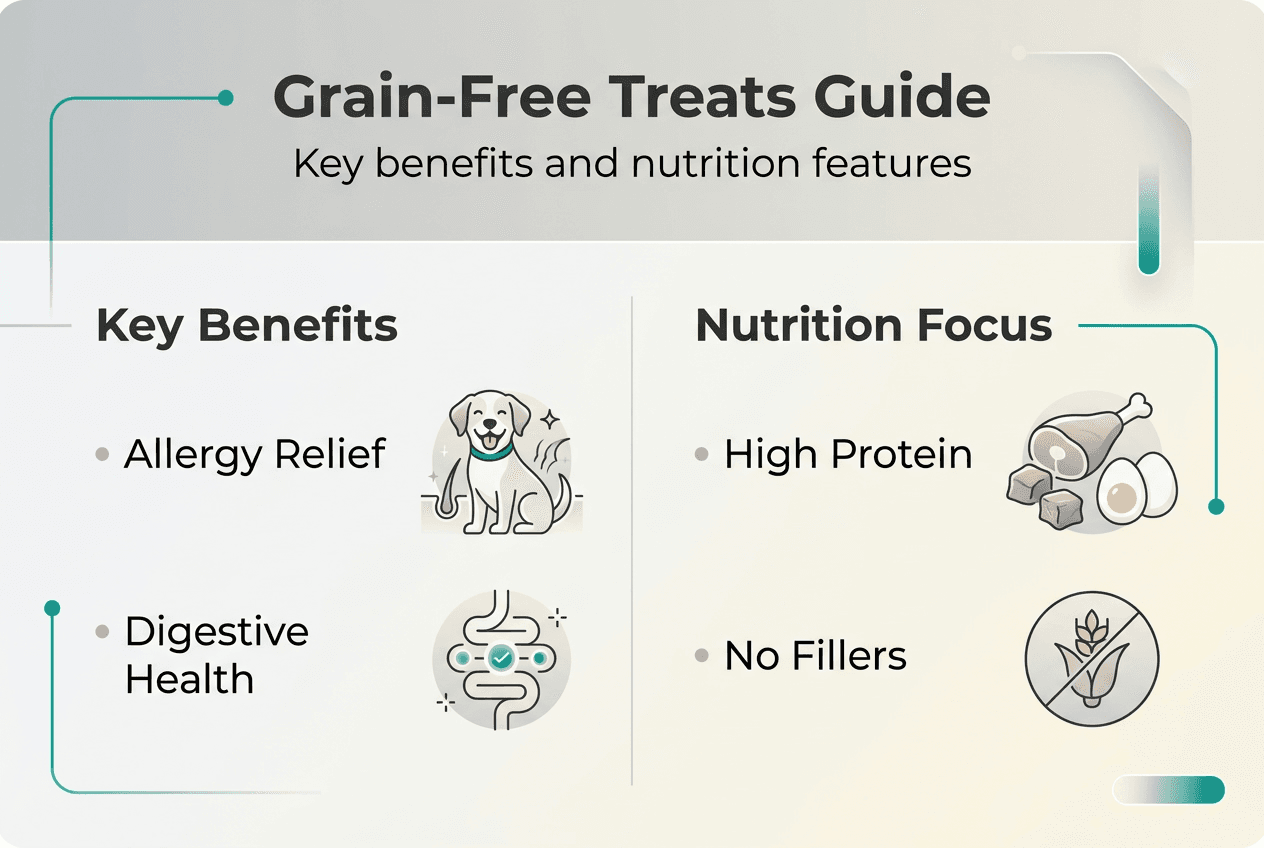
Grain-free dog treats exclude wheat, corn, rice, barley, and other cereal grains from their ingredient lists. Instead, these treats use alternative carbohydrate sources such as sweet potato, peas, chickpeas, or lentils alongside quality protein sources. This formulation approach addresses specific dietary needs whilst maintaining palatability and nutritional completeness.
Dogs with food sensitivities or allergies often benefit from grain-free options because grains can trigger inflammatory responses in susceptible animals. Symptoms like chronic itching, digestive upset, ear infections, or skin irritation may indicate grain intolerance. Switching to grain-free treats eliminates these potential triggers whilst providing necessary nutrients through alternative ingredients.
Novel protein sources in grain-free treats help manage food sensitivities effectively. Premium grain-free treats frequently feature proteins your dog hasn’t encountered previously, reducing the likelihood of allergic reactions. Common novel proteins include:
- Venison offers lean protein with lower allergenic potential than chicken or beef
- Duck provides rich omega fatty acids supporting skin and coat health
- Salmon delivers essential omega-3s whilst serving as an alternative protein source
- Rabbit supplies easily digestible protein suitable for sensitive stomachs
- Kangaroo presents a truly novel option rarely used in commercial dog foods
Some dogs thrive on grain-free options even without diagnosed allergies. Active breeds requiring dense nutrition benefit from the higher protein content typical in grain-free formulations. Dogs with digestive sensitivities may process alternative carbohydrates more efficiently than traditional grains. Senior dogs sometimes experience improved energy levels when grains are replaced with more bioavailable nutrient sources.
Pro Tip: Introduce any new treat gradually over seven to ten days, mixing small amounts with current treats to monitor your dog’s response and avoid digestive upset.
The grain free dog treats guide explores these nutritional foundations in greater detail, offering practical frameworks for understanding how grain-free options fit within your dog’s overall dietary strategy. Quality grain-free treats complement complete diets by providing training rewards, mental stimulation, and supplementary nutrition without compromising health goals.
Debunking myths and safety concerns around grain-free diets
The grain-free debate intensified when the FDA launched an investigation examining potential links between certain grain-free diets and dilated cardiomyopathy in dogs. This FDA investigation into diet and DCM created widespread concern amongst dog owners, leading many to question whether grain-free options were inherently dangerous.
However, the investigation revealed crucial nuances often overlooked in media coverage. The cases primarily involved diets formulated with inadequate taurine levels or improper nutrient ratios, not grain-free formulations themselves. Dogs fed nutritionally complete grain-free diets with appropriate amino acid profiles showed no increased cardiac risk. The issue centred on formulation quality rather than the absence of grains.
Balanced nutrition mitigates potential risks entirely. Premium grain-free treats and foods include:
- Adequate taurine levels or precursor amino acids supporting cardiac function
- Complete micronutrient profiles meeting AAFCO standards
- Quality protein sources providing essential amino acids
- Appropriate fat ratios delivering energy and supporting cellular health
- Bioavailable vitamins and minerals supporting overall physiological function
Recent controlled research definitively supports the safety of properly formulated grain-free diets. Studies examining dogs fed balanced grain-free diets over extended periods found no negative cardiac effects when nutritional adequacy was maintained. These findings directly contradict early fears about grain-free formulations, confirming that quality and balance matter far more than ingredient categories.
“The key distinction lies not in whether a diet contains grains, but whether it provides complete, bioavailable nutrition meeting your dog’s specific physiological requirements. Premium grain-free formulations achieve this through thoughtful ingredient selection and rigorous nutritional testing.”
Common misconceptions persist despite mounting evidence. Many owners believe all grain-free products carry cardiac risks, when only poorly formulated options pose concerns. Others assume grain-free automatically means healthier, overlooking the importance of overall nutritional balance. Some think grains are inherently harmful to dogs, though most canines digest quality grains perfectly well unless specific sensitivities exist.
The essential grain-free dog food guide clarifies these misconceptions through evidence-based analysis, helping you distinguish between marketing claims and nutritional reality. Understanding the actual science behind grain-free safety empowers confident decision-making based on your dog’s individual needs rather than generalised fears.
How to evaluate premium grain-free dog treats for your dog’s nutrition
Choosing high-quality grain-free treats requires systematic evaluation of multiple factors affecting nutritional adequacy and safety. This practical checklist helps you identify products genuinely supporting your dog’s health:
-
Examine ingredient transparency and sourcing clarity. Premium brands specify exact protein sources rather than vague terms like “meat meal” or “animal derivatives”. Look for named proteins such as “deboned venison” or “salmon meal” with clear country of origin information.
-
Verify nutritional adequacy through guaranteed analysis statements. Quality treats display minimum crude protein and fat percentages alongside maximum crude fibre and moisture levels. Compare these values against your dog’s life stage requirements and activity level.
-
Confirm veterinary backing or AAFCO compliance. Brands prioritising transparent sourcing and AAFCO formulations demonstrate commitment to nutritional standards and scientific validation. AAFCO approval indicates the product meets established nutritional profiles for specific life stages.
-
Assess taurine content and amino acid profiles. Taurine supports cardiac function, and adequate levels are crucial in grain-free formulations. Premium products either include supplemental taurine or provide sufficient precursor amino acids enabling dogs to synthesise taurine naturally.
-
Evaluate micronutrient fortification and bioavailability. Quality treats include chelated minerals and active vitamin forms your dog’s body can readily absorb and utilise. Check for specific compounds like zinc proteinate rather than generic zinc oxide.
-
Research brand reputation and recall history. Trustworthy manufacturers maintain transparent communication, promptly address concerns, and demonstrate consistent quality control through third-party testing.
Pro Tip: Contact manufacturers directly to request detailed nutritional information and sourcing documentation. Responsive, transparent companies willing to share this data typically produce higher-quality products.
| Evaluation Factor | What to Look For | Red Flags |
|---|---|---|
| Protein Source | Named meats, clear origin | Vague terms, unnamed sources |
| Taurine Content | Listed amount or precursors | No mention, inadequate levels |
| Certification | AAFCO, veterinary approval | No third-party validation |
| Ingredient List | Short, recognisable items | Excessive fillers, artificial additives |
The grain-free dog food selection guide provides detailed frameworks for applying these evaluation criteria across different product categories and price points. Understanding these quality markers transforms shopping from guesswork into informed decision-making.
Consider your dog’s specific needs when evaluating treats. Puppies require higher protein and fat for growth. Senior dogs benefit from joint-supporting ingredients like glucosamine. Active breeds need calorie-dense options. Dogs with sensitivities require limited ingredient formulations featuring novel proteins.
Making easy grain-free dog treats at home offers another quality control option, allowing you to select every ingredient and customise nutrition precisely to your dog’s requirements whilst ensuring absolute freshness and transparency.
Trends and growth in the grain-free dog treats market
The grain-free pet food sector has experienced remarkable expansion, with global sales forecast exceeding USD 92.22 billion by 2034. This substantial growth reflects fundamental shifts in how owners approach canine nutrition, prioritising quality ingredients and specialised formulations over conventional options.
Consumer demand for premium, grain-free products continues accelerating as owners increasingly view their dogs as family members deserving equivalent nutritional consideration. This humanisation trend drives preference for natural ingredients, transparent sourcing, and formulations addressing specific health concerns. Owners now routinely research ingredients, compare nutritional profiles, and select products based on scientific evidence rather than marketing claims alone.
European markets show particularly strong growth in premium grain-free brands, with upscale products experiencing rapid sales increases. British owners especially prioritise quality and transparency, driving innovation in grain-free formulations tailored to regional preferences and regulatory standards.
Breed-specific and function-focused treats represent emerging market segments gaining significant traction. Manufacturers now develop grain-free options targeting:
- Large breeds requiring joint support through glucosamine and chondroitin
- Small breeds needing calorie-dense nutrition in appropriately sized pieces
- Active working dogs demanding high protein and fat for sustained energy
- Senior dogs benefiting from cognitive support through omega-3 fatty acids
- Puppies requiring growth-supporting nutrition with appropriate calcium ratios
| Market Segment | Growth Driver | Consumer Priority |
|---|---|---|
| Premium grain-free | Quality ingredients | Transparency, sourcing |
| Functional treats | Targeted health benefits | Specific nutritional support |
| Breed-specific | Tailored formulations | Size and activity matching |
| Novel protein | Allergy management | Alternative protein sources |
This market expansion directly impacts product quality and availability. Increased competition incentivises innovation, driving manufacturers to develop superior formulations meeting rigorous nutritional standards. Greater consumer awareness pressures brands toward transparency and scientific validation. Expanded distribution channels make premium grain-free options accessible beyond speciality retailers.
Pro Tip: Market growth means more choices, but not all products deliver equivalent quality. Use the evaluation criteria discussed earlier to distinguish genuinely premium options from marketing-driven products capitalising on trends without substantive nutritional value.
The best grain free dog food brands for 2026 reflects these market dynamics, highlighting manufacturers combining innovation with nutritional integrity. Understanding broader market trends helps you anticipate emerging options whilst maintaining focus on proven quality indicators.
Practical tips for feeding your dog premium grain-free treats
Integrating grain-free treats into your dog’s diet requires thoughtful implementation ensuring nutritional balance and monitoring for individual responses. These practical strategies optimise benefits whilst minimising potential complications.
Introduce treats gradually over seven to ten days, starting with small portions mixed alongside current treats. This gradual transition allows your dog’s digestive system to adapt whilst enabling you to observe any adverse reactions before fully committing to new products. Sudden dietary changes often trigger temporary digestive upset even with high-quality treats.
Novel protein treats offer particular advantages for dogs prone to allergic responses. Selecting proteins your dog hasn’t previously encountered reduces the likelihood of triggering existing sensitivities. Rotate between different novel proteins periodically to prevent developing new sensitivities through repeated exposure to single protein sources.
Watch carefully for food sensitivity indicators requiring veterinary consultation. Symptoms include persistent itching, digestive irregularities, ear infections, skin inflammation, or behavioural changes following treat introduction. However, placebo effects can influence food challenge tests, complicating accurate sensitivity identification. Work with your veterinarian to design controlled elimination trials distinguishing genuine reactions from coincidental symptoms.

Balance treats within your dog’s overall daily caloric intake to prevent nutritional imbalances or weight gain. Treats should comprise no more than ten percent of total daily calories, with complete meals providing the remaining ninety percent. Calculate treat portions based on your dog’s weight, activity level, and life stage requirements.
Pro Tip: Keep a feeding diary documenting treat types, quantities, and any observed responses. This record helps identify patterns linking specific ingredients to symptoms whilst providing valuable information for veterinary consultations.
Avoid common feeding pitfalls compromising grain-free treat benefits:
- Overfeeding treats relative to complete meals disrupts nutritional balance
- Using treats as meal replacements creates micronutrient deficiencies
- Ignoring individual responses because a product works for other dogs
- Assuming grain-free automatically suits your dog without monitoring results
- Neglecting dental health considerations when selecting treat textures
The grain free dog feeding guide offers comprehensive strategies for incorporating grain-free options throughout your dog’s life stages, addressing changing nutritional requirements from puppyhood through senior years.
Consider treat timing strategically to maximise training effectiveness and digestive comfort. Use treats during training sessions when motivation peaks. Avoid feeding treats immediately before vigorous exercise to prevent digestive discomfort. Space treats throughout the day rather than offering large quantities simultaneously.
Discover premium grain-free dog treats at Ultimate Pet Foods
Now that you understand the nutritional science and evaluation criteria behind quality grain-free treats, finding trusted products becomes your next priority. Ultimate Pet Foods specialises in premium grain-free options formulated with transparency and nutritional integrity at their core. Every product features clear ingredient sourcing, complete nutritional profiles, and formulations designed to support your dog’s specific health requirements.
Explore detailed resources explaining grain-free diet benefits specific to your dog’s breed, size, and life stage. The comprehensive grain-free ingredients guide demystifies label terminology, empowering confident product selection. Compare formulations side-by-side using the dry dog food comparison tool, ensuring you select options genuinely matching your dog’s nutritional profile. Ultimate Pet Foods transforms the knowledge you’ve gained into practical purchasing decisions supporting your companion’s long-term health and vitality.
FAQ
Are grain-free dog treats safe for all dogs?
Grain-free treats are safe for most dogs when properly formulated with complete nutrition and adequate taurine levels. However, dogs with pre-existing heart conditions or specific dietary requirements should be evaluated by a veterinarian before dietary changes. Quality matters far more than the presence or absence of grains.
How do I know if my dog has a food sensitivity?
Common symptoms include chronic itching, digestive upset, ear infections, skin inflammation, or excessive paw licking. Food challenge tests help identify specific triggers, though placebo effects can complicate results. Work with your veterinarian to design controlled elimination trials for accurate diagnosis.
What are novel proteins, and why are they important?
Novel proteins like venison, duck, salmon, or rabbit are protein sources your dog hasn’t previously consumed. They’re important because they’re unlikely to trigger allergic responses in dogs with existing food sensitivities. Rotating novel proteins prevents developing new sensitivities through repeated exposure.
Can grain-free treats help with my dog’s digestive health?
Removing grains may reduce digestive irritation in dogs sensitive to wheat, corn, or other cereals. Balanced grain-free treats using easily digestible carbohydrates like sweet potato support overall gut health. However, benefits depend on your dog’s individual digestive profile and the treat’s overall formulation quality.