
Grain Free Dog Feeding Guide for Healthy, Happy Pets
Finding the perfect food for your dog can feel confusing when allergies or sensitivities come into play. For many health-conscious British owners, a grain-free approach is seen as a safer, premium option that suits individual breeds and unique health needs. This guide will show practical steps to assess nutritional requirements, select high-quality grain-free formulas, and create feeding routines that encourage lasting wellbeing for your canine companion. Balanced nutrition and clear feeding strategies help dogs thrive at every life stage.
Table of Contents
- Step 1: Assess Your Dog’s Dietary Needs
- Step 2: Select The Right Grain Free Formula
- Step 3: Transition Your Dog To Grain Free Feeding
- Step 4: Establish Consistent Feeding Routines
- Step 5: Monitor Health And Adjust As Needed
Quick Summary
| Key Takeaway | Explanation |
|---|---|
| 1. Assess individual dietary needs | Evaluate factors like age, breed size, and health status for optimal nutrition. |
| 2. Select a high-quality grain-free formula | Choose a grain-free diet rich in essential nutrients, focusing on quality protein sources. |
| 3. Transition gradually to new food | Introduce new food over 7-10 days to prevent digestive issues for your dog. |
| 4. Establish consistent feeding routines | Maintain regular feeding times and portion control to support digestion and prevent obesity. |
| 5. Monitor health to adjust diet | Regularly track weight, energy, and coat condition to make necessary dietary adjustments. |
Step 1: Assess Your Dog’s Dietary Needs
Evaluating your dog’s unique nutritional requirements is fundamental to maintaining optimal health and wellbeing. Every dog is different, which means their dietary needs can vary significantly based on multiple individual factors.
To create a personalised nutrition plan, consider these key aspects:
- Age: Puppies, adult dogs, and senior canines have distinct nutritional needs
- Breed size: Small, medium, and large breeds metabolise food differently
- Activity level: Working dogs and highly active pets require more calories
- Current health status: Some dogs need specialised diets for weight management or specific health conditions
Carefully assess individual dietary needs with guidance from your veterinary professional. They can help determine precise caloric requirements and recommend nutritional strategies tailored to your dog’s specific profile.
Here is a summary of how key dog characteristics influence their nutritional approach:
| Dog Characteristic | Nutritional Focus | Why It Matters |
|---|---|---|
| Age | Adjust protein and calorie levels | Supports growth or vitality |
| Breed Size | Tailor portion size and energy density | Matches metabolism differences |
| Activity Level | Increase or decrease caloric intake | Fuels energy needs |
| Health Status | Integrate specialised nutrients | Addresses medical conditions |
A balanced diet supports your dog’s overall health, energy levels, and longevity.
Weight management is crucial during this assessment. Regularly monitor your dog’s body condition and adjust portions accordingly to prevent obesity-related health risks.

Expert tip: Consult your veterinarian annually to review and update your dog’s dietary plan as their nutritional requirements evolve with age and lifestyle changes.
Step 2: Select the Right Grain Free Formula
Choosing the perfect grain-free dog food requires careful consideration of your dog’s unique nutritional needs and health profile. Understanding commercial diet options is crucial to making an informed decision that supports your pet’s overall wellness.
When selecting a grain-free formula, evaluate these essential factors:
- Nutritional completeness: Ensure the food provides all essential nutrients
- Protein source: Look for high-quality, named meat proteins as primary ingredients
- Life stage appropriateness: Choose formulas specifically designed for your dog’s age
- Individual health requirements: Consider any allergies or specific dietary needs
A high-quality grain-free diet should replace grains with nutritionally dense alternatives like sweet potato, legumes, or other complex carbohydrates.
Carefully read ingredient labels and opt for formulas that offer balanced nutrition without unnecessary fillers. Some dogs may have specific sensitivities, so monitoring their response to a new diet is critical.
Expert tip: Introduce any new grain-free formula gradually by mixing it with the current food, increasing the proportion over 7-10 days to prevent digestive upset.
Step 3: Transition Your Dog to Grain Free Feeding
Successfully changing your dog’s diet requires patience, careful planning, and a methodical approach. Dietary transition strategies are crucial for maintaining your dog’s digestive health and preventing potential complications.
Follow these step-by-step guidelines for a smooth transition:
- Gradual introduction: Mix new grain-free food with current diet
- Proportion control: Start with 25% new food, 75% current food
- Incremental changes: Increase new food ratio every 2-3 days
- Observation: Monitor your dog’s digestion, energy, and overall health
A successful diet transition takes approximately 7-10 days, allowing your dog’s digestive system to adapt comfortably.
Watch for signs of digestive discomfort such as loose stools, vomiting, or reduced appetite. Consistency is key during this adjustment period. If any adverse reactions occur, consult your veterinarian immediately and potentially slow down the transition process.
Expert tip: Keep a detailed food transition diary to track your dog’s response, noting any changes in digestion, energy levels, and overall wellbeing.
Step 4: Establish Consistent Feeding Routines
Creating a stable and predictable feeding schedule is fundamental to your dog’s overall health and wellbeing. Maintaining regular feeding patterns supports your dog’s digestive system, metabolism, and behavioural stability.
Implement these key strategies for a reliable feeding routine:
- Consistent timing: Feed at the same times each day
- Portion control: Measure exact quantities for each meal
- Location stability: Use the same feeding area
- Minimal disruptions: Avoid changing feeding times or locations
Predictable feeding schedules help dogs feel secure and reduce anxiety around mealtimes.
Adult dogs typically thrive on two meals per day, while puppies require more frequent feeding. Always ensure fresh water is available alongside meals. Tracking portions carefully prevents overfeeding and supports maintaining a healthy weight.
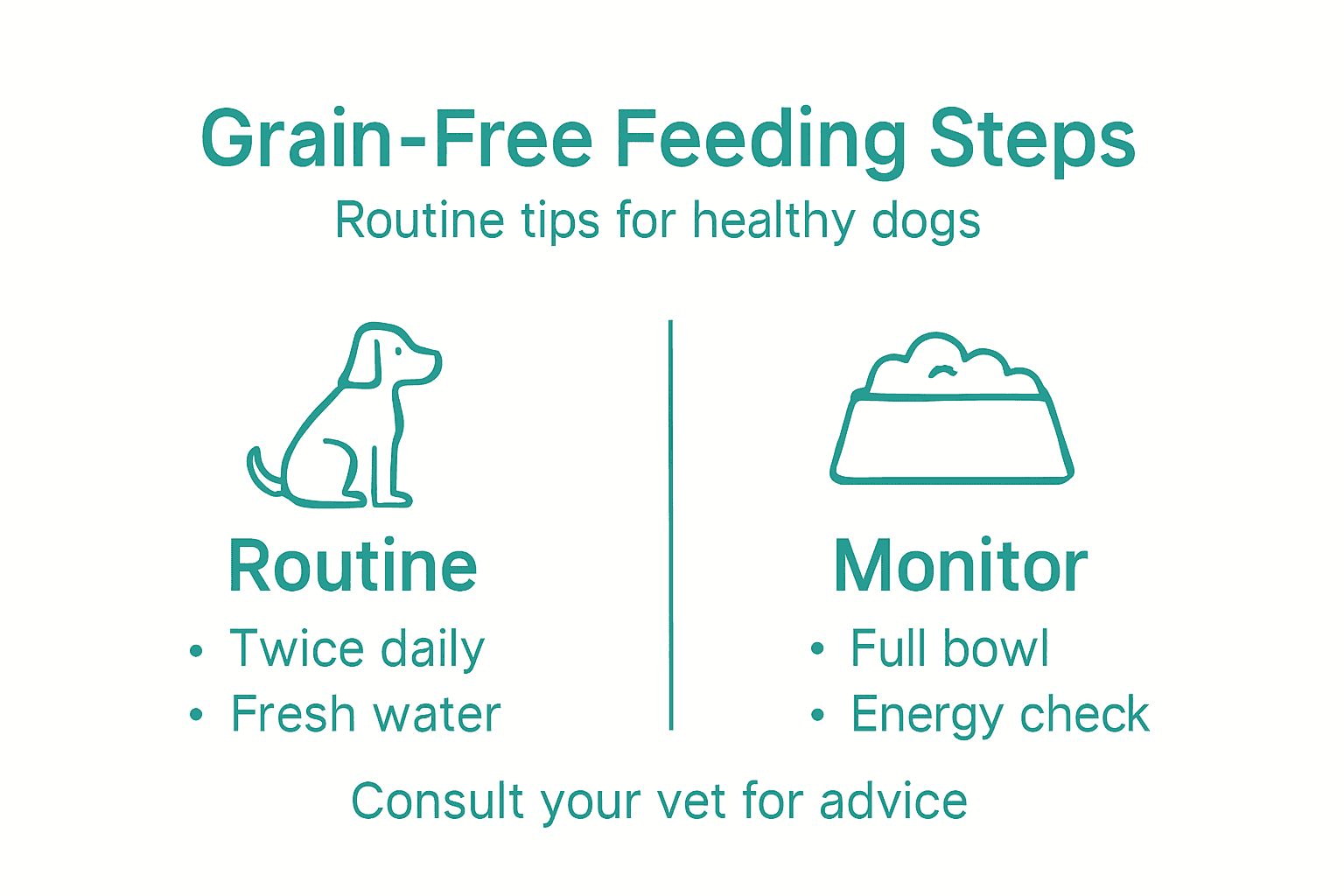
Expert tip: Set daily meal alarms on your phone to maintain absolute consistency in feeding times, helping your dog develop a reliable digestive and energy rhythm.
Step 5: Monitor Health and Adjust as Needed
Successfully managing your dog’s grain-free diet requires ongoing observation and proactive health monitoring. Regular health assessments are critical to ensuring your pet’s nutritional strategy remains optimal throughout their life stages.
Key health indicators to track consistently include:
- Weight changes: Monitor body condition and adjust portions
- Energy levels: Note variations in activity and vitality
- Coat condition: Check for shine, thickness, and overall appearance
- Digestive health: Observe stool consistency and frequency
- Behaviour patterns: Watch for mood or appetite shifts
Small, consistent observations can reveal significant changes in your dog’s overall health and nutritional needs.
Professional guidance remains essential. Schedule regular veterinary check-ups to discuss your dog’s dietary response and make personalised adjustments. Some dogs may require subtle modifications to their grain-free diet based on age, health conditions, or individual metabolic differences.
To help you monitor your dog’s progress, use this guide to common signs requiring dietary adjustments:
| Sign Observed | Possible Interpretation | Suggested Action |
|---|---|---|
| Weight Gain | Overfeeding | Reduce portion sizes |
| Dull Coat | Nutrient deficiency | Review fat and vitamin intake |
| Low Energy | Inadequate calories or protein | Check meal balance and consult vet |
| Digestive Upset | Sensitivity or intolerance | Transition diet more gradually |
Expert tip: Create a monthly health tracking journal to document your dog’s physical and behavioural changes, providing valuable insights for both you and your veterinarian.
Discover Tailored Grain-Free Nutrition for Your Dog’s Unique Needs
Transitioning your dog to a grain-free diet can feel overwhelming when balancing age, breed size, activity, and specific health challenges like weight management or allergies. This guide helps you understand why precise nutritional assessment and a gradual food transition matter so much for your pet’s wellbeing. At the same time, many owners struggle to find premium, freshly prepared options that support digestive health, maintain energy, and nurture a shiny coat.
You can confidently address these concerns with our expertly formulated grain-free ranges. Explore our Small Breed Grain Free Dog Food | Freshly Prepared & Natural – Ultimate Pet Foods for recipes designed to fuel your dog’s vitality and suit their size perfectly.
Give your dog the best start and ongoing nutrition by choosing products crafted from natural ingredients that meet their life stage and health needs. Visit https://ultimatepetfoods.co.uk to browse our complete grain-free collection and see why pet owners trust us for quality, transparency, and results. Act now to provide the balanced diet your dog deserves. For puppies, don’t miss our dedicated Try Our Grain Free Puppy Food - Optimal Health & Nutrition pages and for dogs needing support with weight, check out our Weight Loss Dog Food UK selection.
Frequently Asked Questions
What should I consider when assessing my dog’s dietary needs for a grain-free diet?
Evaluating your dog’s unique nutritional requirements is essential. Consider factors such as their age, breed size, activity level, and current health status. Use this information to create a tailored feeding plan that meets their specific needs.
How do I choose the right grain-free formula for my dog?
Select a grain-free option by ensuring it provides complete nutrition and uses high-quality, named meat proteins as primary ingredients. Verify the formula is appropriate for your dog’s life stage and take note of any allergies or sensitivities.
What steps should I take to transition my dog to a grain-free diet?
Start by gradually introducing the new grain-free food, mixing it with their current diet. Begin with a ratio of 25% new food to 75% old food and increase the new proportion every 2-3 days until fully transitioned, usually within 7-10 days.
How often should I feed my dog and what routine is best?
Establish a consistent feeding routine by providing meals at the same times each day, measuring portions accurately, and offering food in the same location. This predictability will help your dog feel secure and maintain a healthy digestive rhythm.
What health indicators should I monitor after switching to a grain-free diet?
Regularly assess your dog’s weight, energy levels, coat condition, digestive health, and behaviour patterns. Note any significant changes and adjust their diet accordingly, aiming for consistency in health and activity.
How can I track my dog’s health during their grain-free diet?
Create a monthly health tracking journal to document your dog’s weight, energy levels, and any changes in behaviour or digestion. This record will provide valuable insights to help you and your veterinarian make informed dietary adjustments.