

Grain-free puppy food: what health-conscious owners must know

Grain-free puppy food has become one of the most talked-about topics among health-conscious dog owners, and it’s easy to see why. The promise of a cleaner, more natural diet is genuinely appealing. But here’s the surprising reality: grain allergies are rare in dogs, and most food sensitivities are linked to animal proteins, not grains at all. So before you switch your puppy’s diet based on a trend, let’s look at the evidence, separate fact from marketing, and help you make the best possible choice for your growing dog.
Table of Contents
- What makes a puppy food grain free?
- Does your puppy need grain-free food? Evidence and expert perspective
- Health benefits and risks of grain-free puppy food
- Nutritional benchmarks: what to look for in grain-free puppy food
- How to choose the right grain-free puppy food for your dog
- Where to find premium grain-free puppy food and expert advice
- Frequently asked questions
Key Takeaways
| Point | Details |
|---|---|
| Grain allergies are rare | Most puppies do not need grain-free food unless allergies are diagnosed by a vet. |
| Balance nutrition matters | Choose foods meeting established protein and fat benchmarks, not just marketing claims. |
| Legumes may pose risks | High levels of peas and lentils can cause health problems if not balanced and moderate. |
| Expert guidelines first | WSAVA and AAFCO standards ensure foods support puppy growth and well-being. |
| Consult before switching | Speak to your vet and check for evidence of sensitivity before moving to grain-free diets. |
What makes a puppy food grain free?
Now that we’ve cleared up a common misconception, let’s define what ‘grain-free’ actually means for puppy food. At its simplest, a grain-free diet removes ingredients like wheat, rice, barley, oats, and corn from the recipe. These are the carbohydrate sources that appear in most conventional puppy foods.
So what replaces them? Manufacturers typically use:
- Sweet potato for digestible energy and natural fibre
- Lentils as a plant-based protein and carbohydrate source
- Peas for added protein and starch
- Chickpeas and butternut squash in some premium recipes
These alternatives can work well, but there’s an important caveat. Grain-free foods replacing grains with legumes like peas and lentils may pose risks when those ingredients appear high on the ingredient list. Legumes in large quantities have been associated with potential cardiovascular concerns in dogs, which is why ingredient order matters enormously.
“Grain-free does not automatically mean healthier. It simply means different carbohydrate sources are used. The quality and balance of those sources is what truly counts.”
Grains themselves provide fibre, B vitamins, and sustained energy. Their removal is not inherently beneficial unless your puppy has a specific, diagnosed reason to avoid them. We always recommend reading our grain-free dog food basics guide before making any dietary changes.
Does your puppy need grain-free food? Evidence and expert perspective
Understanding the composition of grain-free diets leads straight into whether your puppy actually needs one. The honest answer, backed by evidence, is that most puppies do not.
Here’s what the science tells us:
- True grain allergies are uncommon. Most puppies with food sensitivities react to animal proteins such as chicken, beef, or dairy, not to wheat or rice.
- Skin and digestive symptoms are often misattributed. Itching, loose stools, and ear infections are frequently blamed on grains, but grain allergies in dogs are far less common than protein sensitivities.
- Elimination diets identify the real culprit. A proper food trial, guided by your vet, is the only reliable way to pinpoint what’s causing a reaction.
- Grain-free is genuinely beneficial for diagnosed cases. If your vet confirms a grain sensitivity, switching to a well-formulated grain-free recipe makes complete sense.
- Unnecessary restriction can create imbalance. Removing grains without a clinical reason may reduce dietary variety and introduce new risks from legume-heavy substitutes.
The grain-free diet benefits are real for the right puppy. But they are not universal.
Pro Tip: Before switching to grain-free, ask your vet to rule out protein sensitivities first. A simple dietary elimination trial can save you months of guesswork and unnecessary expense.
Health benefits and risks of grain-free puppy food
With an understanding of need, it’s time to assess the actual health impact and scientific guidance on grain-free puppy food. This is where balance really matters.
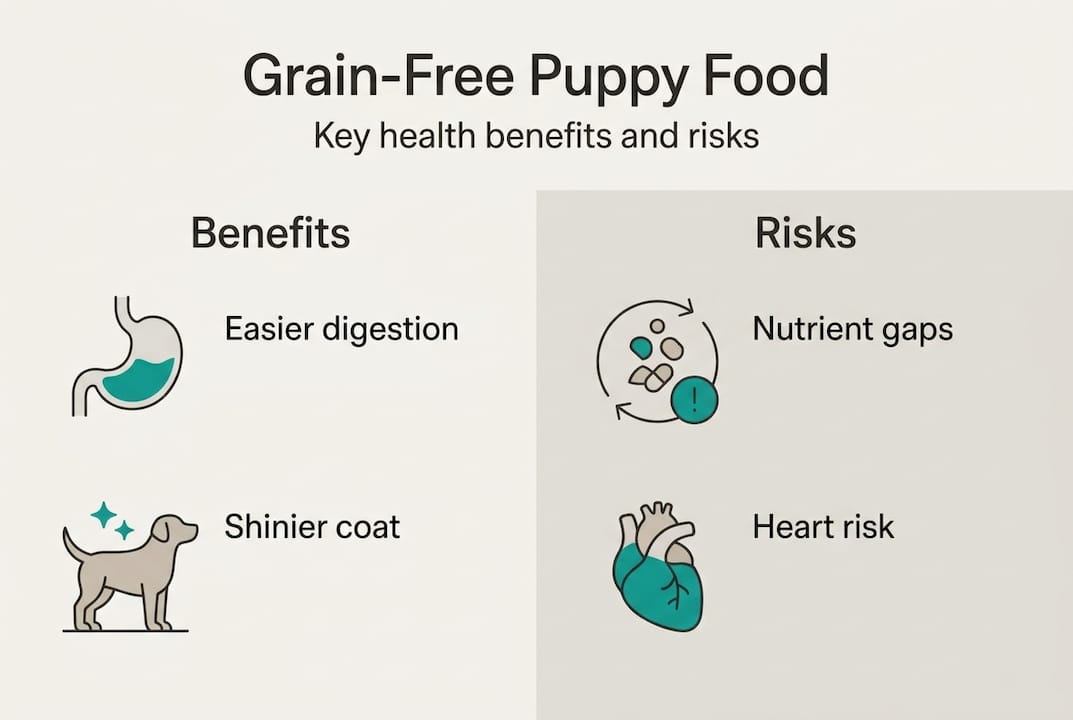
Potential benefits for suitable puppies:
Some puppies with genuine sensitivities do experience fewer digestive issues on grain-free diets. Studies suggest puppies with food intolerances can show up to 35% fewer digestive issues when switched to an appropriate grain-free formula. Clearer skin, a shinier coat, and improved stool quality are commonly reported by owners whose puppies genuinely needed the change.

The risks you need to know:
| Risk factor | Detail |
|---|---|
| High legume content | Peas and lentils high on ingredient list linked to potential heart concerns |
| Nutritional imbalance | Removing grains without proper substitution can reduce fibre and B vitamins |
| Marketing over science | Many grain-free claims are not supported by feeding trials |
| Unnecessary restriction | Healthy puppies may miss out on beneficial nutrients found in quality grains |
For health-conscious owners, grain-free is suitable only for puppies with proven sensitivities. Otherwise, the risks from legume-heavy formulas may outweigh any unproven benefits. WSAVA guidelines prioritise foods from companies with genuine nutrition expertise, AAFCO compliance, and feeding trial evidence. They do not endorse grain-free as a category.
We also recommend checking our grain-free safety facts resource for a deeper look at the evidence.
Nutritional benchmarks: what to look for in grain-free puppy food
Having covered the broader health benefits and risks, let’s look at how to assess which grain-free puppy foods are genuinely healthy. Numbers matter here.
A well-formulated grain-free puppy food should meet these benchmarks:
- Protein: 30 to 38% on a dry matter basis, sourced primarily from named animal proteins
- Fat: 14 to 20%, supporting brain development and healthy skin
- Fibre: Adequate levels from vegetables and alternative carbohydrates
- Calcium and phosphorus: Balanced ratio to support bone growth in puppies
- AAFCO compliance: Confirms the food meets minimum nutritional standards for growth
Grain-free puppy foods with around 36% protein and AAFCO compliance for growth represent a strong nutritional benchmark. Use this as your baseline when comparing brands.
| Nutrient | Recommended range | Why it matters |
|---|---|---|
| Protein | 30 to 38% | Muscle development and immune function |
| Fat | 14 to 20% | Brain health, energy, coat condition |
| Moisture (wet food) | 70 to 80% | Hydration support |
| Legumes | Low on ingredient list | Reduces cardiovascular risk |
Always check the ingredient order on the label. Animal protein should appear first. If peas or lentils appear in the first three ingredients, that’s a signal to look elsewhere. Our grain-free feeding guide walks you through label reading in practical detail, and our best breeds for grain-free guide helps you understand whether your puppy’s breed has specific dietary considerations.
How to choose the right grain-free puppy food for your dog
Once you know what nutritional benchmarks matter, it’s time to apply this knowledge to real-world decisions. Here’s a practical, step-by-step approach:
- Get a vet diagnosis first. If you suspect a sensitivity, confirm it before switching. A proper elimination diet takes 8 to 12 weeks and is the gold standard for identifying food reactions.
- Check for WSAVA or AAFCO compliance. These are your quality assurance markers. WSAVA-compliant brands employ qualified nutritionists and conduct feeding trials, which means the food has been genuinely tested.
- Read the ingredient list carefully. Named animal proteins (chicken, salmon, lamb) should lead the list. Avoid foods where peas, lentils, or chickpeas dominate the first few ingredients.
- Look beyond the marketing. Words like ‘natural,’ ‘holistic,’ and ‘ancestral’ are not regulated terms. Focus on nutritional analysis and compliance certifications instead.
- Transition gradually. If you do switch to grain-free, do so over 7 to 10 days to avoid digestive upset. Mix increasing amounts of the new food with the old.
- Monitor your puppy closely. Track coat condition, energy levels, stool quality, and growth rate. These are your real-world indicators of whether the diet is working.
Pro Tip: A food that lists ‘chicken meal’ as the first ingredient is not necessarily inferior to one listing ‘fresh chicken.’ Chicken meal is a concentrated protein source with moisture removed, often delivering more protein per gram than fresh meat.
For a broader look at the evidence supporting grain-free choices, our grain-free diets benefits 2026 article is a great next read.
Where to find premium grain-free puppy food and expert advice
Armed with evidence and practical knowledge, here’s how to access leading grain-free puppy foods and further guidance from us at Ultimate Pet Foods. 🐾
We know how much thought goes into every bowl you put down for your puppy. That’s why we’ve built a range of resources to help you compare, choose, and feel confident in your decision.
Start with our detailed puppy food comparison to see how our grain-free puppy recipe stacks up against popular alternatives on protein, ingredients, and nutritional balance. If you want to understand exactly what goes into a quality grain-free recipe, our grain-free ingredients explained page breaks it all down clearly. And if you’re still weighing up whether grain-free is right for your dog, our grain-free diet benefits guide gives you the full picture. Every wag starts with the right nutrition.
Frequently asked questions
How do I know if my puppy has a grain allergy?
True grain allergies are rare in dogs, and most puppies reacting to food are actually sensitive to animal proteins. Only a vet-supervised elimination diet can reliably confirm a grain allergy.
Are grain-free puppy foods healthier than regular puppy foods?
For most puppies, grain-free foods offer no proven health advantage and may introduce risks if legumes dominate the recipe. Regular, well-balanced puppy foods are perfectly safe unless a sensitivity has been diagnosed.
What are the signs of a poor grain-free puppy diet?
Watch for a dull coat, slow growth, loose stools, low energy, or excessive wind. These often point to nutritional imbalance or excessive legumes, and a WSAVA-compliant food with feeding trial evidence is your safest choice.
Which grain-free puppy foods are recommended by experts?
Experts favour WSAVA- and AAFCO-compliant recipes with named animal proteins leading the ingredient list, moderate legume content, and evidence from proper feeding trials rather than marketing claims alone.
Can grain-free puppy foods cause heart problems?
There is an ongoing investigation into a possible link between high legume content in grain-free diets and dilated cardiomyopathy in dogs. The evidence is still developing, but choosing reputable brands with moderate legume levels significantly reduces any potential risk.
Recommended
- Puppy nutrition 2026: 35% fewer digestive issues with grain-free
- Grain-free dog food basics: a guide for 2026
- All life stages dog food: 68% of owners misunderstand labels
- Essential Guide to Grain Free Dog Food : What Dogs Owners Should know
- Fordeler med kornfri hundemat: optimal helse i 2026 — Dr-Clauder Norge


