
Grain-free dog food basics: a guide for 2026
Many dog owners believe grain-free dog food is automatically healthier for their pets, but recent research reveals this assumption is far from accurate. The reality is more nuanced: grain-free diets suit some dogs brilliantly whilst offering no advantage to others. This guide unpacks grain-free dog food fundamentals, examining benefits, potential risks, and practical selection strategies to help you make informed choices tailored to your dog’s specific nutritional needs and health status.
Table of Contents
- What Is Grain-Free Dog Food?
- Common Misconceptions And Actual Allergy Prevalence
- Grain-Free Dog Food And Heart Health: What The Evidence Says
- Choosing And Transitioning To Grain-Free Dog Food Safely
- Find The Right Grain-Free Dog Food For Your Pet
Key takeaways
| Point | Details |
|---|---|
| Allergy rarity | Less than 1% of dogs have genuine grain allergies, making grain-free diets unnecessary for most pets. |
| Nutritional density | Grain-free formulas contain higher protein and fat to compensate for reduced carbohydrate content from traditional grains. |
| Heart health clarity | Balanced grain-free diets show no cardiac harm when nutritionally complete and properly formulated. |
| FDA investigation focus | Concerns centre on legume-heavy diets, not grain absence itself, linked to certain DCM cases. |
| Reversibility potential | Early detection of diet-related DCM enables successful dietary intervention and symptom reversal. |
What is grain-free dog food?
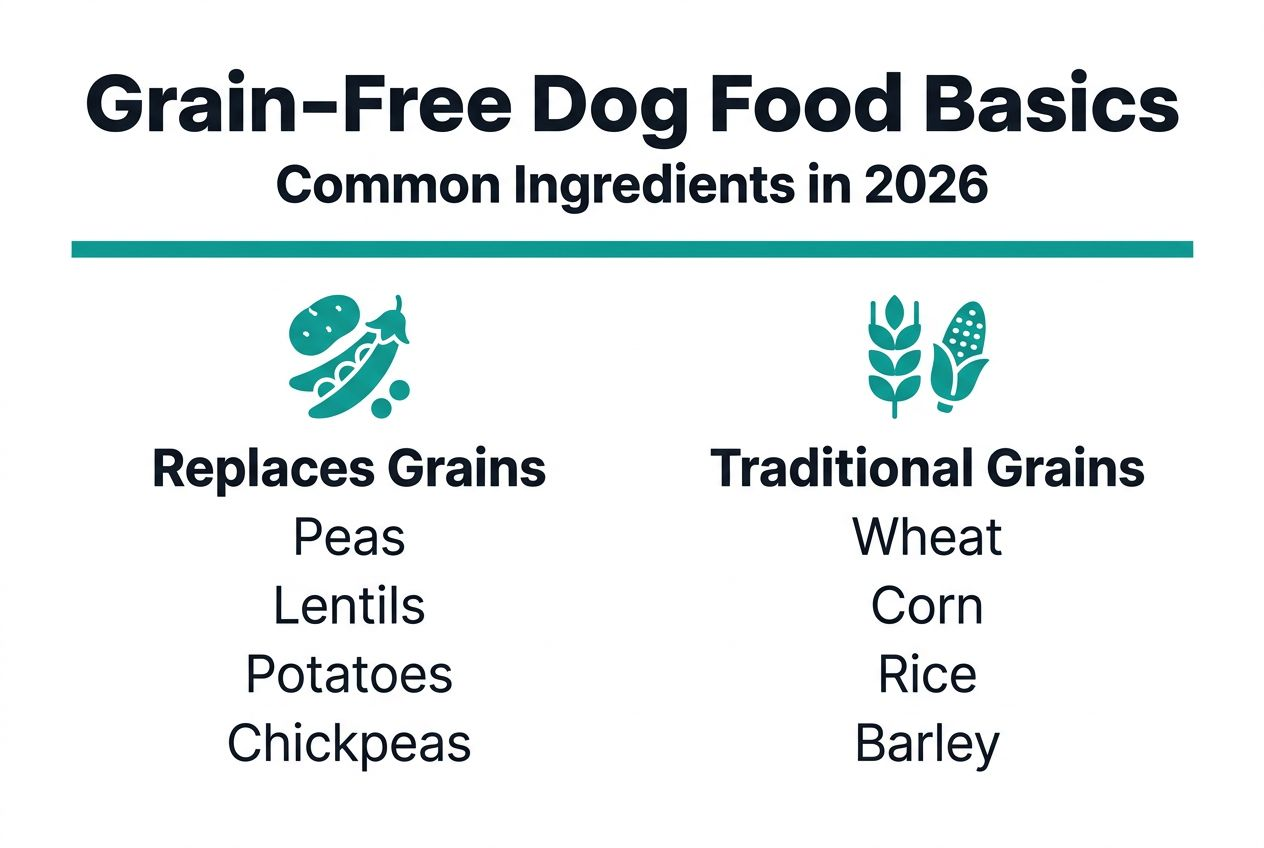
Grain-free dog food excludes all cereal grains including wheat, corn, rice, barley, oats, and similar ingredients traditionally used as carbohydrate sources. These formulations replace grains with alternative ingredients to meet your dog’s energy requirements whilst maintaining nutritional balance.
Alternative carbohydrate sources typically include:
- Peas and lentils providing protein alongside carbohydrates
- Potatoes offering easily digestible starch
- Sweet potatoes delivering vitamins and fibre
- Chickpeas and other legumes adding texture and nutrients
- Tapioca serving as a neutral binding ingredient
Grain-free formulas contain higher protein and fat levels compared to traditional recipes. This nutritional shift compensates for the energy traditionally supplied by grains. Manufacturers adjust macronutrient ratios to ensure dogs receive adequate calories and balanced nutrition.
Not all grain-free foods deliver equal quality. Some brands prioritise premium ingredients with careful nutritional balance, whilst others simply remove grains without thoughtful formulation. Ingredient sourcing, processing methods, and nutrient profiles vary dramatically between products.
Exploring the benefits of grain free diet options reveals how quality formulations support digestive health, coat condition, and energy levels in dogs who genuinely benefit from grain exclusion.

Pro Tip: Check whether a grain-free food meets AAFCO or FEDIAF nutritional standards rather than assuming grain absence alone indicates superior quality.
Common misconceptions and actual allergy prevalence
The widespread belief that grains commonly trigger allergies in dogs lacks scientific support. This misconception drives many owners towards grain-free diets unnecessarily, often without veterinary guidance or proper allergy testing.
True grain allergies affect fewer than 1% of dogs diagnosed with food sensitivities. The vast majority of canine food reactions involve protein sources rather than carbohydrates. Beef, dairy, chicken, and lamb trigger significantly more allergic responses than wheat, corn, or rice.
Common signs of genuine food sensitivities include:
- Persistent itching, particularly around paws and ears
- Digestive upset including vomiting or diarrhoea
- Skin inflammation, rashes, or hot spots
- Chronic ear infections resistant to treatment
- Hair loss or poor coat quality
Grain-free diets benefit primarily dogs with confirmed grain intolerances or specific health conditions requiring grain exclusion. Switching without veterinary consultation risks missing the actual allergen whilst potentially introducing new nutritional imbalances.
Professional allergy testing identifies specific triggers accurately. Vets employ elimination diets or blood tests to pinpoint problematic ingredients, enabling targeted dietary changes rather than blanket grain removal. Understanding grain allergies in dogs explained helps distinguish genuine allergies from other health issues.
Pro Tip: If your dog shows suspected allergy symptoms, consult your vet before changing diets to ensure you address the actual cause rather than guessing at solutions.
Many owners discover their dogs thrive on grain-inclusive diets once the genuine allergen is identified and removed. Learning why grain free diets benefit sensitive dogs clarifies when grain removal genuinely supports canine health.
Grain-free dog food and heart health: what the evidence says
Canine dilated cardiomyopathy (DCM) represents a serious heart condition where the heart muscle weakens, reducing its pumping efficiency. This condition can prove fatal without intervention, making the potential dietary connection particularly concerning for dog owners.
The FDA is investigating reports of DCM in dogs consuming certain pet foods, many labelled grain-free. This investigation sparked widespread concern about grain-free diets generally, though the evidence reveals important nuances.
Foods containing legumes as primary ingredients show the strongest correlation with reported DCM cases. Peas, lentils, other legume seeds, or potatoes listed prominently in ingredient panels characterise the diets of concern. Grain absence itself does not appear causative.
Controlled research found no cardiac harm in dogs fed balanced grain-free diets over extended periods. When formulations meet complete nutritional standards without excessive legume reliance, grain-free foods pose no inherent heart risk.
| Factor | Impact on DCM Risk | Management Strategy |
|---|---|---|
| Genetic predisposition | Certain breeds naturally susceptible | Regular cardiac screening for at-risk breeds |
| Legume-heavy formulations | Potential association with some cases | Choose foods with diverse ingredient profiles |
| Nutritional balance | Critical for cardiac health | Select AAFCO/FEDIAF compliant foods |
| Early detection | Enables dietary reversal | Annual vet checks including cardiac assessment |
Multiple factors contribute to DCM development including genetics, underlying medical conditions, nutritional deficiencies, and dietary composition. Dobermanns, Great Danes, Boxers, and certain other breeds face elevated genetic risk regardless of diet.
When detected early, diet-associated DCM often reverses with dietary correction and supportive treatment. This underscores the importance of regular veterinary monitoring, particularly if feeding grain-free diets or owning predisposed breeds.
Pro Tip: If you feed grain-free food, choose formulations without excessive legumes or potatoes as primary ingredients and schedule annual cardiac assessments with your vet.
Understanding dog food for heart health empowers you to make informed choices supporting your dog’s cardiovascular wellbeing. The FDA investigation continues gathering data to clarify dietary factors in DCM cases.
Choosing and transitioning to grain-free dog food safely
Selecting nutritionally sound grain-free dog food requires attention to several critical factors beyond simple grain absence. Quality varies dramatically between brands and formulations.
- Verify the food meets AAFCO or FEDIAF nutritional standards for complete and balanced nutrition at your dog’s life stage.
- Examine ingredient lists carefully, avoiding products listing multiple legumes or potatoes as the first five ingredients.
- Choose brands with transparent sourcing and manufacturing practices, ideally with third-party testing.
- Consider your dog’s individual needs including age, activity level, breed size, and any health conditions.
- Consult your veterinarian before switching, particularly if your dog has existing health issues or takes medications.
Balanced, high-quality nutrition proves essential for maintaining canine health regardless of grain inclusion. Ingredient quality matters more than grain presence or absence for most dogs.
Transitioning to grain-free food requires gradual introduction to prevent digestive upset:
- Days 1-3: Mix 25% new food with 75% current food
- Days 4-6: Increase to 50% new food with 50% current food
- Days 7-10: Shift to 75% new food with 25% current food
- Days 11-14: Complete transition to 100% new food
- Extend this timeline if your dog shows digestive sensitivity
Monitor your dog closely during transition. Watch for changes in stool consistency, energy levels, coat quality, skin condition, and appetite. Normal adjustments include slightly softer stools initially, but persistent diarrhoea or vomiting warrants veterinary consultation.
Pro Tip: Keep a transition journal noting daily percentages, stool quality, energy levels, and any concerns to help identify patterns or problems early.
Learning how to transition dogs to grain free naturally minimises digestive disruption whilst allowing your dog’s system to adapt gradually. Understanding grain free diet benefits helps set realistic expectations for what dietary changes might achieve.
Find the right grain-free dog food for your pet
Choosing premium grain-free dog food tailored to your dog’s specific needs ensures they receive optimal nutrition without compromise. Ultimate Pet Foods specialises in balanced, naturally formulated grain-free options designed with your dog’s health as the primary focus.
Explore the grain free diet benefits at Ultimate Pet Foods to understand how quality formulations support digestive health, energy levels, and overall wellbeing. Our detailed grain-free ingredients guide breaks down what each component contributes to your dog’s nutrition.
Unsure if your dog will enjoy a new food? Try grain free dog food free samples before committing to larger purchases, ensuring your dog loves their new diet whilst you confirm it suits their digestion and health needs.
FAQ
How common are grain allergies in dogs and how do I know if my dog has one?
Genuine grain allergies affect fewer than 1% of dogs with food sensitivities. Signs include persistent itching, digestive upset, skin inflammation, or chronic ear infections. Veterinary allergy testing through elimination diets or blood work provides definitive diagnosis rather than guessing based on symptoms alone.
Can grain-free diets cause heart problems in dogs?
Balanced grain-free diets pose no cardiac risk when nutritionally complete. Some legume-heavy formulations show association with DCM cases, but grain absence itself is not causative. Choose quality foods meeting nutritional standards with diverse ingredient profiles and schedule regular veterinary cardiac assessments.
How do I safely switch my dog to a grain-free diet?
Transition gradually over 7-14 days mixing increasing proportions of new food with current food. Monitor stool quality, energy levels, and coat condition throughout. Consult your vet immediately if digestive upset persists beyond initial adjustment or if concerning symptoms develop.
What ingredients replace grains in grain-free dog food?
Peas, lentils, potatoes, sweet potatoes, chickpeas, and tapioca commonly replace grains as carbohydrate sources. Quality formulations balance these alternatives carefully to maintain nutritional adequacy whilst avoiding excessive reliance on any single ingredient, particularly legumes linked to potential health concerns.
Do all dogs benefit from grain-free diets?
No, most dogs thrive on quality grain-inclusive diets. Grain-free formulations benefit primarily dogs with confirmed grain sensitivities or intolerances diagnosed by veterinarians. For dogs without grain issues, ingredient quality and nutritional balance matter far more than grain presence or absence.