
Puppy nutrition 2026: 35% fewer digestive issues with grain-free
Many puppy owners believe grain-free diets automatically deliver superior health for every pup, but this misconception overlooks the nuanced reality of breed-specific nutritional requirements. Your puppy’s breed, size, and individual sensitivities determine whether grain-free nutrition truly benefits their growth and wellbeing. This guide clarifies how to select tailored premium grain-free diets that genuinely support your puppy’s development, moving beyond marketing myths to evidence-based feeding strategies.
Table of Contents
- Understanding Puppy Nutritional Needs By Breed
- Benefits And Risks Of Grain-Free Diets For Puppies
- The Role Of Natural, Fresh Ingredients In Puppy Health
- Common Misconceptions About Puppy Nutrition
- Practical Feeding Guidelines For Growth And Health
- Explore Premium Grain-Free Puppy Nutrition Options
Key takeaways
| Point | Details |
|---|---|
| Breed dictates nutritional needs | Small, medium, and large breed puppies require different protein, fat, and mineral ratios for optimal development. |
| Grain-free suits specific cases | Grain-free diets primarily benefit puppies with diagnosed grain allergies or sensitivities, not all puppies universally. |
| Fresh ingredients enhance health | Natural, minimally processed ingredients improve nutrient absorption and support stronger immune and digestive systems. |
| Gradual transitions prevent problems | Introducing new foods slowly over 7-10 days reduces digestive upset and supports healthy growth patterns. |
Understanding puppy nutritional needs by breed
Your puppy’s breed fundamentally shapes their dietary requirements during critical growth phases. Small breeds like Yorkshire Terriers need energy-dense foods with higher fat percentages to fuel rapid metabolisms, whilst large breeds such as Great Danes require carefully controlled calcium and phosphorus levels to prevent skeletal abnormalities.
Different breeds require varying protein, fat percentages, and careful calcium-phosphorus balance especially in large breeds to avoid developmental issues. Medium breeds typically fall between these extremes, needing balanced macronutrients that support steady, moderate growth rates. Recognising these distinctions helps you avoid generic feeding approaches that may compromise your puppy’s development.
Breed-specific vulnerabilities also influence optimal nutrition choices:
- Labrador Retrievers prone to obesity benefit from controlled calorie formulas with moderate fat content
- German Shepherds with sensitive digestion often thrive on easily digestible protein sources
- Bulldogs susceptible to skin issues need omega-3 fatty acids and hypoallergenic ingredients
- Golden Retrievers at risk for joint problems require glucosamine and balanced mineral ratios
Understanding breed-specific nutritional needs for puppies transforms feeding from guesswork into targeted health support. Selecting breed-specific dog food explained formulas addresses inherited health vulnerabilities before they manifest as serious conditions. This precision approach optimises your puppy’s foundation for lifelong wellness.
Benefits and risks of grain-free diets for puppies
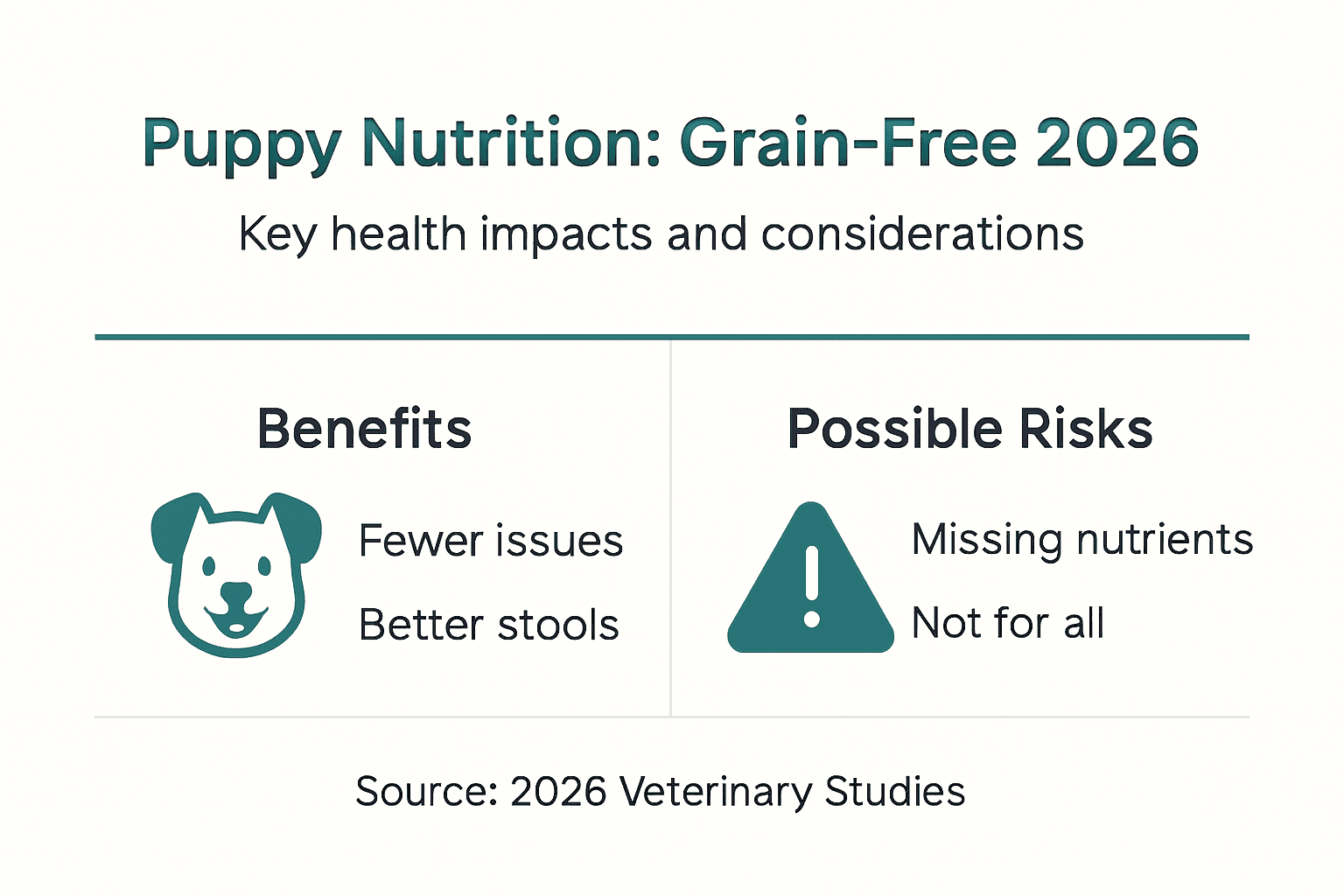
Grain-free diets genuinely help puppies with confirmed grain allergies or sensitivities, reducing inflammation and digestive discomfort. However, the absence of grains doesn’t automatically create superior nutrition for every puppy.

Grain-free diets reduce allergy symptoms in sensitive puppies but carry risks like taurine deficiency leading to heart disease if unbalanced. Legumes often replace grains in these formulas, potentially interfering with amino acid absorption if not properly balanced. Without adequate taurine supplementation, some grain-free diets may contribute to dilated cardiomyopathy, particularly in predisposed breeds.
Key considerations when evaluating grain-free options:
- Verify complete amino acid profiles including taurine and methionine
- Check for quality animal protein as primary ingredients, not plant proteins alone
- Ensure balanced omega-3 to omega-6 fatty acid ratios for inflammation control
- Confirm adequate vitamin and mineral fortification meets AAFCO puppy standards
| Aspect | Grain-Free Benefits | Potential Concerns |
|---|---|---|
| Digestive health | Reduces bloating in sensitive puppies | May lack fibre if poorly formulated |
| Allergies | Eliminates common grain allergens | Legumes can trigger sensitivities too |
| Nutrient density | Often higher protein percentages | Risk of imbalanced amino acids |
| Coat condition | Improved skin health in allergic dogs | Requires omega supplementation |
Pro Tip: Request veterinary allergy testing before switching to grain-free formulas. Many digestive issues stem from protein sources or additives, not grains, saving you unnecessary diet changes and expense.
The grain-free diet benefits become most apparent in puppies with diagnosed sensitivities. Certain breeds respond particularly well to these diets, as outlined in best breeds for grain-free diets, but individual assessment always trumps breed generalisations.
The role of natural, fresh ingredients in puppy health
Fresh, minimally processed ingredients deliver nutrients in forms puppies absorb more efficiently than heavily processed alternatives. This bioavailability advantage directly supports rapid growth phases when cellular development demands optimal nutrition.
Fresh ingredients lead to better nutrient absorption, enhanced immune and digestive markers, and reduced allergenic reactions in puppies. Natural foods retain enzymatic activity and phytonutrients often destroyed during high-temperature kibble manufacturing. These compounds support developing immune systems, helping puppies build resistance to common pathogens.
Digestive health improvements manifest clearly with natural ingredient diets:
- Firmer, more consistent stools indicating proper nutrient extraction
- Reduced flatulence from better protein digestion
- Lower incidence of food sensitivities and inflammatory responses
- Enhanced gut microbiome diversity supporting overall health
Natural diets frequently demonstrate hypoallergenic properties because they avoid synthetic preservatives, artificial colours, and chemical flavour enhancers that trigger reactions in sensitive puppies. Single-source proteins and limited ingredient formulas further reduce allergen exposure whilst maintaining complete nutrition.
Pro Tip: Observe your puppy’s coat condition within three weeks of switching to natural ingredients. Improved shine and reduced shedding signal better nutrient absorption, whilst dull coats may indicate formula adjustments needed.
The natural dog food benefits extend beyond basic nutrition to support optimal development. Puppies with sensitivities particularly benefit from hypoallergenic natural ingredients that eliminate common triggers whilst providing complete nutritional profiles.
Common misconceptions about puppy nutrition
Widespread myths about grain-free diets and protein requirements often mislead well-intentioned puppy owners into suboptimal feeding choices. Correcting these misunderstandings ensures evidence-based decisions.
Grain-free diets mainly help allergic puppies; protein quality is more important than quantity; most grains are not harmful to puppies. The marketing suggesting all puppies thrive on grain elimination oversimplifies complex nutritional science. Similarly, chasing maximum protein percentages without considering amino acid profiles and digestibility creates imbalances rather than advantages.
-
Grain-free automatically means healthier: Only puppies with confirmed grain allergies gain significant benefits from grain elimination; others may lose valuable fibre and nutrient sources.
-
Higher protein percentages equal better growth: Protein quality from animal sources matters far more than crude protein numbers, as digestibility and amino acid completeness determine actual nutritional value.
-
All grains cause allergies: Genuine grain allergies remain relatively uncommon; chicken, beef, and dairy proteins trigger reactions far more frequently than grains.
-
Puppies need identical nutrition regardless of breed: Size, growth rate, and breed-specific vulnerabilities demand tailored macronutrient ratios and mineral balances.
-
Expensive always means superior: Premium pricing should reflect ingredient quality and nutritional science, not merely marketing, requiring careful label evaluation.
Understanding grain-free diet misconceptions protects you from marketing hype whilst identifying genuinely beneficial formulas. Focus on ingredient quality, complete nutrition profiles, and your individual puppy’s responses rather than trendy diet labels.
Practical feeding guidelines for growth and health
Implementing optimal puppy nutrition requires strategic transitions and breed-appropriate portions that support healthy development without creating imbalances.
A gradual 7-10 day transition reduces digestive upset by 35%; breed-specific calorie and mineral management supports healthy development. Rushing diet changes disrupts gut bacteria populations, causing diarrhoea and potentially reducing nutrient absorption during critical growth windows.
-
Execute gradual transitions over 7-10 days: Start with 25% new food mixed with 75% current food for days 1-2, progress to 50-50 for days 3-5, then 75% new food for days 6-8, finishing with 100% new formula by day 9-10.
-
Calculate portions based on adult target weight, not current size: Large breed puppies need controlled feeding to prevent too-rapid growth that stresses developing bones and joints.
-
Monitor calcium and phosphorus ratios strictly for large breeds: Maintain ratios between 1.2:1 and 1.4:1 to prevent developmental orthopaedic disease, avoiding excess supplementation.
-
Divide daily portions into 3-4 meals for puppies under six months: Frequent smaller meals stabilise blood sugar and reduce digestive stress whilst supporting steady growth.
-
Track body condition weekly using rib palpation: You should feel ribs easily without excess fat cover, adjusting portions by 10% increments based on condition changes.
-
Consult your veterinarian at monthly growth checks: Professional monitoring catches developmental issues early and confirms dietary choices support optimal progress.
Following comprehensive feeding guidelines for puppies prevents common errors. Additional puppy feeding tips address specific challenges like picky eating and growth spurts.
Explore premium grain-free puppy nutrition options
Applying this nutritional knowledge becomes straightforward when you access expertly formulated grain-free puppy diets tailored to breed-specific requirements. Ultimate Pet Foods combines premium natural ingredients with science-backed formulations addressing the exact needs discussed throughout this guide.
Our grain free dog feeding guide provides detailed transition protocols and portion calculations for your puppy’s breed and size. Explore comprehensive explanations of the benefits of grain-free diet formulations designed specifically for sensitive and growing puppies. Our grain-free dog food ingredients guide breaks down exactly what goes into premium formulas and why each component supports optimal puppy development. Sample packs let you test suitability before committing to full-sized purchases, ensuring your puppy thrives on their tailored nutrition.
Frequently asked questions
How can I tell if my puppy needs a grain-free diet?
Veterinary-confirmed grain allergies through elimination trials or allergy testing provide the only reliable indication for grain-free feeding. Symptoms like chronic itching, ear infections, or persistent digestive issues warrant professional evaluation rather than self-diagnosis.
What is the best way to transition my puppy to a new diet?
Gradually introduce new food over 7-10 days, starting with 25% new formula mixed with current food and incrementally increasing the proportion daily. Monitor stool consistency, energy levels, and appetite throughout the transition period.
Are all grains bad for puppies?
Most grains provide valuable nutrients, fibre, and energy for puppies without allergies or sensitivities. Only puppies with veterinary-diagnosed grain allergies need complete grain elimination from their diets.
How do I adjust feeding for a large breed puppy?
Control calcium and phosphorus intake carefully using breed-specific formulas designed to prevent rapid growth. Feed according to predicted adult weight rather than current size, dividing daily portions into multiple smaller meals.