
Breed Specific Dog Foods: The Real Nutritional Needs
Finding the perfect food for your dog’s unique needs can feel like a balancing act. Genuine breed-specific dog foods are rooted in scientific study, offering nutrition designed to address distinct genetic predispositions, metabolic demands, and sensitivities. For health-conscious British owners, choosing a premium grain-free option means your companion gets tailored support for optimal wellbeing. In this guide, you’ll discover the real benefits of breed-specific nutrition and learn how to meet your dog’s individual health requirements with confidence.
Table of Contents
- Breed-Specific Dog Foods Explained
- Life Stage Nutrition Versus Breed Focus
- Key Health Needs By Breed And Condition
- Layering Targeted Support For Unique Needs
- Mistakes To Avoid In Breed-Based Feeding
Key Takeaways
| Point | Details |
|---|---|
| Breed-specific nutrition | Tailored diets consider genetic predispositions, metabolic differences, and specific health needs of various breeds. |
| Life stage nutrition | Nutritional requirements vary significantly between different life stages, prioritising physiological needs over breed-specific attributes. |
| Holistic assessment is crucial | Effective dietary planning should account for individual health, activity level, and lifestyle, rather than relying solely on breed generalisations. |
| Consultation with professionals | It is essential to seek veterinary advice to establish and adjust personalised feeding strategies for optimal health outcomes. |
Breed-specific dog foods explained
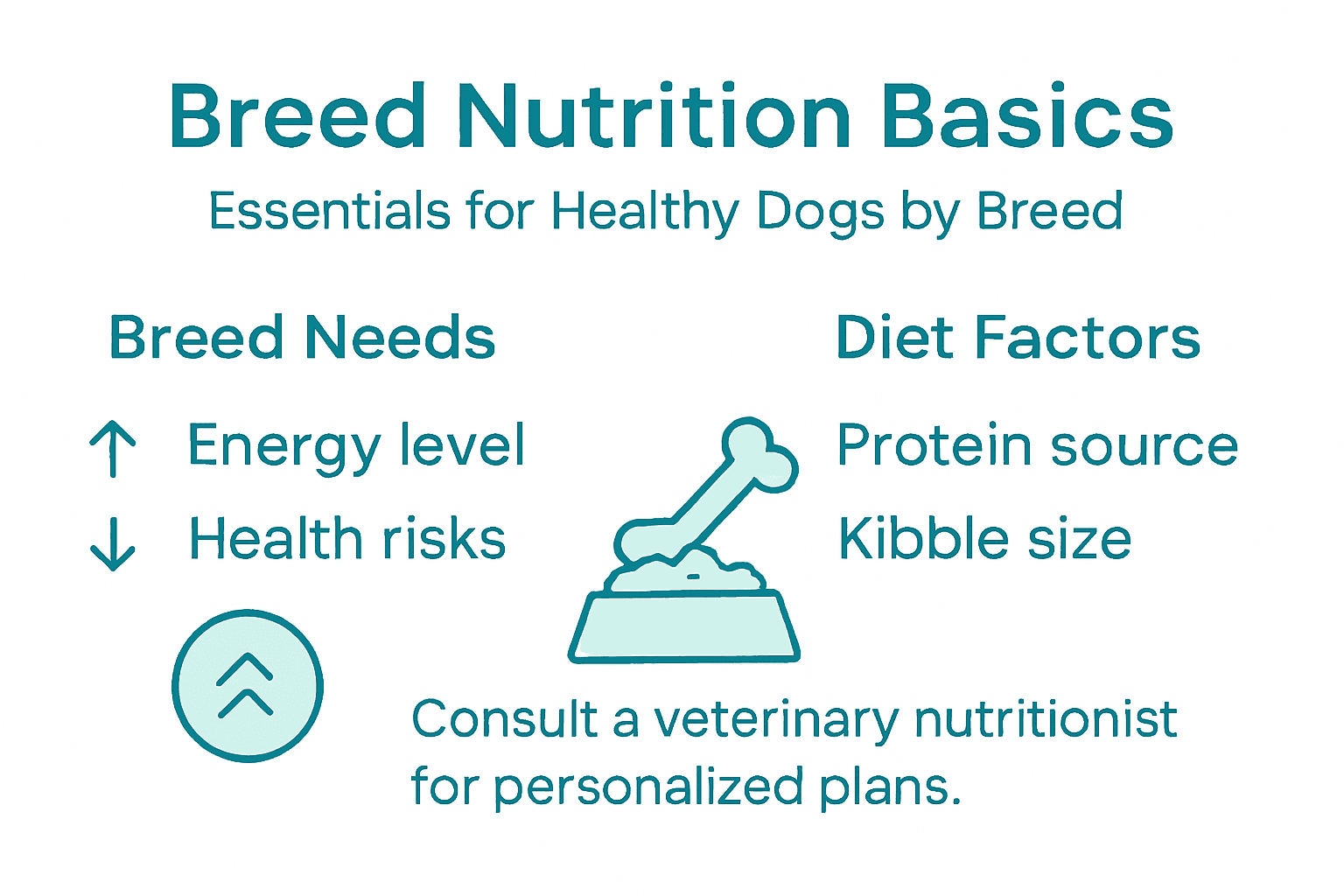
Breed-specific dog foods represent a targeted nutritional approach that goes far beyond generic feeding recommendations. While these specialised diets might seem like a marketing gimmick, they’re actually rooted in scientific understanding of how different dog breeds metabolise nutrients and manage specific health challenges.
Breed-specific nutrition considers multiple critical factors:
- Genetic predispositions to certain health conditions
- Metabolic differences between breed sizes
- Specific energy requirements
- Unique dental and jaw structures
- Potential breed-related sensitivities
Traditional nutrition models treated dogs as a homogeneous group, but modern research reveals profound variations. Breed-specific nutritional requirements demonstrate that a Chihuahua’s dietary needs dramatically differ from those of a Great Dane.
For instance, large breed dogs require carefully balanced calcium and phosphorus levels to support proper bone development and prevent joint issues. Smaller breeds, conversely, need higher-density calories and smaller kibble sizes to match their faster metabolisms.
Ultimate Pet Foods recognises that while breed specificity matters, life stage nutrition remains paramount. Our approach layers breed-specific insights onto fundamental nutritional principles, ensuring every dog receives precisely what their body requires.
Breed-specific nutrition isn’t about complicated formulas — it’s about understanding your dog’s unique biological blueprint.
Key considerations in breed-specific formulations include:
- Precise protein-to-fat ratios
- Targeted vitamin and mineral supplementation
- Kibble size and texture matching breed characteristics
- Supporting breed-specific metabolic tendencies
Genetic diversity plays a significant role in these nutritional strategies. Some breeds, like German Shepherds, are prone to digestive sensitivities, while others like Labrador Retrievers might struggle with weight management.
Pro tip: Always consult with your veterinarian to understand your specific breed’s unique nutritional requirements and potential health predispositions.
Life stage nutrition versus breed focus
Nutrition for dogs isn’t a one-size-fits-all approach. While breed characteristics play a crucial role, life stage nutrition fundamentally determines dietary requirements with far more scientific precision than breed-specific formulations.
Life stage nutrition represents a comprehensive approach to feeding that recognises dogs’ changing physiological needs across different developmental phases:
- Puppy stage: High-energy, growth-supporting nutrition
- Adult stage: Maintenance and balanced health support
- Senior stage: Reduced calories, enhanced nutrient density
- Reproductive stage: Specialised nutritional requirements
Breed differences certainly influence metabolic rates and potential health predispositions, but they are secondary to the fundamental nutritional demands of each life stage. A Great Dane puppy and a Chihuahua puppy, despite their size differences, both require similar core nutritional elements for proper growth and development.

Ultimate Pet Foods understands that nutritional strategies must prioritise physiological needs over breed-specific marketing. Our approach focuses on delivering precisely balanced nutrition that supports dogs through every stage of their lives.
Here is a comparison of breed-specific nutrition and life stage nutrition for dogs:
| Aspect | Breed-specific Nutrition | Life Stage Nutrition |
|---|---|---|
| Main Focus | Genetic, metabolic, and anatomical differences | Age-related physiological needs |
| Targeted Nutrients | Tailored proteins, minerals, kibble texture | Adjusted energy, vitamins, organ support |
| Key Advantage | Addresses breed-linked vulnerabilities | Supports growth, maintenance, senior health |
| Limitation | Not fully individualised, can generalise | May overlook breed predispositions |
| Example Use Case | Feeding a Dachshund with back problems | Feeding a growing puppy or elderly companion |
Life stage nutrition is about meeting biological requirements, not creating breed-specific complexity.
Key nutritional considerations across life stages include:
- Protein quality and digestibility
- Caloric density matching metabolic needs
- Essential vitamin and mineral ratios
- Supporting immune and organ function
Developmental pace varies between breeds, but the fundamental nutritional principles remain consistent. Smaller breeds might mature faster, while larger breeds take longer to reach full development, but their core nutritional needs follow similar scientific principles.
Pro tip: Consult with a veterinary nutritionist to develop a personalised feeding strategy that considers both your dog’s life stage and individual health profile.
Key health needs by breed and condition
Breed-specific health research reveals that different dog breeds possess unique genetic predispositions to specific health conditions, making tailored nutritional support critical for long-term wellness.
Breed health profiles demonstrate significant variations in medical vulnerabilities:
- Large breeds: Joint and bone health challenges
- Small breeds: Dental and metabolic issues
- Brachycephalic breeds: Respiratory and dental complications
- Working breeds: Higher energy and muscle maintenance requirements
Genetic inheritance plays a profound role in determining potential health risks. Some breeds are more susceptible to specific conditions that require targeted nutritional interventions. German Shepherds, for instance, might need enhanced joint support, while Bulldogs could require specialised respiratory and weight management nutrition.
Ultimate Pet Foods recognises that nutritional strategies must address these breed-specific vulnerabilities proactively. Our approach involves developing targeted formulations that support potential genetic predispositions while maintaining overall nutritional balance.
Below is a summary of health priorities for major breed categories:
| Breed Category | Common Health Concern | Nutritional Support Focus |
|---|---|---|
| Large breeds | Joint and bone diseases | Balanced calcium, joint supplements |
| Small breeds | Dental issues, fast metabolism | Small kibble, high nutrient density |
| Brachycephalic breeds | Breathing and dental problems | Weight management, easy-chew formats |
| Working breeds | High energy requirements | Quality protein, sustained calories |
Breed-specific health needs are not marketing gimmicks — they’re scientifically validated nutritional requirements.
Key health considerations by breed category include:
- Genetic disease risk assessment
- Metabolic rate variations
- Potential nutritional deficiency patterns
- Breed-specific organ and system vulnerabilities
Metabolic diversity means that nutrition cannot follow a universal template. A Greyhound’s dietary needs dramatically differ from a Bulldog’s, reflecting their distinct physiological characteristics and potential health challenges.
Pro tip: Request a comprehensive breed-specific health screening from your veterinarian to develop a truly personalised nutrition strategy.
Layering targeted support for unique needs
Comprehensive dog welfare research reveals that effective nutritional support requires a multifaceted approach addressing individual dog needs beyond generic breed classifications.
Targeted nutritional layering involves creating a holistic support strategy that considers multiple interconnected factors:
- Genetic predispositions
- Individual metabolic requirements
- Lifestyle and activity levels
- Specific health vulnerabilities
- Environmental influences
Modern nutritional science recognises that dogs are not simply defined by breed, but by a complex interaction of genetic, environmental, and individual factors. A Labrador Retriever living in a city will have dramatically different nutritional requirements compared to one working on a farm, despite sharing the same breed characteristics.
Ultimate Pet Foods approaches targeted support through our Ultimate+ Functional Health range, which provides specialised nutritional layers designed to address specific health needs while maintaining balanced overall nutrition.
Targeted nutrition is about understanding the individual dog, not just applying breed-based generalisations.
Key strategies for layering nutritional support include:
- Comprehensive health assessment
- Identifying specific metabolic needs
- Adapting nutrition to lifestyle changes
- Regular monitoring and adjustment
Nutritional complexity demands a flexible, personalised approach. What works for one dog may not be optimal for another, even within the same breed, highlighting the importance of individualised nutritional strategies.
Pro tip: Schedule annual nutritional consultations to reassess and fine-tune your dog’s dietary support as their health and lifestyle evolve.
Mistakes to avoid in breed-based feeding
Dog nutrition research reveals that blindly following breed-specific dietary recommendations without professional guidance can lead to significant nutritional missteps.
Common feeding misconceptions that pet owners frequently encounter include:
- Assuming all dogs of the same breed have identical nutritional needs
- Ignoring individual metabolic variations
- Believing breed-specific foods are universally superior
- Overlooking life stage nutritional requirements
- Relying on non-veterinary nutritional advice
Breed generalisations can be dangerously misleading. While breed characteristics provide valuable insights, they represent statistical averages, not individual prescriptions. A German Shepherd raised as a family pet will have dramatically different nutritional requirements compared to one working in search and rescue.
Ultimate Pet Foods emphasises the importance of holistic nutritional assessment. Our approach goes beyond breed labels, considering individual factors such as activity level, health history, and specific metabolic needs.
Breed-specific nutrition is a guideline, not a definitive rulebook for every dog’s dietary needs.
Key mistakes to avoid in breed-based feeding include:
- Overfeeding based on breed stereotypes
- Neglecting individual health variations
- Failing to adjust nutrition with age
- Disregarding veterinary professional advice
Nutritional complexity demands a nuanced approach. What works perfectly for one dog might be entirely inappropriate for another, even within the same breed.
Pro tip: Schedule an annual nutritional consultation with your veterinarian to create a truly personalised feeding strategy tailored to your dog’s unique requirements.
Discover Nutritional Solutions Tailored to Your Dog’s Unique Needs
Understanding your dog’s breed-specific nutritional needs is vital for ensuring their long-term health. Many owners face the challenge of navigating complex dietary information while trying to provide the perfect balance of nutrients that respect both breed genetics and life stage demands. Recognising terms like “genetic predispositions” and “metabolic differences” from the article highlights the importance of specialised nutrition without overlooking fundamental life stage requirements.
Ultimate Pet Foods offers premium, natural, grain-free options that go beyond generic feeding. Whether you own a smaller breed that benefits from our Small Breed Grain Free Dog Food | Freshly Prepared & Natural – Ultimate Pet Foods or are seeking a science-backed formula focused on balanced health through all stages of life, you can trust our carefully crafted products. We invite you to explore Dry Dog Food | Grain-Free & Science-Backed Kibble – Ultimate Pet Foods and find the ideal nutritional support specifically designed to meet your dog’s individual needs.
Take control of your dog’s health today with tailored nutrition that honours both breed and life stage. Visit Ultimate Pet Foods now to select the best options and give your companion the balanced, natural nourishment they deserve. Your dog’s unique blueprint requires a nutritional approach made just for them.
Frequently Asked Questions
What are breed-specific dog foods?
Breed-specific dog foods are specialised diets designed to meet the unique nutritional needs of particular dog breeds, considering factors like genetic predispositions, metabolic differences, and health challenges.
How do breed-specific dog foods differ from general dog foods?
Unlike general dog foods, which follow a one-size-fits-all approach, breed-specific dog foods are tailored to address the unique anatomical and nutritional requirements of specific breeds, ensuring better support for their health and well-being.
Are breed-specific foods necessary for my dog’s nutrition?
While breed-specific foods can provide targeted nutritional support, it is crucial to also consider your dog’s life stage. Consulting with a veterinarian can help determine the best dietary approach for your dog’s individual needs.
What should I consider when choosing dog food for my breed?
When selecting dog food, consider your dog’s breed characteristics, life stage, metabolic rate, and any specific health vulnerabilities. It’s advisable to discuss these factors with a veterinarian for a personalised nutrition strategy.
Recommended
- Breed-Specific Dog Food Explained | Do Dogs Really Need It?
- 7 Best Foods for Small Breeds: A Guide for Pet Owners – Ultimate Pet Foods
- 7 Expert Tips for Choosing Healthy Food for Small Dogs
- Understanding Dog Foods to Avoid for Optimal Health – Ultimate Pet Foods
- Dog Nutrition Basics—Why Balanced Diets Matter for Service Dogs