
All life stages dog food: 68% of owners misunderstand labels
Many dog owners believe grain-free dog food is always healthier, yet true grain allergies affect fewer than 1% of dogs. The term ‘all life stages’ on dog food labels often confuses people, leading to poor nutritional choices for their pets. Understanding what these labels mean and how grain-free options fit into your dog’s dietary needs helps you make informed decisions that truly benefit your pet’s health across every phase of life.
Table of Contents
- What All Life Stages Dog Food Means And Why It Matters
- Grain-Free Dog Food: Facts, Benefits, And Concerns Explained
- Comparing Grain-Free With Grain-Inclusive Dog Foods Across Life Stages
- Practical Guidance: Selecting The Right All Life Stages Grain-Free Dog Food
- Explore Premium Grain-Free Dog Food Options Designed For Every Life Stage
- Frequently Asked Questions
Key takeaways
| Point | Details |
|---|---|
| All life stages food meets requirements for pregnancy, puppy growth, adult maintenance, and senior phases | This designation ensures the formula provides adequate nutrition across your dog’s entire lifespan |
| Grain-free diets can be complete and appropriate when carefully formulated with balanced nutrients | Quality matters more than grain presence for most dogs |
| True grain allergies affect under 1% of dogs, making them extremely rare | Most food sensitivities stem from proteins, not grains |
| Balanced nutrition trumps grain presence for optimal dog health | Focus on complete nutrient profiles rather than grain inclusion alone |
What all life stages dog food means and why it matters
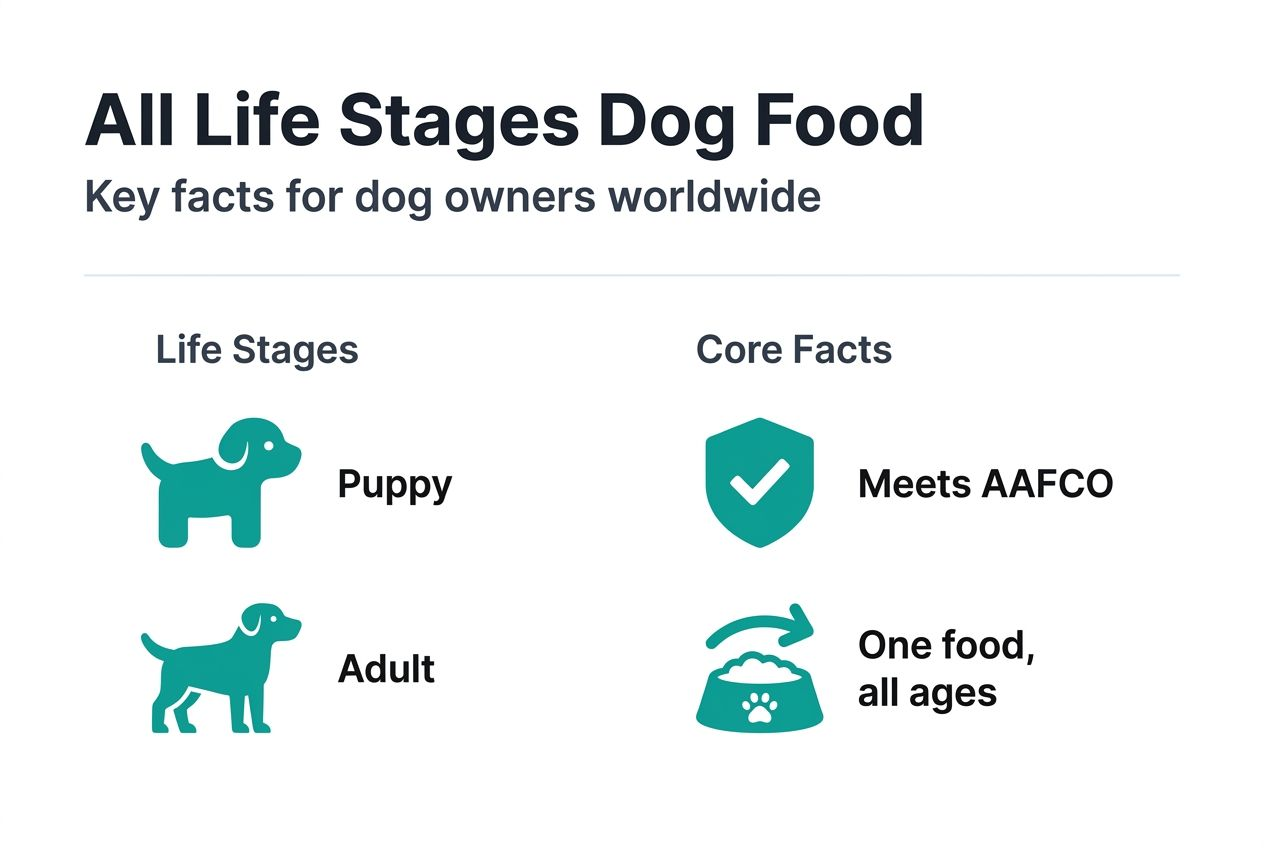
AAFCO Model Regulations define “All Life Stages” as gestation/lactation, growth, and adult maintenance phases. This designation means the food meets the highest nutritional standards required across all these critical periods. Food carrying this label must contain adequate levels of protein, fat, vitamins, and minerals to support the most demanding life stages, particularly growth and reproduction.
Why does this matter for your dog? Pregnant and lactating females need significantly more energy and nutrients than adult dogs at maintenance. Puppies require concentrated nutrition to support rapid growth and development. Adults need sustained energy for daily activities, whilst seniors benefit from maintained muscle mass and joint health.
Life stage dog food nutrition addresses these varying demands through precise formulation. The key life stages covered include:
- Gestation and lactation for pregnant and nursing mothers
- Growth phase for puppies from weaning to maturity
- Adult maintenance for dogs in their prime years
- Senior support for ageing dogs with changing metabolic needs
All life stages formulas solve a practical challenge for multi-dog households. You can feed the same food to your puppy, adult, and senior dogs without maintaining separate inventories. However, portion control becomes crucial since growing puppies need more calories per kilogramme of body weight than adult dogs.
Pro tip: Even with all life stages food, monitor each dog’s body condition individually and adjust portions based on their specific activity level and metabolism.
Grain-free dog food: facts, benefits, and concerns explained
Grain-free dog food replaces traditional grains like wheat, maize, and rice with alternative carbohydrate sources such as sweet potato, peas, and lentils. These formulas typically contain higher protein and fat levels compared to grain-inclusive options. The popularity surge stems partly from human dietary trends, but what does the science actually show?
Grain allergies affect fewer than 1% of dogs, making them exceptionally rare. Most diagnosed food sensitivities in dogs stem from proteins like beef, dairy, or chicken rather than grains. This means the majority of dogs switching to grain-free diets aren’t addressing an actual medical need.
The dilated cardiomyopathy (DCM) concern emerged when some grain-free diets were linked to cardiac issues. Research suggested certain formulas might lack adequate taurine or contain ingredients that interfere with taurine absorption. This sparked legitimate concern amongst veterinarians and pet owners alike.

However, recent controlled studies show no adverse cardiac effects in dogs fed well-balanced grain-free diets over extended periods. The key lies in nutritional completeness. Properly formulated grain-free foods that meet recognised standards pose no inherent health risks.
Understanding the benefits of grain-free diet helps you make informed choices:
- Higher protein content supports muscle maintenance and energy
- Alternative carbohydrates may suit dogs with specific digestive sensitivities
- Novel protein sources benefit dogs with diagnosed food allergies
- Dense nutrition requires smaller portion sizes for some dogs
The grain-free diet safety debate emphasises quality over categorisation. A poorly formulated grain-free food poses risks, just as a poorly formulated grain-inclusive food does. The formula’s overall nutritional balance matters most.
Pro tip: Choose reputable brands that conduct feeding trials and provide transparent ingredient sourcing. Consult your veterinarian if your dog has cardiac risk factors or breed predispositions to DCM.
Comparing grain-free with grain-inclusive dog foods across life stages
How do these diet types stack up nutritionally across different life phases? The table below compares key nutritional aspects:
| Nutritional Factor | Grain-Free Formula | Grain-Inclusive Formula |
|---|---|---|
| Protein content | Typically 25-35% | Usually 20-28% |
| Carbohydrate source | Peas, lentils, sweet potato | Rice, wheat, oats, maize |
| Fat content | Generally higher (15-20%) | Moderate (12-16%) |
| Caloric density | More calories per cup | Fewer calories per cup |
| Fibre sources | Legumes, vegetables | Whole grains, beet pulp |
For puppies, both diet types can meet growth requirements when properly formulated. Grain-free puppy foods often contain more protein, which supports muscle development. Grain-inclusive formulas provide steady energy release through complex carbohydrates. Neither approach holds inherent superiority for healthy puppies.
Adult dogs show similar outcomes on both diet types when formulas meet nutritional standards. Different carbohydrate sources support overall health and cardiac function in adult dogs. Your dog’s individual response matters more than the grain presence itself.
Senior dogs may benefit from grain-free formulas if they develop digestive sensitivities with age. However, whole grains provide beneficial fibre that supports gut health and regular bowel movements. Many seniors thrive on grain-inclusive diets throughout their later years.
Health considerations for sensitive dogs include:
- Dogs with diagnosed grain allergies require grain-free formulas
- Those with protein sensitivities need novel protein sources regardless of grain content
- Digestive issues may improve with either diet type depending on the underlying cause
- Breed-specific predispositions to DCM warrant veterinary consultation before diet changes
The grain-free dog food by life stage selection process should prioritise balanced nutrition over grain ideology. Monitor your dog’s coat quality, energy levels, stool consistency, and body condition. These tangible health markers reveal diet suitability better than ingredient lists alone.
Pro tip: When switching between diet types, transition gradually over 7-10 days by mixing increasing amounts of new food with decreasing amounts of current food to prevent digestive upset.
Practical guidance: selecting the right all life stages grain-free dog food
Choosing optimal nutrition requires systematic evaluation rather than marketing claims. Follow these steps to select grain-free dog food that truly serves your dog’s needs:
- Verify AAFCO compliance for nutritional adequacy by checking the label for “formulated to meet AAFCO Dog Food Nutrient Profiles for All Life Stages” or similar wording
- Examine the ingredient list for named protein sources as the first ingredients, such as chicken, beef, or salmon rather than generic “meat meal”
- Confirm the presence of essential nutrients including taurine, L-carnitine, and omega fatty acids that support cardiac and overall health
- Research the manufacturer’s quality control processes, recall history, and feeding trial participation
- Calculate the cost per day based on your dog’s weight and the recommended feeding amounts, not just the bag price
- Consult your veterinarian, especially if your dog has existing health conditions, breed-specific risks, or suspected food sensitivities
The life stage nutrition guide provides detailed breakdowns of nutritional requirements. Pay attention to minimum protein and fat levels for your dog’s current life stage. Puppies and pregnant dogs need higher nutrient concentrations than adult dogs at maintenance.
Label reading reveals crucial information beyond marketing promises. Look for specific percentages of crude protein, crude fat, and moisture content. Check for named vitamin and mineral supplements that ensure nutritional completeness.
Observing your dog’s response provides the ultimate assessment. Watch for these positive indicators:
- Healthy skin and glossy coat within 6-8 weeks
- Consistent energy levels appropriate for age and breed
- Well-formed stools without excessive gas or digestive upset
- Maintaining ideal body condition without excessive weight gain or loss
- Enthusiasm for meals without signs of food aversion
Negative signs requiring diet reassessment include persistent digestive issues, coat deterioration, lethargy, or unexplained weight changes. These symptoms warrant veterinary consultation to rule out underlying health problems before attributing them solely to diet.
Pro tip: Keep a simple food diary tracking your dog’s response during diet transitions, noting energy levels, stool quality, and any changes in behaviour or appetite to identify patterns.
Explore premium grain-free dog food options designed for every life stage
Ultimate Pet Foods offers grain-free dog food by life stage that combines premium ingredients with balanced nutrition tailored to your dog’s specific needs. Each formula meets rigorous standards for all life stages, ensuring your puppy, adult, or senior dog receives complete nutrition.
Our grain-free range emphasises ingredient transparency and nutritional completeness. Discover the grain-free diet benefits through carefully selected proteins, vegetables, and functional ingredients that support digestion, coat health, and vitality. The grain-free dog food ingredients guide explains our sourcing philosophy and nutritional approach. Explore our range to find the perfect match for your dog’s individual requirements.
Frequently asked questions
What are all life stages in dog food?
All life stages dog food meets nutritional requirements for pregnant females, growing puppies, adult dogs, and senior dogs. The formula complies with recognised nutrient profiles ensuring complete and balanced nutrition across your dog’s entire lifespan.
Is grain-free dog food better for all dogs?
Grain-free diets primarily benefit dogs with diagnosed grain allergies or sensitivities, which affect fewer than 1% of dogs. Most dogs thrive on either grain-free or grain-inclusive diets when the formula provides balanced, complete nutrition meeting recognised standards.
Can grain-free dog food cause heart problems?
Early studies linked certain grain-free diets with dilated cardiomyopathy (DCM) in some dogs. Recent controlled research shows well-balanced grain-free foods pose no cardiac risks when nutritionally complete. Choose reputable brands that conduct feeding trials and meet AAFCO standards.
How do I choose the best dog food for my pet’s life stage?
Check food labels for all life stages compliance or specific life stage designations matching your dog’s current phase. Consider your dog’s age, breed characteristics, activity level, and any health conditions whilst consulting your veterinarian. Prefer brands following AAFCO nutritional guidelines with transparent ingredient sourcing and quality control processes.