
Are Grains Bad for Dogs? Key Impacts Explained
Choosing the right food for a sensitive dog can feel confusing when so many options promise allergy relief. For British pet owners who care about nutrition and wellbeing, understanding grains in dog food is key. Although terms like ‘cereals’ include wheat, rice, oats, barley, and maize, vague labelling means you might not know which grains you are actually feeding your dog. This introduction explores how grain quality and type affect nutritional value and allergenic potential, helping you make informed choices.
Table of Contents
- Grains In Dog Food: What They Are
- Nutritional Role Of Grains For Dogs
- Common Allergies And Grain Sensitivities
- Grain-Free Diets: Facts And Risks
- How To Choose The Right Dog Food
Key Takeaways
| Point | Details |
|---|---|
| Role of Grains in Nutrition | Grains provide essential nutrients, including carbohydrates, fibre, and B-vitamins, supporting overall canine health. |
| Understanding Sensitivities | Some dogs may have sensitivities or allergies to certain grains, necessitating careful observation of their dietary reactions. |
| Grain-Free Diet Considerations | Grain-free diets may lead to nutritional deficiencies and are not suited for most dogs unless medically indicated. |
| Choosing Appropriate Dog Food | Factors such as the dog’s age, activity level, and health conditions should guide the selection of dog food for optimal nutrition. |
Grains in Dog Food: What They Are
In the world of canine nutrition, grains represent a complex and often misunderstood ingredient category in dog food. Cereal products like wheat, rice, oats, barley, and maize form the core of what we define as grains in commercial pet nutrition.
Grains are essentially the edible seeds of grass-like plants, which have been cultivated for thousands of years as a fundamental human and animal food source. In dog food, these ingredients serve multiple nutritional purposes beyond simple calorie provision. They contribute essential nutrients including:
- Carbohydrates for energy
- Dietary fibre for digestive health
- Complex proteins
- B-vitamins
- Minerals like selenium and magnesium
However, not all grains are created equal. The quality and processing of grains can dramatically impact their nutritional value. Some dogs might have specific sensitivities or allergies to certain grain types, which makes understanding their composition crucial for pet owners.
Commercial dog foods typically use grains in various forms - whole grains, refined grains, or grain by-products. Whole grains retain more nutrients and provide better nutritional density compared to highly processed alternatives. Rice, for instance, is often considered more digestible than wheat for many dogs.
Here’s a comparison of common grains found in dog food and their nutritional highlights:
| Grain Type | Protein Quality | Digestibility Level | Key Nutrients |
|---|---|---|---|
| Wheat | Moderate, incomplete | Medium | B-vitamins, fibre |
| Rice | Low, incomplete | High | Magnesium, selenium |
| Oats | Moderate, incomplete | Medium-High | Iron, manganese, fibre |
| Barley | Moderate, incomplete | Medium | Selenium, phosphorus |
| Maize (corn) | Low, incomplete | Medium | Antioxidants, vitamin E |
| Quinoa | High, complete | High | All essential amino acids |
Pro tip: Always review dog food ingredient labels carefully to understand the specific grains used and their nutritional contribution to your pet’s diet.
Nutritional Role of Grains for Dogs
Dogs are omnivorous animals with complex nutritional needs, and grains play a significant role in meeting those requirements. Nutritional benefits of grains for dogs extend far beyond simple energy provision, offering a range of essential nutrients that support overall canine health.
The primary nutritional contributions of grains include:
- Carbohydrate-based energy source
- Complex protein profiles
- Essential B-vitamins
- Dietary minerals
- Soluble and insoluble fibre for digestive health
Whole grains provide a more comprehensive nutritional profile compared to refined grains. They contain the entire grain kernel, including the bran, germ, and endosperm, which means they retain more nutrients and offer superior nutritional density. Brown rice, for instance, contains more vitamins, minerals, and fibre than white rice.

Protein quality in grains varies considerably. Some grains like quinoa offer complete protein profiles, containing all essential amino acids that dogs require for muscle maintenance and cellular repair. This makes them particularly valuable in balanced dog nutrition.
Not all dogs metabolise grains identically. While most dogs can effectively digest and benefit from grain-based nutrients, some individuals might have specific sensitivities. Understanding individual dog dietary needs becomes crucial in determining the most appropriate nutritional approach.
Pro tip: Consult with a veterinary nutritionist to understand your specific dog’s unique nutritional requirements and potential grain sensitivities.
Common Allergies and Grain Sensitivities
Dogs can experience various sensitivities to grains, with wheat, corn, and barley being the most common culprits. Grain allergies in dogs manifest through multiple symptoms that can significantly impact a dog’s overall health and comfort.
Typical signs of grain-related allergies include:
- Persistent skin itching
- Recurring ear infections
- Digestive disruptions
- Excessive licking or chewing of paws
- Recurring hot spots
- Unexplained weight loss
Allergic reactions occur when a dog’s immune system misidentifies specific grain proteins as harmful invaders. This immune response triggers inflammatory processes, causing various physiological reactions. Some dogs develop immediate hypersensitivity, while others might experience delayed allergic responses that develop over weeks or months.
Not all grain sensitivities are true allergies. Some dogs might simply have difficulty digesting certain grain types, which is more accurately described as a food intolerance. These digestive sensitivities can cause bloating, gas, and inconsistent stool quality without triggering a full immune response.
Approximately 10-15% of dogs experience some form of grain-related dietary sensitivity, making careful nutrition monitoring crucial.
Identifying specific grain sensitivities requires systematic observation and potentially professional veterinary guidance. Allergen-free dog food strategies can help pet owners navigate nutritional challenges effectively.
Pro tip: Consider maintaining a detailed food diary documenting your dog’s dietary intake and corresponding health responses to help identify potential grain sensitivities.
Grain-Free Diets: Facts and Risks
Is grain-free safe for dogs is a complex question that demands careful consideration. Despite popular marketing claims, grain-free diets are not universally beneficial for all dogs and can potentially introduce nutritional complications.
Key considerations about grain-free diets include:
- Potential nutrient deficiencies
- Higher cost compared to traditional diets
- Possible increased cardiovascular risks
- Limited scientific evidence supporting broad benefits
- Individual dog metabolic variations
Contrary to widespread belief, most dogs do not require grain-free nutrition. Veterinary research indicates that grain-free diets often replace grains with alternative carbohydrate sources like potatoes or legumes, which may not provide superior nutritional profiles.
Only a small percentage of dogs genuinely require grain-free diets due to specific medical conditions or confirmed grain allergies.
Some grain-free diets might inadvertently compromise a dog’s nutritional balance. Grains contribute essential nutrients including fibre, vitamins, and minerals that alternative ingredients may not adequately replace. The trend towards grain-free feeding has raised concerns among veterinary nutritionists about potential long-term health implications.
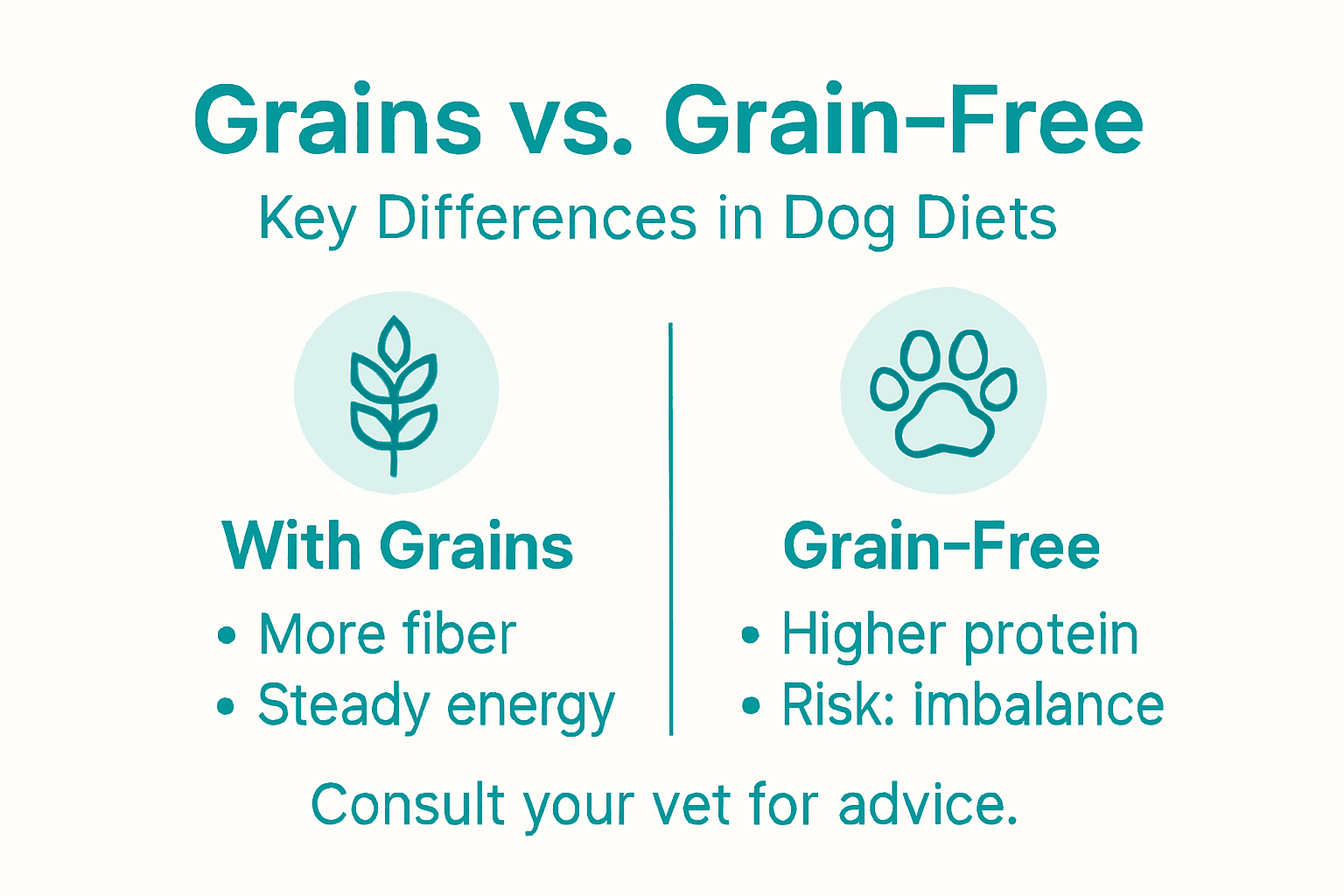
Pro tip: Consult a veterinary nutritionist before transitioning your dog to a grain-free diet to ensure comprehensive nutritional adequacy.
The following table outlines how to approach the choice between grain-inclusive and grain-free dog foods:
| Diet Type | Best For | Major Risks | Key Nutritional Note |
|---|---|---|---|
| Grain-inclusive | Most healthy dogs | Possible allergies in some dogs | Provides dietary fibre and minerals |
| Grain-free | Dogs with confirmed grain sensitivities | Potential nutrient imbalances | Alternative carbs may lack nutrients |
How to Choose the Right Dog Food
Choosing dog food requires careful consideration of multiple factors that impact your dog’s overall health and nutritional needs. Understanding your dog’s unique requirements is the foundational step in selecting an appropriate diet.
Key factors to evaluate when selecting dog food include:
- Age and life stage
- Breed size and metabolic requirements
- Activity level and energy needs
- Existing health conditions
- Potential allergies or sensitivities
- Nutritional quality of ingredients
- Protein and nutrient balance
Dogs have diverse nutritional needs that change throughout their lifetime. Puppies require different nutrient profiles compared to senior dogs, with specific emphasis on growth, maintenance, and age-related health support. Reading ingredient labels becomes crucial in understanding the actual nutritional value of commercial dog foods.
High-quality dog food should list a specific protein source as the first ingredient, indicating genuine meat content rather than generic meat by-products.
Nutritional completeness matters more than trendy dietary claims. While grain-free or speciality diets might seem appealing, they don’t automatically translate to superior nutrition. Professional veterinary guidance can help determine the most appropriate dietary strategy for your individual dog.
Pro tip: Consult with a veterinary nutritionist annually to reassess and fine-tune your dog’s dietary requirements as they age and their health needs evolve.
Discover the Best Nutrition Choices for Your Dog’s Wellbeing
Understanding if grains are suitable for your dog can feel overwhelming especially with concerns about allergies and sensitivities. This article highlights key challenges like digestive issues and allergic reactions caused by common grains. Many owners are searching for natural, hypoallergenic options that provide complete nutrition without compromising health.
At Ultimate Pet Foods, we specialise in premium, natural grain-free dog foods designed to support your dog’s unique dietary needs. Our wide collections feature ingredients carefully chosen to promote optimal digestion and overall vitality. Whether you want to manage your dog’s weight or improve coat condition, we have targeted formulas ready for your dog’s life stage and breed.

Explore our grain-free options today and take control of your dog’s health with confidence. Visit Ultimate Pet Foods now to find the perfect tailored nutrition that helps your dog thrive without the worry of grain-related sensitivities. For dogs needing specific support, see our Weight Loss Dog Food UK range designed for healthier lifestyles.
Frequently Asked Questions
Are grains harmful to all dogs?
Not all dogs are harmed by grains. Most dogs digest grains well and benefit from the nutrients they provide. However, some dogs may have specific sensitivities or allergies to certain grains, particularly wheat, corn, and barley.
What are the benefits of including grains in dog food?
Grains provide essential nutrients such as carbohydrates for energy, B-vitamins, dietary fibre for digestive health, and minerals like selenium and magnesium. Whole grains retain more nutrients and offer a more balanced nutritional profile.
Can grain-free diets be harmful to dogs?
Grain-free diets can potentially lead to nutrient deficiencies and compromise a dog’s overall health if not properly balanced. Many dogs do not require grain-free diets, and only a small percentage are recommended to avoid grains due to allergies.
How can I identify if my dog has a grain sensitivity?
Signs of grain sensitivity can include persistent skin itching, digestive issues, and recurrent ear infections. Maintaining a detailed food diary and consulting a veterinary nutritionist can help in identifying any adverse reactions to grains.