
How to choose natural dog food for your dog's unique needs
Choosing the right natural dog food can feel overwhelming when you want the absolute best for your four-legged companion. With countless brands promising premium quality and tailored nutrition, how do you separate genuine natural options from marketing hype? This guide walks you through assessing your dog’s specific requirements, understanding ingredients, evaluating quality standards, and making confident decisions about natural and grain-free diets that truly support your dog’s health and vitality.
Table of Contents
- Understanding Your Dog’s Unique Dietary Needs
- Decoding Natural Dog Food: Ingredients And Grain-Free Options
- Evaluating Premium Natural Dog Food Brands And Quality Standards
- Feeding Your Dog Naturally: Step-By-Step Selection And Transition Guide
- Explore Premium Natural Dog Food Options At Ultimate Pet Foods
- Frequently Asked Questions
Key takeaways
| Point | Details |
|---|---|
| Assess individual needs | Consider your dog’s breed, age, size, activity level, and existing health conditions before selecting food. |
| Understand natural ingredients | Natural means recognisable ingredients without artificial additives, but doesn’t guarantee nutritional balance. |
| Verify quality standards | Check for AAFCO approval and ingredient transparency rather than relying solely on price. |
| Transition gradually | Introduce new natural food over 7-10 days to prevent digestive upset and monitor your dog’s response. |
| Consider grain-free carefully | Grain-free diets benefit sensitive dogs but aren’t necessary for all, so consult your vet first. |
Understanding your dog’s unique dietary needs
Before exploring natural dog food options, you need to evaluate your dog’s unique needs including breed, age, size, activity level, and health status. Every dog has distinct nutritional requirements that change throughout their life, and understanding these factors forms the foundation of selecting appropriate food.
Breed characteristics significantly influence dietary needs. Large breeds like Great Danes require controlled calcium levels during growth to prevent skeletal issues, whilst working breeds such as Border Collies need higher protein and fat content to fuel their energy demands. Some breeds carry genetic predispositions to food sensitivities. Bulldogs often struggle with grain allergies, making breed specific dog foods needs particularly relevant when selecting natural options.
Life stage dramatically affects nutritional requirements. Puppies need higher protein and fat ratios to support rapid growth and development, typically requiring foods with 22-32% protein content. Adult dogs maintain health with moderate protein levels around 18-25%, whilst choosing dog food for senior dogs naturally often means reducing calories but maintaining protein to preserve muscle mass. Understanding life stage dog food nutrition by age ensures you’re meeting your dog’s current needs rather than feeding a one size fits all diet.

Size and activity level create substantial variation in caloric requirements. A sedentary Chihuahua might need only 150 calories daily, whilst an active Labrador could require 1,800 calories or more. Active dogs benefit from higher fat content for sustained energy, whereas less active pets need calorie restriction to prevent obesity. Calculate your dog’s ideal caloric intake based on their weight and activity to avoid overfeeding or underfeeding.
Existing health conditions demand special consideration. Dogs with kidney disease require restricted protein and phosphorus, whilst those with pancreatitis need low fat diets. Food allergies manifest as skin irritation, ear infections, or digestive upset, often requiring elimination diets to identify triggers. When finding the best natural dog food, match ingredients to your dog’s specific health requirements rather than choosing based on trends.
Pro Tip: Schedule regular veterinary consultations as your dog ages or their health changes. Your vet can recommend blood work to identify emerging issues like kidney function decline or thyroid problems that require dietary adjustments before symptoms become severe.
Decoding natural dog food: ingredients and grain-free options
The term natural on dog food labels carries specific meaning. Natural means recognisable ingredients without artificial colours, flavours, or preservatives, but this doesn’t automatically guarantee nutritional completeness or superior health benefits. You need to look beyond marketing language to understand what’s actually in the bag.
Genuine natural dog food ingredients include whole meats like chicken, beef, or fish as primary protein sources, identifiable vegetables such as sweet potatoes and peas, and natural preservatives like mixed tocopherols (vitamin E). Avoid foods listing vague terms like meat meal or animal by-products without specifying the source. Quality natural foods clearly identify every ingredient, allowing you to trace exactly what your dog consumes.
Many owners confuse natural with organic or assume natural automatically means healthier. Natural simply describes ingredient processing and excludes synthetic additives, but says nothing about nutritional balance, ingredient quality, or farming practices. A natural food could still contain low quality protein sources or inappropriate nutrient ratios. Always verify that natural foods meet AAFCO standards for complete and balanced nutrition rather than assuming the natural label guarantees adequacy.
Grain-free diets have gained popularity, particularly for dogs with sensitivities. Grain-free diets help dogs with allergies by eliminating common triggers like wheat, corn, and soy, but grains are acceptable if your dog tolerates them. Understanding grain free dog food basics guide helps you determine whether this approach suits your dog’s needs.
Recent concerns about grain-free diets and dilated cardiomyopathy (DCM) warrant attention. Some grain-free formulas use legumes and potatoes as primary ingredients, potentially interfering with taurine absorption in susceptible breeds. This doesn’t mean grain-free diets are inherently dangerous, but you should choose formulas with adequate taurine levels and consult your vet if your breed carries DCM risk. Learn why grain free diets benefit sensitive dogs whilst understanding the limitations.
| Diet Type | Advantages | Disadvantages |
|---|---|---|
| Grain-free | Eliminates common allergens; higher protein content; suits sensitive digestion | Potentially higher cost; DCM concerns with some formulas; not necessary for all dogs |
| Grain-inclusive | Often more affordable; provides fibre and nutrients; suitable for most dogs | May trigger allergies in sensitive dogs; lower protein in some formulas |
When choosing the right dog food, prioritise your dog’s individual response over dietary trends. Some dogs thrive on grain-inclusive natural diets, whilst others show dramatic improvement switching to grain-free options. Monitor your dog’s coat condition, energy levels, stool quality, and skin health when evaluating any diet change.
Pro Tip: Introduce new foods gradually over 7-10 days, mixing increasing amounts with the old food. Watch for signs of intolerance like loose stools, vomiting, or increased scratching, and consult your vet if symptoms persist beyond the transition period.
Evaluating premium natural dog food brands and quality standards
Identifying trustworthy premium natural dog food brands requires understanding quality standards and comparing options objectively. The Association of American Feed Control Officials (AAFCO) sets nutritional standards that reputable brands follow. Look for statements confirming foods meet AAFCO profiles for specific life stages, ensuring nutritional completeness.
Premium natural dog foods typically cost £2-4 per pound compared to conventional options at £0.50-1.50, but higher price doesn’t automatically indicate better quality. Some expensive brands invest heavily in marketing rather than ingredient quality, whilst certain mid-range options offer excellent nutrition. Evaluate cost per feeding rather than per bag, as nutrient-dense foods require smaller portions.
Several brands consistently deliver quality natural and grain-free options. Stella & Chewy’s, Open Farm, and Wellness Core offer transparent ingredient sourcing and meet AAFCO standards. These brands typically feature named meat proteins as first ingredients, avoid artificial additives, and provide detailed nutritional information. However, the best brand for your dog depends on their specific needs rather than general reputation.
| Brand Category | Price Range (per kg) | Key Features | Certifications |
|---|---|---|---|
| Premium Natural | £8-15 | Named proteins, transparent sourcing, no artificial additives | AAFCO approved, often organic certified |
| Mid-Range Natural | £4-8 | Quality ingredients, some transparency, minimal additives | AAFCO approved |
| Budget Natural | £2-4 | Basic natural ingredients, less transparency | May lack AAFCO approval |
Follow these steps to evaluate natural dog food brands effectively:
- Verify AAFCO approval by checking for feeding trial statements or nutrient profile confirmation on packaging.
- Examine the ingredient list, ensuring named meat proteins appear in the first three ingredients.
- Research the manufacturer’s reputation, including recall history and transparency about sourcing.
- Compare guaranteed analysis percentages for protein, fat, and fibre against your dog’s requirements.
- Check for third-party testing or quality certifications beyond basic regulatory compliance.
- Read recent customer reviews focusing on long-term feeding experiences rather than initial palatability.
Ingredient transparency separates quality brands from mediocre options. Premium manufacturers specify protein sources (chicken, not poultry), identify vegetable types (sweet potatoes, not root vegetables), and explain their sourcing practices. This transparency allows you to make informed decisions and avoid potential allergens. Explore the natural dog diet guide 2026 to understand how ingredient quality affects allergy management.
If your dog shows reluctance towards certain foods, the dog food for picky eaters guide offers strategies for encouraging acceptance whilst maintaining nutritional standards. Palatability matters, but shouldn’t compromise ingredient quality or nutritional appropriateness.
Feeding your dog naturally: step-by-step selection and transition guide
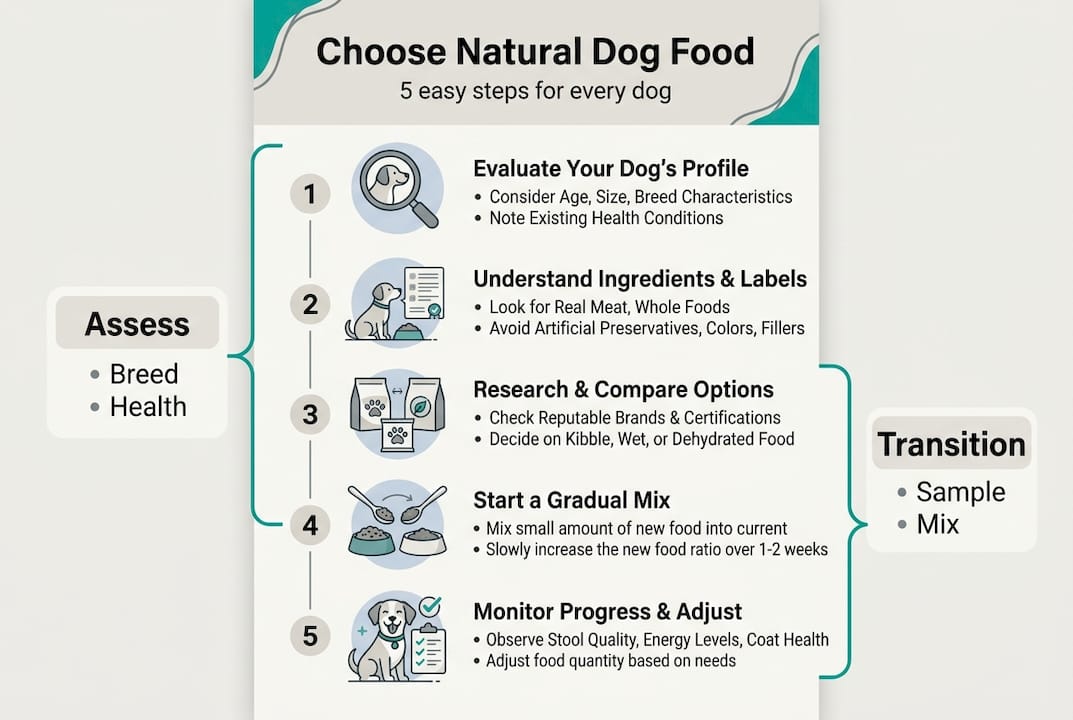
Selecting and transitioning to natural dog food requires a systematic approach to ensure success. Following clear steps minimises confusion and helps you make confident decisions that support your dog’s health.
Step 1: Assess your dog’s needs and consult your vet
Evaluate your dog’s unique requirements including breed characteristics, life stage, activity level, and health conditions. Schedule a veterinary consultation to discuss dietary changes, particularly if your dog has existing health issues or takes medications. Your vet can recommend blood work to identify underlying conditions affecting nutritional needs, such as kidney function or thyroid levels.
Step 2: Research ingredients and suitable brands
Create a shortlist of natural dog food brands meeting AAFCO standards and matching your dog’s requirements. Compare ingredient lists, focusing on named protein sources and absence of artificial additives. Consider grain-free options if your dog shows signs of grain sensitivity, but don’t assume grain-free is necessary without evidence of intolerance.
Step 3: Compare diets considering allergies and breed needs
Narrow your options by eliminating foods containing known allergens or ingredients your dog has reacted to previously. Match protein sources to your dog’s preferences and tolerance. Large breed puppies need controlled calcium levels, whilst senior dogs benefit from joint-supporting ingredients like glucosamine. Factor in breed-specific considerations when making final selections.
Step 4: Purchase samples or small quantities for testing
Avoid buying large bags before confirming your dog accepts the food. Many premium brands offer sample sizes, or you can explore options like dog food tailored for your furry friend through sample boxes. This approach minimises waste and financial risk whilst determining palatability and digestibility.
Step 5: Transition gradually over 7-10 days
Begin with 25% new food mixed with 75% current food for days 1-3. Increase to 50/50 for days 4-6, then 75% new food for days 7-9, before feeding 100% new food from day 10. This gradual transition allows your dog’s digestive system to adjust and helps identify any intolerance issues. Compare options using resources like dry dog food UK to make informed choices.
Avoid these common transition mistakes:
- Switching foods abruptly, causing digestive upset and creating negative associations with the new food
- Mixing too many new foods simultaneously, making it impossible to identify problematic ingredients
- Giving up too quickly if your dog initially refuses the food, as some dogs need time to accept new flavours
- Ignoring signs of intolerance like persistent loose stools or vomiting beyond the transition period
- Failing to adjust portion sizes, as natural foods often have different caloric density than previous diets
Pro Tip: Monitor stool quality throughout the transition. Ideal stools are firm, well-formed, and easy to pick up. Consistently loose stools, mucus, or blood indicate intolerance requiring veterinary attention. Similarly, watch appetite and energy levels, as decreased interest in food or lethargy may signal the diet isn’t suitable.
Explore premium natural dog food options at Ultimate Pet Foods
Now that you understand how to evaluate and select natural dog food, discovering quality options becomes your next step. Ultimate Pet Foods specialises in premium natural and grain-free dog foods designed to meet diverse dietary requirements. Their curated range focuses on fresh ingredients, hypoallergenic properties, and tailored nutrition for different breeds and life stages.
Whether your dog needs grain-free options for sensitivity management or breed-specific formulations, Ultimate Pet Foods offers transparent ingredient sourcing and scientifically backed nutrition. Explore the benefits of a grain-free diet for your dog to understand how these diets support digestive health and reduce allergic reactions. The grain-free dog food ingredients guide provides detailed information about alternative carbohydrate sources and their nutritional benefits.
If you’re uncertain which formula suits your dog best, consider the tailored dog food sample box to test multiple options before committing to larger quantities. This approach allows you to observe your dog’s response to different proteins and formulations whilst minimising waste. Ultimate Pet Foods combines educational resources with quality products, supporting your journey towards optimal canine nutrition.
Frequently asked questions
What should I look for on natural dog food labels?
Examine the ingredient list first, ensuring named meat proteins like chicken or beef appear within the first three ingredients rather than vague terms like meat meal. Look for AAFCO approval statements confirming the food meets nutritional standards for your dog’s life stage. Natural on labels means ingredients lack artificial colours, flavours, or preservatives, but verify this by checking for recognisable ingredients like sweet potatoes and blueberries rather than chemical additives. Grain-free indicates absence of wheat, corn, rice, and other grains, though this doesn’t automatically make the food superior unless your dog has grain sensitivities.
Is grain-free dog food always better for my dog?
Grain-free diets benefit dogs with confirmed grain allergies or sensitivities, often reducing symptoms like skin irritation and digestive upset. However, most dogs tolerate grains perfectly well, making grain-free unnecessary unless specific issues exist. Recent concerns about grain-free diets and heart disease in certain breeds mean you should consult your vet before switching, particularly for breeds predisposed to dilated cardiomyopathy. Understanding benefits of grain free diets helps you make informed decisions based on your dog’s individual needs rather than dietary trends.
How can I transition my dog to a natural diet safely?
Transition gradually over 7-10 days by mixing increasing proportions of new food with the current diet. Start with 25% new food for the first 2-3 days, increase to 50% for days 4-6, then 75% for days 7-9 before feeding entirely new food. Monitor stool quality, appetite, and energy levels throughout the transition. Watch for signs of intolerance like persistent loose stools, vomiting, or increased scratching that continue beyond the adjustment period. Avoid switching foods abruptly, as this commonly causes digestive upset and may create negative associations with the new food.
How do I know if my dog has a food allergy requiring natural alternatives?
Food allergies typically manifest as chronic ear infections, excessive scratching, red or inflamed skin, hair loss, or digestive issues like vomiting and diarrhoea. These symptoms persist despite flea control and other treatments, distinguishing them from environmental allergies. Your vet can recommend an elimination diet using novel protein sources to identify triggers. Common allergens include beef, dairy, wheat, chicken, and soy. Natural dog foods often avoid these common triggers and use limited ingredient formulations, making them suitable for allergy management once you’ve identified problematic ingredients through veterinary guidance.
Recommended
- 7 Key Tips for Choosing Dog Food for Senior Dogs Naturally
- How to Choose Dog Food: A Step-by-Step Guide for Healthy Dogs
- 7 Essential Tips for Choosing Dog Vitamins and Supplements
- 7 Expert Tips for Choosing Healthy Food for Small Dogs
- Guide complet compléments digestion canine 2026 – Bounty Premium – Compléments pour chiens