
Dog Food for Picky Eaters: Ensuring Healthy Nutrition
Over half of British pet owners report that their dogs turn up their noses at standard food, making mealtimes stressful and frustrating. For health-conscious owners, deciphering picky feeding habits feels even more urgent when dietary sensitivities are at play. Learn how to recognise subtle mealtime signals and explore practical strategies for selecting premium, grain-free nutrition that supports your dog’s wellbeing and fits even the choosiest appetite.
Table of Contents
- Step 1: Identify Specific Feeding Behaviours And Preferences
- Step 2: Select Suitable Grain-Free Dog Food Formulas
- Step 3: Prepare Meals To Maximise Appeal For Picky Eaters
- Step 4: Introduce New Foods And Monitor Acceptance
- Step 5: Assess Nutritional Improvements And Satisfaction
Quick Summary
| Main Insight | Explanation |
|---|---|
| 1. Observe feeding behaviours | Keep a detailed record of your dog’s eating habits to identify preferences and potential health issues. |
| 2. Choose quality grain-free food | Select dog food with high-quality proteins and nutritional balance tailored to your dog’s life stage. |
| 3. Enhance meal appeal | Experiment with textures, temperatures, and serving methods to make meals more enticing for picky eaters. |
| 4. Introduce new foods slowly | Gradually incorporate new ingredients to minimise digestive disruptions and monitor acceptance. |
| 5. Monitor nutritional progress | Track health indicators like coat condition, energy level, and stool quality to assess dietary effectiveness. |
Step 1: Identify specific feeding behaviours and preferences
Understanding your dog’s unique eating habits requires careful observation and attention to subtle variations in their feeding patterns. Research from the Dog Genome Project reveals that feeding behaviours can significantly differ across dog breeds due to genetic variations, meaning what works for one pup might not suit another.
Effective identification of feeding preferences involves tracking several key indicators. Watch for signals such as food selectivity, timing of meals, eating speed, and reaction to different textures or flavours. Some dogs might consistently push away certain kibble sizes or show reluctance towards specific protein sources. Others may display excitement only for particular meal types. Pay attention to body language like ear positioning, tail movement, and overall enthusiasm during mealtimes. These nuanced behaviours provide critical insights into your dog’s dietary preferences.
Consistent observation helps you understand whether your dog’s feeding behaviour represents typical variation or potentially signals an underlying health concern. Documenting these patterns can help you adjust nutrition strategies and ensure your furry companion receives optimal nourishment tailored to their individual needs.
Expert advice: Keep a detailed food diary noting your dog’s reactions, preferences, and any unusual eating patterns to help identify trends and potential dietary adjustments.
To help distinguish among picky eating behaviours, here is a comparison of feeding signals and their likely meanings:
| Feeding Signal | Possible Interpretation | Suggested Action |
|---|---|---|
| Sniffing then refusal | Dislikes food odour or flavour | Try alternative protein source |
| Delayed eating | Prefers eating later | Adjust mealtime schedule |
| Selects certain kibble | Shows texture preference | Experiment with food formats |
| Excitement at bowl change | Responds to novelty | Rotate bowls and presentation |
| Slow chewing or hesitation | Possible dental discomfort | Assess dental health; softer food |
Step 2: Select suitable grain-free dog food formulas
Choosing an appropriate grain-free dog food formula requires thoughtful consideration of your dog’s individual nutritional needs and health requirements. Government guidance on animal welfare strategies emphasises the importance of selecting nutritionally balanced diets based on scientific evidence and veterinary recommendations.

When selecting a grain-free formula, evaluate key factors such as protein source quality, ingredient transparency, and nutritional completeness. Look for recipes that feature high-quality proteins like freshly prepared meats as the primary ingredient, ensuring your dog receives essential amino acids and nutrients. Consider your dog’s age, breed, weight, and any specific health conditions. Puppies, adult dogs, and senior canines have varying nutritional requirements, so choose formulas specifically designed for their life stage. Pay attention to added functional ingredients like prebiotics, which support digestive health, and avoid formulas with excessive fillers or artificial additives.
Ultimately, grain-free dog food should provide a balanced, nutritionally complete diet that supports your dog’s overall wellbeing. Consult with your veterinarian to determine the most suitable formula for your dog’s unique dietary needs, ensuring you’re making an informed choice that prioritises their health and vitality.
Expert advice: Always introduce new dog food gradually by mixing it with the current diet to minimise digestive disruption and monitor your dog’s response to the new formula.
Step 3: Prepare meals to maximise appeal for picky eaters
Strategies for making dog meals more enticing involve understanding and addressing your dog’s unique sensory preferences and mealtime experiences. Transforming mealtime from a potential challenge into an enjoyable moment requires creativity, patience, and a strategic approach to food presentation and preparation.
Start by experimenting with different textures, temperatures, and serving techniques that might capture your dog’s interest. Warm the food slightly to enhance its aroma, which can stimulate appetite and make the meal more appealing. Consider adding small amounts of flavourful toppers like bone broth, a tiny portion of cooked chicken, or a sprinkle of nutritional yeast to increase the meal’s attractiveness. Vary the presentation by occasionally serving food in different bowls or using food puzzles that make mealtime more interactive and engaging. Pay attention to your dog’s reactions to different preparation methods and be willing to adapt your approach based on their individual preferences.
Remember that consistency and positive reinforcement are key to helping picky eaters develop more adventurous eating habits. Maintain a calm and relaxed atmosphere during mealtimes, avoiding pressure or stress that might further discourage eating. Create a routine that makes mealtime feel safe and enjoyable, gradually introducing new flavours and textures while celebrating small victories in your dog’s nutritional journey.
Expert advice: Rotate protein sources and preparation methods to keep meals interesting, and always introduce new foods gradually to prevent overwhelming your dog’s sensory preferences.
Step 4: Introduce new foods and monitor acceptance
Strategies for progressive food introduction involve a careful and patient approach to expanding your dog’s dietary preferences while maintaining their nutritional health and comfort level.
Begin by introducing new foods in extremely small quantities blended with familiar meals. Aim to incorporate approximately 10% of the new food into their current diet, gradually increasing the proportion over 7 to 10 days. Observe your dog’s physical reactions carefully noting any changes in digestion, energy levels, coat condition, and overall wellbeing. Maintain a detailed food diary documenting portion sizes, new ingredient introductions, and your dog’s responses. Look for subtle indicators of acceptance such as enthusiasm during mealtimes, clean bowl finishes, and consistent stool quality. If your dog shows hesitation or digestive sensitivity, revert to the previous food mixture and slow down the transition process.
Successful food introduction requires a combination of persistence, positive reinforcement, and keen observation. Create a stress-free eating environment by maintaining consistent mealtimes, using calm body language, and avoiding any pressure or negative reactions to food exploration. Celebrate small victories and remain patient throughout the process, understanding that each dog has unique sensory preferences and adaptation rates.
Expert advice: Track your dog’s food acceptance using a systematic approach, noting specific reactions to each new ingredient and being prepared to adjust your strategy based on their individual response.
Step 5: Assess nutritional improvements and satisfaction
Contextualised veterinary care approaches emphasise comprehensive monitoring of dietary interventions to ensure optimal health outcomes for your dog.
Develop a systematic assessment framework that tracks multiple indicators of nutritional success. Observe physical changes such as coat shine, muscle tone, energy levels, and overall body condition. Maintain a detailed log documenting weight fluctuations, digestion quality, stool consistency, and behavioural changes. Schedule regular veterinary check-ups to conduct professional evaluations and blood tests that can provide deeper insights into your dog’s metabolic response to the new diet. Pay close attention to subtle signs of improvement like increased playfulness, better sleep patterns, and more consistent appetite.
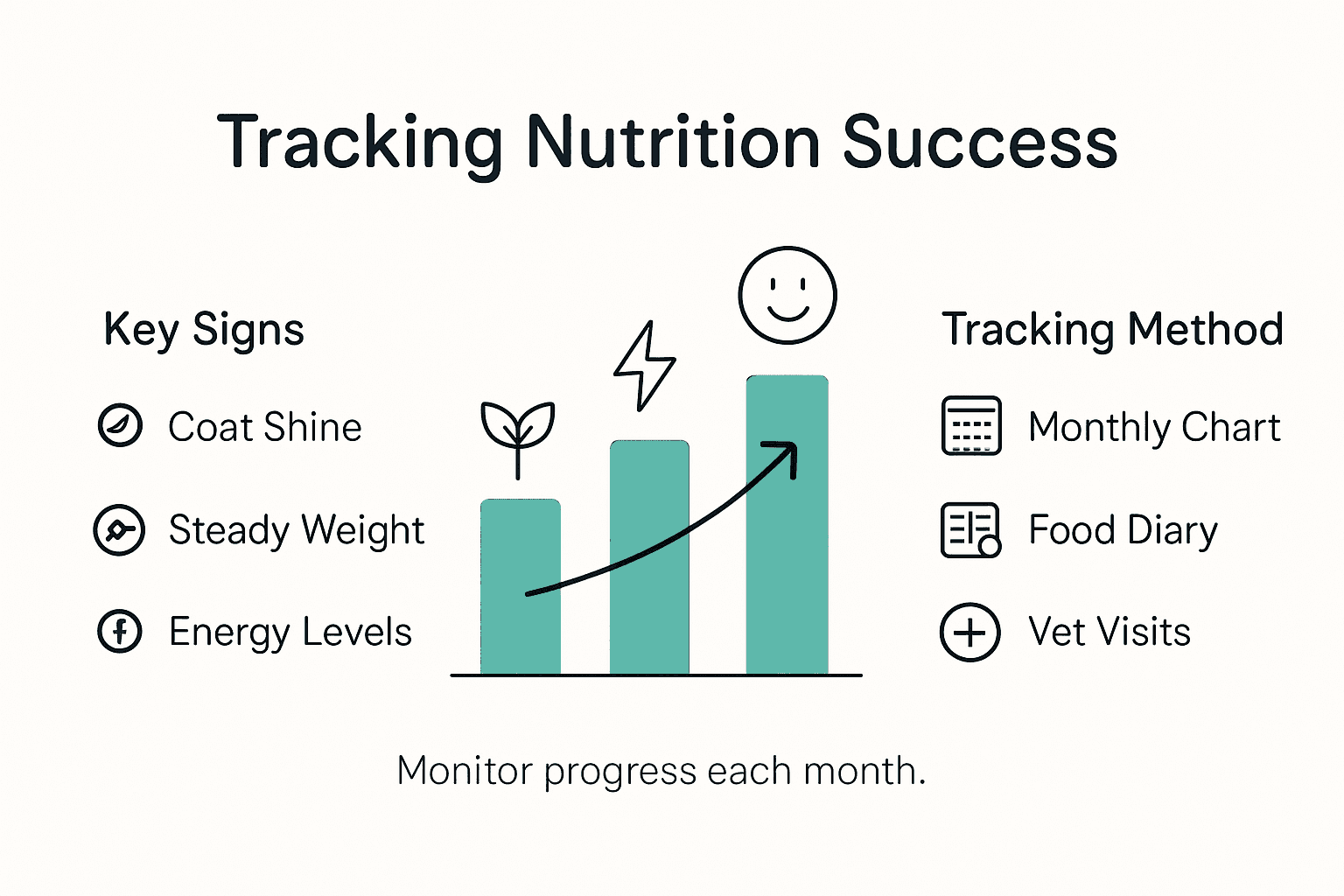
Engaging in proactive health monitoring requires patience and precision. Compare your dog’s current state against baseline measurements taken before dietary changes, looking for gradual improvements in key health markers. Be prepared to make incremental adjustments based on professional veterinary guidance, understanding that nutritional optimisation is an ongoing process unique to each individual dog.
Expert advice: Create a monthly health tracking chart to visualise your dog’s nutritional progress and maintain clear communication with your veterinary professional.
Below is a summary of key health indicators to monitor when assessing nutritional improvements:
| Health Indicator | What to Observe | Example of Positive Change |
|---|---|---|
| Coat condition | Shine and smoothness | Glossier, less shedding |
| Energy level | Activity and playfulness | More energetic walks |
| Body condition | Muscle tone and weight | Toned muscles, stable weight |
| Stool quality | Consistency and colour | Firm, regular stools |
Discover Tailored Grain-Free Nutrition for Your Picky Eater
Addressing the challenge of feeding a picky dog requires more than just patience It calls for selecting the right food that matches their unique taste and health needs Our premium Dry Dog Food | Grain-Free & Science-Backed Kibble – Ultimate Pet Foods range features carefully crafted recipes with fresh ingredients designed to appeal to sensitive palates while providing balanced nutrition. From recognising subtle feeding behaviours to introducing new flavours gradually our offerings support every stage of your dog’s nutritional journey.
Take the next step in ensuring your dog enjoys every meal with confidence and vitality Explore our complete grain-free collection today at Ultimate Pet Foods and find expert-approved options tailored for all breeds and life stages Don’t let picky eating stand in the way of your dog’s health Start transforming mealtimes now with natural, wholesome choices built to nourish and delight.
Frequently Asked Questions
How can I identify my dog’s picky eating behaviours?
To identify your dog’s picky eating behaviours, observe their reactions to different foods, including any signs of refusal or preference for certain textures or flavours. Keep a detailed food diary to track these behaviours over time, noting any patterns or changes.
What should I look for when selecting grain-free dog food?
When selecting grain-free dog food, focus on high-quality protein sources as the primary ingredient and ensure the formula meets your dog’s specific nutritional needs. Consider your dog’s age, breed, and any health conditions to choose an appropriate formula that supports their overall wellbeing.
How can I make meals more appealing to my picky eater?
To make meals more appealing, experiment with different textures and temperatures, such as warming the food slightly or adding flavour enhancers like bone broth. Vary the presentation methods, like using interactive food puzzles, to engage your dog during mealtimes and stimulate their interest.
What is the best way to introduce new foods to my dog?
Introduce new foods gradually by mixing a small quantity (about 10%) with their familiar diet, increasing the amount over 7 to 10 days. Monitor your dog’s reactions closely for any signs of acceptance or digestive issues, adjusting the process as needed based on their comfort level.
How can I assess if my dog’s nutrition has improved after changing their food?
Assess your dog’s nutritional improvement by monitoring physical changes such as coat shine, weight stability, and energy levels over time. Keep a detailed log of these indicators and consult with your veterinarian periodically to evaluate any significant changes in your dog’s health.