

Complete canine nutrition: expert guide to feeding your dog

TL;DR:
- Complete dog nutrition requires meeting regulated standards for essential nutrients based on breed, age, and health.
- Grain-free diets may pose risks like dilated cardiomyopathy but are beneficial for dogs with confirmed grain allergies.
- Choosing a quality dog food involves verifying AAFCO or WSAVA compliance, feeding trials, and expert involvement.
Many dog owners assume that choosing a premium or grain-free food automatically means their dog is getting everything they need. It’s an understandable belief, and food packaging does very little to help. The truth is that complete canine nutrition is far more nuanced than any front-of-bag claim suggests. It’s shaped by your dog’s breed, life stage, activity level, and individual health needs. In this guide, we walk through what the science actually says, how expert standards are applied, and how you can cut through the noise to make genuinely informed decisions for your dog.
Table of Contents
- What does complete canine nutrition really mean?
- Grain-free diets and the facts: separating evidence from hype
- Expert standards: feeding trials, WSAVA compliance, and choosing quality
- Tailoring nutrition to your dog: practical strategies for every life stage
- A fresh perspective: why ‘complete’ nutrition is personal (and not always premium)
- How Ultimate Pet Foods can help you feed complete nutrition
- Frequently asked questions
Key Takeaways
| Point | Details |
|---|---|
| Evidence-based standards | True complete nutrition is based on expert guidelines like AAFCO and WSAVA, not just marketing claims. |
| Grain-free not always best | Grain-free diets are only needed for rare cases of grain allergy, and risks exist for some breeds. |
| Personalised feeding | Nutritional needs vary by age, health, and lifestyle—tailor diets to your dog, not a trend. |
| Brand transparency matters | Choose foods from brands that openly share nutritionist credentials, feeding trial results, and quality controls. |
What does complete canine nutrition really mean?
The word ‘complete’ has a specific, regulated meaning in the world of dog nutrition. It does not simply mean ‘lots of good stuff’ or ‘premium ingredients.’ A complete diet must meet every essential nutrient requirement for your dog’s life stage, at appropriate levels, consistently across every batch produced.
Two key organisations define these standards. The Association of American Feed Control Officials (AAFCO) sets minimum and maximum nutrient levels, with compliance verified either through nutritional formulation or real-world feeding trials. The World Small Animal Veterinary Association (WSAVA) goes further, recommending that manufacturers employ qualified nutritionists, conduct published research, and maintain third-party quality controls. These benchmarks exist to protect your dog, not to favour any particular diet style.
Key fact: Neither AAFCO nor WSAVA approves specific foods. They set the standards that brands must demonstrate they meet.
So what does your dog actually need to thrive? Here’s a summary of the essential nutrient categories:
- Protein for muscle maintenance and immune function
- Fat for energy, skin health, and fat-soluble vitamin absorption
- Carbohydrates for readily available energy and digestive fibre
- Vitamins including A, D, E, K, and the B-complex group
- Minerals such as calcium, phosphorus, zinc, and selenium
- Water as the often-overlooked but absolutely essential nutrient
Here’s a snapshot of AAFCO’s recommended levels for some key nutrients in adult maintenance diets:
| Nutrient | Minimum (DM%) | Maximum (DM%) |
|---|---|---|
| Crude protein | 18% | — |
| Crude fat | 5.5% | — |
| Calcium | 0.5% | 2.5% |
| Phosphorus | 0.4% | 1.6% |
| Zinc | 80 mg/kg | 1,000 mg/kg |
Understanding these standards helps you look beyond grain-free marketing claims and ask the right questions. Compliance with AAFCO or vet nutrition standards is the baseline, and it matters far more than any trendy ingredient on the label. We also recommend reviewing whether grain-free is safe for dogs before making any sudden dietary changes.
Grain-free diets and the facts: separating evidence from hype
Grain-free dog food has become one of the most talked-about nutrition trends of the past decade. Some of the conversation is well-founded. But a lot of it isn’t. Let’s look at what the evidence actually shows.
Grain-free diets typically replace wheat, corn, and rice with legumes such as lentils, peas, or chickpeas, or with potatoes. Premium grain-free diets are generally higher in protein and fat and rely heavily on these legume-based carbohydrate sources. This shift raised concerns around 2018 when the FDA began investigating a potential link between grain-free diets and dilated cardiomyopathy (DCM), a serious heart condition, particularly in breeds such as Golden Retrievers, Irish Wolfhounds, Dobermans, and Boxers.
Here’s a comparison to help you see both sides clearly:
| Factor | Grain-free diets | Grain-inclusive diets |
|---|---|---|
| Primary carbohydrate source | Legumes, potatoes | Grains (rice, oats, barley) |
| Typical protein level | Higher | Moderate |
| DCM concern | Yes, for some breeds | Lower association |
| Suitable for grain allergies | Yes | No |
| Widely researched long-term | Less so | More so |
Since then, the picture has become more complex. No confirmed causal link between grain-free diets and DCM was established in the FDA’s 2022 update, and grain-free sales rose significantly during the same period without a corresponding rise in DCM rates across the general dog population. Researchers currently suspect that high legume content may reduce taurine availability in the body, and taurine is an amino acid that supports heart muscle function. That said, this has not been conclusively proven.

Pro Tip: Grain-free is genuinely valuable for dogs with confirmed grain allergies or intolerances. But grain allergies are actually quite rare in dogs. If your vet hasn’t confirmed a grain sensitivity, the benefits of switching may not justify any additional risk.
If you do choose a grain-free diet, here’s what to look for on the ingredient list:
- Named meat as the first ingredient, not legumes
- Taurine listed as an added ingredient
- Compliance with AAFCO nutrient profiles
- Evidence of feeding trials or certified nutritionist involvement
We’ve put together an honest look at the benefits of grain-free diets and a grain-free diet benefits overview to help you weigh the evidence for your individual dog.
Expert standards: feeding trials, WSAVA compliance, and choosing quality
After understanding the science behind ingredients, here’s how to identify diets that meet expert-approved criteria. This is where many well-meaning owners get caught out, because ‘vet recommended’ on a bag is not the same as meeting WSAVA guidelines.
WSAVA’s guidelines include an eight-point checklist that covers whether a brand employs a full-time qualified nutritionist, conducts and publishes its own research, and maintains rigorous quality and safety controls. Remarkably, only around 12 brands worldwide currently meet all WSAVA criteria, including having ACVN-certified (American College of Veterinary Nutrition) nutritionists on staff.
Here’s how to assess whether a dog food genuinely meets expert standards:
- Check for AAFCO compliance on the label, ideally backed by feeding trials rather than formulation alone.
- Look for a full-time qualified nutritionist employed by the manufacturer, not just a consultant.
- Ask about third-party audits and whether the brand publishes its own nutritional research.
- Verify quality control processes, including ingredient sourcing and batch testing.
- Request transparency around taurine levels, particularly for breeds at higher DCM risk.
- Avoid decisions based on marketing terms like ‘natural,’ ‘holistic,’ or ‘ancestral’ unless backed by the above.
Pro Tip: Don’t be afraid to contact a brand directly and ask for evidence of feeding trials and independent nutritional analysis. Reputable manufacturers welcome this kind of question. Those who don’t may tell you something important.
Want to understand the basics before making any changes? Our grain-free dog food basics guide and grain-free dog treats guide are excellent starting points. And for the scientific backdrop, the pet nutrition guidance from WSAVA is worth bookmarking.
Tailoring nutrition to your dog: practical strategies for every life stage
Even the most rigorously formulated food is only as good as its fit with your individual dog. Life stage, size, activity level, and health conditions all influence what ‘complete’ actually looks like in practice.
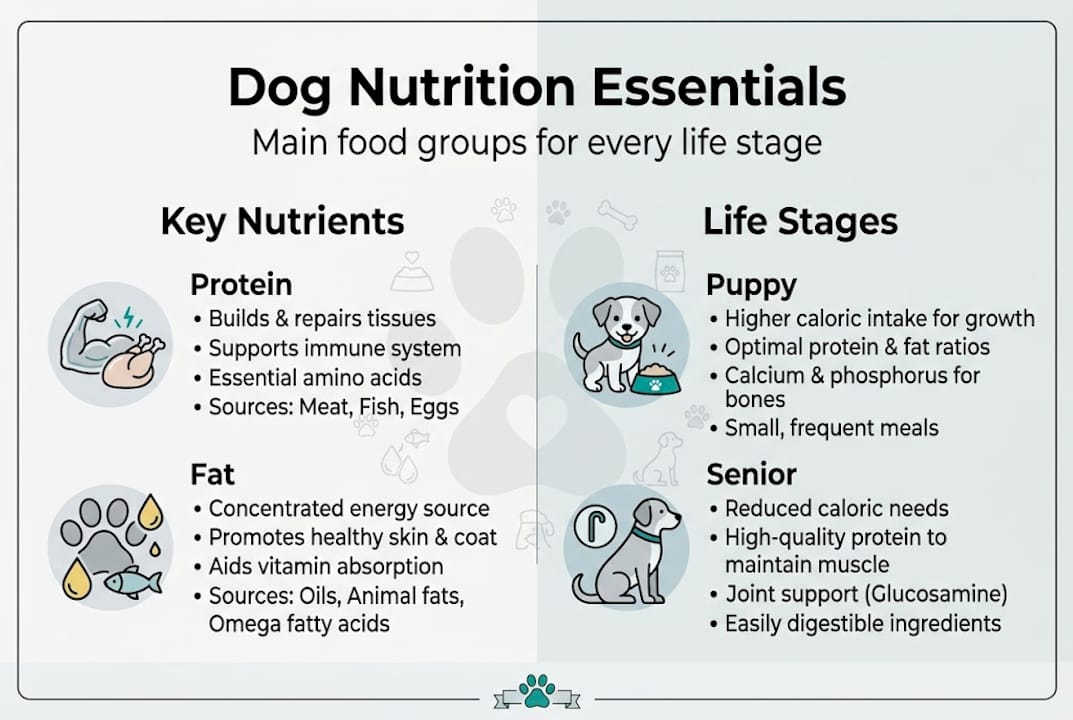
Here are the key nutritional priorities at each life stage:
- 🐾 Puppies: Require higher protein and fat than adults to support rapid growth, bone development, and immune system maturation. DHA from fish oil is particularly important for brain development.
- 🐕 Active adult dogs: Need increased caloric density and sustained protein to support muscle repair and energy output. Performance-focused formulas may be appropriate here.
- 🦮 Senior dogs: This is where things get nuanced. There are no standardised ‘senior’ nutrient profiles, meaning senior foods vary significantly between brands. Base your choices on your individual dog’s health status, not their age alone.
- 🌿 Dogs with allergies or sensitivities: A grain-free or limited ingredient diet may be genuinely beneficial here, especially when allergens have been confirmed through an elimination diet or vet testing.
- ⚖️ Overweight dogs: Prioritise controlled caloric intake, higher fibre, and sustained protein to maintain lean muscle while reducing body fat.
Expert note: Research published in 2025 confirms that senior dog food formulations are inconsistent across brands and lack standardised requirements. Basing your senior dog’s diet purely on an age-related label without considering individual health markers is not recommended.
We recommend monitoring your dog’s Body Condition Score (BCS) regularly. It’s a simple 9-point scale used by vets to assess whether your dog is at an ideal weight. Schedule regular reviews with your vet and consider taurine blood testing if your dog is a breed with known DCM risk and is eating a high-legume diet.
For detailed guidance on puppies, our grain-free puppy food guide is a helpful resource. And if your dog is getting older, read about why senior dogs need special food to understand what truly matters at that stage.
A fresh perspective: why ‘complete’ nutrition is personal (and not always premium)
We’ve spent years working closely with dog owners, and one pattern stands out clearly. The owners most worried about their dog’s diet are often feeding foods that are, objectively, quite good. The owners who aren’t worried enough? Sometimes feeding foods that genuinely fall short.
Marketing has a lot to answer for here. The pressure to choose the most expensive, most grain-free, most ‘ancestral’ food is real. But we genuinely believe the best diet for your dog isn’t necessarily the priciest one or the one with the most impressive-sounding ingredients. It’s the one that meets verified nutritional standards, suits your dog’s individual profile, and is supported by transparent evidence.
A mid-range food that passes feeding trials and employs a certified nutritionist will serve most dogs better than a premium boutique brand with no published research. Cost is not a proxy for quality. WSAVA compliance, feeding trials, and objective nutritional standards are.
We encourage every owner to explore grain-free diets for dogs with allergies if that applies to your dog, but always start from your dog’s actual needs rather than a trend. Talk to your vet. Look deeper than the front of the bag. Your dog will thank you for it. 🐶
How Ultimate Pet Foods can help you feed complete nutrition
Putting this knowledge into practice doesn’t have to be overwhelming. At Ultimate Pet Foods, we’ve built our entire range around the principles we’ve outlined here: evidence-backed formulas, natural ingredients, and transparent nutrition that genuinely puts your dog first.
Whether you’re weighing up why a grain-free diet may help your dog or looking to see how we stack up against other brands, our dog food comparison makes it easy to see what sets us apart. Not sure where to start? Our dog food guide walks you through everything, from ingredient lists to life-stage recommendations, so you can choose with confidence. Every wag starts with the right bowl. 🐾
Frequently asked questions
What nutrients must be included for complete canine nutrition?
Complete canine nutrition requires balanced levels of protein, fat, carbohydrates, vitamins, minerals, and water. AAFCO sets minimum and maximum nutrient levels, verified through formulation or feeding trials.
Is grain-free food always better for my dog?
No. Grain-free food is only advisable for dogs with confirmed grain allergies, which are genuinely rare. For most dogs, grain-free risks such as DCM may outweigh any unproven benefits.
How can I be sure a dog food is complete and balanced?
Look for AAFCO or WSAVA compliance, evidence of feeding trials, and brands with certified nutritionists. WSAVA guidelines recommend checking for qualified nutritionists, published research, and regular quality audits.
Do senior or puppy foods really differ from adult dog food?
Yes, but with important caveats. Puppies need higher protein and energy than adults, while senior dog foods vary widely and lack standardised nutrient profiles, so individual health should guide your choice.


