
Breed nutrition guide for natural, grain-free diets
TL;DR:
- Dog breeds have unique nutritional needs influenced by genetics, size, and health risks, requiring breed-specific diets for optimal health. Life stage considerations dictate appropriate nutrient profiles, with careful label reading essential for safe transitions and targeted feeding practices. Grain-free diets offer benefits for sensitivities but are not inherently safer or better, emphasizing the importance of ingredient quality and balanced formulation.
Choosing the right food for your dog feels straightforward until you realise how many variables actually matter. Grain-free has become shorthand for “healthier” in many pet owner circles, but that assumption can lead you down the wrong path entirely. Your Labrador, your elderly Dachshund, and your neighbour’s Chihuahua have fundamentally different nutritional needs, and the food that works brilliantly for one could be entirely wrong for another. This guide cuts through the noise to help you make confident, evidence-backed feeding decisions based on your dog’s breed, life stage, and health profile, not just marketing trends.
Table of Contents
- What makes dog nutrition breed-specific?
- How life stages affect your dog’s nutritional needs
- Grain-free diets: Benefits, risks and common misconceptions
- Designing an optimal natural, grain-free diet for your dog
- Why ‘grain-free’ is only part of the puzzle
- Explore tailored dog nutrition solutions
- Frequently asked questions
Key Takeaways
| Point | Details |
|---|---|
| Breed-specific needs matter | Size, metabolism and genetics mean diet should be tailored to your dog’s unique breed. |
| Life stage is critical | Nutritional needs shift as your dog grows, so choose foods clearly marked for the right stage. |
| Grain-free is not risk-free | Grain-free labels can hide other risks; always check for overall diet quality and balance. |
| Quality over marketing | Ingredient composition and food transparency are more important than buzzwords on packaging. |
What makes dog nutrition breed-specific?
Every dog is a dog, but not every dog is the same. Breed-specific nutrition recognises that genetics, body composition, metabolism, and inherited health risks all shape what your dog genuinely needs from their food. Understanding breed-specific dog nutrition is the first real step towards feeding with confidence rather than guesswork.
Size and calorie density matter enormously. Large breeds like Labradors and Golden Retrievers need controlled calorie profiles to protect their joints and prevent obesity-related strain. Small breeds like Chihuahuas and Yorkshire Terriers, on the other hand, have faster metabolisms relative to their body weight and often need more calorie-dense food served in smaller, more frequent portions. Getting this balance wrong contributes to overweight large dogs and underweight small ones.
Genetic health risks add another layer of complexity. Consider these examples:
- Dalmatians have a unique uric acid metabolism that makes high-purine proteins (such as organ meats) a risk factor for urinary stones. Their diet needs careful protein source selection.
- German Shepherds are prone to exocrine pancreatic insufficiency and often benefit from highly digestible proteins and fats.
- Bulldogs and Boxers are brachycephalic breeds with a tendency towards flatulence and sensitive digestion, making ingredient quality and digestibility especially important.
- Border Collies and working breeds have significantly higher energy demands than companion breeds and need more protein and fat to sustain performance.
“Recognising your dog’s breed is not just about aesthetics, it is about understanding a genetic blueprint that directly influences their nutritional needs at every stage of life.”
AAFCO nutritional adequacy standards define what constitutes complete nutrition across breed sizes and life stages, providing the regulatory foundation for responsible dog food formulation. No single “premium” formula covers all these variables. Grain-free is one tool in a broader nutritional strategy, not a solution on its own.
How life stages affect your dog’s nutritional needs
A puppy is not a small adult dog. A senior dog is not simply a slower adult. Each life stage brings distinct physiological demands, and feeding the wrong profile at the wrong stage creates real, long-term health consequences.
Life stage nutritional overview
| Life stage | Key nutritional priorities | Cautions |
|---|---|---|
| Puppy (0–12 months) | High protein, DHA for brain development, calcium/phosphorus ratio for bone growth | Avoid over-supplementing calcium in large breeds, which accelerates skeletal growth too rapidly |
| Adult (1–7 years) | Balanced protein, healthy fats, fibre for gut health, antioxidants | Watch for creeping weight gain, especially in neutered dogs |
| Senior (7+ years) | Easily digestible protein, joint-supporting nutrients, controlled phosphorus | Kidney function declines in many seniors; phosphorus overload adds strain |
AAFCO defines “all life stages” claims and specifies that foods must meet distinct standards for growth, maintenance, and gestation or lactation, which means label reading is a genuine skill worth developing.
How to check a dog food label for correct life stage claims
- Find the nutritional adequacy statement. This will read something like “formulated to meet the nutritional levels established by AAFCO for all life stages” or “adult maintenance.”
- Match the statement to your dog’s stage. A puppy needs a “growth” or “all life stages” food. An adult needs “maintenance” or “all life stages.” A senior may benefit from a specific senior formula.
- Check the protein source. It should be named (e.g., “freshly prepared chicken”) rather than vague (e.g., “meat and animal derivatives”).
- Look at the mineral ratios. Calcium and phosphorus percentages matter especially for puppies and seniors.
- Review the carbohydrate sources. This is where grain-free decisions come in. Potatoes and legumes replace grains in many formulas, and understanding their proportion matters.
Explore our detailed guidance on life stage feeding and nutrition by age for breed-specific applications of these principles.
Pro Tip: Do not feed an “all life stages” food to a senior dog with early kidney concerns. These formulas are typically higher in protein and phosphorus to support puppy growth, which is precisely what an ageing kidney does not need. A specific senior formula with controlled phosphorus is a far gentler choice.
Grain-free diets: Benefits, risks and common misconceptions
The grain-free conversation has become heated, and understandably so. On one side, there are genuine benefits for dogs with grain sensitivities or inflammatory conditions. On the other, there are real questions about safety that responsible owners must take seriously.
What the research actually says
Research into grain-free diets and dilated cardiomyopathy (DCM) has found cases of DCM in breeds without a genetic predisposition, which raised understandable alarm. The critical insight, however, is that the issue appears to be less about the absence of grain and more about the ingredient composition replacing it. Formulas heavy in legumes (lentils, peas, chickpeas) or potatoes, particularly when these feature prominently in the ingredient list, appear more associated with DCM risk than grain-free feeding as a concept alone.
What grain-free can genuinely offer:
- Reduced inflammation in dogs with true grain sensitivities or allergies
- A lower glycaemic profile when the carbohydrate source is well chosen
- Often a higher meat content, supporting lean muscle in active breeds
- A natural reduction in common allergens like wheat gluten for sensitive dogs
Grain-free vs. grain-inclusive: A balanced comparison
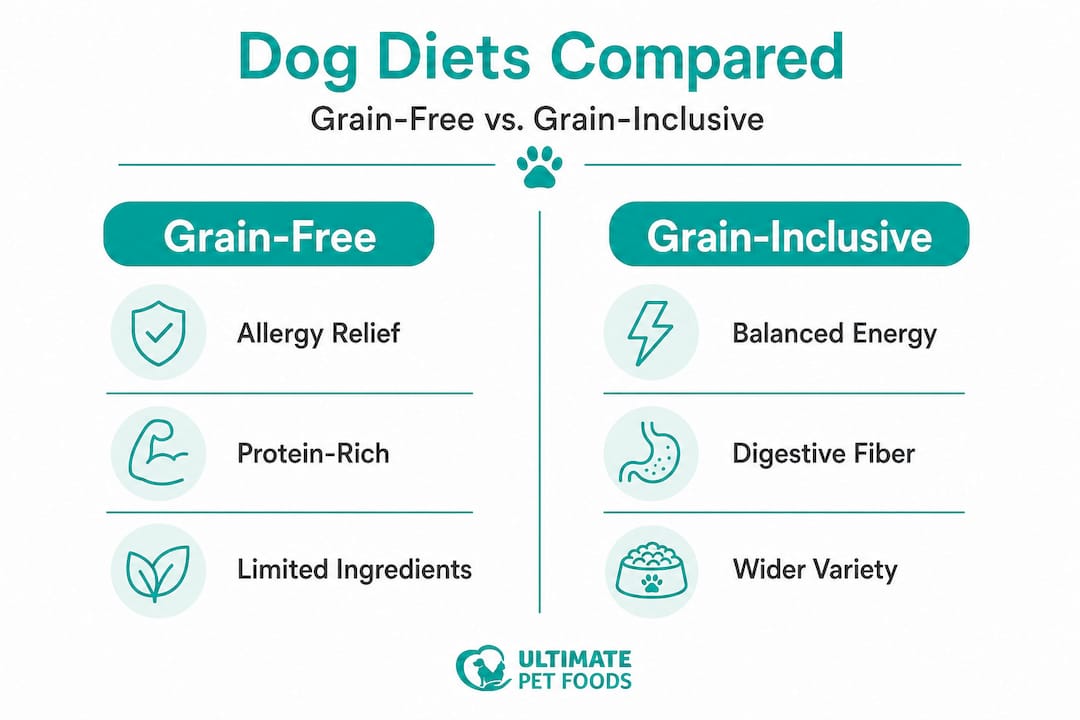
| Factor | Grain-free | Grain-inclusive |
|---|---|---|
| Suitable for | Grain-sensitive dogs, allergy-prone breeds | Most healthy adult dogs without sensitivities |
| Protein content | Often higher, more meat-focused | Variable; can still be high quality |
| Carbohydrate source | Potatoes, sweet potatoes, legumes | Rice, oats, barley, maize |
| DCM considerations | Risk increases with legume/potato-heavy recipes | Lower association when grains are quality sources |
| Digestibility | High when meat content is fresh and primary | Depends heavily on grain type and processing |
| Common misconception | “All grain-free is healthier” | “Grains are always problematic” |
📊 Important statistic: The veterinary sciences review on DCM highlights that the majority of reported cases involved non-predisposed breeds consuming boutique or exotic grain-free formulas, underscoring that formula composition, not grain-free status alone, is the primary variable of concern.
Breed-specific signs to watch for when trialling grain-free feeding include changes in energy levels, stool consistency, coat condition, and any signs of cardiac symptoms in breeds already considered at moderate risk. We cover this in detail in our guide on grain-free safety, alongside a thorough overview in our grain-free dog food basics guide. You can also explore the specific grain-free diet benefits for dogs who do respond well.
Designing an optimal natural, grain-free diet for your dog
Once you understand the landscape, building the right plan for your dog becomes far less daunting. The key is treating food as a complete system rather than a collection of ticks on a checklist. As research consistently emphasises, overall diet composition matters far more than the simple absence of grain.
Step-by-step guide to switching diets safely
-
Consult your vet first. Before switching, particularly if your dog has existing health conditions, get a baseline health check. Mention your intentions and ask about breed-specific considerations.
-
Choose a formula appropriate for your dog’s breed size and life stage. A large breed puppy needs different calcium to phosphorus ratios than a small adult. Match the food to the animal, not just the trend.
-
Scrutinise the ingredient list. Fresh or freshly prepared named meat should be in the top two or three ingredients. If peas or lentils appear in the first three, think carefully about that formula’s legume loading.
-
Begin the transition gradually over 7 to 10 days. Start with 75% old food and 25% new food, then shift to 50/50, then 25% old and 75% new, and finally 100% new food. Rushing this process is a common cause of digestive upset.
-
Monitor your dog’s response actively. Look at stool quality (firm and consistent is ideal), coat shine, energy levels, and any signs of itching or digestive discomfort. Keep brief notes to share with your vet if needed.
-
Adjust protein and fat profiles by breed activity. A working Spaniel needs more fat for sustained energy than a sedentary indoor Pug. High-quality animal fats like chicken fat or salmon oil support coat health and energy simultaneously.
-
Review micronutrient sources. Natural grain-free foods should include vegetables, herbs, and functional ingredients like turmeric, flaxseed, or prebiotics to support gut health and reduce inflammation.
Pro Tip: Track your dog’s weight, coat condition, and energy levels on a simple monthly log. Breed-specific improvements like reduced ear infections in Cocker Spaniels or improved joint mobility in Labradors often appear within 8 to 12 weeks of a well-matched diet change, giving you tangible evidence that you have made the right call.
Our guide on grain-free for allergies is particularly useful if your dog shows signs of food sensitivity alongside the dietary transition.
Why ‘grain-free’ is only part of the puzzle
We have seen a lot of change in the dog food world over the past decade, and we have also seen a consistent pattern: owners who focus entirely on whether a food is grain-free often overlook the factors that matter more. This is our honest, experienced perspective.
The term “grain-free” has become a badge of quality in marketing, but it is not inherently a guarantee of anything. We have reviewed formulas labelled grain-free that replaced wheat and rice with enormous quantities of cheap legume fillers, kept the meat content low, and dressed the packaging in earthy tones suggesting natural nutrition. That is not better food. It is just different fillers.
The real question is not “does this food contain grain?” It is “what is actually in this food, and is it genuinely nourishing my dog?” A grain-inclusive food made with high-quality, named proteins, cold-pressed oats, and functional ingredients can outperform a grain-free formula built on pea protein concentrate and potato starch. We genuinely believe this, and the emerging science supports it.
What we encourage every owner to do is think about diet as a holistic pattern. Consider ingredient transparency. Consider bioavailability, which is whether nutrients can actually be absorbed and used by your dog. Consider your dog’s unique genetic health risks. Understand that grains are not inherently harmful, and that the dogs who truly thrive on grain-free diets are those whose formulas are carefully balanced with quality proteins, natural fats, and meaningful micronutrients.
Consulting a vet who is knowledgeable about nutrition, not just one who recommends whatever is on the clinic shelf, is genuinely valuable. Online trends move fast and are often driven by anecdote rather than evidence. Your dog deserves better than that.
Explore tailored dog nutrition solutions
Understanding your dog’s nutritional needs is one thing. Finding the right food to meet them is another. At Ultimate Pet Foods, we have curated a range of premium, natural options that go well beyond the grain-free label.
Whether you are exploring why grain-free may be best for your particular dog, looking for guidance on breed-specific dog food, or wanting to understand exactly what goes into each formula through our grain-free ingredient guide, we are here to help you make an informed, confident choice. Every product we stock is chosen with ingredient quality, digestibility, and genuine health outcomes in mind. Your dog’s health is personal to us, and we are always happy to support you in finding the best fit. 🐾
Frequently asked questions
Is a grain-free diet always healthier for my dog?
Not all dogs benefit equally from grain-free feeding; suitability depends on your dog’s breed, existing health conditions, and crucially the overall diet formulation rather than just the absence of grain.
What should I look for on a dog food label for breed and life stage?
Look for a clear nutritional adequacy statement that matches your dog’s current life stage, and ensure the AAFCO label standards for growth, maintenance, or senior care are met with named ingredients.
Can all breeds safely eat grain-free dog food?
Some breeds carry greater sensitivity to ingredient imbalances, and FDA DCM findings have included non-predisposed breeds affected by certain grain-free formulas, so always discuss the switch with your vet before changing your dog’s diet.
How do I transition my dog to a grain-free diet?
Introduce the new food gradually over 7 to 10 days, starting at 25% new food and increasing incrementally, while monitoring closely for any changes in digestion, energy, or coat condition.
Are all grain-free dog foods free from problematic ingredients?
No. Many grain-free formulas replace grain with high levels of legumes or potatoes, and research links these legume or potato-heavy recipes to a greater proportion of DCM cases than those with more balanced ingredient composition.