

Tailor dog food to each life stage for best health

TL;DR:
- Dogs have unique nutritional needs at each life stage, impacting health and longevity.
- Grain-free diets are suitable for many dogs but require careful ingredient and breed considerations.
- Tailoring diet choices based on individual response, breed, and age is essential for optimal canine health.
Not all dogs thrive on the same bowl of food. A bouncy eight-week-old Labrador and a gentle twelve-year-old Spaniel have entirely different bodies, entirely different needs, and entirely different futures ahead of them. Yet many owners still reach for the same bag labelled “all breeds, all ages” and hope for the best. Life-stage nutrition is not a marketing gimmick. It is one of the most practical, evidence-backed ways you can support your dog’s health from their very first meal to their very last wag. In this guide, we break down each life stage, explain what the science actually says about grain-free diets, and give you the tools to feed your dog with genuine confidence.
Table of Contents
- What are dog life stages and why do they matter?
- Puppy to young adult: Nutrition for development and safe transition
- Mature adults and seniors: Dietary shifts and supporting long-term health
- Grain-free diets across life stages: Science, risks and when they fit
- Our take: Why personalisation, not trends, should guide your dog’s diet
- Premium solutions for every life stage and dietary need
- Frequently asked questions
Key Takeaways
| Point | Details |
|---|---|
| Life-stage nutrition matters | Feeding your dog based on age supports growth, health and longevity better than one-size-fits-all approaches. |
| Transitions need care | Switching dog food between stages should be gradual to avoid digestive issues and ensure nutrient needs are met. |
| Senior dog foods vary | Not all senior formulas meet rigorous standards, so review ingredients and consult your vet before changing foods. |
| Choose grain-free wisely | Grain-free diets are suitable for most, but consult a vet for breeds at risk of heart conditions and always monitor your pet’s health. |
What are dog life stages and why do they matter?
Dogs are not small adults, and senior dogs are not simply older adults. Each phase of a dog’s life brings distinct physiological changes that directly affect how their body processes nutrients, builds tissue, and manages energy. Feeding the wrong formula at the wrong stage is a bit like giving a teenager the same calorie intake as a retired pensioner. The body simply cannot use it well.
The American Animal Hospital Association (AAHA) defines four core canine life stages, each with its own nutritional focus:
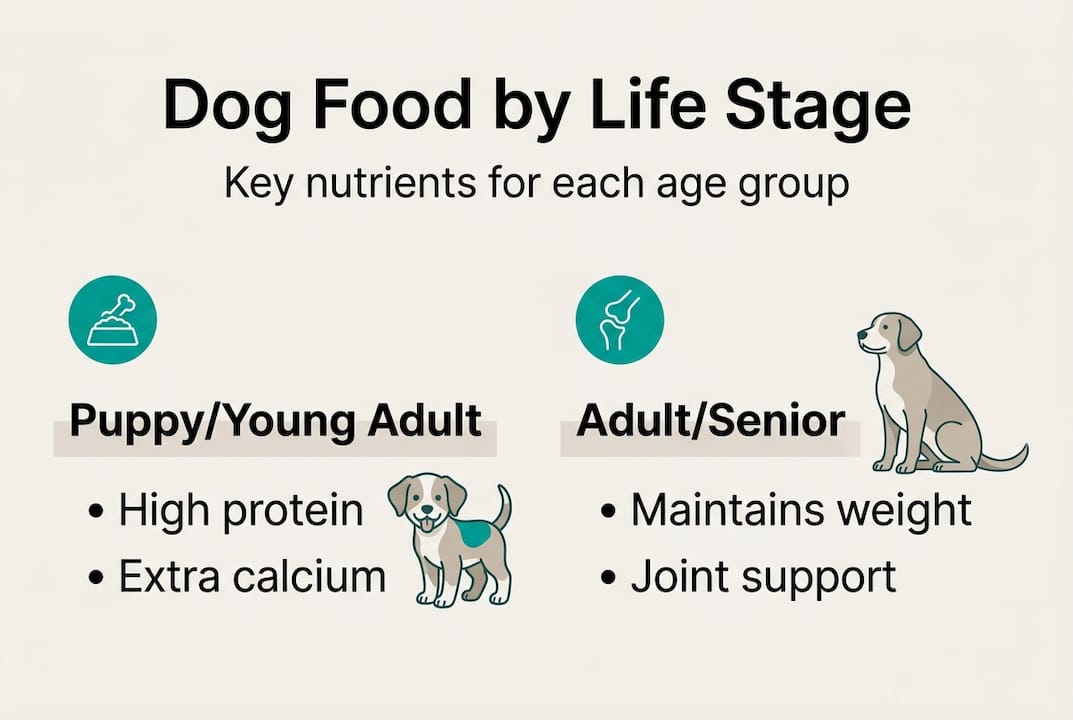
- Puppy: Rapid growth phase requiring high protein, calcium, and energy-dense food to support bone, muscle, and organ development.
- Young adult: The transition period where growth slows and the priority shifts to maintaining lean body condition and preventing early-onset obesity.
- Mature adult (7–10 years): Metabolism begins to change; joints, organ function, and weight management become increasingly important.
- Senior (10+ years): Joint and kidney support become central, alongside digestibility and calorie control.
Here is a quick overview of how priorities shift across those stages:
| Life stage | Age range | Core dietary priority |
|---|---|---|
| Puppy | 0–12 months (varies by breed) | High protein, calcium, energy density |
| Young adult | 1–7 years | Maintenance, obesity prevention |
| Mature adult | 7–10 years | Metabolism support, joint care |
| Senior | 10+ years | Digestibility, kidney and joint support |
“Feeding to life stage is one of the most impactful decisions a pet owner can make. Nutrition drives development, longevity, and quality of life at every age.” — AAHA Life Stage Guidelines
The consequences of ignoring these shifts are real. Dogs fed high-calorie puppy food into adulthood face a significantly elevated risk of obesity, which in turn strains joints and shortens lifespan. Seniors fed standard adult food without adjusted phosphorus levels may place unnecessary pressure on ageing kidneys. We believe that understanding nutrition for every canine life stage is the single most powerful tool you have as a dog owner. It is also worth noting that breed size matters enormously here. Large breeds like Great Danes have different calcium-to-phosphorus ratios during puppyhood compared to Chihuahuas, and breed-specific dog food needs should always be factored into your choice.
Puppy to young adult: Nutrition for development and safe transition
Puppyhood is the most nutritionally demanding phase of a dog’s life. Everything is growing at once: bones, muscles, organs, the immune system, and the brain. A puppy’s diet needs to be rich in high-quality protein to fuel muscle development, calcium and phosphorus in precise ratios for skeletal growth, and sufficient energy density to support all that activity without requiring enormous portion sizes.
High-protein, energy-dense diets are essential during this phase, but the transition to adult maintenance food is equally important for preventing obesity. Most small to medium breeds are ready to transition between 9 and 12 months. Large and giant breeds often need puppy food for longer, sometimes up to 18 months, because their growth plates close more slowly.
Here is how to transition safely:
- Days 1–2: Feed 75% current food, 25% new food.
- Days 3–4: Move to a 50/50 mix.
- Days 5–6: Shift to 25% current food, 75% new food.
- Day 7 onwards: Serve the new food exclusively.
This gradual approach gives your dog’s gut microbiome time to adjust. Rushing the switch is one of the most common causes of loose stools and digestive upset during food changes. Our guide on transitioning dog foods walks you through this in more detail if you need extra support.
Common mistakes during this phase include overfeeding (portion sizes should be adjusted every few weeks as a puppy grows), choosing an “all breeds” formula that does not account for breed-specific calcium ratios, and delaying the switch to adult food past the appropriate age. Staying on puppy food too long is just as problematic as switching too early.
Pro Tip: Weigh your puppy every two weeks and adjust portions accordingly. A puppy that is gaining weight too quickly is at greater risk of joint problems later in life, especially in large breeds. You can find grain-free food for puppies formulated specifically to support healthy, steady growth without unnecessary fillers.
Once your dog reaches young adulthood, the focus shifts from building to maintaining. Lean muscle mass, healthy weight, and good energy levels become the benchmarks of a well-fed adult dog.
Mature adults and seniors: Dietary shifts and supporting long-term health
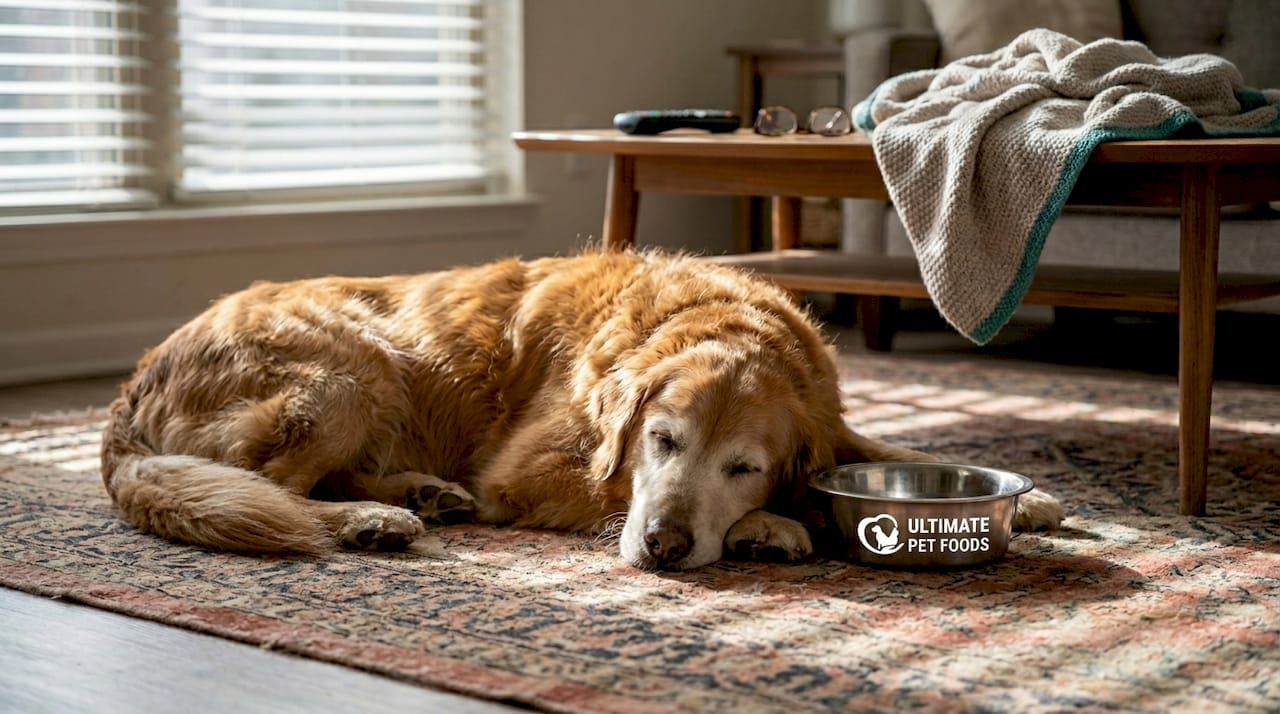
As dogs move into their mature adult and senior years, the changes are often subtle at first. A little less enthusiasm on the morning walk. A slightly longer recovery after play. These are natural signs that the body’s needs are shifting, and the diet should shift with them.
Here is where things get interesting, and a little surprising. Research published in Frontiers in Veterinary Science found that senior dog foods show inconsistent nutritional differences from standard adult foods. In fact, 18% of tested senior diets failed to meet AAFCO adult maintenance standards, and there are currently no formal senior-specific nutrient profiles set by AAFCO, NRC, or FEDIAF. That means the label “senior formula” is not always a guarantee of superior nutrition.
So what should you actually look for?
| Nutrient | Adult food focus | Senior food focus |
|---|---|---|
| Protein | Maintenance of lean muscle | Higher quality, easily digestible sources |
| Phosphorus | Standard levels | Reduced to support kidney function |
| Omega-3 fatty acids | Coat and skin support | Joint and cognitive support |
| Fibre | Digestive regularity | Increased for gut motility |
| Calories | Activity-matched | Often reduced for lower activity levels |
The key nutrients for senior dogs are high-quality, digestible protein (not less protein, but better protein), reduced phosphorus to protect kidney function, and increased omega-3 fatty acids for joint and cognitive support. Our blog on senior dog food reasons explains why these specific nutrients matter so much in later life.
- Watch for weight loss despite a good appetite (may signal nutrient absorption issues)
- Monitor stool consistency as a daily indicator of digestive health
- Note any changes in coat condition, which often reflects internal nutrition
- Look for reduced mobility or stiffness after rest, which may respond to dietary omega-3 increases
Pro Tip: Keep a simple weekly log of your senior dog’s weight, coat condition, and energy levels. Small, consistent changes are far easier to spot and act on when you have a record to compare against. Our senior dog feeding tips and guide to choosing food for older dogs offer practical next steps. For a deeper read, our senior dog nutrition guide covers the science in an accessible way.
Grain-free diets across life stages: Science, risks and when they fit
Grain-free dog food has become one of the most popular choices among health-conscious dog owners, and for understandable reasons. Many dogs show improvements in skin condition, digestion, and energy when grains are removed from their diet. But the conversation around grain-free feeding is more nuanced than the packaging often suggests.
The most significant concern raised in recent years involves a potential link between grain-free diets and DCM (dilated cardiomyopathy, a form of heart disease) in certain dog breeds, particularly Golden Retrievers. The FDA investigated this association and found a correlation with diets high in legumes, peas, and potatoes, though no definitive causal link has been established. Importantly, many affected dogs showed improvement when their diet was changed or taurine was supplemented.
“The FDA has not established a direct causal link between grain-free diets and DCM, but the ongoing investigation highlights the importance of ingredient quality and nutritional balance over trend-driven choices.”
Here is what the evidence currently supports:
- Grain-free diets can be nutritionally complete and appropriate for most healthy dogs
- Breeds with known taurine sensitivity (Golden Retrievers, Cocker Spaniels) warrant extra caution and veterinary input
- High legume content as a primary protein replacement may be a more relevant risk factor than grain-free status alone
- Most grain-free foods meet AAFCO standards, but nutrient variation exists between brands, making label reading essential
For puppies, grain-free feeding can be appropriate if the formula is specifically designed for growth and meets all developmental nutrient requirements. For seniors, the digestibility benefits of grain-free can be genuinely helpful, provided protein quality remains high. Our guide on grain-free safety for dogs and our understanding grain-free ingredients page give you a thorough breakdown of what to look for and what to avoid.
The honest answer is that grain-free is not universally better or worse. It is a tool, and like any tool, it works best when used thoughtfully and matched to the individual dog.
Our take: Why personalisation, not trends, should guide your dog’s diet
We have seen a lot of feeding trends come and go. Raw feeding, grain-free, high-meat, ancestral diets. Each one carries genuine merit for some dogs and genuine risk for others. The problem is when a trend becomes a rule applied to every dog regardless of breed, age, health history, or individual response.
No empirical benchmarks prove grain-free superior for all dogs. Individual response is the most reliable guide you have. A Border Collie thriving on a grain-free formula and a Golden Retriever struggling with the same one are both telling you something important. Listen to your dog.
Our recommendation is simple: start with the life-stage and tailored food for breeds guidelines as your foundation, then observe and adjust. Note changes in coat shine, stool quality, energy, and weight over four to six weeks after any dietary change. Work with your vet, especially for seniors or dogs with health conditions. Nutrition dogma, however well-intentioned, should never override what you are actually seeing in your dog every day.
Premium solutions for every life stage and dietary need
Now that you have a clearer picture of what your dog actually needs at each stage of life, the next step is finding food that genuinely delivers on those needs.
At Ultimate Pet Foods, we offer a full range of natural, grain-free recipes formulated for specific life stages and dietary requirements. Whether you are looking for a nutrient-rich puppy formula, a balanced adult maintenance food, or a gentle senior recipe with joint support, we have options built around real ingredients and sound nutrition. Explore the grain-free diet benefits or browse our grain-free ingredient guide to find the right fit for your dog. 🐾
Frequently asked questions
What is the best dog food for puppies?
The best food for puppies is high in protein and energy to support healthy growth; always choose a product formulated specifically for puppies rather than an all-breed or adult formula to ensure the right calcium-to-phosphorus ratio.
Do senior dogs need special food?
Senior diets show inconsistent differences from adult foods and 18% of tested senior diets failed AAFCO adult maintenance standards, so focus on ingredient quality and specific nutrients like digestible protein and omega-3s rather than relying solely on the “senior” label.
Is grain-free dog food safe for all breeds?
Grain-free diets are generally safe for most dogs, but breeds with known taurine sensitivity such as Golden Retrievers should consult a vet before switching, as some cases link grain-free diets to taurine deficiency and heart issues.
How can I switch my dog’s food safely between life stages?
Transition your dog’s food gradually over 7 to 10 days by mixing increasing amounts of the new formula each day, as abrupt diet changes can disrupt the gut microbiome and cause digestive upset.
Are all grain-free dog foods nutritionally complete?
Most grain-free foods meet AAFCO standards, but nutrient variation between brands means you should always read the label carefully and monitor your dog’s coat, weight, and energy after switching.


