
Choose the best dog food for different breeds in 2026
Choosing the right dog food isn’t as simple as grabbing any bag off the shelf. Different breeds have vastly different nutritional requirements, and what keeps a Chihuahua thriving might not suit a Great Dane. Breed-specific nutrition directly affects your dog’s long-term health, from joint strength to digestive comfort. Premium, grain-free, natural, vet-approved options can support the unique needs of each breed, whether you have a tiny terrier or a giant mastiff. This guide explains how to select breed-specific food and the tangible benefits tailored nutrition delivers for your dog’s wellbeing.
Table of Contents
- Why Breed-Specific Nutrition Matters For Your Dog
- Grain-Free Dog Food: Benefits, Safety, And Considerations
- Tailoring Dog Food For Large, Medium, And Small Breeds
- How To Choose And Transition To The Right Breed-Specific Dog Food
- Find Premium Breed-Specific Grain-Free Dog Food At Ultimate Pet Foods
- Frequently Asked Questions
Key takeaways
| Point | Details |
|---|---|
| Large breeds need joint support | High-protein, grain-free formulas with balanced minerals prevent growth disorders and support healthy joints. |
| Grain-free diets are safe | No credible evidence links grain-free food to heart disease when formulas are balanced and vet-approved. |
| Puppies require tailored nutrition | Adjusted calorie and mineral levels support healthy growth and cartilage development during critical life stages. |
| Kibble size matters | Appropriately sized kibble aids digestion, provides mental stimulation, and promotes dental health. |
| Balanced ingredients deliver results | Natural, breed-tailored formulas optimise health outcomes across all breeds and life stages. |
Why breed-specific nutrition matters for your dog
Different breeds have distinct metabolic rates, energy needs, and health risks that demand tailored dietary approaches. A Labrador’s nutritional requirements differ dramatically from a Yorkshire Terrier’s, not just in portion size but in fundamental nutrient ratios. Large breeds are prone to joint issues and developmental bone disorders, requiring careful mineral balance and omega-3 fatty acids to support skeletal health. Small breeds, meanwhile, need calorie-dense nutrition packed into smaller kibble sizes that match their tiny jaws and faster metabolisms.
Grain-free diets can improve digestion and reduce sensitivities in dogs predisposed to grain intolerances. When formulated with high-quality proteins and natural ingredients, these diets provide complete nutrition without common allergens. The absence of grains often means higher protein and fat content, which benefits active breeds and those with sensitive digestive systems.
Chewing appropriately sized kibble delivers surprising benefits beyond basic nutrition. Adequately chewing kibbles improves digestion and stimulates brain chemicals associated with contentment. Large breed dogs benefit from larger kibble that encourages thorough chewing, whilst small breeds need tiny pieces they can manage comfortably.
Pro Tip: Match kibble size to your dog’s jaw structure. Large breeds should work for their food through proper chewing, whilst small breeds need bite-sized pieces to prevent choking and ensure proper nutrient absorption.
Key nutritional considerations by breed size:
- Large breeds require controlled calcium and phosphorus to prevent skeletal abnormalities
- Medium breeds benefit from balanced protein and fat for sustained energy
- Small breeds need nutrient-dense formulas in compact kibble for efficient digestion
- All breeds thrive on natural ingredients free from artificial additives
“When it comes to nutrition for dogs, one size does not fit all. Breed-specific formulas address unique physiological needs that generic foods simply cannot meet.”
Grain-free dog food: benefits, safety, and considerations
Grain-free diets have faced scrutiny in recent years, but the science in 2026 tells a reassuring story. The FDA found no causal link between grain-free diets and non-hereditary dilated cardiomyopathy in dogs. This conclusive finding puts to rest fears that grain-free formulas inherently pose cardiac risks. When properly formulated with complete nutrition, grain-free foods are perfectly safe for all breeds.
Grain-free formulas typically contain higher protein and fat levels than grain-inclusive alternatives. This macronutrient profile suits many breeds, particularly active dogs and those with higher metabolic demands. The proteins often come from quality animal sources like chicken, turkey, fish, or lamb, providing essential amino acids in bioavailable forms. Healthy fats from sources like salmon oil deliver omega-3 fatty acids crucial for skin, coat, and joint health.
Grain-free diets may support blood sugar regulation and gut microbial balance in dogs. Without grain-based carbohydrates, these formulas rely on alternative sources like sweet potatoes, peas, or lentils. These ingredients provide steady energy without the blood sugar spikes some grains can trigger. For dogs with grain sensitivities or allergies, eliminating wheat, corn, and soy can resolve digestive discomfort and skin issues.
However, grain-free isn’t inherently healthier than grain-inclusive options. The key lies in balanced, complete nutrition regardless of grain content. A poorly formulated grain-free food offers no advantages over a well-balanced grain-inclusive formula. Always prioritise vet-approved formulas that meet your dog’s specific nutritional requirements.
Pro Tip: Choose grain-free when your dog shows signs of grain sensitivity like itchy skin, digestive upset, or chronic ear infections. Otherwise, focus on overall nutritional quality rather than grain presence alone.
When to choose grain-free:
- Your dog has diagnosed grain allergies or sensitivities
- You prefer higher protein and fat macronutrient ratios
- Your vet recommends grain-free for specific health conditions
- You want to support blood sugar stability in diabetic or pre-diabetic dogs
- Your dog thrives on alternative carbohydrate sources
Explore the benefits of grain-free diets to understand how these formulas support various health goals. The right choice depends on your individual dog’s needs, breed characteristics, and any existing health conditions.
Tailoring dog food for large, medium, and small breeds
Breed size dictates fundamental nutritional requirements that generic formulas cannot adequately address. Large breeds face unique skeletal development challenges, medium breeds need sustained energy for active lifestyles, and small breeds require concentrated nutrition in tiny packages. Understanding these differences helps you select formulas that support optimal health throughout your dog’s life.
Large breeds benefit from food formulated with 85% animal ingredients and omega-3s for joints. These formulas provide glucosamine and chondroitin to support cartilage health, whilst marine-based omega-3 fatty acids reduce inflammation. Calcium and phosphorus levels are carefully controlled to prevent developmental orthopaedic diseases that plague rapidly growing large breed puppies.

Large breed puppy food has lower calorie density and mineral content compared to regular puppy food. This controlled nutrition supports steady, healthy growth rather than the rapid development that stresses developing bones and joints. An 18-month study showed puppies benefit from higher antioxidant and omega-3 levels for cartilage health, demonstrating the importance of life-stage specific formulas.
Medium breeds require balanced protein and fat for energy maintenance without excess calories that lead to weight gain. These dogs often lead active lives, needing sustained energy from quality protein sources. Formulas designed for medium breeds typically contain 20 to 28% protein and 10 to 16% fat, supporting muscle maintenance and healthy body condition.
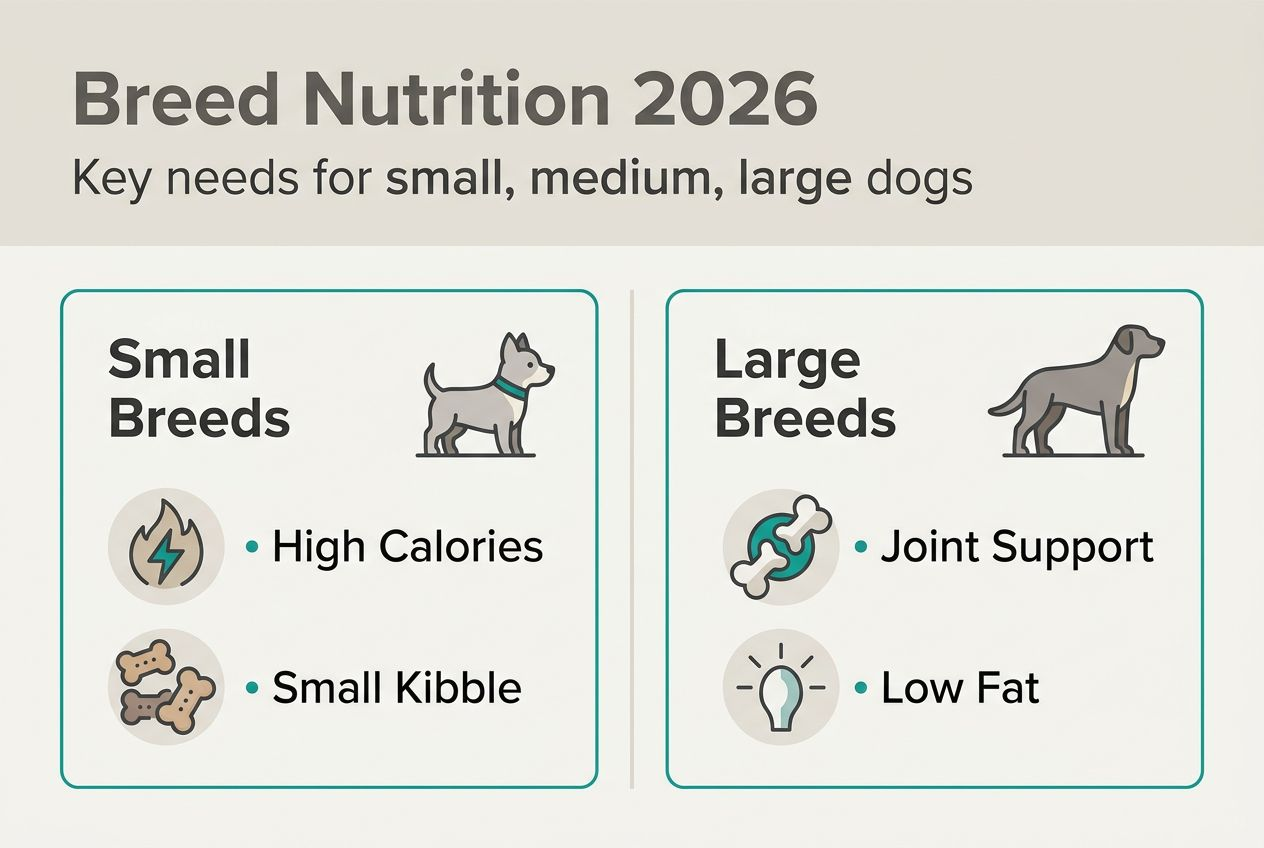
Small breeds benefit from calorie-dense, nutrient-rich formulas with appropriately sized kibble. Their faster metabolisms demand more calories per kilogram of body weight than larger breeds. Tiny kibble pieces prevent choking and ensure proper chewing, whilst concentrated nutrition delivers essential vitamins and minerals in smaller portions.
| Breed Size | Protein Needs | Key Nutrients | Kibble Size |
|---|---|---|---|
| Large | 22-26% | Glucosamine, omega-3s, controlled minerals | Large chunks |
| Medium | 20-28% | Balanced protein and fat, L-carnitine | Medium pieces |
| Small | 25-30% | Concentrated calories, DHA, antioxidants | Tiny kibble |
| Puppies (all sizes) | 28-32% | Higher omega-3s, controlled minerals, antioxidants | Size-appropriate |
Steps to select breed-size appropriate food:
- Identify your dog’s adult weight category (small under 10kg, medium 10 to 25kg, large over 25kg)
- Check protein and fat percentages match breed size requirements
- Verify presence of breed-specific nutrients like joint support for large breeds
- Confirm kibble size suits your dog’s jaw and chewing ability
- Choose life-stage appropriate formulas for puppies, adults, or seniors
Find grain-free options for large breeds and optimal food for small breeds that meet these specific nutritional profiles.
How to choose and transition to the right breed-specific dog food
Selecting appropriate breed-specific food requires evaluating your dog’s size, age, activity level, and any health conditions. Start by consulting your vet about nutritional recommendations tailored to your dog’s breed and individual needs. Vets can identify potential health risks common to specific breeds and suggest dietary strategies to mitigate them.
Look for high-quality, natural, vet-approved grain-free formulas that list animal proteins as primary ingredients. Avoid foods with artificial colours, flavours, or preservatives that offer no nutritional value. Check guaranteed analysis panels for protein, fat, and mineral content appropriate to your dog’s breed size. Quality formulas clearly state their intended breed size and life stage on packaging.
Adequately chewing appropriately sized kibbles improves digestion and brain health in dogs. Match kibble dimensions to your dog’s mouth size. Large breed dogs should have kibble that requires genuine chewing effort, whilst small breeds need pieces they can comfortably manage. This seemingly minor detail significantly impacts digestion, dental health, and eating satisfaction.
Transition gradually over 7 to 10 days mixing old and new food to avoid digestive upset. Start with 25% new food mixed with 75% current food for two to three days. Gradually increase the new food proportion every few days until you reach 100% new food. This slow transition allows your dog’s digestive system to adapt to new ingredients and nutrient profiles.
Pro Tip: Keep a feeding journal during transitions noting stool quality, energy levels, and coat condition. These indicators reveal how well your dog tolerates the new formula and whether it delivers expected health benefits.
Transition timeline:
- Days 1 to 3: 25% new food, 75% current food
- Days 4 to 6: 50% new food, 50% current food
- Days 7 to 9: 75% new food, 25% current food
- Day 10: 100% new food
Observe for digestive tolerance and energy changes during transition. Loose stools or reduced appetite may indicate you’re moving too quickly. Slow the transition if needed, maintaining current ratios for additional days before progressing. Some dogs with sensitive stomachs require 14 days or longer for complete transitions.
Explore grain-free dog meal prep ideas to supplement kibble with fresh, breed-appropriate ingredients that enhance nutrition and variety.
Find premium breed-specific grain-free dog food at Ultimate Pet Foods
Now that you understand breed-specific nutritional requirements, finding quality formulas becomes straightforward. Ultimate Pet Foods offers a comprehensive range of breed-focused, grain-free dog foods formulated with natural, vet-approved ingredients designed for optimal health. Each formula addresses specific breed size needs, from joint support for large breeds to calorie-dense nutrition for small breeds.
Explore detailed breed-specific dog food options that match your dog’s unique requirements. Compare formulas side by side using the dog food comparison tool to identify the perfect nutritional profile. Discover why a grain-free diet benefits dogs across all breeds and life stages, supporting everything from digestive health to coat condition.
Frequently asked questions
Is grain-free dog food safe for all breeds?
Grain-free diets are safe for all breeds when balanced and vet-approved. The FDA found no causal link between grain-free diets and non-hereditary dilated cardiomyopathy in dogs. Ensure the formula meets nutritional needs specific to your dog’s breed and life stage. Quality grain-free foods provide complete nutrition without cardiac risks.
What makes large breed dog food different?
Large breed foods contain lower calcium and phosphorus and higher joint-support nutrients to prevent growth disorders. Marine omega-3s and calcium help maintain strong joints in large breeds throughout their lives. These formulas are specifically designed to support healthy skeletal development and prevent conditions like hip dysplasia.
How do I transition my dog to a new breed-specific food?
Introduce new food slowly over 7 to 10 days mixing with current food in gradually increasing proportions. Monitor for digestive tolerance, stool quality, and energy levels, adjusting the pace if needed. Some sensitive dogs require longer transitions. Explore grain-free meal prep ideas to supplement the transition with fresh ingredients.
Do small breeds really need different food than large breeds?
Absolutely. Small breeds have faster metabolisms requiring more calories per kilogram of body weight, delivered in nutrient-dense, tiny kibble pieces. Large breeds need controlled mineral levels and joint support nutrients in larger kibble that encourages proper chewing. Generic formulas cannot adequately address these opposing nutritional requirements.
Can puppies eat adult breed-specific food?
Puppies require higher protein, specific mineral ratios, and increased omega-3 levels that adult formulas don’t provide. Large breed puppies especially need controlled calcium and phosphorus to prevent developmental bone disorders. Always choose puppy-specific formulas until your dog reaches adult size, typically 12 to 18 months depending on breed.