

What makes premium dog food: key factors for owners

The word ‘premium’ is everywhere on dog food packaging, yet it rarely means what you’d expect. A higher price tag, a sleek bag, or a list of trendy ingredients does not automatically make a food genuinely superior for your dog’s health. In fact, many premium labels are built on marketing rather than evidence. We’ve seen countless well-meaning owners spend more and still feed their dogs food that falls short on formulation, testing, and transparency. This guide cuts through the noise so you can confidently identify what truly qualifies as premium nutrition and make choices that genuinely support your dog’s long-term wellbeing.
Table of Contents
- What defines premium dog food?
- The importance of tailored nutrition for specific health needs
- Grain-free, natural, and fresh: Are the claims justified?
- Research, evidence and quality control: Why they matter
- How to choose premium dog food: Step-by-step
- Why most premium claims miss the mark: Our experience
- Explore premium choices backed by science
- Frequently asked questions
Key Takeaways
| Point | Details |
|---|---|
| Evidence over label | Premium status is about science-backed formulation, not price or trends. |
| Tailored nutrition matters | Premium foods address allergies, sensitivities, and age-related needs. |
| Not all trends are equal | Grain-free and natural claims require careful scrutiny and vet guidance. |
| Check for transparency | Look for brands with clinical feeding trials, qualified nutritionists, and open evidence. |
What defines premium dog food?
The word ‘premium’ has no legal definition in the pet food industry. Any brand can print it on a bag without meeting a single verifiable standard. So if price and packaging aren’t reliable guides, what actually separates a genuinely premium food from an ordinary one?
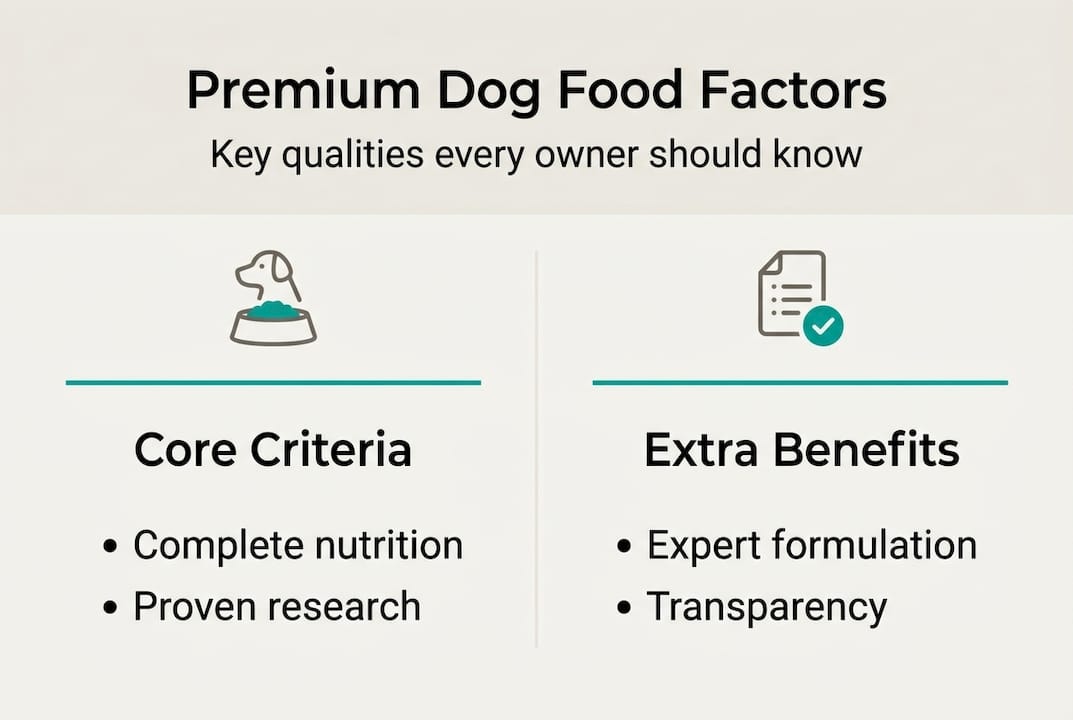
The most trusted framework comes from the World Small Animal Veterinary Association (WSAVA). WSAVA standards specify a full-time nutritionist, feeding trials, and strict quality control as the baseline for a food worth trusting. These aren’t optional extras. They’re the difference between a formula that works and one that simply sounds good.
Here’s what to look for when assessing whether a dog food genuinely earns the premium label:
- A full-time, qualified animal nutritionist involved in formulation
- Feeding trials that confirm real-world results, not just calculated nutrient profiles
- Rigorous quality control at every stage of production
- Transparent sourcing of ingredients with clear provenance
- No reliance on buzzwords like ‘superfood’, ‘ancestral’, or ‘raw-inspired’ without clinical backing
Brands that consistently meet these criteria include names like Purina Pro Plan, Hill’s Science Diet, and Royal Canin. They invest heavily in nutrition research and publish their findings. That said, smaller specialist brands can also meet these standards, and some do so with a stronger focus on natural, grain-free formulations.
Red flags to watch for include vague ingredient sourcing, no mention of feeding trials, and an overreliance on emotional language rather than nutritional data. Learning to spot quality dog food by reading beyond the front of the bag is one of the most valuable skills you can develop as a health-conscious owner.
Pro Tip: Contact the brand directly and ask whether a board-certified veterinary nutritionist was involved in formulating the recipe. A genuinely premium brand will answer this question clearly and confidently.
The importance of tailored nutrition for specific health needs
Understanding the core standards helps, but true premium nutrition means addressing your dog’s specific health requirements. A food that’s excellent for a healthy adult Labrador may be entirely unsuitable for a senior Spaniel with joint issues or a Westie prone to skin sensitivities.
Premium dog foods increasingly offer targeted formulas designed around real health challenges. These include:
- Hypoallergenic options using hydrolysed proteins or novel protein sources for dogs with food allergies
- Joint support formulas enriched with glucosamine and omega-3 fatty acids
- Digestive health recipes featuring prebiotics, postbiotics, and highly digestible proteins
- Weight management foods with controlled calorie density and added L-carnitine
The science behind tailored nutrition is growing rapidly. Fresh and human-grade foods, in particular, are showing promising results. Metabolomic benefits have been documented in studies examining fresh food diets, with improvements in metabolism and reduced harmful glycation end-products noted especially in senior dogs.

| Feature | Standard food | Premium tailored food |
|---|---|---|
| Allergy support | Generic proteins | Hydrolysed or novel proteins |
| Joint health | Minimal support | Added glucosamine and omega-3 |
| Digestive health | Basic fibre | Prebiotics and postbiotics |
| Senior dog support | Standard formula | Reduced glycation, metabolic support |
| Ingredient transparency | Often vague | Clear sourcing and provenance |
The ‘human-grade’ and ‘fresh’ movements are gaining traction for good reason. When backed by genuine nutritional research, these approaches can deliver measurable health improvements. The key word, however, is backed. Fresh ingredients without evidence-based formulation are simply expensive, not premium.
Pro Tip: If your dog has a specific health condition, work with your vet before switching foods. A premium formula tailored to their needs will always outperform a generic ‘premium’ label.
Grain-free, natural, and fresh: Are the claims justified?
Having covered health tailoring, it’s time to unpack common marketing claims and their real nutritional value. Grain-free diets are perhaps the most misunderstood trend in the dog food world. Many owners assume grain-free automatically means better. It doesn’t.
Grain-free diets are suitable for dogs with specific grain allergies or sensitivities, but they are not inherently superior for all dogs. There are also important cardiac health considerations. Some grain-free foods have been linked to dilated cardiomyopathy (DCM), a serious heart condition, particularly when they rely heavily on legumes like peas and lentils as substitutes. Monitoring taurine levels is essential with certain grain-free formulations.
Here’s how to assess whether a trend is genuinely right for your dog:
- Identify the need. Does your dog have a confirmed grain allergy or sensitivity? If not, grain-free may offer no benefit.
- Check the formulation. Is the grain-free recipe balanced and backed by a nutritionist? Or does it simply swap grains for legumes without clinical consideration?
- Review the research. Look for brands that reference feeding trials and cardiac health monitoring in their grain-free food formulations.
- Assess ingredient quality. Natural and fresh claims should be supported by transparent sourcing, not just attractive language.
- Consult your vet. Especially if your dog is a breed predisposed to heart conditions.
“A well-formulated, balanced diet, whether grain-inclusive or grain-free, does not increase cardiac risk when properly researched and clinically supported.”
The benefits of grain-free diets are real for the right dogs. The problem is that marketing has outpaced the science for many products. Always ask what the evidence says, not just what the label claims. You can also explore whether grain-free is safe for your specific dog before making the switch.
Research, evidence and quality control: Why they matter
Trendy ingredients aside, premium truly comes down to continual evidence and strict standards. A beautiful ingredient list means very little if the food hasn’t been tested to confirm it actually delivers what it promises.
Scientific feeding trials are the gold standard. They confirm that a diet supports health outcomes in real dogs over time, not just on paper. Long-term research into premium diets has shown no significant DCM differences between well-formulated grain-inclusive and grain-free foods, provided the formulation is nutritionally complete and rigorously tested. This is an important finding that challenges some of the fear-based marketing around both grain-free and conventional foods.
“Feeding trials lasting 18 months found no meaningful difference in cardiac health outcomes between premium balanced diets, regardless of grain content, when formulated to a high standard.”
When evaluating a brand’s commitment to quality, here’s what to check:
- Third-party testing: Is the food tested by an independent laboratory for nutrient accuracy?
- Transparent sourcing: Can the brand tell you exactly where each ingredient comes from?
- Recall history: Has the brand had significant recalls? How did they respond?
- Published research: Does the brand reference peer-reviewed studies or conduct their own feeding trials?
- Nutritionist involvement: Is a qualified animal nutritionist named and contactable?
Supporting dog food for heart health means choosing brands that take cardiac monitoring seriously, especially if your dog is a larger breed or a senior. Evidence isn’t just reassuring. It’s the foundation of every genuinely premium product.
How to choose premium dog food: Step-by-step
After understanding what premium means, here’s how to put theory into practice for your individual dog. The process doesn’t need to be overwhelming. A clear, methodical approach makes it straightforward.
- Start with your dog’s health profile. Age, breed, weight, activity level, and any existing conditions should shape your search before you look at a single product.
- Use the WSAVA checklist. The WSAVA dog food guide provides evidence-based questions you can ask any brand to scrutinise their credentials properly.
- Read the ingredient list critically. Named meat sources should appear first. Avoid vague terms like ‘meat derivatives’ without further clarification.
- Check for feeding trial evidence. Look on the brand’s website or contact them directly. Genuine premium brands are proud of this information.
- Look at the nutritional analysis. Protein, fat, fibre, and moisture levels should align with your dog’s life stage and health needs.
- Research the brand’s transparency. Do they publish sourcing information? Do they have a named nutritionist? Can you reach them easily?
When spotting quality dog food, remember that the front of the bag is marketing. The back panel and the brand’s website tell the real story.
Here are the questions every health-conscious owner should ask before buying:
- Who formulated this recipe, and what are their qualifications?
- Has this food undergone feeding trials with real dogs?
- Is this formula appropriate for my dog’s specific health needs?
- What is the brand’s approach to quality control and ingredient sourcing?
- If my dog has allergies, does this food address them with evidence-backed ingredients?
For dogs with sensitivities, our guide to grain-free diets for dogs with allergies offers further clarity on matching the right formula to your dog’s needs.
Pro Tip: Don’t hesitate to email or call a brand and ask for their nutritionist’s credentials and feeding trial data. If they can’t or won’t answer, that tells you everything you need to know.
Why most premium claims miss the mark: Our experience
Bringing these lessons together, here’s what conventional wisdom gets wrong about premium pet nutrition. In our experience, the gap between marketing and reality in the dog food industry is significant. Most supermarket ‘premium’ products are built on emotional language, attractive packaging, and ingredient trends, not clinical evidence.
We’ve seen brands proudly label their food as ‘natural’, ‘fresh’, or ‘grain-free’ while being entirely unable to provide feeding trial data or name a qualified nutritionist. These aren’t minor oversights. They’re fundamental failures of transparency that affect your dog’s health directly.
What genuinely makes a difference is a brand’s willingness to be open. Open about who formulated the recipe. Open about where the ingredients come from. Open about the research that supports their claims. That kind of transparency is rare, but it’s the hallmark of a brand you can trust.
We believe that science-backed nutrition should be the baseline, not the exception. Your dog’s health history, breed predispositions, and individual sensitivities should always guide your choices above any trend or label. The best premium foods earn that title quietly, through evidence, not noise.
Pro Tip: The brands worth trusting are usually the ones that make it easy to speak with an animal nutritionist and provide open access to their research. If a brand makes you work hard to find this information, look elsewhere.
Explore premium choices backed by science
If you’re ready to discover premium nutrition beyond the label, genuine next steps are waiting for you. 🐾
At Ultimate Pet Foods, we believe every dog deserves food that’s been properly formulated, rigorously tested, and honestly labelled. Our dog food comparison page lets you evaluate options side by side, so you can make a facts-based decision with confidence. Not sure where to start? Our sample box is the perfect low-commitment way to trial premium, natural recipes tailored to your dog’s needs. And if you’re weighing up the grain-free route, our dedicated page on grain-free benefits explains the science clearly and honestly. Gentle on the inside, strong on the outside — that’s what real premium nutrition looks like.
Frequently asked questions
Do premium dog foods have to be grain-free?
No, grain-free isn’t required for premium status. Grain-free is suitable in certain scenarios, such as confirmed grain allergies, but it is not essential or inherently superior for all dogs.
How do I know if a dog food brand meets premium standards?
Check for a full-time qualified nutritionist, evidence of feeding trials, and compliance with WSAVA guidelines as your baseline criteria for evaluating any brand.
Are fresh or human-grade dog foods always better?
Not always. Research documents metabolomic benefits for some dogs on fresh food diets, but what matters most is whether the formulation is evidence-backed and appropriate for your individual dog.
Is it safe to switch my dog to a grain-free or premium food myself?
Always consult your vet first, particularly if your dog has heart issues, allergies, or underlying health conditions, as major diet changes require proper veterinary oversight.
Does premium food really make a difference for senior dogs?
Yes. Studies show that quality premium diets can improve metabolism and support cardiac health, making the right formulation especially valuable for older dogs with changing nutritional needs.


