
How to Spot Quality Dog Food for Optimal Canine Health
Selecting the right food for your dog can feel complicated, but nearly half of British pet owners admit they struggle to decode labels and ingredient lists. Dietary sensitivities are increasingly common, and with so many brands making bold claims, finding truly premium grain-free options is challenging. This guide reveals what to check on every package, so health-conscious British dog owners can confidently provide nutrition that supports their dog’s specific needs and wellbeing.
Table of Contents
- Step 1: Assess Ingredient Quality On Packaging
- Step 2: Evaluate Protein Sources And Nutritional Value
- Step 3: Identify Common Allergens And Fillers
- Step 4: Check For Health-Boosting Added Benefits
- Step 5: Verify Credibility With Independent Certifications
Quick Summary
| Key Insight | Explanation |
|---|---|
| 1. Prioritise Named Proteins | Choose dog foods that list specific animal proteins like “chicken” or “salmon” as the first ingredient for higher nutritional value. |
| 2. Avoid Common Allergens | Identify and minimise ingredients like wheat, soy, and corn that may trigger allergic reactions or sensitivities in dogs. |
| 3. Look for Functional Additives | Seek foods that contain health-boosting ingredients such as prebiotics, probiotics, and antioxidants to support your dog’s overall wellness. |
| 4. Verify Independent Certifications | Check for reputable certifications from bodies like the UK Pet Food Federation to ensure food safety and quality assurance. |
| 5. Cross-Check Nutritional Information | Compare the ingredient list with the guaranteed analysis section to confirm the food meets your dog’s dietary needs. |
Step 1: Assess ingredient quality on packaging
Understanding how to read and interpret dog food packaging is crucial for selecting a nutritious meal for your canine companion. When examining ingredients, you want to look beyond marketing claims and dive into the actual nutritional composition.
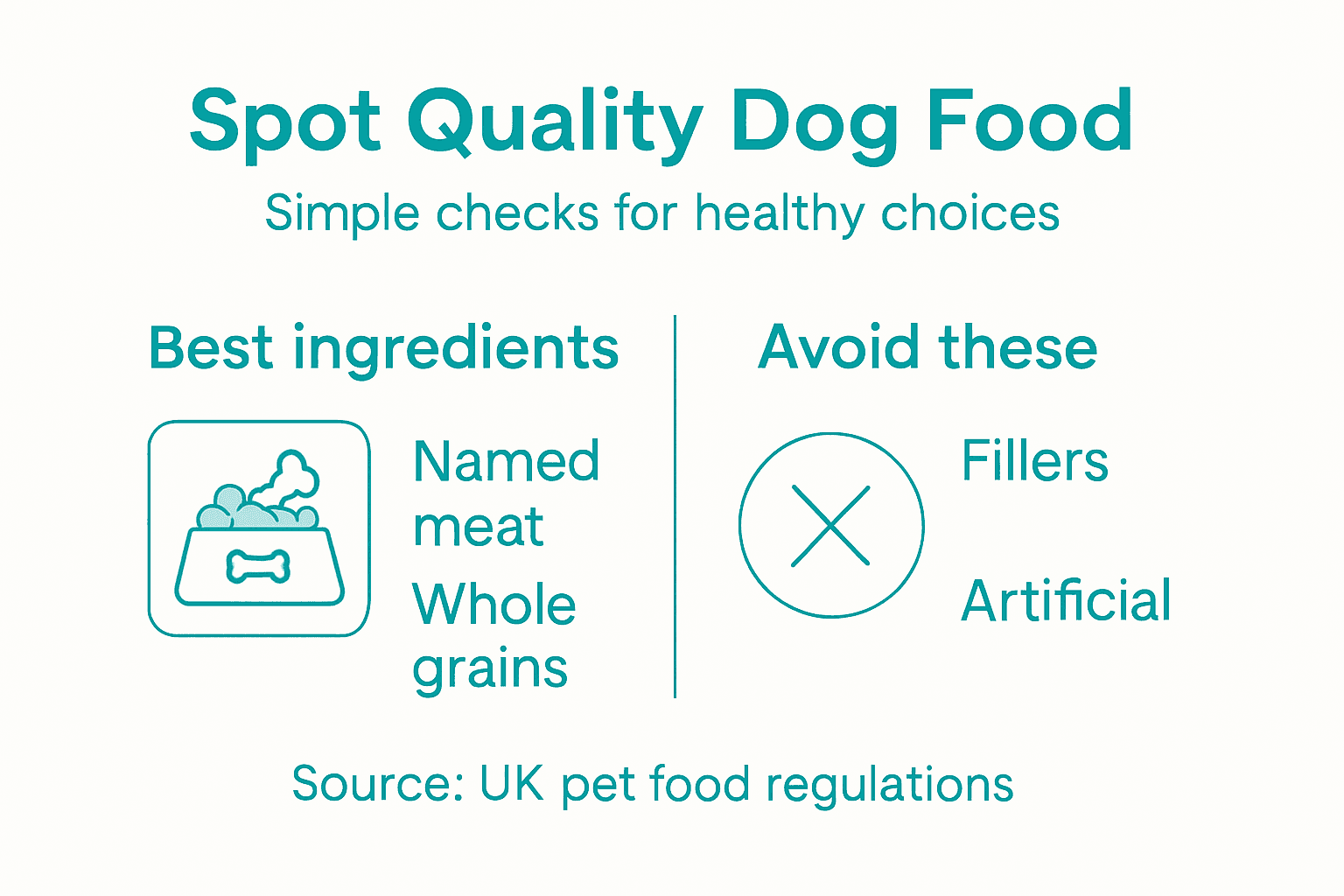
Start by checking the ingredient safety standards established by UK regulations. The first few ingredients listed are the most significant, representing the largest proportions in the food. Look for specific meat or fish names as the first ingredient rather than generic terms like “meat derivatives” or “animal protein”. High-quality dog foods typically list a named protein source first such as “chicken”, “salmon”, or “lamb” instead of vague descriptions.
Also scrutinise the protein sources and their origins. Freshly prepared meats that are gently cooked retain more nutritional value compared to heavily processed meat meals. Avoid foods with excessive fillers like corn, wheat, or unspecified animal by-products. The Food Standards Agency mandates clear labelling, so manufacturers must provide transparent information about ingredient composition.
Top tip: Always cross-reference ingredient lists with the guaranteed analysis section to understand precise nutrient percentages and confirm the food meets your dog’s specific dietary requirements.
Step 2: Evaluate protein sources and nutritional value
Understanding the nutritional profile of your dog’s food requires careful analysis of protein sources and their quality. Protein is the cornerstone of canine nutrition, supporting muscle development, immune function, and overall health.
When evaluating protein sources, look beyond basic percentage claims. Protein source quality depends on factors like ingredient origin, processing method, and amino acid composition. High-quality dog foods should list specific animal proteins first (such as “chicken”, “salmon”, or “lamb”) rather than generic “meat” or “animal derivatives”. These named protein sources indicate a more transparent and potentially more nutritious ingredient profile.
The UK pet food label requirements mandate nutritional transparency, so examine the analytical declaration carefully. Check for crude protein percentages and ensure the food guarantees nutritional adequacy for your dog’s specific life stage. Pay attention to protein digestibility proteins from fresh, minimally processed sources are typically more bioavailable and easier for your dog to absorb.
Top tip: Compare protein sources across different dog food brands and look for foods that list high-quality, named animal proteins as the first ingredients.
Step 3: Identify common allergens and fillers
Knowing how to recognise potential allergens and unnecessary fillers in dog food is crucial for maintaining your canine companion’s health and well-being. Understanding what ingredients might trigger sensitivities can help you make more informed nutritional choices.
Carefully examine the ingredient list for common dog food allergens, which typically include wheat, soy, dairy, corn, and certain meat proteins. These ingredients can cause digestive issues, skin irritations, or allergic reactions in some dogs. Look for foods that minimise or eliminate these potential triggers, especially if your dog has shown previous sensitivity. Pay close attention to the first few ingredients, as they constitute the largest proportion of the food.

European pet food regulations control ingredient quality to ensure safety and nutritional balance. Avoid dog foods with excessive corn, wheat gluten, or unspecified meat by-products, which often serve as cheap fillers with limited nutritional value. Instead, seek out foods with named protein sources and whole food ingredients that provide genuine nutritional benefits.
Top tip: Consider working with your veterinarian to identify your dog’s specific food sensitivities through an elimination diet or allergy testing.
Step 4: Check for health-boosting added benefits
Navigating the world of canine nutrition means looking beyond basic ingredients to understand the additional health-supporting components that can elevate your dog’s diet. Knowing what functional ingredients to seek out can make a significant difference in your pet’s overall wellness.
Modern dog foods now incorporate functional health ingredients designed to support specific health needs. Look for scientifically formulated additions like prebiotics, probiotics, antioxidants, and targeted vitamins that go beyond standard nutritional requirements. These components can help support digestive health, boost immune function, and address specific wellness concerns such as joint mobility, skin condition, or cognitive performance.
Pet food manufacturers carefully select and balance these additional ingredients to provide comprehensive nutritional support. Seek out foods that include vegetable fibres, omega fatty acids, and specific micronutrients that contribute to your dog’s long-term health. Pay attention to labels that highlight functional health benefits, such as digestive support, skin and coat care, or immune system enhancement.
Here’s a summary of how common dog food ingredients affect canine health:
| Ingredient Type | Potential Health Impact | Typical Usage in Dog Food |
|---|---|---|
| Named animal proteins | Supports muscle and immune health | Primary protein source |
| Meat derivatives | May be less nutritious | Often used as cost-saving filler |
| Wheat, soy, corn | Can trigger allergies | Common bulk filler |
| Fresh vegetables | Delivers vitamins and fibre | Used for added nutrition |
| Omega fatty acids | Supports skin and coat health | Included for functional benefits |
Top tip: Always consult with your veterinarian to understand which specific health-boosting ingredients might be most beneficial for your individual dog’s age, breed, and health condition.
Step 5: Verify credibility with independent certifications
Validating the trustworthiness of dog food goes beyond reading labels and requires understanding the independent certifications that demonstrate a manufacturer’s commitment to quality and safety. This process helps you make informed decisions about your dog’s nutrition.
Start by examining pet food safety standards through official certifications. The UK Pet Food Federation maintains rigorous standards, with members annually committing to legal compliance and quality assurance. Look for evidence of third-party testing, such as certifications from recognised bodies like the British Veterinary Association or independent laboratories that verify nutritional claims and product safety.
Independent testing laboratories provide critical verification of pet food quality. These organisations conduct comprehensive analytical testing, including shelf-life studies and nutritional claim assessments. Seek out dog foods that have undergone thorough scientific evaluation, which demonstrates a manufacturer’s transparency and commitment to producing high-quality, safe nutritional products for your canine companion.
This table compares independent certification markers for dog food credibility:
| Certification Body | What They Check | Benefit to Consumers |
|---|---|---|
| UK Pet Food Federation | Legal compliance, safety | Ensures quality assurance |
| British Veterinary Association | Nutritional standards | Trust in scientifically vetted claims |
| Independent laboratories | Analytical testing | Verifies safety and nutritional claims |
Top tip: Request detailed certification information directly from manufacturers and do not hesitate to ask about their specific quality control processes and independent testing protocols.
Choose Quality Nutrition to Support Your Dog’s Health Today
Finding truly high-quality dog food that meets your pet’s specific needs can be challenging with unclear ingredient lists and fillers masking nutritional value. This article highlights how to spot named animal proteins, avoid common allergens, and seek added health benefits in formulations. The frustration of trying to decode labels and the desire to provide optimal canine health is something every dog owner understands.
At Ultimate Pet Foods, we share your commitment to transparent nutrition. Our range of premium, natural, grain-free dog foods features carefully selected fresh ingredients designed to support digestion, immune function and coat health. Whether you need specialised nutrition for a large breed puppy or a grain free small breed option, you can trust the detailed labelling and independently tested quality of our products.
Explore the difference that named, hypoallergenic proteins make with our Nutritious & Delicious: Buy Our large breed puppy food Today! or discover the tailored benefits of our Grain free small breed dog food range.
Give your dog the nutrition they deserve by choosing quality ingredients backed by scientific testing. Visit https://ultimatepetfoods.co.uk now to shop our complete selection and start feeding your dog with confidence.
Frequently Asked Questions
How can I assess the quality of dog food ingredients?
To assess the quality of dog food ingredients, start by checking the packaging for clear labels and specific meat or fish names as the first ingredient. Avoid generic terms like “meat derivatives” and focus on named protein sources such as “chicken” or “salmon”. Review the ingredient list against the guaranteed analysis for a complete understanding of nutrient percentages and dietary needs.
What protein sources should I look for to ensure my dog’s nutrition?
To ensure your dog’s nutrition, look for high-quality protein sources listed first in the ingredient list, such as named animal proteins like “chicken”, “salmon”, or “lamb”. Avoid generic terms such as “meat” or “animal by-products”, as these may indicate lower nutritional value. Compare protein sources across brands to find options with high-quality, specific animal proteins.
How do I identify common allergens in dog food?
Identify common allergens by carefully examining the ingredient list for ingredients like wheat, soy, corn, and dairy, which can trigger sensitivities in some dogs. If your dog has shown previous sensitivity, avoid foods that contain these allergens and opt for options with minimal filler ingredients. Reviewing the first few ingredients will help guide your choice.
What health-boosting ingredients should I look for in dog food?
Look for functional health ingredients such as prebiotics, probiotics, antioxidants, and omega fatty acids in dog food. These components can support digestive health, boost immunity, and improve overall wellness. Check labels for specific beneficial claims, such as support for joint mobility or skin health, to choose the right food for your dog.
How can I verify the credibility of dog food brands?
To verify the credibility of dog food brands, look for independent certifications from recognised authorities that demonstrate compliance with safety and nutritional standards. Examine whether the manufacturer has undergone third-party testing to validate their nutritional claims. Request detailed certification information to ensure transparency in the quality of the dog food you choose.