
Pet food safety tips every dog owner should know
TL;DR:
- Many dog owners focus on what they feed their pets but neglect proper storage and handling practices that ensure food safety. Following hygienic routines and correct storage protects dogs from illness and prevents household contamination, especially when dealing with raw or commercial diets. Consistent, proper habits in purchasing, storing, and feeding are essential for maintaining pet health and safety every day.
Most dog owners focus on what they feed their dog. Far fewer stop to think about how they store, handle, and select that food. Yet the gap between a safe meal and a contaminated one can be as small as a damp storage bin, an unwashed scoop, or a bag left open on a warm shelf. Following the right pet food safety tips protects your dog from illness and, in many cases, protects your household too. This guide covers everything from purchasing safe pet food to storing kibble correctly and practising hygienic feeding routines every single day.
Table of Contents
- Key takeaways
- Purchasing safe pet food
- Storing dry dog food correctly
- Hygiene practices during feeding
- Raw pet food risks and how to manage them
- Household hazards and foods to avoid
- Glenn’s take on what really matters
- Feed your dog safely, every single day 🐾
- FAQ
Key takeaways
| Point | Details |
|---|---|
| Buy quality from the start | Choose commercially balanced diets with verified manufacturing standards and human-grade ingredients for daily feeding. |
| Store kibble carefully | Keep dry food below 27°C and 60% humidity in a sealed, clean container away from damp areas. |
| Practise daily hygiene | Wash hands before and after feeding, clean bowls regularly, and use dedicated utensils to prevent cross-contamination. |
| Raw food carries real risks | Raw pet food can harbour Salmonella and E. coli. Strict refrigeration at or below 4°C and thorough cleaning are non-negotiable. |
| Know your household hazards | Common foods like chocolate, xylitol, and excess salt are toxic to dogs. Always check ingredient lists carefully. |
Purchasing safe pet food
The first layer of protection happens before the food even reaches your home. Not all dog foods are created equal, and understanding what separates a safe, nutritious formula from a risky one is worth your time.
Look for foods that have been formulated by veterinary nutritionists and that meet recognised industry standards. Vet-formulated commercial diets that comply with AAFCO guidelines have undergone extensive research and deliver complete, balanced nutrition. This matters because homemade or raw diets without proper oversight frequently fall short on key nutrients, and the shortfalls are not always obvious until health problems appear.
Pay attention to how the food is manufactured. At Ultimatepetfoods, every recipe is made with freshly prepared meat or fish, gently cooked at 82°C to help lock in freshness, flavour, and nutrients. This gentle cooking process also reduces the microbial risk that comes with raw or poorly processed ingredients. Our recipes are complete and balanced, suitable for daily lifelong feeding, and include added prebiotics (MOS and FOS) to support digestive health and gut balance from the inside out.
When you are purchasing safe pet food, check these things before adding a bag to your trolley:
- Packaging integrity: Look for sealed bags with no tears, dents, or swelling, which can indicate spoilage or bacterial activity.
- Use-by date: Never purchase food close to or past its best-before date. Check the pet food expiration guidelines before you buy.
- Recall awareness: Stay informed on pet food recalls updates by bookmarking the FSA’s alert page. If a product is flagged, stop feeding immediately and contact your vet.
- Ingredient transparency: Avoid foods with vague ingredient names like “meat derivatives.” Named protein sources and clearly listed additives are signs of a trustworthy recipe.
Pro Tip: Sign up for email alerts from the Food Standards Agency so you receive pet food recalls updates directly to your inbox rather than discovering them by chance.
Storing dry dog food correctly
Even the highest-quality kibble deteriorates quickly if stored incorrectly. Heat and humidity are the two biggest threats.
Dry pet food stored above 27°C or in humidity exceeding 60% is vulnerable to fat oxidation, nutrient degradation, and mould growth. This is why garages, laundry rooms, and kitchens near heat sources are poor storage locations, even though they are the most common choices.
Here is how to store pet food properly, step by step:
- Choose a cool, dry, dark location. A kitchen cupboard away from the cooker or a purpose-built pantry shelf is ideal.
- Use an airtight container. A sealed bin with a proper lid prevents moisture and pests from getting in.
- Keep the original bag inside the container. Retaining the original packaging means you keep the lot number and best-before date, both of which are critical if a recall is issued.
- Clean the container between bags. Unwashed storage bins accumulate rancid fat residues that transfer to fresh kibble and accelerate spoilage. Wash, rinse, and fully dry the bin before adding a new bag.
- Follow first-in, first-out rotation. Label the date you opened each bag and always use older stock before opening a new one.
- Avoid damp environments. Heat accelerates quality loss and humidity raises moisture content, creating conditions where mould thrives.
| Storage factor | Ideal condition | Risk if ignored |
|---|---|---|
| Temperature | Below 27°C | Fat oxidation and nutrient loss |
| Humidity | Below 60% | Mould growth and spoilage |
| Container | Sealed and airtight | Pest access and moisture ingress |
| Bin cleanliness | Washed between bags | Rancid residue contaminating fresh food |
| Packaging | Original bag retained | Loss of recall and lot number details |
Pro Tip: If you transfer kibble into a storage bin, tape the original bag’s label to the outside of the container. This keeps all the pet food expiration guidelines and lot codes visible without having to dig through the bin.
Our guide to storing dog food naturally goes deeper into recommended containers and the environmental factors that affect shelf life.
Hygiene practices during feeding
Handling pet food properly does not stop at the storage cupboard. What happens at mealtime matters just as much.
Contaminated pet food can spread Salmonella and E. coli to humans through contact with bowls, scoops, and kitchen surfaces. The FSA has highlighted this risk repeatedly, and yet most households have no consistent routine around pet feeding hygiene. The good news is that best pet food hygiene habits are straightforward once they become routine.
- Wash your hands with soap and warm water before and after every feeding session. This is one of the simplest, most effective safe pet feeding practices you can adopt.
- Use a dedicated scoop or measure and clean it weekly alongside the storage container.
- Sanitise feeding bowls regularly. Washing and disinfecting feeding bowls and surfaces removes residues and reduces bacterial load significantly. A weekly wash in hot soapy water or the dishwasher (for dishwasher-safe bowls) is the minimum.
- Keep pet food areas separate from where you prepare human food. Cross-contamination between your dog’s feeding mat and your chopping board is a genuine risk.
- Replace worn bowls. Scratched plastic bowls harbour bacteria in microscopic crevices that ordinary washing cannot reach. Stainless steel or ceramic options are easier to keep truly clean. You can find practical guidance on choosing the right dog bowl on our blog.
Pro Tip: Place a designated feeding mat under your dog’s bowls and wash it weekly alongside the bowls. It limits the spread of food particles to surrounding floor areas and simplifies your cleaning routine.
Raw pet food risks and how to manage them
If you use raw food as a complement or are considering it, the safety obligations increase considerably.
Harmful bacteria were found in 35% of sampled raw pet foods, including Salmonella, E. coli, and Campylobacter. Beyond that, the FSA has also flagged the risk of antimicrobial-resistant bacteria in raw food, which poses additional concerns for both pets and the people who handle it.
If you do choose to feed raw, these precautions are not optional:
- Store raw pet food at or below 4°C in a dedicated section of your fridge, separate from human food at all times.
- Thaw raw food inside the fridge or in the microwave only. Never defrost on a counter at room temperature.
- Clean and disinfect every surface, utensil, and container that contacts raw food immediately after use.
- Never let your dog lick your face after eating a raw meal.
- Supervise children and anyone with a compromised immune system carefully, as both the CDC and the FSA caution vulnerable groups against contact with raw pet food environments.
The safest and most practical approach for everyday feeding is a gently cooked, complete dry diet. Our raw dog food safety guide covers the full picture if you want to explore both sides.
For households that want the nutritional richness of fresh ingredients without the microbial risks of raw feeding, Ultimatepetfoods’ recipes offer a genuinely safer daily alternative. You can read more in our raw food safety guide.
Household hazards and foods to avoid
Preventing pet food contamination is one side of the safety picture. The other is knowing which everyday foods and household items can seriously harm your dog.
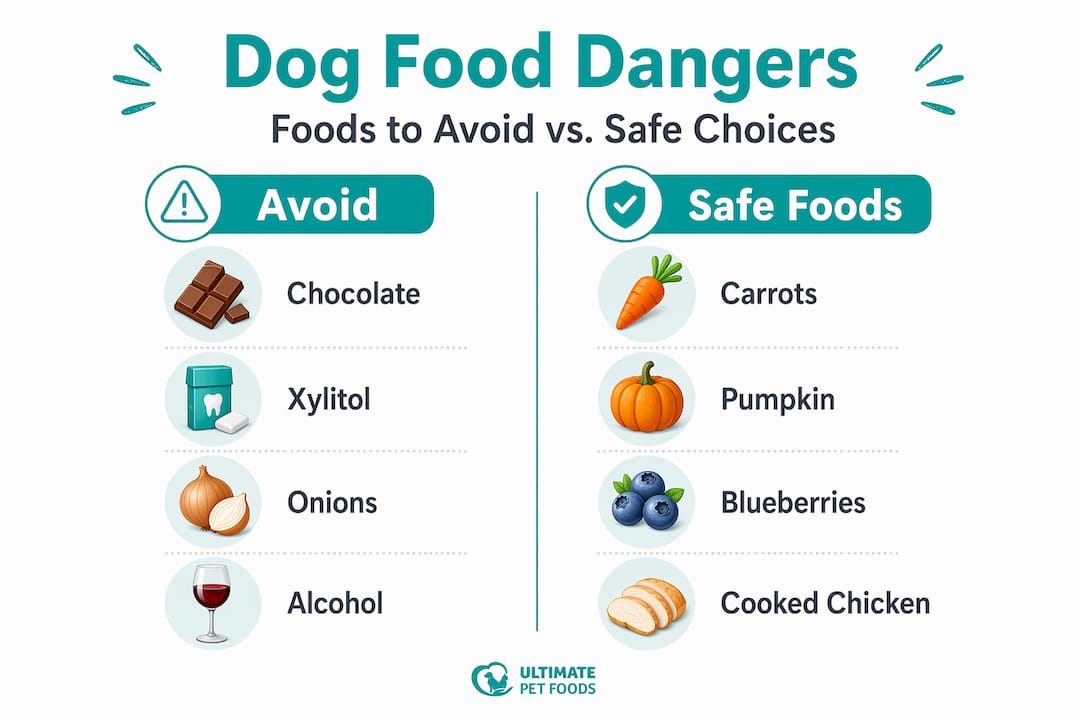
The numbers are sobering. A 10-pound dog can become severely ill from just 0.5 teaspoons of table salt, and 1.5 teaspoons can prove fatal. Salt is just one of many hazards hiding in ordinary kitchens and living rooms.
The following should never reach your dog:
- Chocolate (all varieties, with dark and baking chocolate being particularly dangerous)
- Xylitol (an artificial sweetener found in chewing gum, peanut butter, and many baked goods)
- Rich fatty scraps from cooking, which can trigger pancreatitis even in small amounts
- Cooked bones, which splinter and can cause internal blockages or perforations
- Holiday plants such as poinsettia, mistletoe, and holly
- Tinsel, ribbon, and small decorations that look like toys but cause digestive blockages
When checking ingredient lists on commercial foods, watch carefully for hidden allergens and unnecessary additives. At Ultimatepetfoods, we exclude harmful additives from all our recipes and use carefully selected, named ingredients so you always know exactly what your dog is eating. Our blog on foods to avoid for dogs covers the full list with practical guidance on safe disposal and storage.
Glenn’s take on what really matters
I’ve spoken to a lot of dog owners over the years, and the pattern I keep seeing is this: people spend real time and money choosing the right food, then undermine all of it with how they store or handle it. A premium kibble left in a warm garage, scooped with an unwashed measure, into a bowl that hasn’t been cleaned in a week. That is where the risk quietly builds.
In my experience, the single most undervalued habit is cleaning the storage bin between bags. Most owners never do it, and yet unwashed bins are one of the most common routes to rancid kibble and unnecessary illness. It takes five minutes and makes a genuine difference.
What I also find is that the appeal of raw or home-cooked feeding often comes from a desire to do something tangible for a dog’s health. That instinct is good. But veterinary nutritionist formulated diets that meet industry standards already deliver balanced nutrition with far lower risk than most home-prepared alternatives. You do not have to choose between caring deeply and feeding safely. The best commercially prepared foods do both.
The honest truth is that consistency beats perfection. A good routine around buying, storing, and handling pet food, maintained every single day, protects your dog far more than any single premium ingredient.
— Glenn
Feed your dog safely, every single day 🐾
Everything we do at Ultimatepetfoods is built around making safe, nutritious, everyday feeding straightforward for you and genuinely good for your dog.
Our dry dog food range is made with freshly prepared meat or fish, gently cooked at 82°C to lock in nutrients and freshness without the microbial risks of raw feeding. Every recipe is complete and balanced, suitable for all breeds and life stages, and enriched with prebiotics (MOS and FOS) to support healthy digestion from the inside out.
If your dog has specific health needs, our Ultimate+ Functional Health range goes further. It includes targeted formulas for digestive care, skin and coat support, weight and joint management, dental health, and healthy living, all using hydrolysed proteins for gentle, effective everyday nutrition. Whether you are feeding a bouncy puppy or a wise senior, we have a recipe designed to support them for life. Explore the full range and find the right fit for your dog today. 🐕
FAQ
How should dry dog food be stored safely?
Store dry kibble in a sealed, airtight container in a cool, dry location below 27°C and at humidity below 60%. Keep the original bag inside the container to retain lot numbers and use-by dates, and wash the container thoroughly between bags.
What bacteria can be found in raw pet food?
Raw pet food frequently contains harmful bacteria including Salmonella, E. coli, and Campylobacter. The FSA found harmful bacteria in 35% of sampled raw foods, making strict refrigeration and hygiene non-negotiable when handling it.
How often should I clean my dog’s food bowl?
Feeding bowls should be washed in hot soapy water or the dishwasher at least once a week. Disinfecting bowls and surfaces regularly reduces the bacterial build-up that can cause illness in both dogs and their owners.
Which common foods are toxic to dogs?
Chocolate, xylitol, excess salt, and rich fatty scraps are among the most dangerous household foods for dogs. Even small amounts can cause serious illness, and a fatal dose of salt for a 10-pound dog is as little as 1.5 teaspoons.
How do I stay informed about pet food recalls?
Sign up for email alerts from the Food Standards Agency and check their website regularly for the latest pet food recalls updates. Always retain your food packaging so you can cross-reference lot numbers if a recall is announced.