
Avoid these dog feeding mistakes for a healthier pet
TL;DR:
- Most dogs are overweight due to common feeding mistakes like overfeeding and free-feeding.
- Using precise tools and consistent routines is essential for proper portion control and health.
- Adjusting diet based on age, activity, and health needs is crucial for lifelong canine wellbeing.
Most dog owners feed their pets with the best intentions, yet 60% of dogs are overweight, and simple feeding errors are usually to blame. It is not about buying the most expensive food or following the latest trend. It is about getting the basics consistently right. From overfeeding and skipping schedules to sneaking table scraps, these everyday habits quietly chip away at your dog’s health. This guide walks you through exactly what to do differently, backed by evidence and practical advice, so every meal you serve supports a longer, happier, healthier life for your dog. 🐾
Table of Contents
- What you need to feed your dog right
- The most common dog feeding mistakes and how to avoid them
- Feeding for life stage and special requirements
- Safe feeding routines: schedules, transitions, and water
- Table scraps and hidden dangers: human food and treats
- What most dog owners get wrong (and how simple habits fix everything)
- Feed your dog better with trusted, balanced nutrition
- Frequently asked questions
Key Takeaways
| Point | Details |
|---|---|
| Measure every portion | Always use a proper measuring tool instead of guessing to prevent obesity and malnutrition in your dog. |
| Stick to a feeding schedule | Maintain consistent, twice-daily meal times for adult dogs to aid digestion and prevent overeating. |
| Adjust for age and activity | Puppies, seniors, and active breeds require different calories and nutrients, so tailor portions and foods accordingly. |
| Avoid dangerous human foods | Never feed dogs chocolate, grapes, onions, or foods containing xylitol due to toxicity risk. |
| Transition diets gradually | Switch your dog’s food over 7–10 days to prevent digestive upsets and health issues. |
What you need to feed your dog right
Before you can feed your dog correctly, it is important to have the right tools and knowledge in place. Think of it like cooking a recipe: without the right equipment, even the best ingredients can go to waste.
Here is what every owner needs before changing their feeding routine:
- Digital kitchen scale or measuring cup for accurate portioning
- Fresh, clean water available at all times
- A consistent feeding schedule with set meal times
- Quality, nutritionally complete food that meets your dog’s life stage needs
- A feeding chart based on your dog’s weight, breed, and activity level
- A notebook or tracking app to log meals, treats, and weight changes
One of the most overlooked tools is a simple measuring device. Not measuring portions often results in excess calories, even when using a good quality food. Packet guidelines are a starting point, not a precise instruction, because every dog’s metabolism is different.
When choosing food, look for products that are nutritionally complete and balanced. Following AKC feeding guidance is a helpful starting point for understanding what balanced nutrition looks like across different breeds and sizes. Understanding portion control for optimal nutrition helps you move beyond guesswork and build a routine that genuinely supports your dog’s health.
| Tool | Why it matters |
|---|---|
| Digital scale | Eliminates guesswork in portioning |
| Feeding chart | Tailors intake to your dog’s specific needs |
| Tracking app | Spots patterns in weight gain or loss |
| Water bowl check | Ensures daily hydration is never missed |
For a more detailed breakdown of how much to serve, our serving sizes guide covers portions by weight, breed type, and activity level.
Pro Tip: Invest in a digital kitchen scale rather than relying on cup measures. Kibble density varies between brands, meaning a “cup” can differ by 20% or more in actual weight.
The most common dog feeding mistakes and how to avoid them
With the right tools in hand, let’s look at what often goes wrong and what to do instead.
Overfeeding, free-feeding, and inconsistent schedules all contribute to obesity and related health problems. The good news? Every single one of these mistakes is fixable.
Here are the five most common feeding mistakes we see:
- Overfeeding at mealtimes by eyeballing portions rather than measuring
- Free-feeding (leaving food out all day), which removes all portion control
- Feeding table scraps and human food as a reward or out of habit
- Not adjusting portions as your dog ages, gains weight, or becomes less active
- Ignoring treats as calories, allowing them to push daily intake well over target
Inconsistent feeding disrupts digestion, and most adult dogs do best with two structured meals per day. Irregular timing can cause bloating, anxiety around food, and unpredictable energy levels.
“Every treat, every scrap, every extra handful counts. If it goes in the bowl or the mouth, it counts towards the daily total.”
| Common mistake | Correct practice |
|---|---|
| Eyeballing portions | Weigh every meal with a digital scale |
| Free-feeding all day | Set two fixed mealtimes daily |
| Sharing table scraps | Offer only dog-safe, approved treats |
| Same portions year-round | Review and adjust every 4 to 6 weeks |
| Forgetting treat calories | Include treats in daily calorie budget |
According to pet obesity statistics, obesity is now one of the most common preventable health conditions in dogs. Controlling portions consistently is the single most effective step you can take. If you have a young dog, our puppy feeding guide covers age-specific amounts in detail.
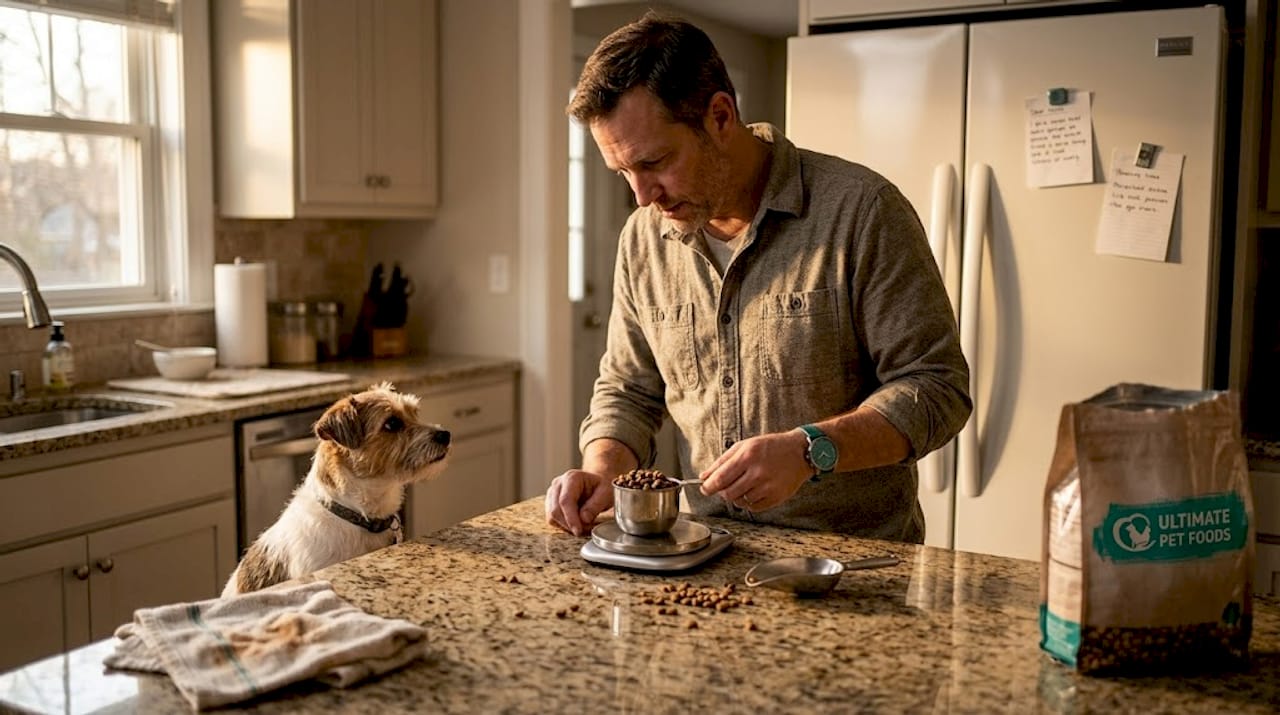
Pro Tip: Weigh your dog monthly and adjust portions based on what you see, not just what the packaging says. A dog who has become less active needs fewer calories, even if their weight has not yet visibly changed.
Feeding for life stage and special requirements
Understanding these mistakes, it is essential to recognise how your dog’s age and lifestyle change their nutritional needs.
Failing to adjust for life stage is one of the most critical and most common mistakes owners make. A puppy and a senior dog have dramatically different calorie, protein, and nutrient requirements.
Here is a quick summary by life stage:
- Puppies (up to 12 months): 3 to 4 meals per day, higher protein and fat for growth, follow breed-specific guidelines closely
- Adult dogs (1 to 7 years): 2 meals per day, balanced macronutrients, adjusted for activity level
- Senior dogs (7+ years): 2 meals per day, often lower calories, higher joint-supporting nutrients, easier-to-digest proteins
Activity level matters just as much as age. A working Border Collie needs significantly more fuel than a retired Greyhound spending most of the day on the sofa. Dogs with medical conditions such as diabetes, kidney disease, or obesity need veterinary-guided feeding plans that go beyond standard guidelines. Review puppy feeding fundamentals for a thorough overview of early nutrition requirements.
Treats deserve special attention here. They should make up no more than 10% of your dog’s total daily calorie intake. Anything beyond that tips the balance and quietly adds up over weeks and months.
Stat: Overfeeding is the leading cause of canine obesity, which is linked to diabetes, joint disease, heart problems, and a shortened lifespan.
Our puppy portion step guide and puppy feeding tips are excellent starting points if you are navigating those early months.
Pro Tip: Use body condition scoring alongside weight checks. A dog can be within a “normal” weight range but still carry excess fat. Body condition scoring gives you a more accurate picture of overall health.
Safe feeding routines: schedules, transitions, and water
Once you understand your dog’s nutritional demands, here is how to execute feeding changes safely and smoothly.
A consistent routine is one of the simplest gifts you can give your dog. Inconsistent schedules disrupt digestion, and most adult dogs thrive on two meals per day at the same times each day. Puppies need three to four meals spread evenly through the day.
When switching foods, patience is everything. Sudden diet changes cause digestive upset, so always transition gradually over 7 to 10 days using this approach:
- Days 1 to 2: 75% old food, 25% new food
- Days 3 to 4: 50% old food, 50% new food
- Days 5 to 6: 25% old food, 75% new food
- Days 7 to 10: 100% new food
Watch for loose stools, vomiting, or reluctance to eat during any transition. These are signs to slow the process down further.
“Changing your dog’s food overnight is one of the fastest ways to cause digestive distress. A gradual switch protects the gut and makes the new food far more likely to be accepted.”
Neglecting fresh water is another surprisingly common oversight. Water supports digestion, kidney function, and temperature regulation. Always keep a clean bowl topped up, and refresh it at least twice daily.
For detailed transition support, our guides on transitioning dog foods, moving to a grain free transition, and switching to a hydrolysed food cover every scenario clearly.
Table scraps and hidden dangers: human food and treats
Alongside scheduled meals, what about snacks and extras? Here is what every owner must know.
Feeding human foods can introduce toxins that are genuinely dangerous, even in small amounts. The following foods should never reach your dog’s bowl:
- Chocolate (contains theobromine, toxic to dogs)
- Grapes and raisins (can cause sudden kidney failure)
- Onions and garlic (damage red blood cells)
- Xylitol (an artificial sweetener found in many human foods, extremely toxic)
- Macadamia nuts (cause weakness, vomiting, and tremors)
- Avocado (contains persin, harmful to dogs)
“Even a small portion of the wrong food can trigger a serious reaction. When in doubt, leave it out.”
Beyond toxicity, human food adds hidden calories that are rarely accounted for. A small piece of cheese or a few bites of chicken might seem harmless, but over time they contribute meaningfully to weight gain.
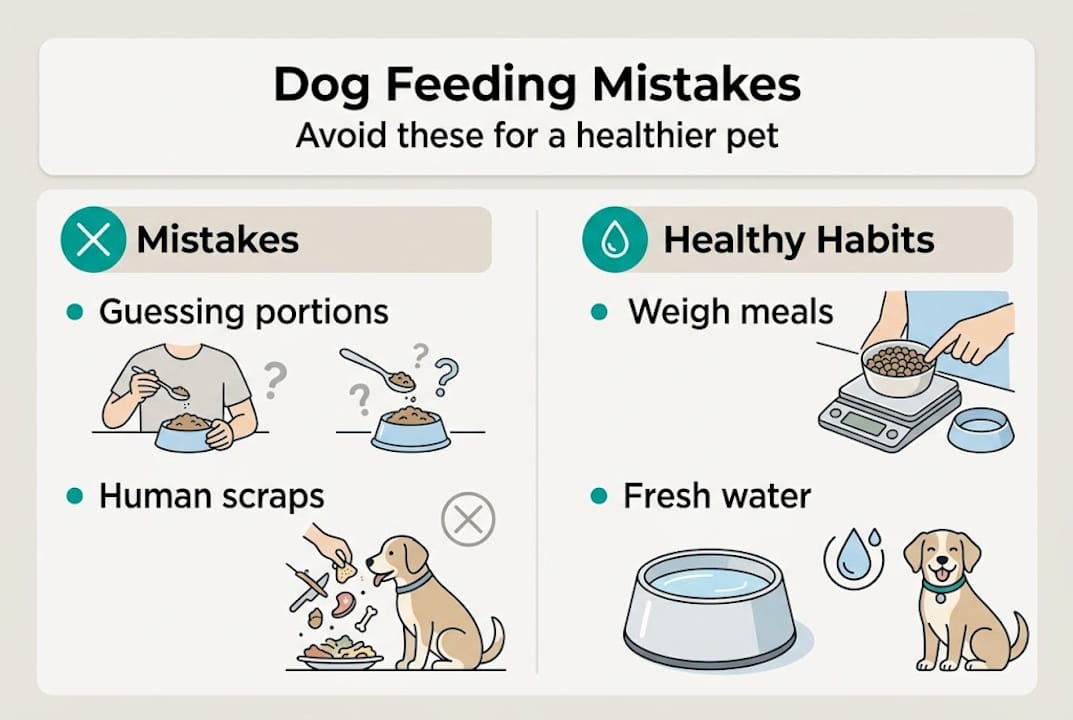
Safer treat choices include single-ingredient options such as plain cooked chicken, carrot sticks, or specially formulated dog treats with clear calorie labelling. Always read treat labels and factor those calories into your dog’s daily total.
For a full overview, our guide on human food dangers for dogs and our list of foods to avoid for dogs are essential reading.
Pro Tip: Use low-calorie, single-ingredient treats as training rewards. They keep your dog motivated without silently inflating their daily calorie intake.
What most dog owners get wrong (and how simple habits fix everything)
Here is something we have noticed after years of supporting dog owners: the biggest feeding mistakes are almost never caused by a lack of love or effort. They come from routine. From doing what feels natural rather than what the evidence supports.
Most owners do not need a complex nutrition overhaul. They need three or four small, consistent habits: weighing meals, sticking to a schedule, logging treats, and checking body condition monthly. That is genuinely it. Fancy superfoods and premium supplements matter far less than getting those basics right every single day.
One thing that rarely gets mentioned is the power of involving the whole household. If one family member is measuring carefully while another is sneaking scraps, the effort is undermined. Feeding your dog well is a team habit, not a solo task.
We also believe that portion control basics are genuinely undervalued. Body condition scoring, in particular, gives you real-time feedback that no scale can match. Learning to assess your dog’s condition by sight and touch takes minutes to learn and pays dividends for years. Small changes, done consistently, lead to dramatic results. 🐕
Feed your dog better with trusted, balanced nutrition
If you are ready to put these insights into practice, the right food makes all the difference. Getting portions right matters far more when the food itself is nutritionally complete, made from quality ingredients, and suited to your dog’s specific needs.
At Ultimate Pet Foods, we offer a range of natural, grain-free recipes designed to support dogs at every life stage, from energetic puppies to senior companions. Whether you are exploring options for the first time or looking to upgrade your current routine, our dog food comparison tool makes it easy to find the right fit. For owners curious about ingredient quality, our grain free ingredients guide explains exactly what goes into every recipe and why it matters. Better feeding starts with better choices. 🌿
Frequently asked questions
How do I know if I am overfeeding my dog?
Check your dog’s body condition regularly rather than relying on weight alone. Overfeeding is best monitored by assessing whether you can easily feel the ribs and see a visible waist from above.
How often should I feed my adult dog?
Most adult dogs thrive on two measured meals per day at consistent times. Two meals per day supports steady digestion and helps prevent bloating or food-related anxiety.
Are treats bad for dogs if used for training?
Treats are perfectly fine when used thoughtfully. Treats should stay under 10% of your dog’s total daily calorie intake and must always be factored into their overall daily total.
What human foods are most dangerous for dogs?
Chocolate, grapes, onions, and anything containing xylitol are among the most dangerous. These foods are highly toxic and should never be offered, even in small amounts.
Do I need to change my dog’s food as they age?
Absolutely. Puppies, adults, and seniors all need different nutrients and calorie levels. Failing to adjust portions as your dog ages is one of the most common and most avoidable mistakes.