
Choosing a Dog Bowl for Healthier Feeding Success
Choosing the right dog bowl often feels surprisingly complex when you care deeply about your pet’s health. British dog owners know that every pup has unique feeding needs linked to age, breed, activity level, and wellbeing. Finding a premium, grain-free bowl that matches portion control, hygiene, and ergonomic comfort can support both nutritional balance and daily wellbeing. Discover how the right bowl can make a real difference for your dog’s diet, comfort, and long-term health.
Table of Contents
- Step 1: Assess Your Dog’s Feeding Needs And Habits
- Step 2: Measure And Prepare The Feeding Area
- Step 3: Evaluate Bowl Materials For Health Benefits
- Step 4: Select A Bowl Fitting Your Dog’s Dietary Requirements
- Step 5: Test And Verify Ease Of Cleaning And Daily Use
Quick Summary
| Key Insight | Explanation |
|---|---|
| 1. Assess dietary needs carefully | Every dog’s nutritional requirements vary by age, breed, activity level, and health, making personalised feeding plans essential. |
| 2. Create a suitable feeding area | A quiet, clean space with proper bowl height reduces stress and promotes healthy eating habits for your dog. |
| 3. Choose the right bowl material | Selecting stainless steel is recommended for hygiene, durability, and health benefits over other materials like plastic or ceramic. |
| 4. Match bowl design to needs | Consider factors such as breed size, eating speed, and health conditions to select bowls that enhance mealtime comfort and convenience. |
| 5. Ensure easy cleaning | Select bowls with smooth surfaces and simple designs to facilitate thorough cleaning and prevent bacteria accumulation, essential for health. |
Step 1: Assess your dog’s feeding needs and habits
Understanding your dog’s unique feeding requirements is crucial for maintaining optimal health and preventing potential nutritional issues. Every dog has individual dietary needs influenced by factors such as age, breed, activity level, and overall wellness.
To effectively assess your dog’s feeding needs, consider these key evaluation criteria:
- Body condition: Check your dog’s current weight and body shape
- Age and life stage: Puppy, adult, or senior nutritional requirements differ significantly
- Breed characteristics: Size and metabolic rate impact feeding recommendations
- Activity level: Working dogs, athletes, and sedentary pets need varying caloric intakes
Dogs require carefully balanced nutrition for optimal health, which means understanding portion control and ingredient quality. Consult with your veterinarian to create a personalised feeding plan tailored to your dog’s specific requirements.
Nutrition is not one-size-fits-all: your dog’s diet should be as unique as their personality.
Monitor your dog’s response to their current diet by observing energy levels, coat condition, digestive health, and overall vitality. Regular assessment helps you make informed adjustments to support their nutritional needs.
Professional tip: Keep a detailed feeding journal to track your dog’s dietary changes, weight, and health indicators for more precise nutritional management.
Step 2: Measure and prepare the feeding area
Creating the right feeding environment is essential for your dog’s comfort, health, and mealtime experience. A well-prepared feeding area helps establish routine, reduces stress, and supports proper nutrition.
When setting up your dog’s feeding space, consider these critical aspects:
- Location selection: Choose a quiet, low-traffic area away from distractions
- Floor surface: Select an easily cleanable surface like tiles or hardwood
- Bowl placement: Position feeding bowls at an appropriate height for your dog’s size
- Spacing: If multiple pets are present, ensure adequate separation between feeding zones
The key to a successful feeding area is strategic bowl placement and hygiene, which prevents competition and supports your dog’s comfort during mealtimes. Measure the distance between food and water bowls to ensure your dog can easily access both without feeling cramped.
A thoughtfully prepared feeding area can transform mealtime from a simple routine into a positive, stress-free experience.
Ergonomics matter significantly in bowl selection. Consider your dog’s breed, size, and eating habits when choosing bowl height and design. Raised or angled feeders can help larger dogs or those with neck strain eat more comfortably.
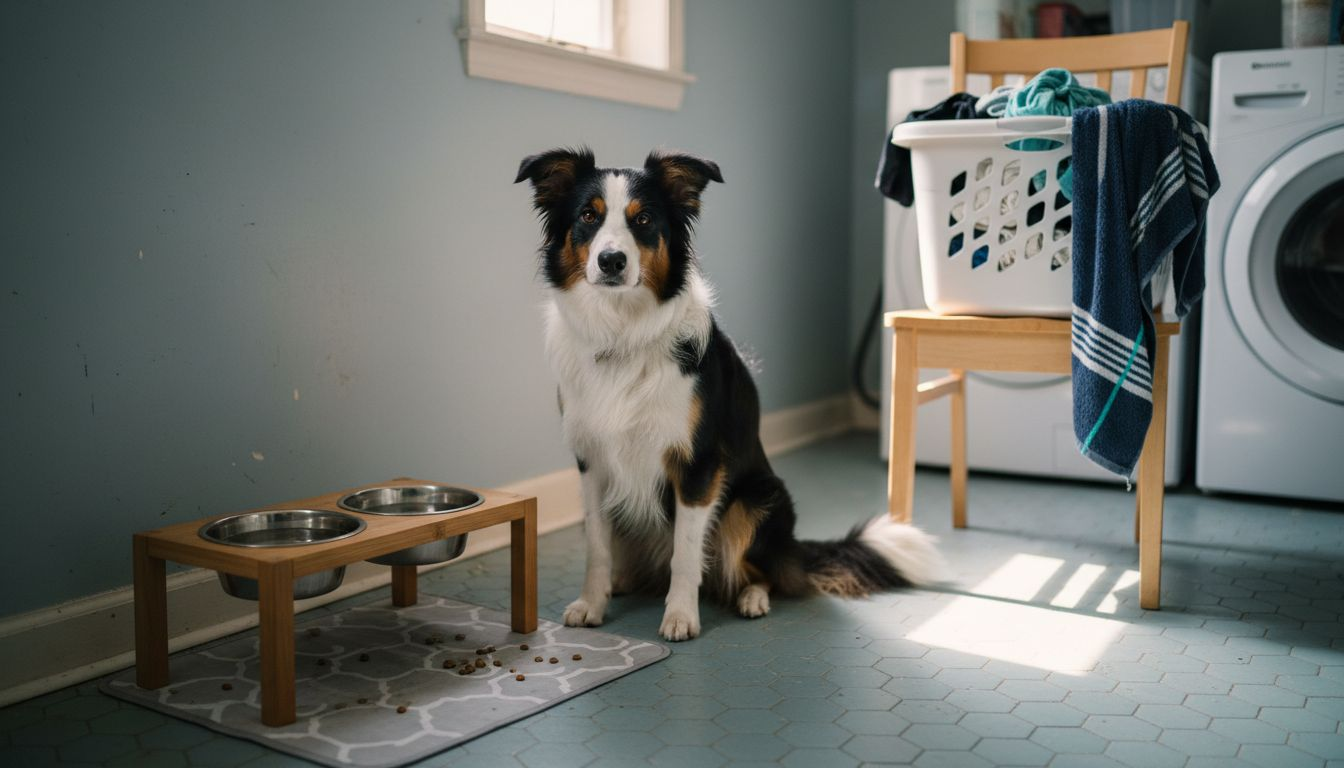
Professional tip: Invest in a washable feeding mat to catch spills and make cleaning your dog’s eating area quick and simple.
Step 3: Evaluate bowl materials for health benefits
Selecting the right dog bowl material is crucial for your pet’s health, hygiene, and overall feeding experience. Different materials offer unique advantages and potential drawbacks that can significantly impact your dog’s mealtime comfort and wellbeing.
When evaluating bowl materials, consider these key health-related factors:
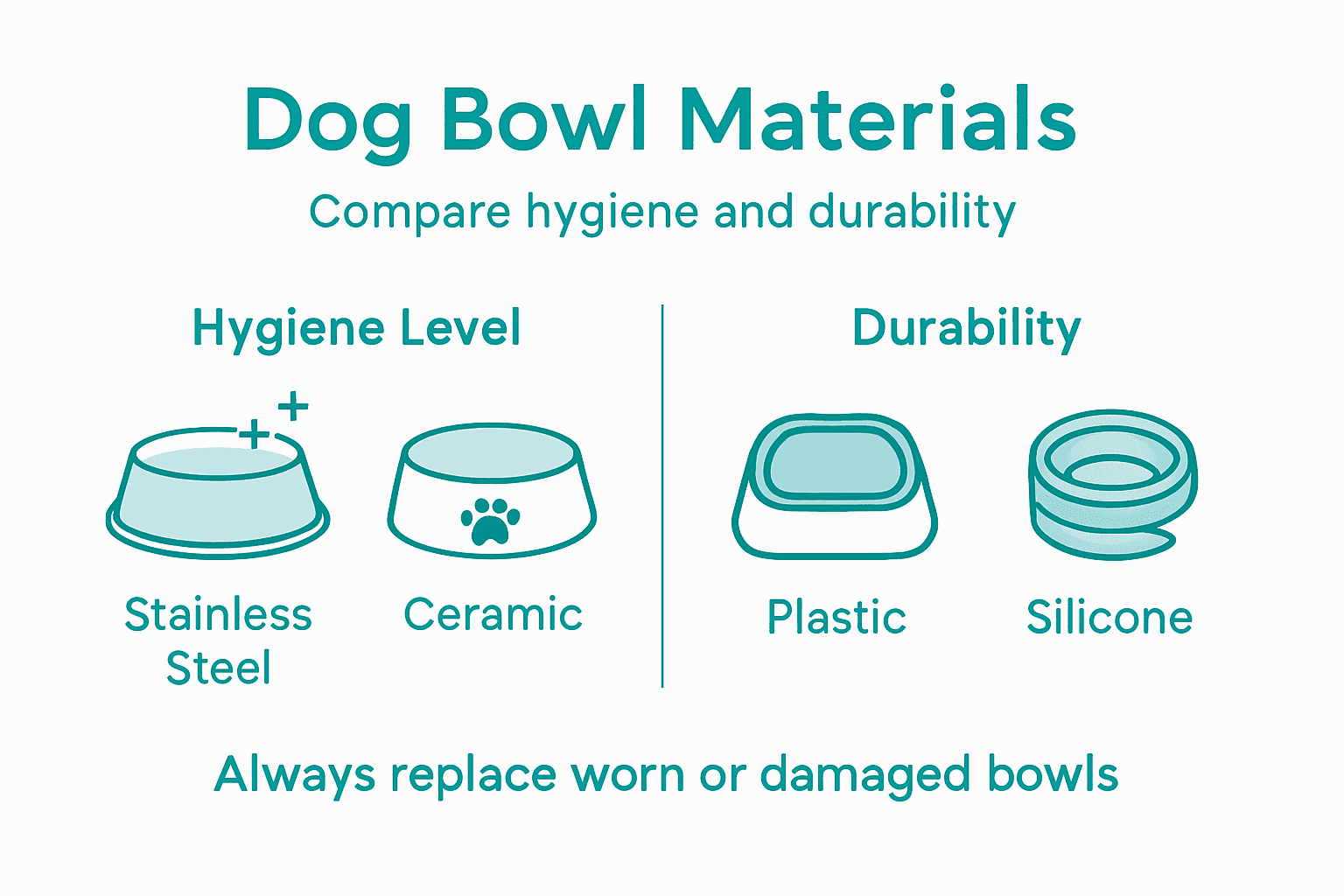
- Stainless steel: Highly durable, non-porous, and resistant to bacterial growth
- Ceramic: Stable and heavy, but can chip and harbour bacteria in cracks
- Plastic: Lightweight and affordable, but prone to scratches and potential chemical leaching
- Silicone: Flexible, portable, and easy to clean, but less durable than other options
Bowl material selection impacts dog health dramatically, with each material presenting unique considerations for hygiene and safety. Stainless steel remains the top recommendation for its non-reactive surface and ease of cleaning.
Not all dog bowls are created equal: the right material can prevent potential health risks and support your dog’s nutritional wellbeing.
Consider your dog’s specific needs when choosing a bowl. Puppies and dogs with sensitive skin might require different materials compared to robust adult dogs. Look for bowls with smooth, non-porous surfaces that minimise bacterial accumulation and are simple to sanitise regularly.
Professional tip: Replace your dog’s bowl every 12-18 months, or immediately if you notice any signs of wear, scratches, or damage that could compromise hygiene.
Here’s how common dog bowl materials compare for health and usability:
| Material | Hygiene Level | Durability | Suitability for Sensitive Dogs |
|---|---|---|---|
| Stainless steel | Excellent, non-porous | Highly resistant | Ideal for all dogs |
| Ceramic | Good if undamaged | Prone to chipping | Suitable with regular checks |
| Plastic | Moderate, scratches hold bacteria | Can wear easily | Not for dogs with allergies |
| Silicone | Easy to clean, flexible | Less durable | Best for travel or puppies |
Step 4: Select a bowl fitting your dog’s dietary requirements
Choosing the right dog bowl is more than a simple aesthetic decision. It’s about understanding your dog’s unique dietary needs, eating habits, and potential health considerations that can significantly impact their mealtime experience.
When selecting a bowl that supports your dog’s dietary requirements, consider these essential factors:
- Breed size: Match bowl depth and width to your dog’s breed
- Eating speed: Choose slow-feeder designs for rapid eaters
- Health conditions: Address specific digestive or neck strain issues
- Portion control: Select bowls that support recommended serving sizes
Selecting the right dog bowl involves understanding your dog’s individual eating patterns and physical characteristics. Larger breeds might benefit from elevated or deeper bowls, while smaller or flat-faced dogs require shallower designs.
Your dog’s bowl is more than a container: it’s a critical tool in managing their nutritional health and eating comfort.
Evaluate your dog’s specific needs by observing their current eating behaviour. Dogs with neck strain might need angled feeders, while those prone to bloating could benefit from slow-feeder designs that prevent rapid consumption.
Professional tip: Consult with your veterinarian to understand your specific dog’s unique dietary requirements and recommended bowl design.
Use the following table to match dog bowl types to common dietary or health needs:
| Feeding Challenge | Recommended Bowl Type | Why It Works |
|---|---|---|
| Eats too quickly | Slow-feeder or maze design | Promotes slower, healthier eating |
| Prone to neck strain | Raised or angled bowl | Reduces bending and discomfort |
| Small or flat-faced breed | Shallow, wide bowl | Eases access to food |
| Frequently spills food | Heavy, non-slip bowl | Prevents tipping and mess |
Step 5: Test and verify ease of cleaning and daily use
Ensuring your dog’s feeding bowl remains hygienic and convenient for daily use is crucial for maintaining your pet’s health and simplifying your routine. A bowl that is difficult to clean can become a breeding ground for bacteria and create unnecessary stress during mealtimes.
To effectively test and verify your dog bowl’s usability, assess these key cleaning and maintenance aspects:
- Material compatibility: Determine dishwasher-safe or hand-wash requirements
- Surface texture: Check for smooth surfaces that prevent food residue buildup
- Durability: Evaluate resistance to scratches and potential bacterial harbourage
- Cleaning time: Measure how quickly and thoroughly you can sanitise the bowl
Proper dog bowl hygiene requires consistent and thorough cleaning practices to prevent potential health risks. Select bowls with simple designs that allow complete surface cleaning without hidden crevices or hard-to-reach areas.
A clean bowl is more than a chore: it’s a critical component of your dog’s overall health and nutrition.
Consider performing a practical test by washing the bowl immediately after purchase. Time yourself, check how easily food residue comes off, and assess whether the cleaning process feels manageable within your daily routine.
Professional tip: Keep a dedicated sponge or cleaning cloth exclusively for your dog’s bowls to prevent cross-contamination with other kitchen utensils.
Enhance Your Dog’s Feeding Experience with Thoughtful Nutrition Choices
Choosing the right dog bowl is essential for healthier feeding success because it directly influences your dog’s comfort, eating habits, and overall wellbeing. This article highlights challenges such as managing eating speed, accommodating breed-specific needs, and maintaining hygiene to prevent health risks. Addressing these pain points through the right bowl choice supports better portion control and reduces stress at mealtimes.
To complement your carefully chosen feeding accessories, explore our range of premium, natural dog foods designed to meet diverse life stages and dietary sensitivities. Whether you have a growing puppy or a wise senior, our specialised blends help ensure balanced nutrition that matches your dog’s unique requirements. Discover our collections featuring grain-free recipes crafted for optimal health and vitality.
Looking for tailored options for your growing companion? Browse the Dry Puppy Food Range to support their development with natural, wholesome ingredients. Or if you care for an older dog, our Blends for Senior Dogs are formulated to maintain their health and comfort.
Visit Ultimate Pet Foods today and take the next step towards creating a feeding routine that truly cares for your dog’s health and happiness.
Start transforming your dog’s mealtimes now by selecting the right bowl and pairing it with premium nutrition tailored just for them.
Frequently Asked Questions
How do I assess my dog’s feeding needs before choosing a bowl?
To assess your dog’s feeding needs, evaluate their body condition, age, breed, and activity level. Observe their overall health and energy; you can make better feeding choices. Track changes in these areas to ensure you address their nutritional requirements effectively.
What factors should I consider when preparing my dog’s feeding area?
When preparing your dog’s feeding area, consider the location, floor surface, bowl placement, and spacing if multiple pets are present. Choose a quiet, low-traffic area with an easily cleanable surface to promote a stress-free eating environment. Ensure bowls are at an appropriate height to enhance comfort during meals.
What is the best material for my dog’s feeding bowl?
Stainless steel is often recommended for dog bowls due to its durability and resistance to bacterial growth. Consider your dog’s needs, such as skin sensitivity or allergies, and choose a bowl material that minimises health risks while ensuring ease of cleaning.
How do I select a bowl that fits my dog’s dietary requirements?
To select a bowl that fits your dog’s dietary requirements, match the bowl size to your dog’s breed and consider any health conditions. Choose designs that accommodate your dog’s eating speed and help manage portion control. Observing your dog’s eating habits will guide you in making the right choice.
How can I ensure my dog’s bowl is easy to clean and maintain?
To ensure your dog’s bowl is easy to clean, select materials that are dishwasher-safe or have smooth surfaces that do not trap food residue. Regularly check for scratches or wear that can harbour bacteria, and aim to establish a cleaning routine to keep the bowl hygienic and healthy for your dog.
How often should I replace my dog’s feeding bowl?
It’s advisable to replace your dog’s feeding bowl every 12 to 18 months, or sooner if you notice any damage or wear. Monitor for any chips or scratches that can compromise hygiene, ensuring your dog’s feeding experience remains safe and clean.