

Dog food cooking tips for a healthy, grain-free diet

TL;DR:
- Homemade grain-free dog meals require careful formulation and supplementation to ensure nutritional completeness.
- Avoid toxic foods like onions, grapes, chocolate, and xylitol to keep your dog safe.
- Professional guidance and proper ingredient sourcing are essential for long-term dog health.
Cooking homemade, grain-free meals for your dog is one of the most loving things you can do, but it comes with real nutritional responsibility. Many well-meaning owners dive in with fresh ingredients and good intentions, only to discover their recipes are missing critical nutrients. Deficiencies can quietly develop over weeks or months before any symptoms appear. This guide gives you practical, evidence-backed dog food cooking tips, covering everything from essential ingredients and safe cooking methods to supplements and hidden hazards, so you can feel genuinely confident every bowl you serve supports a long, healthy life. 🐾
Table of Contents
- What you need for safe homemade dog food
- Step-by-step: Cooking complete, grain-free dog food
- Avoiding hidden dangers and common mistakes
- Supplements and expert support: Closing nutrition gaps
- Why most homemade dog food advice gets it wrong
- Take the next step: Support your dog’s grain-free journey
- Frequently asked questions
Key Takeaways
| Point | Details |
|---|---|
| Balance is key | Homemade grain-free dog food needs careful ingredient ratios and supplements to avoid health risks. |
| Avoid toxic foods | Keep onion, garlic, grapes, chocolate, and similar hazards out of all homemade dog meals. |
| Expert support matters | Professional advice and expert tools ensure your recipes are complete, natural, and safe for your dog. |
| Cooking technique impacts nutrition | Gentle methods like steaming or slow-cooking help preserve nutrients in fresh dog food. |
What you need for safe homemade dog food
Before diving into the process, it’s crucial to know what you need to create safe, complete dog meals. Getting this foundation right makes everything else far more straightforward.
Key ingredients
A nutritionally complete homemade meal typically includes:
- Muscle meat (chicken, turkey, lamb, venison): primary protein and amino acid source
- Organ meat (liver, kidney): concentrated source of vitamins A, B12, iron, and zinc
- Vegetables (courgette, carrot, spinach, broccoli): fibre, antioxidants, and vitamins
- Grain-free carbohydrates (sweet potato, lentils, butternut squash): energy and digestive support
- Supplements: calcium, omega-3 oil, and a complete vitamin-mineral premix
| Ingredient | Main purpose |
|---|---|
| Muscle meat | Protein and essential amino acids |
| Liver | Micronutrients including vitamins A and B12 |
| Vegetables | Fibre, antioxidants, vitamins |
| Sweet potato/lentils | Digestible energy, gut support |
| Supplements | Nutritional balance and completeness |
Essential tools
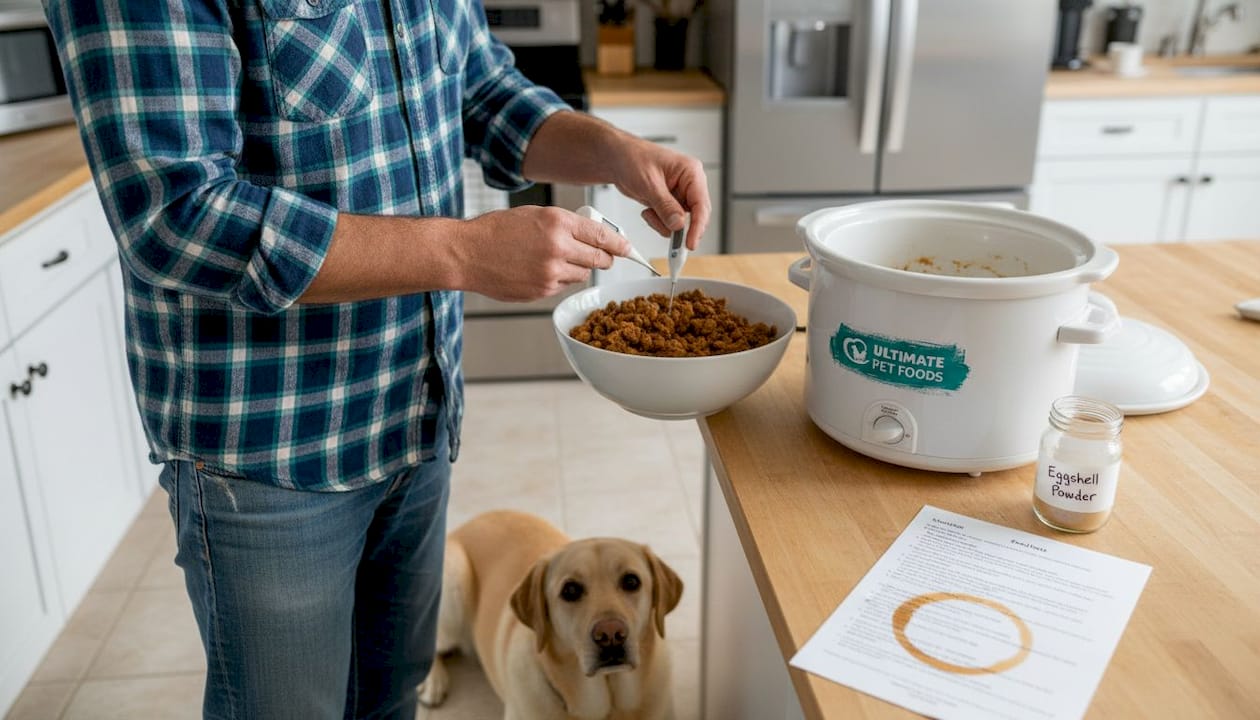
You’ll need digital kitchen scales, a food thermometer, measuring cups, a slow cooker or steamer, airtight storage containers, and freezer-safe bags. These aren’t optional extras; they help you achieve consistent, safe portion sizes and cooking temperatures every time.
Safety first
Always source meat from reputable suppliers and handle raw ingredients carefully to avoid cross-contamination. Our step-by-step dog meals guide is a great companion resource as you build your routine.
⚠️ Important: Most homemade recipes lack key nutrients, which can lead to serious health issues over time. Never rely on an unverified online recipe without cross-checking against NRC or AAFCO standards.
Pro Tip: Before committing to a regular recipe, consult a veterinary nutritionist. Tools like BalanceIT can help you formulate recipes that genuinely meet your dog’s individual needs rather than guessing.
Step-by-step: Cooking complete, grain-free dog food
With the right tools and trusted ingredients ready, you’re set to start cooking. Follow these steps carefully for consistently safe, nutritious meals.
- Source quality ingredients. Choose human-grade or pet-grade meat from a trusted butcher or supplier. Opt for novel proteins like venison or duck if your dog has known sensitivities.
- Calculate ratios. A general starting point is roughly 70% protein (muscle and organ meat), 20% vegetables, and 10% grain-free carbohydrates. AAFCO and NRC guidelines offer precise targets for protein, fat, calcium, and vitamins.
- Prep ingredients safely. Chop vegetables into small pieces. Remove any bones from meat before cooking. Rinse vegetables thoroughly.
- Cook gently. Lightly steam vegetables to retain nutrients. Slow-cook meat until it reaches a safe internal temperature of at least 74°C.
- Mix carefully. Combine cooked meat, vegetables, and grain-free carbohydrates. Add supplements only once food has cooled, as heat can degrade some vitamins.
- Cool and store. Refrigerate meals for up to three days or freeze in portion-sized containers for up to three months.
- Introduce gradually. Swap only 25% of your dog’s existing food for the new recipe during the first week, increasing slowly to avoid digestive upsets.
For more creative inspiration, browse our dog-friendly recipe ideas and dog treat recipes for between-meal options.
| Cooking method | Nutrient retention | Convenience | Best for |
|---|---|---|---|
| Steaming | High | Moderate | Vegetables, fish |
| Slow cooking | Moderate | High | Tough meats, batch cooking |
| Roasting | Lower | Low | Occasional variety |
Pro Tip: Use a food thermometer to confirm meat is cooked through every time. Add eggshell powder (finely ground) as a simple, affordable calcium source to balance mineral ratios without expensive supplements.
Avoiding hidden dangers and common mistakes
Cooking meals isn’t just about mixing fresh ingredients. It’s crucial to avoid hidden hazards and common pitfalls that could seriously harm your dog.
Foods that are toxic to dogs
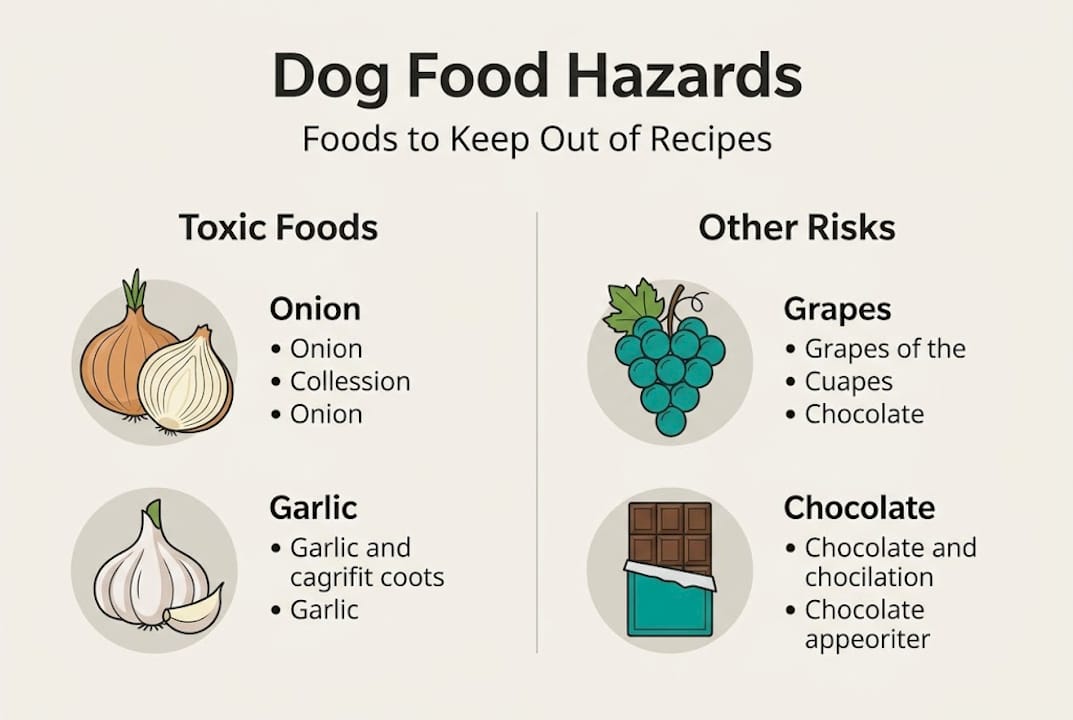
The following must never appear in your dog’s bowl:
- Onions and garlic: destroy red blood cells and cause anaemia
- Grapes and raisins: can cause sudden kidney failure
- Chocolate and caffeine: affect the nervous system and heart
- Xylitol (found in some nut butters and sugar-free products): causes dangerous blood sugar drops
- Excessive salt or sugar: linked to dehydration and long-term organ stress
These foods are toxic to dogs and should be kept completely out of any recipe, no matter how small the quantity.
Common allergens and safe swaps
Some dogs react to proteins they’ve eaten repeatedly. Common allergens include beef, dairy, wheat, chicken, and egg. If your dog shows signs of itching, loose stools, or recurring ear infections, try rotating to novel proteins like rabbit or venison. For more detail on how grain-free choices affect your dog’s safety, read our guide on grain-free dog food safety.
💡 Even in seemingly ‘natural’ diets, hidden dangers are easy to overlook. Well-meaning owners can unknowingly include an ingredient that triggers an allergy or causes toxicity without realising it until symptoms appear.
Rotating between different protein sources and vegetables also reduces the risk of developing new sensitivities over time. Variety isn’t just more interesting for your dog; it’s genuinely protective. Over 85% of online recipes lack critical nutrients or contain inappropriate ingredients, which is exactly why careful recipe selection and ingredient checking matters so much.
Supplements and expert support: Closing nutrition gaps
Once you know what not to include, it’s equally important to fill any nutritional gaps with expert guidance and targeted supplements.
Even the freshest, most thoughtfully assembled recipe will likely fall short without supplementation. Supplements are almost always required to meet critical nutritional needs, even in natural, grain-free diets. This is a fact many owners are surprised to learn.
Essential supplements for homemade diets
| Supplement | Typical guidance | Main benefit |
|---|---|---|
| Calcium (eggshell powder) | ~900mg per 450g meat | Bone and muscle health |
| Omega-3 oil (fish oil) | 300mg EPA/DHA per 10kg bodyweight | Skin, coat, and joint support |
| Vitamin-mineral premix | Per product instructions | Overall nutritional completeness |
Signs of nutritional deficiency to watch for
- Dull, dry, or flaky coat
- Low energy or lethargy
- Irregular or very loose stools
- Slow wound healing
- Weak nails or dental issues
If you notice any of these signs, review your recipe and consult your vet promptly. Our dog food supplements guide covers UK-specific options in detail, and our article on essential supplements for dogs explains what each nutrient actually does. You’ll also find helpful tips on choosing vitamins to avoid overdosing or under-supplementing.
For personalised recipe formulation, expert nutritionist advice is invaluable. Always have your vet double-check supplement dosages rather than relying on general online guidance.
Pro Tip: Supplement needs change as your dog ages or if they develop a health condition. Schedule a nutritional review at least once a year to keep things properly balanced.
Why most homemade dog food advice gets it wrong
Here’s a hard-won reality we feel compelled to share: the vast majority of grain-free homemade dog food advice circulating online is dangerously oversimplified. The message tends to be “use whole foods, skip the grains, and your dog will thrive.” We wish it were that easy.
The truth is that homemade diets almost universally require professional formulation to be complete. Studies consistently show that 85 to 95% of commonly shared recipes result in deficiencies that cause real harm over time. Bone problems, organ dysfunction, and immune issues are not rare outcomes; they’re predictable results of long-term nutritional imbalance.
We’d also challenge the idea that grain-free automatically means better for every dog. Grains are highly digestible for most dogs, and removing them isn’t a health upgrade unless your dog has a genuine sensitivity. The goal should always be balance and evidence, not trends. Pair your natural approach with proper professional support, and your dog will genuinely thrive. 🐕
Take the next step: Support your dog’s grain-free journey
Knowing the principles is powerful, but putting them into practice every single day takes commitment. On busy days when home-cooking simply isn’t possible, having a trusted, nutritionally complete alternative on hand makes all the difference.
We’ve put together resources to help you understand the real grain-free benefits and what they mean for your dog’s daily wellbeing. Our grain-free ingredient guide breaks down exactly what goes into quality recipes. And if you’re comparing options, our UK dry dog food comparison helps you find the right ready-made food to complement your home-cooked meals. Every wag and bounce deserves the best foundation. 🐾
Frequently asked questions
What is the healthiest way to cook dog food at home?
Steaming and slow-cooking preserve nutrients while ensuring safety, but always supplement to ensure your dog’s meals are nutritionally balanced and complete.
Is a grain-free diet always better for my dog?
Not always. Grains are 87 to 93% digestible for most dogs, so grain-free isn’t automatically superior; nutritional balance matters far more than simply removing grains.
Which supplements should I add to homemade dog food?
Most homemade recipes need calcium, a vitamin-mineral premix, and omega-3 oil at a minimum; always confirm exact needs with your vet.
How can I avoid toxic foods for my dog when cooking?
Avoid onion, garlic, grapes, chocolate, and xylitol entirely, and always check every ingredient before it goes into your dog’s food.
Can I use only whole foods for my dog’s homemade diet?
No. Even carefully selected whole-food recipes lack crucial nutrients in most cases, and most dogs need additional supplementation for genuine long-term health.


