
Is Homemade Dog Food Healthier? Complete Guide
Most british pet owners believe preparing homemade dog food guarantees better health for their dogs, yet studies show that over 90 percent of home-cooked diets lack critical nutrients. With so much information swirling around, it is easy to get swept up in common myths about what truly nourishes our four-legged friends. By separating fact from fiction, this guide shows how to protect your dog’s wellbeing with informed choices and up-to-date nutritional science.
Table of Contents
- Defining Homemade Dog Food and Common Myths
- Nutritional Comparison: Homemade Versus Commercial
- Common Ingredients and Preparation Methods
- Health Risks and Safety Concerns Explained
- Homemade Diets Versus Premium Commercial Options
Key Takeaways
| Point | Details |
|---|---|
| Homemade Diets Require Expertise | Preparing balanced homemade dog food necessitates significant nutritional knowledge, as improper formulations can cause deficiencies. |
| Commercial Foods Offer Nutritional Assurance | Premium commercial dog foods are scientifically formulated to meet the specific dietary needs of dogs across various life stages. |
| Health Risks of Homemade Options | Homemade diets pose risks of bacterial contamination and nutritional imbalances, potentially leading to long-term health issues. |
| Consistent Quality with Commercial Products | Our gently cooked kibble ensures precise nutrient balance and safety, providing a reliable dietary solution for pet owners. |
Defining Homemade Dog Food and Common Myths
Homemade dog food represents a personalised nutrition approach where pet owners prepare meals from scratch rather than relying on commercial products. Unlike standard commercial kibble, homemade diets involve preparing meals using whole food ingredients like lean meats, vegetables, and grains tailored specifically to a dog’s individual nutritional requirements.
While many dog owners believe homemade diets are inherently healthier, several persistent myths surround this feeding method. The Raw vs Cooked Dog Food Guide highlights that not all homemade diets deliver balanced nutrition. Common misconceptions include believing that homemade automatically means more nutritious, when in reality, creating a truly balanced diet requires extensive nutritional knowledge.
Veterinary nutritionists warn that improperly formulated homemade diets can lead to significant nutritional deficiencies. Nutritional balance is complex, requiring precise proportions of proteins, fats, vitamins, and minerals. Without professional guidance or carefully researched recipes, homemade diets might inadvertently lack essential nutrients that commercial foods are scientifically formulated to provide. Dogs require specific nutrient ratios that cannot be achieved through random ingredient combinations or well-intentioned guesswork.
Key considerations for homemade dog food include understanding canine nutritional science, consulting veterinary professionals, and recognising that commercial foods like our gently cooked kibble are developed with rigorous nutritional standards. Our products contain freshly prepared meats, gentle-cooked at 82°C to lock in nutrients, and include prebiotics MOS and FOS to support digestive health - providing a scientifically balanced alternative to potentially risky homemade experiments.
Nutritional Comparison: Homemade Versus Commercial
Navigating the complex landscape of dog nutrition requires a comprehensive understanding of the nutritional differences between homemade and commercial dog food diets. Understanding raw versus kibble feeding strategies reveals that each approach carries unique nutritional considerations that directly impact canine health.
Professional veterinary organisations consistently emphasise the challenges of homemade diets. The PDSA advises that commercially prepared dog foods are meticulously formulated to meet precise nutritional requirements, whereas homemade meals often struggle to achieve the same comprehensive nutritional profile. Nutritional balance is not simply about providing calories, but ensuring dogs receive exact proportions of proteins, carbohydrates, vitamins, and minerals essential for optimal health.
Research highlights significant risks associated with homemade diets. Studies indicate that dog owners frequently miscalculate nutritional needs, potentially leading to deficiencies or excesses that can cause long-term health complications. Commercial foods undergo rigorous testing and development, with nutritionists and veterinarians collaborating to create scientifically balanced formulations that support different life stages and breed-specific requirements.
Our gently cooked kibble represents the gold standard in nutritional science, containing freshly prepared meats cooked at 82°C to preserve nutrients, supplemented with prebiotics MOS and FOS. Unlike hit-or-miss homemade approaches, our products provide a consistently balanced, safe, and nutritionally complete diet that supports your dog’s overall health and wellbeing.
Common Ingredients and Preparation Methods
Homemade dog food requires careful ingredient selection and preparation to ensure nutritional adequacy. What Ingredients to Avoid in Dog Food highlights the critical importance of understanding which components are safe and beneficial for canine nutrition.
Traditional homemade dog food typically incorporates lean proteins like chicken, turkey, beef, and fish as primary ingredients. Protein sources must be thoroughly cooked to eliminate potential bacterial risks. The PDSA demonstrates how pet owners can create dog-friendly recipes using whole ingredients, such as incorporating wholewheat flour, unsweetened coconut milk, and carefully selected fruits and vegetables that provide essential nutrients without compromising digestive health.
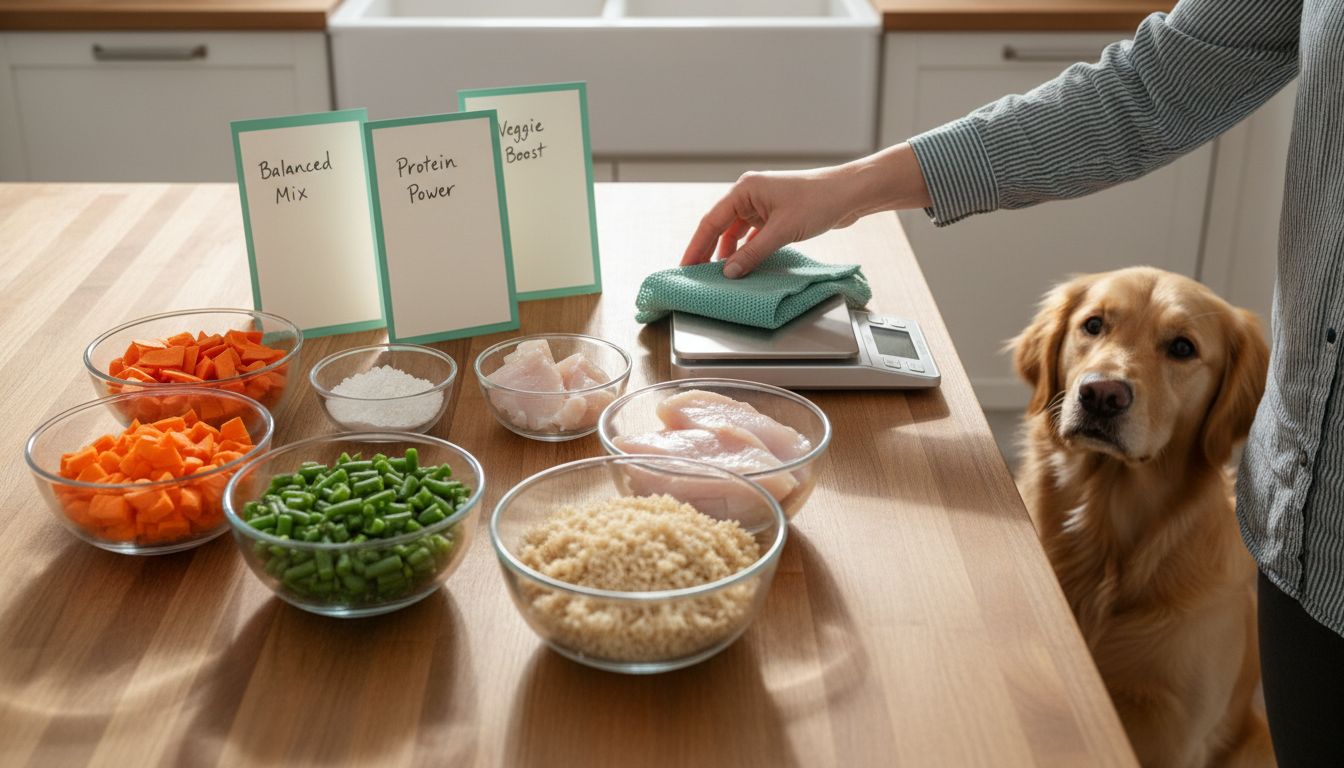
Nutritional experts caution that simply combining ingredients does not guarantee a balanced diet. Research indicates that many dog owners inadvertently create meals lacking crucial vitamins and minerals. Homemade diets require precise proportions of protein, carbohydrates, fats, vitamins, and minerals - a complex balance that commercial foods scientifically formulate to achieve. Key considerations include avoiding toxic ingredients like onions, chocolate, and excessive salt, and ensuring protein sources are lean and properly prepared.
Our gently cooked kibble eliminates these preparation challenges, offering a scientifically developed alternative. Prepared at 82°C to lock in nutrients, our products contain freshly prepared meats, include prebiotics MOS and FOS, and provide a consistently balanced nutritional profile that surpasses the hit-or-miss approach of homemade meal preparation.
Health Risks and Safety Concerns Explained
Pet owners exploring homemade dog food must carefully navigate numerous potential health risks. Understanding dog foods to avoid becomes crucial in preventing unintentional nutritional harm to their beloved companions.
Bacterial contamination represents a significant concern in homemade and raw feeding approaches. Research highlights the potential for dangerous pathogens like E. coli and Salmonella, which can seriously compromise both canine and human health. The risks extend beyond immediate digestive issues, potentially introducing antimicrobial-resistant bacteria that could create long-term health complications for entire households.
Nutritional imbalances pose another substantial threat to dogs fed homemade diets. Studies consistently demonstrate that well-intentioned pet owners frequently miscalculate essential nutrient proportions, leading to potential deficiencies or excesses that can cause chronic health problems. These imbalances might not manifest immediately, making them particularly insidious and challenging to diagnose, potentially resulting in subtle but progressive health deterioration.
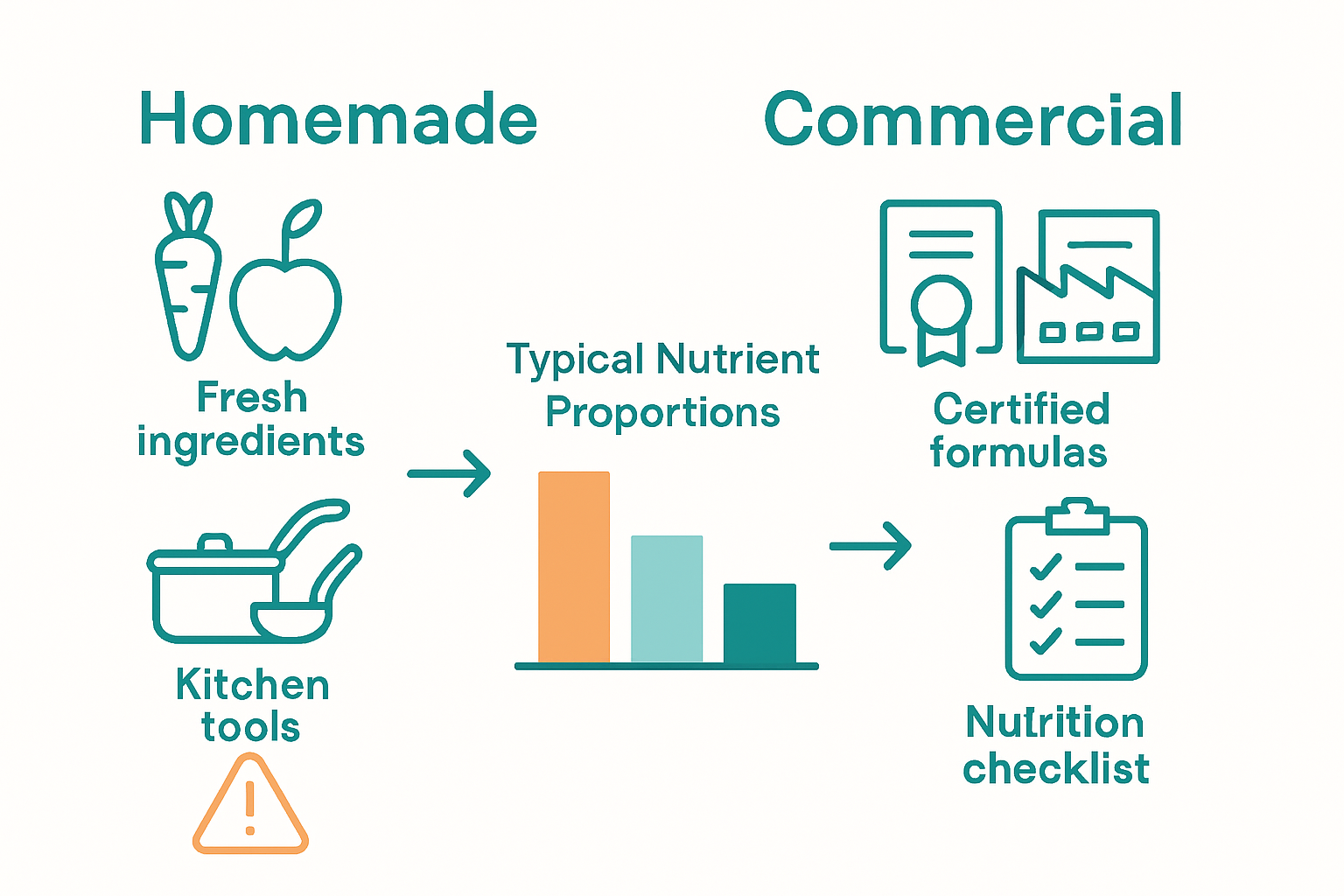
Our gently cooked kibble eliminates these complex risks, offering a scientifically formulated alternative. Prepared at 82°C to ensure pathogen elimination, our products contain freshly prepared meats, include prebiotics MOS and FOS, and provide a consistently balanced nutritional profile that protects your dog’s health with precision and care.
Homemade Diets Versus Premium Commercial Options
Comparing homemade dog food with premium commercial dog food options reveals significant nutritional complexities that pet owners must carefully consider. Professional veterinary organisations consistently recommend commercially prepared diets as the most reliable nutritional approach for canine health.
Nutritional precision remains the most critical differentiator between homemade and commercial dog food. The PDSA emphasises that commercial foods are meticulously formulated to meet comprehensive nutritional requirements, a standard incredibly challenging to replicate in home kitchens. Commercial diets undergo rigorous scientific testing, ensuring balanced proportions of proteins, carbohydrates, vitamins, and minerals that support optimal canine health across different life stages.
While passionate dog owners might believe homemade diets offer more control, research demonstrates substantial risks in self-prepared meals. Nutritional imbalances can develop silently, potentially causing long-term health complications that may not immediately manifest. Commercial foods, particularly premium options, are developed by veterinary nutritionists who understand the intricate dietary needs of dogs, accounting for breed, age, weight, and specific health conditions.
Our gently cooked kibble represents the pinnacle of nutritional science, prepared at 82°C to preserve nutrients, containing freshly prepared meats, and supplemented with prebiotics MOS and FOS. Unlike unpredictable homemade approaches, our products provide a consistently balanced, scientifically developed diet that supports your dog’s complete nutritional requirements with precision and care.
Discover Balanced Nutrition Without the Guesswork
Many dog owners face the challenge of ensuring their pets receive a complete and balanced diet when preparing homemade meals. As the article emphasises, nutritional deficiencies and safety risks often arise from lacking precise knowledge and formulation skills required to create a healthy homemade dog food. If you want to avoid the frustration and uncertainty of ingredient selection while confidently supporting your furry friend’s wellbeing, there is a better alternative.
Our gently cooked, grain-free kibble offers a science-backed solution made from freshly prepared meats and enriched with prebiotics to support digestion and overall health. Designed to provide the exact nutrient balance your dog needs, our recipes remove the risk of nutritional imbalances common in homemade diets. Experience the reassurance that comes from feeding your dog a premium diet tailored to their needs.
Try our Dry Dog Food | Grain-Free & Science-Backed Kibble – Ultimate Pet Foods and explore the full range of natural, hypoallergenic options available at Ultimate Pet Foods.
Take the next step in giving your dog the best nutrition without the guesswork. Visit our site today to discover how our expertly crafted meals support your dog’s health and happiness every day.
Frequently Asked Questions
Is homemade dog food healthier than commercial dog food?
While some believe homemade dog food is healthier, it often lacks the nutritional balance found in commercial diets. Creating a balanced homemade diet requires extensive knowledge of canine nutrition.
What are the main risks associated with homemade dog food?
The primary risks include nutritional imbalances that can lead to deficiencies, and bacterial contamination from improperly cooked ingredients, which can affect both dogs and humans.
How can I ensure my homemade dog food is nutritionally balanced?
To ensure a balanced diet, consult a veterinary nutritionist and use reputable recipes that include precise proportions of proteins, carbohydrates, fats, vitamins, and minerals.
What is the nutritional difference between homemade and premium dog food?
Premium commercial dog foods are meticulously formulated to meet dogs’ comprehensive nutritional requirements, which can be challenging to replicate in homemade diets. They undergo rigorous testing to ensure balance and safety.