

Healthy carb sources for dogs: your 2026 guide

TL;DR:
- Carbohydrates in dog diets vary in quality, with complex carbs like sweet potatoes supporting steady energy and digestion. Proper preparation, such as cooking plain and serving in moderation, is essential for safe and effective nutrition. Tailoring carb choices to your dog’s health and activity level helps maintain optimal overall wellbeing.
Carbohydrates have become one of the most debated topics in dog nutrition, and we understand why it can feel confusing. Are carbs good for dogs? Which ones should you choose? The truth is, not all carbs are equal. The right healthy carb sources for dogs can support steady energy, digestive health, and even immune function. The wrong ones can spike blood sugar or cause digestive upset. This guide cuts through the noise with evidence-backed profiles, preparation tips, and practical advice so you can make confident, informed choices for your dog every single day.
Table of Contents
- Key takeaways
- 1. What makes a healthy carb source for dogs
- 2. Sweet potatoes: the gold standard carb
- 3. Carrots: dental health meets great nutrition
- 4. Pumpkin: the quiet overachiever
- 5. Brown rice: a reliable whole grain option
- 6. Oats: fibre-rich and gentle on digestion
- 7. Comparing the top carbohydrate options
- 8. Tailoring carb choices to your dog’s specific needs
- My take on carbs in your dog’s diet
- Nourishing your dog from the bowl up
- FAQ
Key takeaways
| Point | Details |
|---|---|
| Choose complex carbs | Opt for low-glycemic, high-fibre options like sweet potatoes and oats to support steady energy and digestion. |
| Preparation matters | Always cook starchy carbs thoroughly and serve them plain to avoid toxicity and digestive upset. |
| Match carbs to your dog’s needs | Diabetic, senior, and overweight dogs benefit most from low-glycemic, high-fibre carbohydrate options. |
| Raw vs cooked vegetables | Alternating raw and cooked vegetables offers both dental and nutritional benefits for your dog. |
| Balance is everything | Combine carbs with quality protein and healthy fats for glycemic control and overall wellbeing. |
1. What makes a healthy carb source for dogs
Not every carbohydrate belongs in your dog’s bowl. Understanding what to look for is the first step toward genuinely better nutrition.
The core distinction is between complex carbohydrates and simple carbohydrates. Complex carbs, found in foods like sweet potatoes, oats, and pumpkin, break down slowly. This means a gradual release of glucose into the bloodstream, which supports sustained energy and avoids the spikes associated with simple sugars. Simple carbohydrates, like those in white bread or processed treats, digest quickly and offer little nutritional value.
Here is what to assess when choosing carbohydrate options for dogs:
- Glycemic index (GI): Lower GI foods cause a slower, gentler rise in blood sugar. Sweet potatoes have a lower GI than white rice, making them a better everyday choice.
- Fibre content: Dietary fibre supports gut health, regulates digestion, and promotes satiety. Both soluble and insoluble fibre play a role.
- Digestibility: Some carbs are harder for dogs to process. Lightly cooked or steamed vegetables tend to be easier on the digestive system than raw starchy options.
- Preparation safety: Certain foods are only safe once cooked. Raw or seasoned versions can be harmful.
- Caloric contribution: Carbs add calories. For dogs prone to weight gain, portion control is just as important as food choice.
Pro Tip: Start new carbohydrate foods slowly. Introduce one at a time over five to seven days and watch for any loose stools, bloating, or changes in appetite before adding another.
2. Sweet potatoes: the gold standard carb
Sweet potatoes are widely regarded as one of the best carbs for dogs, and the evidence backs that up. They are rich in soluble fibre, which helps firm stools and aids digestive recovery during and after illness. They also replenish potassium, an electrolyte that dogs can lose when they are unwell.
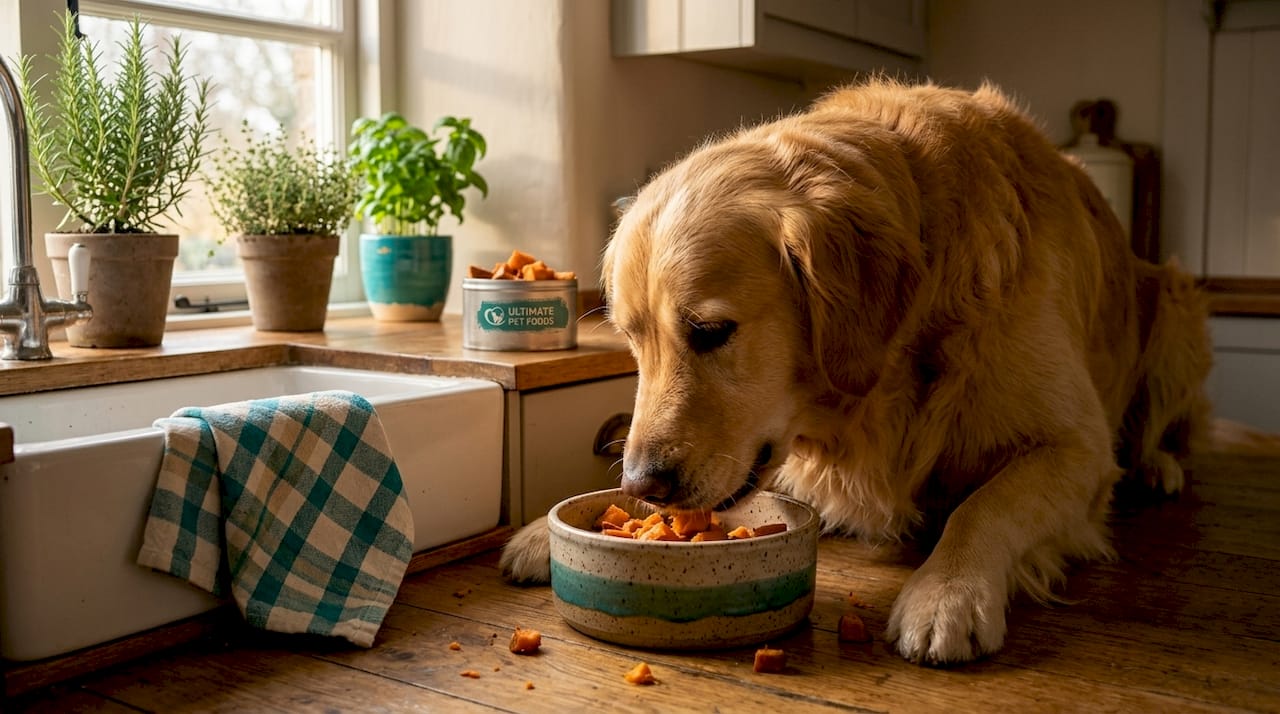
The glycemic index of sweet potatoes is lower than that of white rice, meaning they provide sustained energy rather than a rapid glucose spike. This makes them a genuinely useful carb for active dogs, seniors, and those managing their weight.
A practical guideline is to serve around 1 teaspoon per 10kg of your dog’s body weight. Always serve them cooked and plain. Raw sweet potatoes are difficult to digest, and seasoned or canned versions with syrup or additives can cause serious digestive distress or toxicity.
You can find more about the nutritional case for this ingredient on Ultimatepetfoods’ dedicated page on sweet potato in dog food.
3. Carrots: dental health meets great nutrition
Carrots are one of those dog-friendly carb foods that deserve far more credit than they typically receive. A single medium carrot contains just 25 calories alongside 1.7g of fibre, 5,054 mcg of beta-carotene, and meaningful levels of vitamin C and potassium, making it genuinely nutrient-dense for the calorie content.
The raw versus cooked debate is worth knowing about. Raw carrots provide a satisfying crunch that mechanically cleans teeth, reducing plaque accumulation by around 19% as a supplement to regular brushing. Cooked carrots, on the other hand, increase beta-carotene bioavailability by up to six times, offering superior antioxidant support.
The smart approach is to alternate. Give raw carrot sticks a few times a week for dental benefit, and add lightly steamed or boiled carrots to meals for maximum nutrient absorption.
Pro Tip: Frozen carrot sticks make an excellent low-calorie treat for teething puppies or overweight dogs looking for something satisfying to chew. They are a brilliant swap for high-calorie biscuit treats.
4. Pumpkin: the quiet overachiever
Pumpkin does not always get the attention it deserves as one of the most nutritious carbs for pets. It is low in calories, high in soluble fibre, and packed with beta-carotene. The fibre content is particularly useful because it works in both directions, helping to firm loose stools and gently ease constipation.
Beyond digestion, pumpkin’s beta-carotene supports immune function and eyesight, which is a meaningful bonus for senior dogs whose immune defences naturally decline with age.
Always use plain, cooked pumpkin or unsweetened, unflavoured canned pumpkin puree. Pumpkin pie filling is not suitable as it contains sugars and spices that are harmful to dogs. A tablespoon or two added to meals is a gentle, effective way to support digestive balance.
5. Brown rice: a reliable whole grain option
Brown rice is one of the most commonly recommended healthy grains for dogs, particularly for dogs recovering from an upset stomach. It is gentle, easy to prepare, and familiar to most dog owners.
That said, it is worth understanding its limitations. Brown rice has a higher glycemic index than sweet potato, which means it causes a faster rise in blood sugar. For healthy, active dogs this is generally not a concern, but for dogs managing diabetes or weight issues, sweet potato or oats would be a more considered choice.
Brown rice does provide useful fibre and some B vitamins. When used occasionally as part of a balanced meal, particularly during digestive recovery, it earns its place as a safe starch for dogs. Serve it fully cooked, plain, and in modest portions.
6. Oats: fibre-rich and gentle on digestion
Oats are a brilliant carbohydrate option for dogs that need a little extra digestive support. They contain soluble fibre, specifically beta-glucan, which supports digestive health and blood sugar stability. This makes them particularly well suited to dogs with sensitive stomachs or those on a weight management programme.
Serve oats cooked in water, never in milk, which many dogs cannot digest comfortably. Avoid instant oat sachets with added sugar or flavourings. Plain, cooked rolled oats in small quantities are a gentle, satisfying addition to your dog’s diet. A couple of tablespoons for a medium-sized dog is a sensible portion to start with.
7. Comparing the top carbohydrate options
Here is how the most popular dog-friendly carb foods compare across the key nutritional criteria:
| Carb source | Fibre level | Glycemic index | Calories (approx. per 100g) | Best for | Preparation |
|---|---|---|---|---|---|
| Sweet potato | High | Low | 86 kcal | General use, recovery, seniors | Cooked, plain only |
| Carrots | Moderate | Very low | 41 kcal | Weight control, dental health | Raw or lightly cooked |
| Pumpkin | High | Low | 26 kcal | Digestion support, seniors | Cooked or plain canned |
| Brown rice | Moderate | Moderate | 111 kcal | Digestive recovery | Fully cooked, plain |
| Oats | High | Low to moderate | 68 kcal (cooked) | Sensitive stomachs, weight control | Cooked in water |
For diabetic dogs, high-fibre, low-glycemic foods like pumpkin and green beans are the recommended approach. High-glycemic options such as white rice and white pasta should generally be avoided for these dogs, as they cause rapid blood glucose rises that are difficult to manage.
Pro Tip: Combining two or three carb sources rather than relying on a single one gives your dog a broader range of fibre types and micronutrients. Try adding a tablespoon of pumpkin and a small portion of oats together for a genuinely gut-supportive meal addition.
8. Tailoring carb choices to your dog’s specific needs
The best carbs for your dog depend on who your dog actually is. Age, activity level, health conditions, and digestive sensitivity all shape which carbohydrate sources will serve them best.
For diabetic dogs: Focus on low-glycemic, high-fibre carbohydrate choices like pumpkin, carrots, and green beans. These slow glucose absorption and help maintain more stable blood sugar levels throughout the day. Avoid white rice, white potatoes, and processed grains.
For dogs with sensitive stomachs: Cooked oats, plain pumpkin, and well-cooked sweet potato are gentle and unlikely to trigger flare-ups. Raw vegetables can be harder to tolerate. For more guidance on foods for sensitive digestion, our Ultimatepetfoods nutrition blog covers this in detail.
For active or working dogs: These dogs benefit from carbs that provide sustained energy. Sweet potato and oats are ideal here. Their lower glycemic index means energy is released steadily across the day rather than in a short burst.
For overweight dogs: High-fibre vegetables like carrots and green beans are particularly useful because they promote fullness without adding significant calories. Research into small dog weight management highlights carbohydrate selection as a key lever in preventing and addressing obesity.
- Reduce starchy carbs in meals and increase fibrous vegetables for dogs carrying extra weight.
- Always balance carbs with adequate protein from quality sources to preserve lean muscle mass.
- Check feeding frequency guidelines to ensure you are not inadvertently overfeeding across multiple meals.
Remember that balancing carbs with protein and healthy fats is what supports glycemic control and long-term health, particularly in dogs with special dietary needs.
My take on carbs in your dog’s diet
I have spoken with a lot of dog owners over the years who feel guilty about feeding their dogs any carbohydrates at all. The low-carb movement has understandably made people cautious. But in my experience, the problem is rarely carbs themselves. The problem is the type and the preparation.
What I have found is that sweet potatoes, in particular, are genuinely underused. Dog owners reach for plain white rice as a default bland diet food, but sweet potato offers more fibre, better glycemic control, and more potassium to aid recovery. When I see dogs that are sluggish or have inconsistent digestion, swapping white rice for cooked sweet potato in their diet is often one of the first practical changes I suggest.
The raw versus cooked carrot question trips people up too. There is no single correct answer. Raw is great for dental health a few times a week, and cooked is better for nutrient availability. Doing both, at different times, is genuinely the most balanced approach.
Where I see owners go wrong most often is either overfeeding starchy carbs in a well-meaning attempt to fill their dog up, or feeding improperly prepared foods like raw sweet potato or oat sachets with added sweeteners. The portions and the preparation really do matter.
My honest advice? Keep it simple, keep it varied, and let the quality of your dog’s complete food do most of the heavy lifting. A well-formulated dry food with quality carbohydrate sources built in takes the guesswork out of daily feeding entirely.
— Glenn
Nourishing your dog from the bowl up
At Ultimatepetfoods, we believe every wag and bounce starts with genuinely good nutrition. Our grain-free dry dog food recipes are built around freshly prepared meat and fish, gently cooked at 82°C to lock in freshness and nutrients. We use human-grade ingredients throughout and include prebiotics (MOS and FOS) in every recipe to support a healthy gut from the inside out.

For dogs with specific needs, our Ultimate+ Functional Health range uses hydrolysed proteins to deliver targeted everyday support across five areas: Digestive Care, Skin and Coat Care, Weight Control and Joint Care, Dental Care, and Healthy Living. Whether your dog needs a little extra digestive support or a recipe that works alongside a weight management plan, we have a complete, balanced option for daily feeding at every life stage. Explore the benefits of grain-free feeding and find the right recipe for your dog today.
FAQ
Can dogs eat sweet potatoes every day?
Yes, in moderation. Serve cooked, plain sweet potato at around 1 teaspoon per 10kg of body weight. They are a low-glycemic, fibre-rich carbohydrate that supports digestion and steady energy when portioned correctly.
What are the safest carb sources for diabetic dogs?
Pumpkin, carrots, and green beans are the most recommended options. These are high in fibre, low in glycemic index, and help slow glucose absorption, which supports more stable blood sugar levels in diabetic dogs.
Are oats good for dogs with sensitive stomachs?
Yes. Cooked plain oats are gentle on digestion and rich in soluble fibre. They can support gut health and blood sugar stability, making them a well-suited choice for dogs with sensitive digestive systems.
Is raw carrot safe for dogs?
Raw carrot is safe and beneficial for most dogs. It provides a natural dental-cleaning action and reduces plaque accumulation. Alternating between raw and lightly cooked carrot offers both oral health and superior nutrient bioavailability.
How many carbs should be in a dog’s daily diet?
There is no single universal figure, but carbohydrates should complement, not dominate, a balanced diet. Pair carb sources with quality protein and healthy fats to support glycemic control, lean muscle, and overall health across all life stages.


