

Feeding Dogs with Diabetes: Natural Diet Success Guide

Caring for a diabetic dog can feel overwhelming for many british pet owners, especially when it comes to choosing the right food. With more than 32 percent of dogs in the United Kingdom at risk for special dietary needs, understanding premium, grain-free options is crucial. Making smart nutrition choices not only helps stabilise blood sugar but also improves quality of life. Discover how to combine expert advice and natural food solutions for the healthiest approach to your dog’s diabetes management.
Table of Contents
- Step 1: Consult Your Vet For A Tailored Feeding Plan
- Step 2: Select Natural, Grain-Free Diabetic Dog Food
- Step 3: Measure And Prepare Portion Sizes Accurately
- Step 4: Create A Consistent Feeding Schedule
- Step 5: Monitor Your Dog’s Condition And Adjust As Needed
Quick Summary
| Key Point | Explanation |
|---|---|
| 1. Consult Your Vet Regularly | Work closely with your veterinarian to create a tailored feeding plan that supports diabetes management for your dog. |
| 2. Choose Natural, Grain-Free Foods | Select diabetic dog food with low glycaemic index ingredients to maintain stable blood glucose levels and overall health. |
| 3. Control Portion Sizes Strictly | Measure food portions accurately using a digital scale to ensure consistent calorie intake and avoid weight gain. |
| 4. Establish a Consistent Feeding Schedule | Feed your dog at the same times daily to align with insulin treatments, promoting steady blood sugar levels. |
| 5. Monitor Health Metrics Closely | Record daily health observations such as water intake and weight to identify any changes needing immediate attention. |
Step 1: Consult your vet for a tailored feeding plan
Navigating diabetes management in dogs requires expert guidance, and the most critical first step is working closely with your veterinarian to develop a personalised nutrition strategy. A comprehensive diet assessment involves understanding your dog’s unique health profile, including current medical status, insulin requirements, and metabolic needs.
Your veterinarian will conduct a thorough evaluation that considers multiple factors such as your dog’s age, breed, current weight, activity level, and specific diabetes characteristics. They will help you design a feeding plan that stabilises blood glucose levels while providing complete nutritional support. This might involve recommending specific diabetic dog food formulations, establishing precise meal portions, and synchronising feeding times with insulin administration to ensure optimal metabolic management.
The consultation will also cover critical dietary considerations like selecting foods with complex carbohydrates, controlling portion sizes, and identifying appropriate treats. Close veterinary collaboration is crucial for successful dietary management of canine diabetes, allowing for ongoing adjustments as your dog’s health evolves.
Expert suggestion: Schedule follow-up consultations every three months to monitor your dog’s response to the dietary plan and make necessary nutritional adjustments.
Step 2: Select natural, grain-free diabetic dog food
Choosing the right nutrition for a diabetic dog requires careful consideration, focusing on foods that support stable blood glucose levels while providing complete nutritional support. Understanding natural dog food ingredients plays a crucial role in managing your dog’s health effectively, especially when dealing with diabetes.
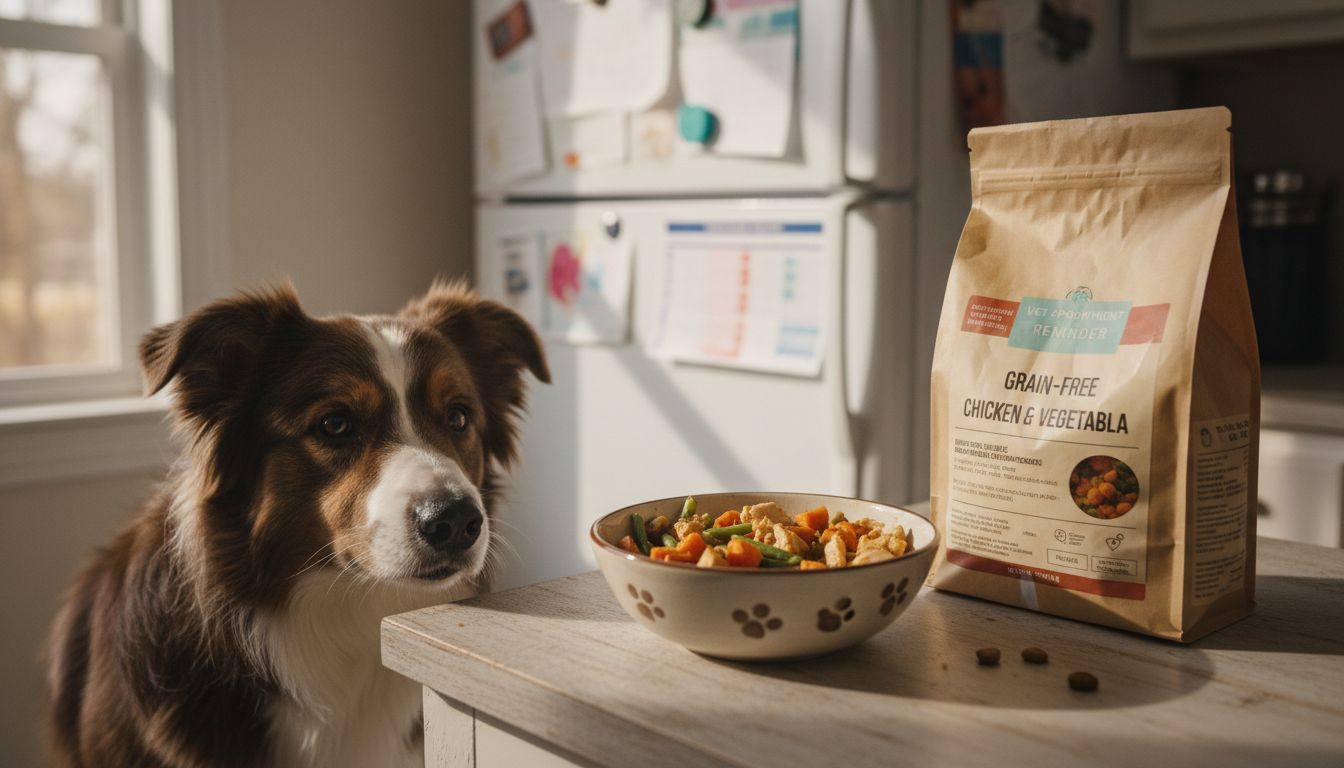
When selecting a diabetic dog food, prioritise options with low glycaemic index ingredients that help maintain steady blood sugar levels. Look for grain-free formulations rich in high-quality proteins, with complex carbohydrates from sources like sweet potatoes or legumes. These foods should offer balanced nutrition without sudden sugar spikes, incorporating lean proteins, healthy fats, and carefully selected carbohydrates that support your dog’s metabolic needs.
Natural, grain-free diets can provide significant benefits for diabetic dogs by reducing inflammatory responses and supporting more consistent energy release. Grain-free dog treats can complement this nutritional approach, ensuring your dog receives balanced nutrition throughout their diet.
Here are key differences between natural grain-free diets and standard diabetic dog foods:
| Criteria | Natural Grain-Free Diets | Standard Diabetic Dog Foods |
|---|---|---|
| Protein Source | Lean meats, fish, eggs | Meat, poultry-based proteins |
| Carbohydrate Type | Sweet potato, legumes | Rice, maize, barley |
| Glycaemic Index Impact | Lower, slow energy release | Moderate, potential spikes |
| Anti-inflammatory Benefit | Supports joint and gut health | Less emphasis on inflammation |
| Allergenic Potential | Reduced for most dogs | May trigger grain sensitivities |
Expert suggestion: Always introduce new foods gradually, monitoring your dog’s blood glucose levels and overall health response during dietary transitions.
Step 3: Measure and prepare portion sizes accurately
Managing portion sizes is crucial for diabetic dogs, as consistent meal measurements help stabilise blood glucose levels and support overall metabolic health. Mastering dog food portion control becomes essential when managing your dog’s diabetes, requiring precision and careful attention to nutritional needs.
To measure portions accurately, invest in a digital kitchen scale that provides precise gram measurements. Follow your veterinarian’s recommended daily calorie intake, typically divided into two or three equal meals aligned with insulin administration times. Use standardised measuring cups specifically designed for pet food, ensuring each serving matches the exact nutritional requirements your vet has prescribed. Pay close attention to the caloric density of the food, as diabetic dogs often require carefully calculated portions that prevent weight gain while maintaining stable energy levels.
Consistent timing and portion control are fundamental to managing canine diabetes effectively. Weigh your dog regularly to track any weight changes and adjust portions accordingly, always consulting with your veterinarian about potential dietary modifications.
Expert suggestion: Keep a daily feeding log recording portion sizes, meal times, and your dog’s weight to help your veterinarian make informed nutritional adjustments.
Step 4: Create a consistent feeding schedule
Establishing a predictable feeding routine is fundamental for managing diabetes in dogs, as consistent meal times help stabilise blood glucose levels and support overall metabolic health. Expert tips for transitioning dog foods can help you develop a reliable feeding strategy that aligns perfectly with your dog’s insulin treatment plan.
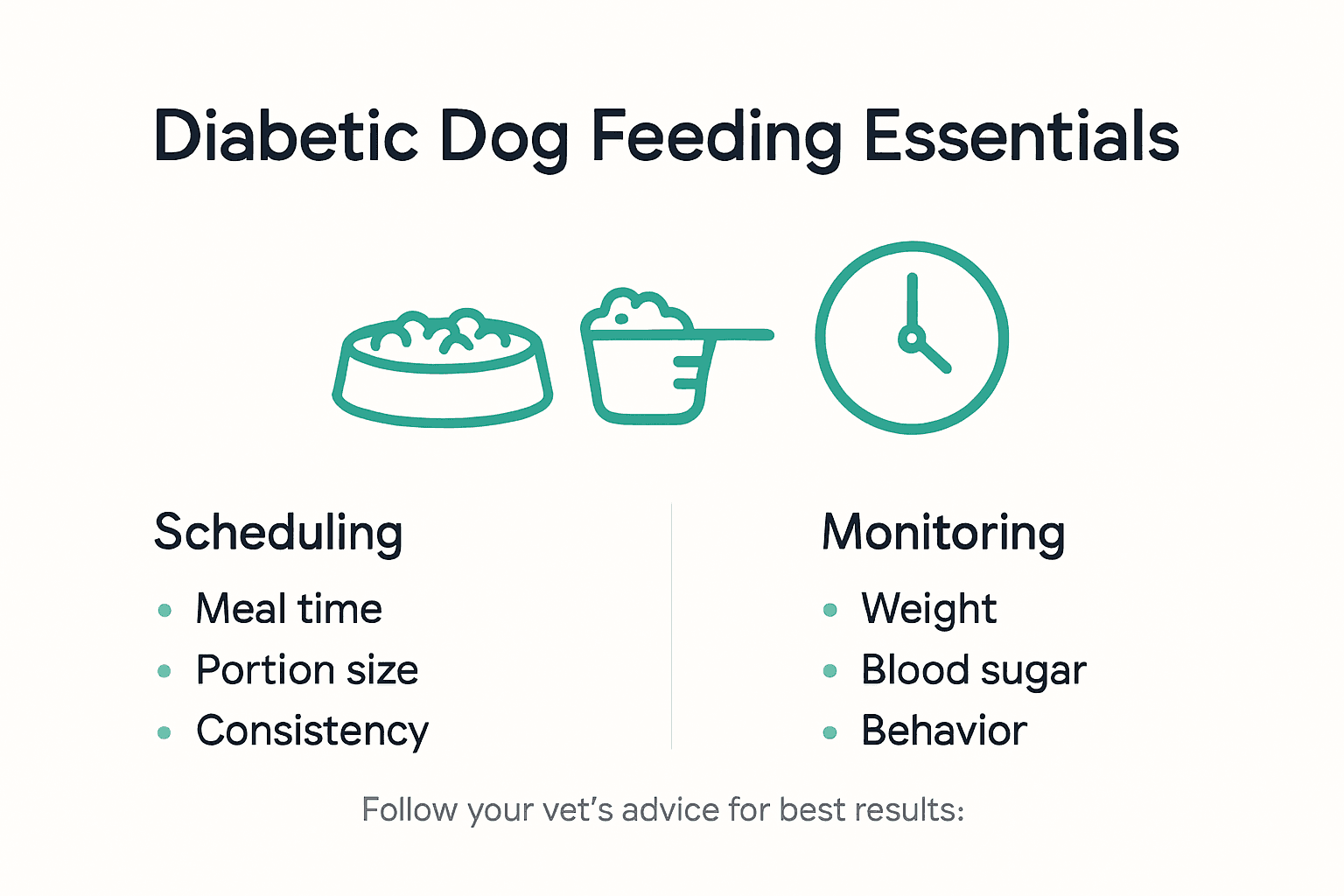
Aim to feed your diabetic dog two equally portioned meals per day, precisely timed around insulin injections. Veterinarians recommend scheduling meals at the same time every morning and evening—ideally 30 minutes before administering insulin. This synchronisation ensures that food absorption and insulin activity work together harmoniously, preventing dangerous blood sugar fluctuations. Use an alarm or smartphone reminder to maintain absolute consistency, treating meal times as critically important medical appointments for your dog’s health.
Prepare meals in advance and store them in clearly labelled containers to streamline your feeding routine. If your daily schedule varies, arrange for a family member or pet carer to maintain the established feeding times, ensuring your dog receives consistent nutrition regardless of your availability.
Expert suggestion: Create a visible feeding chart in your kitchen to track meal times, portion sizes, and insulin administration, helping all household members stay aligned with the diabetic management plan.
Step 5: Monitor your dog’s condition and adjust as needed
Managing a diabetic dog requires continuous observation and proactive health tracking to ensure your pet remains stable and comfortable. Creating the perfect dog feeding schedule serves as an essential foundation for monitoring your dog’s ongoing health and nutritional needs.
Develop a comprehensive tracking system that records daily observations such as water intake, urination frequency, energy levels, weight changes, and any shifts in behaviour or appetite. Maintain a detailed log documenting blood glucose readings, insulin dosages, meal times, and portion sizes. Regular veterinary check-ups are crucial for professional assessment of your dog’s diabetes management. During these consultations, your veterinarian will review your tracking data, potentially recommending adjustments to diet, insulin levels, or overall care strategy based on your dog’s specific metabolic responses.
Below is a summary of important daily health metrics to monitor for diabetic dogs:
| Metric | What to Track | Why It Matters |
|---|---|---|
| Water Intake | Total consumed per day | Indicates blood glucose shifts |
| Urination Frequency | Number of toilet trips | Warns of hyperglycaemia |
| Energy/Behaviour | Notable activity changes | Flags potential instability |
| Weight | Weekly weigh-in | Closely linked to diet efficacy |
| Appetite | Meal acceptance pattern | Identifies digestive issues |
Be vigilant about recognising potential warning signs that might indicate your dog’s diabetes is not well controlled. Symptoms like excessive thirst, frequent urination, sudden weight loss, lethargy, or changes in vision can signal the need for immediate veterinary intervention and potential dietary modifications.
Expert suggestion: Invest in a dedicated notebook or digital tracking app specifically designed for monitoring diabetic pet health to ensure consistent and comprehensive record keeping.
Support Your Diabetic Dog with Tailored, Natural Nutrition
Managing canine diabetes demands precision and care when it comes to feeding. This article highlights the importance of selecting low glycaemic, natural grain-free diets and maintaining consistent feeding schedules to help stabilise your dog’s blood glucose levels. Many dog owners face challenges around finding high-quality food that supports metabolic health without triggering sugar spikes or allergies. With careful portion control and expert guidance, you can make a life-changing difference for your diabetic companion.
At Ultimate Pet Foods, we understand the unique dietary needs of diabetic dogs. Our premium Blends for our Senior Dogs category offers naturally balanced, grain-free recipes crafted from fresh ingredients designed to support joint health, energy balance and overall wellbeing. Combined with our broad range of collections, you can tailor your dog’s meals perfectly to their condition and lifestyle.
Choose natural nutrition that aligns with veterinary advice to regulate blood sugar effectively. Visit Ultimate Pet Foods now to explore our specialised diabetic-friendly selections and take the vital next step in improving your dog’s quality of life.
Frequently Asked Questions
How can I create a tailored feeding plan for my diabetic dog?
To create a tailored feeding plan for your diabetic dog, consult your veterinarian to assess their health profile and nutritional requirements. Follow their recommendations on specific food formulations, portion sizes, and meal timings to effectively manage blood glucose levels.
What ingredients should I look for in natural, grain-free diabetic dog food?
When selecting natural, grain-free diabetic dog food, prioritise options with low glycaemic index ingredients, complex carbohydrates like sweet potatoes or legumes, and high-quality proteins. Ensure the food does not cause sudden sugar spikes, promoting stable energy release for your dog.
How do I accurately measure and prepare food portions for my diabetic dog?
To measure and prepare food portions accurately, invest in a digital kitchen scale and standardised measuring cups. Follow your veterinarian’s recommended daily calorie intake, dividing it into two or three equal meals, and adjust portions based on your dog’s weight and health response.
What is the best feeding schedule for managing my dog’s diabetes?
The best feeding schedule for managing a diabetic dog’s diabetes involves two equally portioned meals daily, timed around insulin injections. Aim to feed your dog at the same time each day, ideally 30 minutes before administering insulin, to prevent dangerous blood sugar fluctuations.
What daily health metrics should I monitor for my diabetic dog?
Monitor key health metrics such as water intake, urination frequency, energy levels, weight changes, and appetite. Regularly track these metrics to identify potential warning signs and ensure your dog’s diabetes is well controlled, making necessary dietary adjustments if needed.


