

Plant-based dog diets: A practical guide for healthy pets

TL;DR:
- Well-formulated plant-based diets can support healthy markers and digestion in dogs over a year.
- Proper supplementation for nutrients like B12, iodine, and taurine is essential in plant-based feeding.
- Gradual transition and ongoing monitoring are key to successfully switching your dog to a plant-based diet.
Many dog owners assume their pets need meat at every meal, but the science tells a more nuanced story. Recent longitudinal research shows that well-formulated plant-based diets can support healthy clinical markers, with protein digestibility exceeding 90% and maintained wellbeing over a full year in trials covering more than 2,500 dogs. If your dog struggles with allergies, skin flare-ups, or you simply want to optimise their nutrition with premium, natural ingredients, a plant-based approach may be worth exploring. This guide walks you through the evidence, the practical steps, and the honest trade-offs, so you can make a genuinely informed choice for your dog.
Table of Contents
- Why consider a plant-based diet for your dog?
- Comparing plant-based and meat-based diets: What the science says
- Meeting your dog’s nutritional requirements on a plant-based diet
- Switching to a plant-based diet: Practical do’s and don’ts
- A fresh perspective: What most guides miss about plant-based dog diets
- Next steps for optimal dog nutrition
- Frequently asked questions
Key Takeaways
| Point | Details |
|---|---|
| Backed by research | Well-formulated plant-based diets are supported by growing clinical evidence for healthy adult dogs. |
| Nutrient gaps common | Plant-based and meat-based diets can have micronutrient shortfalls, so supplements or careful product choice is crucial. |
| Transition gradually | Change your dog’s diet over 7–10 days and monitor their health with regular vet check-ins. |
| Allergy-friendly option | Plant-based diets can help manage animal protein allergies, but plant sensitivities should be watched for as well. |
| Personalise for best results | Ongoing monitoring and willingness to adapt your dog’s diet ensure lasting health and nutritional balance. |
Why consider a plant-based diet for your dog?
The reasons owners explore plant-based feeding are varied, but they tend to cluster around three core motivations: managing allergies, optimising long-term health, and aligning feeding choices with personal values. Each of these is valid, and the good news is that science is beginning to catch up with the curiosity.
Allergy management is perhaps the most pressing reason. Many common animal proteins, including chicken, beef, and dairy, are among the leading triggers for canine food sensitivities. A plant-based diet offers novel protein sources that your dog’s immune system may not have encountered before, reducing the likelihood of an allergic response. Plant ingredients also bring anti-inflammatory phytonutrients and dietary fibre, which support gut health and immune balance.
Health optimisation is the second driver. Plant-based diets appeal to health-conscious owners for their potential to deliver anti-inflammatory nutrients and hypoallergenic novel proteins, though premium formulation is essential to avoid deficiencies. The fibre content in plant-based foods also feeds beneficial gut bacteria, which is increasingly linked to systemic health.
Ethos-driven feeding rounds out the picture. Some owners simply want their dog’s diet to reflect broader values around sustainability and animal welfare. That is a personal choice, and one that can absolutely be made without compromising your dog’s health, provided you approach it thoughtfully.
Here is what the evidence supports when plant-based diets are properly formulated:
- Protein digestibility above 90%, comparable to many meat-based options
- Fewer reported vet visits in large-scale owner surveys
- Maintained body condition, coat quality, and energy levels over 12 months
- Increased dietary fibre supporting healthy gut transit
- Access to antioxidants in dog food that help neutralise cellular damage
“The data increasingly supports plant-based diets as a viable option for healthy adult dogs, but the emphasis must always be on premium formulation. A poorly balanced plant-based diet is no better than a poorly balanced meat-based one.”
The role of natural antioxidants for dogs found in plant ingredients, such as polyphenols from berries and carotenoids from vegetables, adds genuine nutritional value beyond simple calorie delivery. This is where plant-based feeding can genuinely shine, when it is built on quality ingredients rather than cheap fillers.
Comparing plant-based and meat-based diets: What the science says
Objective comparison matters here. Both diet types have real strengths and genuine weaknesses, and understanding them helps you make a smarter choice for your individual dog.
One of the most interesting findings from recent research is how plant-based diets change gut processing. Plant-based diets alter the faecal metabolome, increasing carbohydrate fermentation products like acetic and propanoic acid. This reflects a distinct shift in how the gut microbiome operates, not necessarily a negative one, but a change you should monitor during transition.

| Feature | Plant-based diet | Meat-based diet |
|---|---|---|
| Protein digestibility | >90% when well formulated | Typically >85-92% |
| Fibre content | High, supports gut bacteria | Generally lower |
| B-vitamins | Often requires supplementation | Naturally higher |
| Iodine levels | Frequently below guidelines | Usually adequate |
| Anti-inflammatory nutrients | Rich in phytonutrients | Depends on ingredients |
| Allergen risk | Lower for animal allergens | Higher for common proteins |
| Gut microbiome impact | Shifts fermentation profile | More stable baseline |
Critically, commercial plant-based dog foods often fall short on iodine and B-vitamins per FEDIAF guidelines, though it is worth noting that meat-based commercial products also show micronutrient gaps. Neither diet type is automatically complete simply because it is widely sold.
Knowing how to spot quality dog food is therefore essential regardless of which approach you choose. Look for brands that reference FEDIAF or WSAVA guidelines on their labelling, and treat any product making vague “complete and balanced” claims without supporting data with healthy scepticism.
The key nutritional strengths and weaknesses to keep in mind:
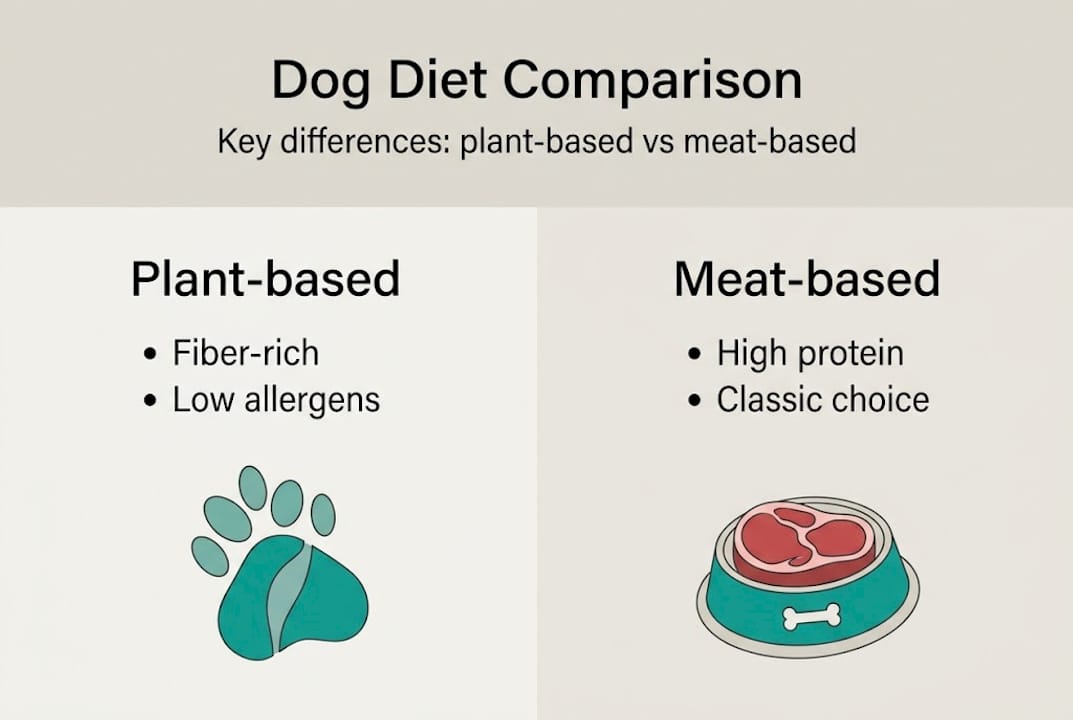
- Plant-based strengths: rich fibre, phytonutrients, novel proteins, lower saturated fat
- Plant-based weaknesses: potential gaps in iodine, B12, taurine, and vitamin D3
- Meat-based strengths: naturally higher B-vitamins, taurine, and bioavailable minerals
- Meat-based weaknesses: higher allergen risk, variable fibre content, potential for heavy metal accumulation in some proteins
Use the dog food comparison tool to evaluate specific products side by side before committing to a switch.
Meeting your dog’s nutritional requirements on a plant-based diet
Knowing the gaps is only useful if you know how to close them. The B-vitamin and iodine shortfall common in commercial plant-based diets is addressable, but it requires attention and consistency.
Here are the nutrients most commonly under-supplied in plant-based dog foods, along with practical guidance:
| Nutrient | Why it matters | Common shortfall | How to address it |
|---|---|---|---|
| Vitamin B12 | Nerve function, red blood cells | Frequent in plant-only diets | Supplement or fortified food |
| Iodine | Thyroid health | Often below FEDIAF guidelines | Kelp supplement or fortified food |
| Taurine | Heart function | Absent in plant sources | Direct supplementation |
| Vitamin D3 | Bone health, immunity | Low in plant ingredients | Animal-derived D3 supplement |
| Zinc | Skin, coat, immune function | Variable in plant foods | Check label; supplement if needed |
Here is a practical step-by-step approach to managing nutrition on a plant-based regimen:
- Read the label carefully. Look for FEDIAF-compliant labelling and a named manufacturer with contact details. Vague ingredient lists are a warning sign.
- Check dog vitamin requirements for your dog’s breed, age, and weight before selecting a product.
- Identify gaps. Cross-reference the product’s guaranteed analysis against FEDIAF minimums for B12, iodine, taurine, and D3.
- Add targeted supplements. Use single-nutrient supplements rather than broad multivitamins where possible, as this allows more precise dosing. Our guide to homemade dog food supplements covers this in detail.
- Schedule regular vet check-ups. Bloodwork every six months is ideal for dogs on plant-based diets, particularly in the first year.
- Review and adapt. Nutritional needs change with age, activity level, and health status. Stay curious and stay proactive.
Pro Tip: Ask your chosen brand for independent laboratory analysis of their product, not just the guaranteed analysis on the bag. Brands committed to science-backed nutrition will share this data willingly. If they cannot provide it, that tells you something important.
Switching to a plant-based diet: Practical do’s and don’ts
With nutrition management clear, the next step is putting this knowledge into action safely and smoothly. A rushed transition is one of the most common mistakes owners make, and it is entirely avoidable.
Gradual transition over 7 to 10 days:
- Days 1 to 3: Replace 25% of the current food with the new plant-based option.
- Days 4 to 6: Move to a 50/50 split, observing stool consistency and energy levels.
- Days 7 to 8: Increase to 75% new food, watching for any digestive changes.
- Days 9 to 10: Complete the transition to 100% plant-based, continuing to monitor closely.
Do’s:
- Consult your vet before starting, especially for dogs with existing health conditions
- Introduce single new ingredients first to identify any sensitivities
- Monitor energy levels, coat shine, stool quality, and general demeanour weekly
- Explore dog superfoods for longevity that complement a plant-based base diet
- Learn about superfoods for dogs such as blueberries, sweet potato, and flaxseed that add genuine nutritional value
Don’ts:
- Never switch abruptly. Sudden dietary changes upset the gut microbiome and cause digestive distress
- Do not overlook soy or gluten sensitivities. Some allergy-prone dogs react to plant proteins too, as monitoring for plant sensitivities is just as important as avoiding animal allergens
- Do not skip supplements because the label says “complete.” Verify this claim independently
- Avoid relying solely on fresh ingredients for dogs without ensuring nutritional completeness
Pro Tip: Keep a simple weekly logbook noting your dog’s energy, coat condition, stool quality, and appetite. Bring this to every vet appointment. It gives your vet far more useful information than memory alone, and it helps you spot patterns early.
A fresh perspective: What most guides miss about plant-based dog diets
Most articles on plant-based dog diets either champion the approach enthusiastically or dismiss it outright. We think both positions miss the point.
The honest truth is that nutritional balance is harder to achieve than most owners realise, regardless of diet type. The gap between a label saying “complete and balanced” and a product actually delivering complete and balanced nutrition is real, and it exists across both plant-based and meat-based commercial foods.
What actually determines success is not the diet category you choose. It is your willingness to monitor, adapt, and stay genuinely curious about your dog’s individual response. Bloodwork does not lie. Your dog’s coat, energy, and digestion tell a story every week. The owners who get the best long-term results from science-backed dog nutrition are those who treat feeding as an ongoing conversation rather than a one-time decision.
Ethics, allergies, or health concerns may bring you to plant-based feeding. Diligence and genuine curiosity are what keep your dog thriving within it.
Next steps for optimal dog nutrition
If this guide has sparked questions about upgrading your dog’s diet, we are here to help you take the next step with confidence. At Ultimate Pet Foods, we believe every dog deserves nutrition that is genuinely tailored to their needs, whether that means grain-free, hypoallergenic, or premium natural formulas.
Explore the grain-free diet benefits that many allergy-prone dogs experience, or use our compare premium and supermarket dog food tool to see exactly how products stack up on ingredients and nutrition. You can also browse our full range of dry dog food options to find a formula that fits your dog’s life stage, breed, and health goals. We are always happy to support you on this journey. 🐾
Frequently asked questions
Are plant-based diets safe for all dog breeds and ages?
Empirical data supports plant-based diet viability for healthy adult dogs, but puppies, pregnant dogs, and those with chronic illness require specialist veterinary supervision before making any dietary change.
Which nutrients do plant-based dog diets most often lack?
The main shortfalls are B-vitamins and iodine in commercial plant-based foods, along with taurine and vitamin D3, so targeted supplementation or careful product selection is essential.
Can a plant-based dog diet help with allergies?
A plant-based diet can help avoid many common animal allergens, but monitoring for plant sensitivities such as soy is equally important. Consult your vet for allergy testing and a structured transition plan.
Do plant-based diets affect the dog’s digestion or faeces?
Yes. Plant-based diets alter the faecal metabolome by increasing carbohydrate fermentation products, but most dogs adapt well when the transition is gradual and monitored.
How should I transition my dog to a plant-based diet?
Transition gradually over 7 to 10 days, monitoring energy, coat condition, and stool quality throughout, and consult your vet at each stage for the safest outcome.


