
Dog digestive health diet: your 2026 feeding guide
TL;DR:
- A dog digestive health diet emphasizes highly digestible ingredients, balanced fiber, and biotics to support gut function. Proper transition, strict elimination diets, and veterinary guidance are essential for managing food sensitivities and digestive issues effectively. Regular stool quality and prompt veterinary advice are key to maintaining optimal canine gut health.
A dog digestive health diet is defined as a feeding approach that prioritises highly digestible ingredients, balanced dietary fibre, and biotic supplementation to support optimal gut function and overall canine wellbeing. Every wag, bounce, and cuddle your dog gives you starts with what goes into their bowl. When digestion works well, your dog absorbs nutrients efficiently, produces firm stools, and maintains steady energy. When it does not, the signs are hard to miss: loose stools, excessive wind, vomiting, or a dull coat. At Ultimatepetfoods, we formulate our dry dog food recipes with freshly prepared meat or fish, gently cooked at 82°C, and include prebiotics MOS and FOS to support a healthy gut from the inside out.
What key nutrients support dog digestive health?
The foundation of any canine gut health food is digestibility. A diet built on high-quality protein from freshly prepared meat or fish is broken down more completely in the small intestine, leaving less undigested material to ferment in the colon. That fermentation is the primary cause of loose stools and excessive flatulence in dogs fed lower-quality ingredients.
Dietary fibre plays an equally important role, and the type matters as much as the amount:
- Soluble fibre (found in ingredients like chicory root and beet pulp) dissolves in water to form a gel, slowing digestion and feeding beneficial gut bacteria.
- Insoluble fibre (found in ingredients like cellulose) adds bulk to stools and speeds transit time, helping prevent constipation.
- Prebiotics MOS (mannanoligosaccharides) and FOS (fructooligosaccharides) selectively feed beneficial bacteria, supporting a balanced microbiome.
Biotics are where the science has moved quickly. Prebiotic and postbiotic supplementation over 28 days significantly improves stool consistency and reduces flatulence and vomiting in dogs. That finding, drawn from a study of 114 dog and cat owners, means that consistent daily feeding with a biotic-enhanced diet is not a luxury. It is a measurable clinical benefit. Ultimatepetfoods includes MOS and FOS in all applicable recipes precisely because the evidence supports their daily use.
Probiotics add live beneficial bacteria directly to the gut, while postbiotics are the metabolic by-products those bacteria produce. Both contribute to a stable gut environment. For dogs with digestive disturbances, combining a highly digestible diet with targeted biotic support reduces clinical recovery time more effectively than diet alone.
Pro Tip: Look for named prebiotic sources on the ingredient list, such as chicory extract, MOS, or FOS. A vague reference to “added fibre” tells you very little about the actual gut health benefit.
How to safely transition your dog to a digestive-friendly diet
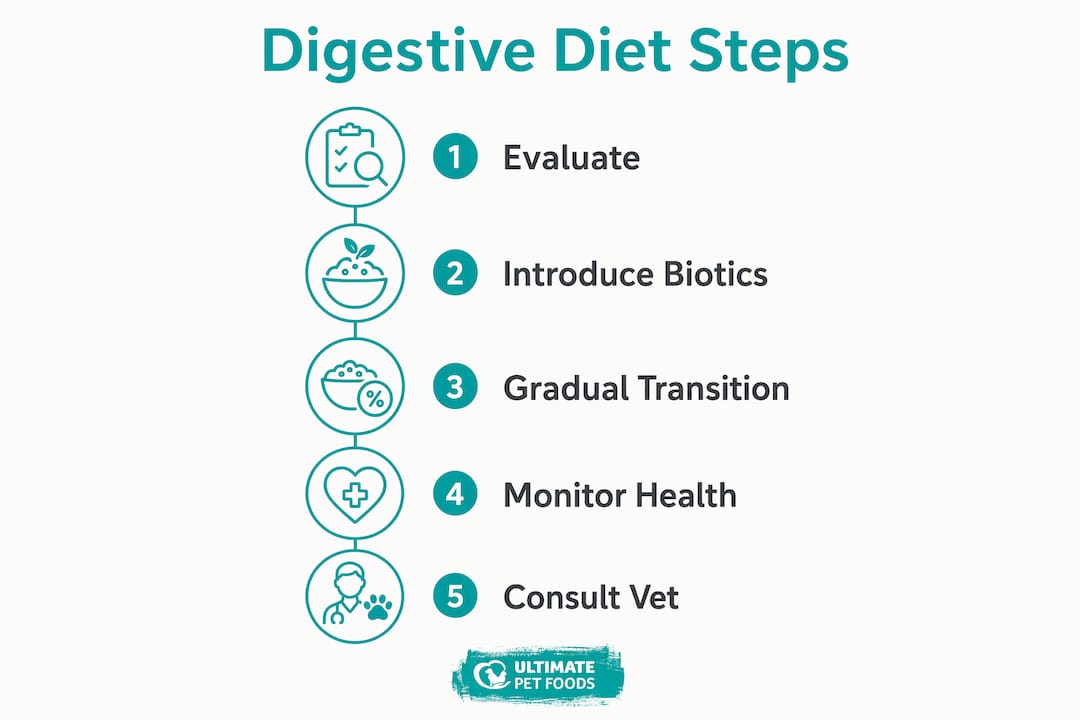
Switching your dog’s food too quickly is one of the most common causes of preventable digestive upset. The gut microbiome needs time to adapt to new ingredients, and microbiome adaptations can take several weeks post diet switch to stabilise fully. Rushing the process disrupts that adaptation and produces exactly the symptoms you are trying to avoid.
Follow this structured approach for a smooth transition:
- Days 1 to 3: Feed 75% current food and 25% new food. Watch for any change in stool firmness or frequency.
- Days 4 to 6: Move to a 50/50 split. If stools remain firm, continue as planned.
- Days 7 to 10: Feed 25% current food and 75% new food. Most dogs settle well at this stage.
- Days 10 to 14: Complete the switch to 100% new food.
Gradual transitions over 7 to 10 days are the standard recommendation, with sensitive dogs requiring up to 14 days or longer. That extended timeline is not overcaution. It reflects the biological reality of how the canine gut adapts. Our transitioning guide walks you through each stage with practical tips for managing any soft stools along the way.
Common pitfalls to avoid during a transition include abrupt food changes, introducing high-fat foods without preparation, and offering new treats or table scraps at the same time. Each of these introduces additional variables that make it impossible to know whether any digestive reaction is caused by the new food or something else entirely.
Pro Tip: Keep a simple feeding diary during the transition. Note stool consistency, frequency, and any vomiting. This record becomes invaluable if you need to consult your vet or slow the transition down.
How do elimination and hydrolysed protein diets help diagnose food sensitivities?
Food sensitivities affecting digestion are more common than many owners realise, and they are frequently misidentified as general digestive weakness rather than a specific dietary trigger. The standard diagnostic tool is the elimination diet trial, a strictly controlled feeding period designed to remove all potential allergens from the diet.
Diagnosing food hypersensitivity remains reliant on elimination diet trials because blood and skin tests for food allergies in dogs are currently unreliable. That means the diet trial is not just one option. It is the only validated diagnostic method available.
Key facts about elimination diet trials:
- Duration: Around 8 weeks of exclusive feeding is necessary to definitively diagnose food allergies, with approximately 95% of dogs responding within that window.
- Protein choice: Hydrolysed protein diets break proteins into fragments too small to trigger an immune response. Novel protein diets use a protein source your dog has never eaten before.
- Strict compliance: Small deviations including treats and flavoured medications can invalidate the entire trial. Every bite counts.
- Re-challenge: After symptoms resolve, reintroducing the original diet confirms the diagnosis. If symptoms return, food hypersensitivity is confirmed.
| Stage | What happens | Typical duration |
|---|---|---|
| Elimination phase | Feed only the trial diet, no treats or extras | 8 weeks |
| Assessment | Monitor for symptom resolution | Ongoing during trial |
| Re-challenge | Reintroduce original food to confirm trigger | 1 to 2 weeks |
| Confirmation | Diagnosis confirmed if symptoms return | Immediate |
Our Ultimate+ Functional Health Digestive Care range uses hydrolysed proteins specifically formulated for targeted everyday support, making it a practical option for dogs undergoing or completing a dietary trial. If a first trial does not resolve symptoms, sequential diet trials or veterinary referral may be needed to identify the correct dietary match for chronic gut issues.
Comparing diet types for dog digestion: which is right for your dog?
Not all diets designed to support digestion are created equal. Understanding the differences helps you make a confident, informed choice for your dog.
| Diet type | Cost | Convenience | Digestibility | Gut health support |
|---|---|---|---|---|
| Commercial dry food with prebiotics/probiotics | Low to moderate | High | High (quality dependent) | Strong with added biotics |
| Prescription veterinary diet | High | Moderate | Very high | Clinically targeted |
| Homemade diet | Variable | Low | Variable | Difficult to balance |
Commercial dry foods with added prebiotics and probiotics, such as the Ultimatepetfoods dry dog food range, offer the best balance of convenience, digestibility, and daily gut health support. Our recipes use human-grade ingredients, freshly prepared meat or fish cooked at 82°C, and are complete and balanced for all breeds and life stages.
Prescription veterinary diets are designed for acute or chronic gastrointestinal disturbances. A highly digestible prescription diet with probiotic and prebiotic ingredients normalises stool consistency within approximately 2 days on average, with 98% of dogs recovering within 9 days compared to 66% on a control diet. These diets are clinically powerful but expensive and typically intended for short-term or medically supervised use.
Homemade diets appeal to owners who want full ingredient control. The risk is nutritional incompleteness. Without a board-certified veterinary nutritionist formulating the recipe, homemade meals frequently fall short on calcium, zinc, and essential fatty acids, which can worsen digestive health over time rather than improve it.
For most dogs, a high-quality commercial dry food with added biotics is the most practical and evidence-backed choice for long-term digestive wellbeing.
When should you consult a vet about your dog’s digestion?
Dietary changes can resolve many mild digestive issues, but some symptoms signal something more serious that requires prompt veterinary attention. Knowing the difference protects your dog.
Seek veterinary advice without delay if your dog shows any of the following:
- Blood in stools or vomit
- Persistent vomiting lasting more than 24 hours
- Diarrhoea lasting more than 48 hours despite dietary management
- Significant weight loss alongside digestive symptoms
- Abdominal pain, bloating, or a distended belly
- Lethargy combined with any gastrointestinal sign
These symptoms may indicate conditions such as pancreatitis, inflammatory bowel disease, intestinal obstruction, or parasitic infection. None of these respond to dietary adjustment alone. Veterinary diet trials for chronic enteropathy show that most improvements in food-responsive cases appear within 10 to 14 days. If your dog shows no improvement after two weeks on a carefully managed diet, that is a clear signal to escalate to professional assessment.
Before your vet appointment, document your dog’s current diet in full: brand, recipe, feeding amounts, treat types, and any supplements. This information directly shapes the diagnostic process and saves time. Your vet may recommend a food allergy identification protocol or refer you to a veterinary internal medicine specialist for chronic cases.
Key takeaways
A dog digestive health diet built on highly digestible ingredients, balanced fibre, and daily prebiotic support delivers measurable improvements in stool quality, gut microbiome stability, and overall canine wellbeing.
| Point | Details |
|---|---|
| Digestibility comes first | Choose foods with named, freshly prepared protein sources and avoid low-quality fillers. |
| Prebiotics MOS and FOS matter | These specific prebiotics selectively feed beneficial gut bacteria and support stool consistency daily. |
| Transition slowly | Allow 7 to 14 days when switching foods to protect microbiome stability and prevent loose stools. |
| Elimination trials need strict compliance | Even a single treat can invalidate an 8-week food sensitivity trial. |
| Know when diet is not enough | Persistent vomiting, blood in stools, or weight loss require veterinary assessment, not just a food change. |
What I have learned about dog gut health after years in pet nutrition
Glenn’s perspective
After years working closely with dog nutrition, the single most consistent observation I have made is this: owners underestimate how much stool quality tells you. A firm, well-formed stool is not just convenient to pick up. It is a direct indicator that your dog is absorbing nutrients efficiently and that the gut microbiome is in reasonable balance.
The second thing I have noticed is a widespread confusion between food allergies and food intolerances. A true food allergy involves an immune response. A food intolerance is a digestive reaction without immune involvement. Both cause gut symptoms, but they require different management approaches. Many owners spend months trialling novel proteins when the real issue is a sensitivity to a fermentable carbohydrate or a fat level that is simply too high for their individual dog.
My honest advice is to treat the transition period as seriously as the diet itself. I have seen dogs fail to improve on genuinely excellent food simply because the switch was done in three days rather than ten. The gut needs time, and patience here pays off in weeks rather than months.
Work with your vet as a partner, not a last resort. The best outcomes I have seen come from owners who document everything, transition carefully, and bring clear feeding records to their appointments. That combination of good food and good communication is what actually moves the needle.
— Glenn
Support your dog’s gut health with Ultimatepetfoods
If you are looking for a dry dog food that works hard for your dog’s digestion every single day, we think you will love what Ultimatepetfoods has to offer.
Our recipes are made with freshly prepared meat or fish, gently cooked at 82°C to lock in nutrients and flavour. Every applicable recipe includes prebiotics MOS and FOS to actively support gut health from the first bowl. For dogs with more targeted needs, our Ultimate+ Functional Health range includes a dedicated Digestive Care formula using hydrolysed proteins, alongside Skin & Coat Care, Weight Control & Joint Care, Dental Care, and Healthy Living options. All our foods are complete and balanced for daily feeding across all breeds and life stages. Explore our full dry dog food range and find the right recipe for your dog today.
FAQ
What is the best diet for a dog with digestion issues?
The best diet for a dog with digestion issues is a highly digestible, complete dry food made with quality protein, balanced fibre, and added prebiotics such as MOS and FOS. For dogs with suspected food sensitivities, a hydrolysed or novel protein diet trial under veterinary guidance is the recommended starting point.
How long does a dog food transition take?
A safe food transition takes 7 to 10 days for most dogs, and up to 14 days for sensitive individuals. Slowing the transition reduces the risk of soft stools and diarrhoea caused by abrupt dietary changes.
Do probiotics help dogs with digestive problems?
Yes. Prebiotic and postbiotic supplementation over 28 days has been shown to significantly improve stool consistency and reduce flatulence and vomiting in dogs. Daily feeding with a biotic-enhanced diet provides consistent, measurable gut health support.
How do I know if my dog has a food allergy affecting digestion?
The only validated method for diagnosing food allergies in dogs is a strict elimination diet trial lasting approximately 8 weeks, with no treats, flavoured medications, or other foods. Blood and skin tests for food allergies in dogs are currently unreliable and not recommended as a primary diagnostic tool.
When should a dog’s digestive symptoms be treated as urgent?
Blood in stools or vomit, persistent vomiting beyond 24 hours, diarrhoea lasting more than 48 hours, or significant weight loss alongside digestive symptoms all require prompt veterinary assessment rather than dietary management alone.