

How to identify food allergies in your dog

TL;DR:
- Dogs with year-round itching, ear infections, and skin changes may have food allergies caused by immune reactions to proteins. An 8 to 12-week elimination diet using novel, single-source ingredients is the only reliable way to diagnose these allergies. Proper trial preparation, strict compliance, and systematic re-challenge are essential for accurate identification and long-term management.
If your dog scratches relentlessly, shakes their head constantly, or suffers from recurring ear infections, you may already suspect something in their bowl is to blame. Knowing how to identify food allergies in dogs is harder than most owners expect. The signs are chronic rather than dramatic, and they overlap with dozens of other conditions. This guide walks you through recognising the key symptoms, preparing and running an elimination diet trial, and confirming which ingredients are causing problems so you can make lasting, meaningful changes to your dog’s diet.
Table of Contents
- Key takeaways
- Recognising the signs of food allergies in dogs
- Preparing for an elimination diet trial
- Running the elimination diet and monitoring progress
- The re-challenge phase and confirming allergens
- My honest take on what actually works
- How Ultimatepetfoods supports dogs with food sensitivities
- FAQ
Key takeaways
| Point | Details |
|---|---|
| Symptoms can mislead | Year-round itching, ear infections, and gut problems are the main signs, but they mimic other conditions. |
| Elimination diet is gold standard | An 8 to 12 week novel protein trial is the only reliable way to diagnose a food allergy. |
| Hidden allergens derail trials | Flavoured treats, supplements, and medications can contain allergenic proteins that invalidate the process. |
| Re-challenge confirms the allergy | Reintroducing one ingredient at a time and watching for symptom return is what makes the diagnosis definitive. |
| Infections must be treated too | Secondary skin and ear infections need concurrent treatment or they will mask dietary improvement. |
Recognising the signs of food allergies in dogs
The most important thing to understand is that food allergy symptoms develop over hours to days rather than instantly. This means your dog’s reaction is chronic and accumulative, not a sudden event. That makes the signs of food allergies easy to confuse with seasonal allergies, breed-specific tendencies, or plain bad luck.
Many owners attribute recurring itching and ear infections to pollen or the environment, delaying a food allergy diagnosis by months or even years. The key distinguishing feature of a food allergy is that it occurs throughout the year, not just in spring or autumn. If your dog is scratching in January as well as July, that is a strong signal worth investigating.
Here are the most common signs to watch for:
- Year-round itching, particularly focused on the face, paws, ears, and groin
- Recurrent ear infections, often dominated by yeast (Malassezia), sometimes monthly or more often
- Skin changes such as redness, hot spots, thickening of the skin, or patchy hair loss
- Gastrointestinal symptoms including vomiting, loose stools, diarrhoea, or excess gas. These affect around 20 to 30% of allergic dogs
- Skin involvement is the most common presentation overall, so do not wait for digestive signs to take it seriously
It is also worth understanding the difference between a food allergy and a food intolerance. A food intolerance is a digestive reaction without immune involvement. An allergy triggers an immune response. Both can cause discomfort, but only a true allergy causes the kind of chronic itching and inflammation described above.
The most common allergens in dogs are beef, dairy, chicken, wheat, soy, and lamb. The proteins in these ingredients are what trigger the reaction, not the carbohydrates or fats. This is why a novel protein diet works so well: it removes everything the immune system has previously encountered and learned to react against.
Pro Tip: If your dog has itchy paws year-round and you have already ruled out contact allergies from grass or flooring, book a vet appointment specifically to discuss food allergy testing before investing in antihistamines or shampoos.
Preparing for an elimination diet trial
Before you change a single meal, preparation is everything. Rushing into a diet trial without the right groundwork is one of the most common reasons it fails. Here is what needs to happen first.

Step 1: Get a veterinary assessment
Your vet needs to rule out other potential causes of your dog’s symptoms. Mange, environmental allergies, bacterial infections, and hormonal conditions can all produce similar signs. Starting a diet trial before excluding these means you may spend 12 weeks changing the food while the real cause goes untreated.
Step 2: Understand the standard for strict compliance
This trial demands absolute consistency. No reliable blood, saliva, or hair tests currently exist for diagnosing canine food allergies. The elimination diet is the only validated diagnostic method, and it only works if the protocol is followed exactly.
Step 3: Choose a novel protein and carbohydrate source
A novel protein is one your dog has never eaten before. If your dog has always eaten chicken and rice-based food, consider duck with sweet potato or salmon with lentils. The logic is straightforward: the immune system cannot react to something it has never encountered. You can find guidance on selecting hypoallergenic diets to help match your dog’s history to an appropriate novel ingredient.
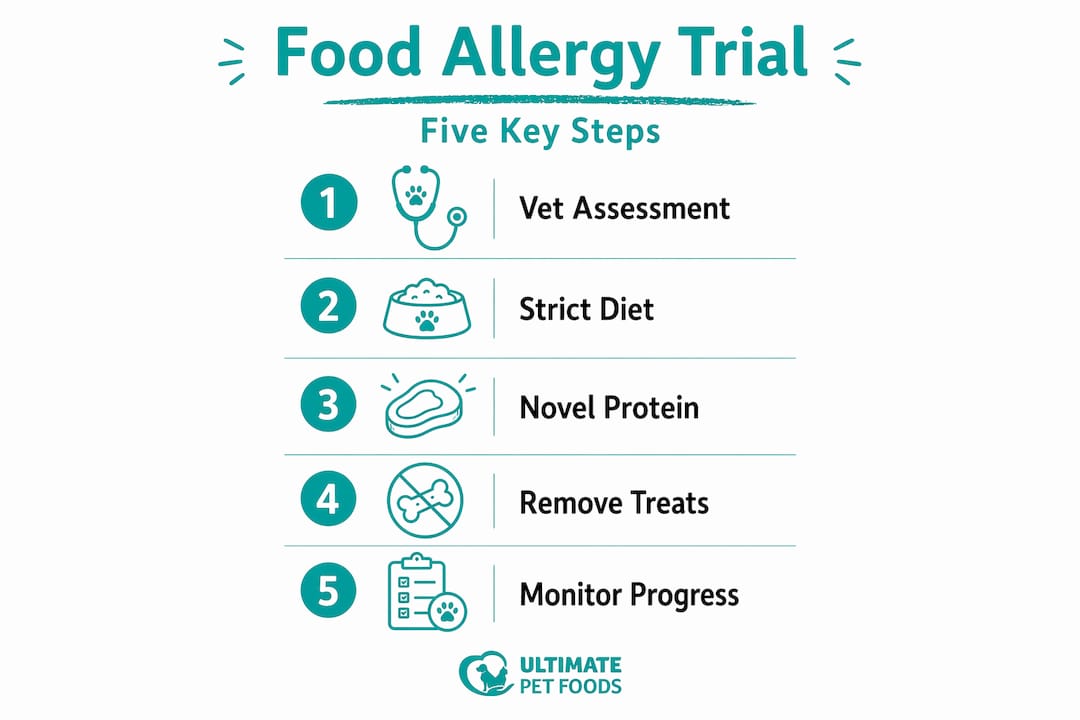
Step 4: Audit and remove everything else
This is where most trials fall apart. Every food item your dog consumes must be checked and most must be removed. Use the table below as a checklist.
| Item | Action required | Reason |
|---|---|---|
| Current dog food | Replace with novel protein diet | Main allergen source |
| Commercial treats and chews | Remove or replace with single-ingredient alternatives | Often contain multiple proteins |
| Flavoured supplements | Check ingredients carefully; replace if needed | Flavoured products often contain beef or chicken protein |
| Flavoured parasite preventatives | Discuss alternatives with your vet | Contain allergenic proteins and must be replaced |
| Toothpaste and dental chews | Replace with unflavoured options | Frequently overlooked allergen sources |
| Table scraps or kitchen extras | Stop entirely during the trial | Even small exposures invalidate results |
Step 5: Set realistic expectations
The trial period is 8 to 12 weeks. The majority of allergic dogs respond between weeks 8 and 10, but extending to 12 weeks accounts for dogs with slower immune responses or seasonal overlap. Commit to the full duration before drawing any conclusions.
Pro Tip: Tell everyone in the household including visitors and dog walkers about the trial. One person slipping your dog a chicken-flavoured treat can reset weeks of progress without anyone realising.
Running the elimination diet and monitoring progress
With preparation done, here is how to execute the trial effectively.
-
Feed only the novel protein diet. No exceptions. No off-cuts from your dinner plate, no flavoured chews, no shared bowls with other pets. Cross-contamination from a second dog’s bowl is enough to trigger a reaction.
-
Record symptoms daily. Write down itching frequency, ear condition, stool quality, and any skin changes. A simple notebook or phone note works well. Patterns become visible over weeks, and documentation protects you from relying on memory.
-
Watch for gradual improvement. Skin symptoms often clear more slowly than gut symptoms. Do not expect dramatic change in week two. A mild, steady reduction in scratching frequency by week four or five is a positive indicator.
-
Extend the trial if needed. If your dog shows partial improvement but not full resolution, continue to 12 weeks before concluding. Some dogs take longer depending on the severity of secondary changes in the skin.
-
Manage secondary infections concurrently. Bacterial pyoderma and Malassezia dermatitis can persist throughout the diet trial and confuse the results. If your dog has active ear or skin infections at the start, work with your vet to treat these alongside the diet change. Untreated infections can make it appear that the diet has failed when the food allergen has actually been removed successfully.
-
Seek veterinary support if symptoms worsen. A dog in significant discomfort may need short-term antihistamines or medicated washes during the trial. These do not invalidate the process as long as you and your vet are aware of them.
Here is a quick reference for what you are looking for during the trial period:
- Reduction in scratching intensity and frequency
- Fewer episodes of head shaking or pawing at the ears
- Clearer skin with less redness and fewer hot spots
- Firmer, more consistent stools
- Less gas and digestive upset
Pro Tip: Take weekly photos of your dog’s most affected areas, especially the paws, belly, and around the ears. Visual comparison over eight weeks is far more reliable than memory alone.
The re-challenge phase and confirming allergens
Improvement during the elimination diet is encouraging, but it is not a confirmed diagnosis on its own. The re-challenge phase is what makes the diagnosis definitive. Without it, any improvement could be coincidental.
Here is how to run the re-challenge safely and systematically:
- Reintroduce one previously fed protein at a time. Feed it daily for up to 14 days and observe closely for any symptom recurrence.
- Expect a reaction within 1 to 14 days if that ingredient is a true allergen. Symptoms typically return in the form of renewed itching, ear inflammation, or digestive upset.
- Remove the confirmed allergen immediately if a reaction occurs. Return to the novel protein diet and allow symptoms to settle before trialling the next ingredient.
- Document every reintroduction. Record the ingredient, the date it was introduced, and any symptoms that appeared. This becomes your dog’s allergy profile for long-term feeding decisions.
- Be aware of false positives. If a reaction occurs but you suspect contamination or an unrelated cause, discuss repeating that reintroduction with your vet before permanently eliminating that ingredient.
The table below compares what a confirmed allergy looks like versus an inconclusive result.
| Scenario | What it suggests | Next step |
|---|---|---|
| Symptoms improve on novel diet, return on reintroduction | Confirmed food allergy to that ingredient | Exclude permanently from diet |
| Symptoms improve but do not return on reintroduction | Coincidental improvement or false negative | Repeat the reintroduction trial |
| Symptoms do not improve despite strict compliance | Non-food allergy or hidden allergen exposure | Re-audit all food sources; consider seasonal allergy as cause |
| Partial improvement only | Possible multiple allergens or secondary infection | Extend trial; manage infections; consult specialist |
If you identify multiple allergens or your dog’s symptoms are complex, a veterinary dermatologist can offer specialist support. The goal is a clear, evidence-based list of ingredients to avoid, which then shapes every future feeding decision for your dog.
My honest take on what actually works
What I have observed time and again is that the biggest obstacle to a successful food allergy trial is not the food itself. It is the hidden allergens nobody thinks to check. Flavoured flea and tick preventatives, probiotic supplements with beef liver coating, and even the small print on a dental chew can contain the exact protein driving the whole reaction.
I have also seen owners abandon trials at week six because they do not see dramatic improvement, when in reality slow progress is completely normal for skin-based allergies. The skin takes longer to resolve than the gut, and if there is an active yeast infection in the ear, the dog will still scratch regardless of how clean the diet is.
The misconception I encounter most often is that a blood test or hair analysis test will give you the answer quickly and conveniently. The honest truth is that these tests are not validated for canine food allergies. They are not recognised by veterinary dermatology guidelines. The elimination diet is time-consuming and demanding, but it is the only method that genuinely works.
What makes the process easier is starting with a food that is already transparent in its ingredients and free from the most common allergens. Recipes built around a single, freshly prepared protein with no unnecessary fillers make it much simpler to know exactly what your dog is eating from day one.
— Glenn
How Ultimatepetfoods supports dogs with food sensitivities
At Ultimatepetfoods, we have built our recipes with dogs like yours in mind. Every dry food in our range uses freshly prepared meat or fish, gently cooked at 82°C to lock in nutrients and flavour, made with human-grade ingredients and formulated to be complete and balanced for lifelong daily feeding.
Our recipes contain added prebiotics (MOS and FOS) to support gut health from the inside out, which matters especially during and after an elimination diet. For dogs with more targeted needs, our Ultimate+ Functional Health range uses hydrolysed proteins and is available in Digestive Care, Skin & Coat Care, Weight Control and Joint Care, Dental Care, and Healthy Living formulas. If you are moving your dog onto a long-term allergen-friendly diet after a successful trial, our grain-free range is a great place to start. Every ingredient is listed clearly so you know exactly what your dog is eating, every single day.
FAQ
What are the most common signs of food allergies in dogs?
The most common signs include year-round itching on the face, paws, ears, and groin, along with recurring ear infections and, in around 20 to 30% of cases, digestive issues such as vomiting or loose stools.
How do you test for food allergies in dogs?
The only reliable method is an 8 to 12 week elimination diet using a novel protein your dog has never eaten before. Blood, saliva, and hair tests are not scientifically validated for diagnosing canine food allergies.
How long does an elimination diet take to work?
Most food-allergic dogs show clear improvement between weeks 8 and 10. The trial should always run for a full 12 weeks before conclusions are drawn to account for slower responders.
Can treats and medications affect a food allergy trial?
Yes. Flavoured treats, supplements, toothpastes, and even parasite preventatives often contain allergenic proteins like beef or chicken. All of these must be checked and replaced before starting the trial.
What causes food allergies in dogs?
Food allergies develop when a dog’s immune system reacts to a specific protein it has been repeatedly exposed to. The most common triggers are beef, chicken, dairy, wheat, soy, and lamb. It is the protein in these ingredients that causes the immune response, not the carbohydrate or fat content.


