

Fresh ingredients dog food: the 2026 buyer's guide

TL;DR:
- Choosing genuinely fresh dog food made from human-grade ingredients cooked at low temperatures is essential for optimal nutrition and digestive health. Proper storage, transparency in ingredients, and matching food to your dog’s needs ensure a balanced diet; hybrids combining fresh and dry foods offer practical flexibility. Brands like Ultimatepetfoods deliver affordable, well-made options that preserve nutrients without relying solely on cold-chain logistics.
Choosing a fresh ingredients dog food that genuinely delivers on its promises is harder than it should be. Every bag, pouch, and subscription box claims to be “natural” or “wholesome,” yet the difference between real fresh nutrition and clever marketing can be significant. Whether your dog has a sensitive stomach, seasonal skin flares, or you simply want the best for them at every life stage, understanding what separates truly fresh food from the rest is the foundation of every good feeding decision. This guide walks you through exactly what to look for, which products stand out in 2026, and how to match the right food to your dog’s specific needs.
Table of Contents
- Key takeaways
- 1. What fresh ingredients dog food actually means
- 2. Key criteria for evaluating fresh dog food
- 3. The top fresh ingredients dog food options in 2026
- 4. Side-by-side comparison of leading options
- 5. Matching fresh dog food to your dog’s specific needs
- My honest take on fresh dog food in 2026
- Why Ultimatepetfoods is built for everyday fresh nutrition
- FAQ
Key takeaways
| Point | Details |
|---|---|
| True freshness has a definition | Genuine fresh dog food uses human-grade ingredients gently cooked at around 82 to 90°C, not high-heat processing. |
| Nutritional completeness matters most | A food can be fresh but still nutritionally incomplete; always check for AAFCO or FEDIAF compliance. |
| Sensitive dogs need transparent sourcing | Novel proteins and limited ingredient lists help dogs with food allergies or digestive sensitivities thrive. |
| Storage is where many owners go wrong | Fresh food lasts 3 to 4 days refrigerated once opened; freezing extends shelf life to around 3 months. |
| Dry food can deliver fresh ingredient quality | Gently cooked dry food, like Ultimatepetfoods’ 82°C kibble, offers fresh ingredient nutrition with everyday convenience. |
1. What fresh ingredients dog food actually means
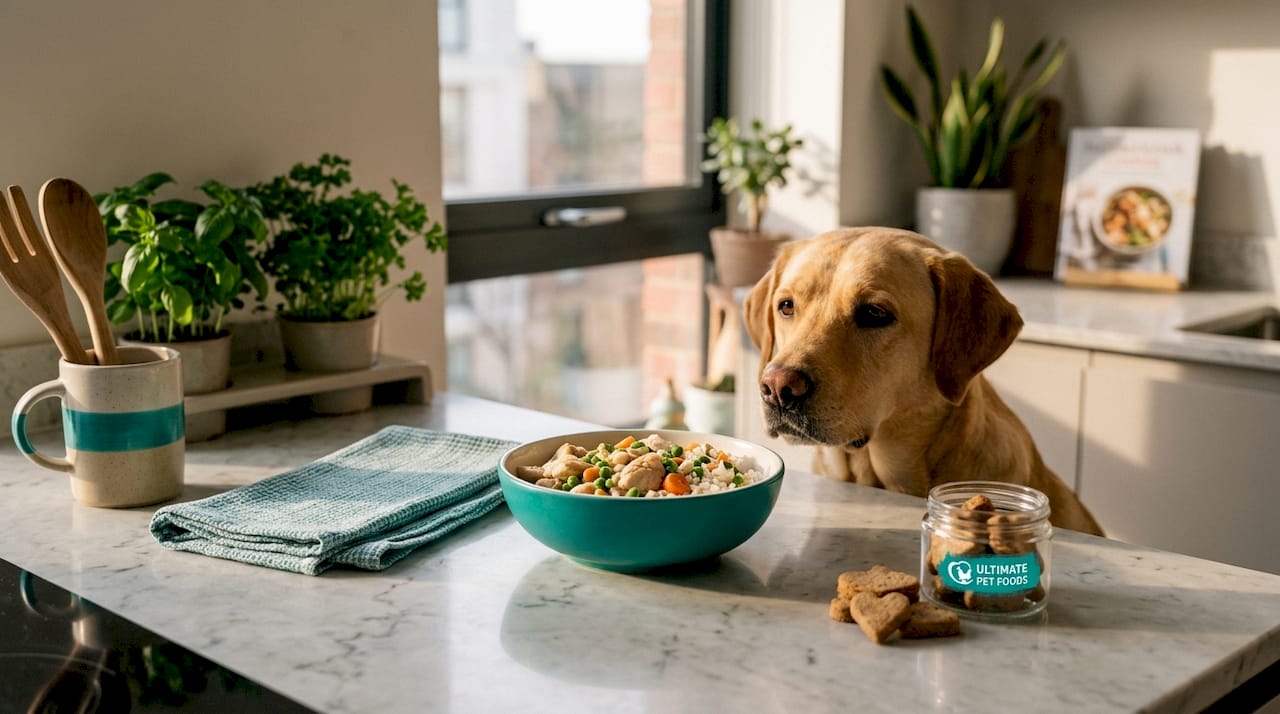
The phrase “fresh dog food” gets used loosely, but there is a real technical distinction. True fresh food uses human-quality ingredients that are gently cooked at around 90°C before temperature-controlled storage, rather than the 150 to 200°C extrusion or retort processes used for standard kibble and tinned food. This matters because high heat generates heat-derived compounds called advanced glycation end products (AGEs). Fresh recipes contain up to 120% fewer AGEs than conventionally processed foods, which is one reason many dogs with sensitive digestive tracts do noticeably better on them.
What is fresh dog food in practical terms? It includes gently cooked refrigerated or frozen meals, high-meat-content dry foods cooked at low temperatures, and freeze-dried options that preserve nutrients without heat. The key words are: human-grade, gently cooked, and temperature-controlled. If a product cannot demonstrate cold-chain accountability from production to your door, “freshness” may be a [marketing claim rather than a manufacturing standard.
2. Key criteria for evaluating fresh dog food
Before comparing products, it helps to have a clear framework. Here is what genuinely separates good fresh ingredient options from everything else:
- Nutritional completeness. A food can contain beautiful ingredients yet still fail your dog nutritionally. Many homemade diets lack essential nutrients without veterinary guidance. Look for AAFCO or FEDIAF “complete and balanced” labelling for your dog’s specific life stage. Puppies, adults, and seniors all have different requirements.
- Ingredient transparency. Human-grade ingredients, named protein sources (chicken, salmon, lamb), and clear country of origin are signs of a reputable product. Vague terms like “meat derivatives” are red flags.
- Sensitivity suitability. Novel proteins such as venison, duck, or white fish are less likely to trigger immune responses in dogs that have developed sensitivities to more common meats. Grain-free formulations remove another common allergen layer.
- Added digestive support. Prebiotics such as MOS (mannan-oligosaccharides) and FOS (fructo-oligosaccharides) actively support gut microbiome health. Every wag, bounce, and cuddle really does start with great gut health.
- Storage realism. Fresh food lasts 3 to 4 days refrigerated once opened, with freezing extending shelf life to around 3 months. Factor this into your buying routine before committing to a subscription.
- Cost and convenience. Fresh food is generally more expensive than kibble and requires consistent refrigeration. For some households, a gently cooked dry food with high fresh meat content offers the best balance of nutrition and practicality.
Pro Tip: When reading labels, look for the moisture percentage. High-moisture fresh foods (above 70%) aid hydration but shrink quickly in volume once cooked down, which is why the feeding quantities look smaller than kibble portions.
3. The top fresh ingredients dog food options in 2026
The fresh dog diet market has expanded considerably. Here are the standout options worth considering this year.
Ultimatepetfoods (complete grain-free dry food) Gently cooked at 82°C using human-grade ingredients, Ultimatepetfoods’ recipes lock in freshness and natural flavour without the nutrient losses associated with high-heat processing. The range is complete and balanced for all breeds and life stages, includes added MOS and FOS prebiotics for daily digestive support, and is available in grain-free formulations ideal for sensitive dogs. The Ultimate+ Functional Health range goes further, using hydrolysed proteins for targeted support across five areas: Digestive Care, Skin & Coat Care, Weight Control & Joint Care, Dental Care, and Healthy Living. It is built for everyday feeding, not short-term fixes.
Carnilove Active and True Fresh Carnilove’s Active range contains 26% fresh meat as part of a 70 to 80% total meat content. Their True Fresh range raises the bar further with 60 to 70% fresh meat and a 100% chicken-free protein selection, making it a strong option for dogs with poultry sensitivities. The high fresh meat content paired with balanced dry formulas offers nutrient density with less reliance on refrigeration than typical wet fresh options.
Subscription-based gently cooked services Brands such as The Farmer’s Dog, Nom Nom, Ollie, Just Food For Dogs, and Open Farm all deliver pre-portioned, refrigerated meals formulated with board-certified nutritionists. These services suit owners who prioritise maximum moisture content and want meals tailored to their dog’s weight and activity level. The trade-off is cost and cold-chain dependence.
Freeze-dried raw options For owners interested in raw nutrition without the bacterial risk of handling raw meat, freeze-dried formats preserve nutrient profiles well and rehydrate easily. They work particularly well as toppers over kibble for a hybrid fresh dog diet.
Pro Tip: Switching to fresh food should be gradual. Introduce the new food over 7 to 10 days, starting with 20% new food and 80% current food, then slowly increasing the ratio. This is especially important for dogs with known digestive sensitivities.
4. Side-by-side comparison of leading options
| Product | Cooking method | Fresh meat content | Protein sources | Grain-free | Life stage | Storage |
|---|---|---|---|---|---|---|
| Ultimatepetfoods dry | Gently cooked at 82°C | High (freshly prepared) | Named meat/fish | Yes | All stages | Ambient |
| Carnilove True Fresh | Gently cooked | 60–70% fresh meat | Novel proteins, no chicken | Yes | Adult | Refrigerated |
| The Farmer’s Dog | Gently cooked | 50–65% | Chicken, beef, turkey | Mostly | All stages | Refrigerated/frozen |
| Ollie | Gently cooked | 50–60% | Beef, chicken, fish | Some recipes | All stages | Refrigerated/frozen |
| Open Farm | Various (some freeze-dried) | Varies by recipe | Ethically sourced | Some recipes | All stages | Ambient or refrigerated |
The clearest difference between refrigerated services and gently cooked dry foods is storage logistics. Refrigerated services deliver superior moisture content, which supports hydration and softens digestion, but they demand consistent fridge space and careful portion management. Common handling mistakes such as refreezing thawed portions or leaving food out too long compromise both safety and nutrition.
Ultimatepetfoods occupies a distinct position: the gentle 82°C cooking process preserves the nutritional integrity of human-grade ingredients while producing a dry kibble that stores at room temperature, feeds consistently, and costs considerably less per day than most subscription services. For families who want fresh ingredient quality without the cold-chain complexity, it is a genuinely practical solution. You can explore more about fresh food versus kibble to understand where each format excels.
5. Matching fresh dog food to your dog’s specific needs
Not every dog needs the same approach, and the best fresh dog food for one household may be entirely wrong for another.
-
Dogs with sensitive digestion or food allergies. Choose a product with a limited ingredient list, a novel protein your dog has not eaten before, and no common allergens such as wheat, corn, or soy. Hydrolysed protein formulas, like those in the Ultimatepetfoods Ultimate+ Digestive Care range, break proteins into smaller molecules that the immune system is less likely to react to. Products with added MOS and FOS prebiotics actively support microbiome balance, which is often disrupted in sensitive dogs.
-
Budget-conscious owners. Gently cooked dry food offers the best value per serving for fresh ingredient quality. A high-quality grain-free kibble cooked at low temperatures, such as the Ultimatepetfoods complete range, typically costs 40 to 60% less per day than a fresh subscription service while still delivering human-grade nutrition.
-
Puppies and active dogs. If you are researching the best fresh dog food for puppies, prioritise products labelled for “all life stages” or specifically for growth. Puppies need higher levels of protein, calcium, and DHA for brain and bone development. AAFCO compliance for growth is non-negotiable. Active adult dogs benefit from higher protein density and digestible energy from named animal fats.
-
Senior dogs. Seniors often struggle with lower appetite and reduced digestive efficiency. Softer textures, higher moisture, or a dry food with easily digestible proteins help maintain lean muscle mass and gut health. The Ultimatepetfoods Weight Control & Joint Care formula from the Ultimate+ range supports healthy weight and mobility with daily, lifelong feeding in mind.
-
Hybrid feeding. You do not have to choose one approach exclusively. Using a portion of gently cooked fresh food or a freeze-dried topper over a nutritionally complete kibble is a brilliant middle ground. It adds moisture, palatability, and variety without the full cost or storage demands of an all-fresh diet. When doing this, reduce the kibble quantity proportionally to avoid overfeeding. You can find more practical advice on choosing fresh ingredients for different life stages at Ultimatepetfoods.
Pro Tip: If your dog has recurring digestive upset, skin flares, or dull coat despite eating a “complete” food, the issue may be ingredient quality rather than formulation. Switching to a recipe with clearly sourced fresh proteins and added prebiotics often produces visible improvement within 4 to 6 weeks.
My honest take on fresh dog food in 2026
I have watched the fresh dog food market mature significantly over the past several years, and my view has settled in a place that might surprise some people. The most common misconception I encounter is that “fresh” automatically means superior, and “kibble” automatically means inferior. Neither is true.
What I have learned is that cooking temperature and ingredient quality matter far more than the format. A gently cooked dry food made with human-grade meat, cooked carefully at 82°C to protect nutrients, genuinely outperforms a poorly formulated refrigerated product that happens to look more impressive on a website. The science around AGEs and digestibility supports this view, and so does lived experience with dogs that have sensitivities.
The storage and handling side of fresh food is also underestimated. I have seen dogs get an inconsistent diet simply because their owners struggled to maintain a proper cold-chain routine. Refreezing thawed portions, late deliveries left on doorsteps, and portions left out for hours are all real problems. A complete, gently cooked dry food removes almost all of that risk.
My genuinely cautious optimism sits with hybrid feeding and with brands like Ultimatepetfoods that have committed to a low-temperature cooking process rather than just marketing the word “fresh.” Verify the nutritional adequacy of whatever you choose. Look for prebiotic support. And trust your dog’s coat, digestion, and energy levels as your clearest feedback over time.
— Glenn
Why Ultimatepetfoods is built for everyday fresh nutrition
At Ultimatepetfoods, we believe that every dog deserves fresh ingredient nutrition as a daily standard, not an occasional treat. Our recipes are made with human-grade ingredients and freshly prepared meat or fish, gently cooked at 82°C to lock in flavour, freshness, and the nutrients your dog relies on.
Every recipe is complete and balanced, suitable for all breeds and life stages, and enriched with MOS and FOS prebiotics to support a healthy gut from the inside out. For dogs that need a little extra care, our Ultimate+ Functional Health range uses hydrolysed proteins to provide gentle, targeted support across five everyday health areas: Digestive Care, Skin & Coat Care, Weight Control & Joint Care, Dental Care, and Healthy Living. To understand why so many of our recipes are grain-free and what that means for your dog’s long-term health, explore our guide to grain-free diet benefits. For those wanting to go deeper into ingredients, our grain-free ingredients guide is a great next step.
FAQ
What is fresh dog food?
Fresh dog food uses human-grade, minimally processed ingredients cooked gently at around 82 to 90°C and stored under temperature-controlled conditions, rather than the high-heat extrusion used in standard kibble.
How long does fresh dog food last once opened?
Refrigerated fresh food typically lasts 3 to 4 days once opened. Unopened portions can be frozen for up to 3 months, but you should always follow the specific manufacturer’s storage guidelines.
Is fresh dog food better for dogs with sensitivities?
Fresh recipes contain significantly fewer heat-derived AGE compounds than standard processed foods, which supports better tolerance in dogs with sensitive digestion. Novel protein formulas and hypoallergenic options offer additional benefits for dogs with food allergies.
What is the best fresh dog food for puppies?
Look for products labelled “complete and balanced for all life stages” or specifically for growth, with AAFCO or FEDIAF compliance. Puppies need higher protein, calcium, and DHA levels than adult dogs, so life stage suitability is non-negotiable.
Can I mix fresh food with dry kibble?
Yes. A hybrid approach using a fresh food topper over a complete, gently cooked dry kibble is a practical and cost-effective way to increase nutrient variety and moisture without the full storage demands of an all-fresh diet. Adjust portions to avoid overfeeding.


