
What is tailored dog nutrition? A complete owner's guide
TL;DR:
- Choosing a breed-specific dog food provides useful insights but does not replace individual assessment. Proper tailored nutrition considers factors like body condition, activity, health, and life stage to meet your dog’s specific needs. Regular evaluation and adjustment, guided by your vet and careful observation, ensure optimal health throughout your dog’s life.
Picking up a bag of dog food labelled “for Labradors” or “for senior dogs” can feel reassuring, but it rarely tells the whole story. Breed can influence dietary needs, yet true tailored nutrition must also account for body condition, activity level, health history, and life stage. Many well-meaning owners unknowingly underfeed, overfeed, or miss key nutrients because they rely on broad labels rather than looking at their individual dog. This guide will walk you through what tailored nutrition genuinely means, which factors matter most, and how to put it all into practice with confidence.
Table of Contents
- What does tailored dog nutrition really mean?
- Core factors that shape your dog’s ideal diet
- Is breed-specific food necessary?
- Applying tailored nutrition: practical steps for owners
- Why most owners get tailored dog nutrition wrong and how to think smarter
- Where to find high-quality, tailored nutrition options
- Frequently asked questions
Key Takeaways
| Point | Details |
|---|---|
| Tailored nutrition defined | True tailored dog nutrition means considering each dog’s life stage, activity, size, and health, not just breed or age labels. |
| Key factors to assess | Regularly review your dog’s weight, lifestyle, and health to ensure the diet matches current needs. |
| Breed is only one factor | Breed provides useful context but must be combined with individual assessment for best results. |
| Continuous adjustment | Optimal nutrition requires ongoing evaluation and periodic adjustment, especially as your dog ages or circumstances change. |
| Expert input matters | Consulting with a vet and tracking your dog’s progress ensures safe, evidence-based dietary changes. |
What does tailored dog nutrition really mean?
Tailored dog nutrition is not simply choosing a breed-specific bag or switching from “puppy” to “adult” food at twelve months. It means building a feeding plan around the specific, measurable needs of your individual dog, accounting for everything from their current body weight to their health conditions and daily energy expenditure.
The benefits of tailored dog diets are well documented, including healthier weight management, improved coat condition, better digestive health, and stronger immunity. Yet many owners still believe that choosing a breed-labelled product is enough. It is not, and here is why.

A common misconception is that if a food is marketed for a particular breed, it must be nutritionally optimal for every dog of that breed. In reality, two Cocker Spaniels living in the same household can have dramatically different needs if one is sedentary and overweight while the other is active and lean. Nutritional needs are shaped by factors like life stage, health status, and activity level, not by breed alone. Breed is simply one small piece of a much larger puzzle.
True tailoring also means recognising that your dog’s needs shift over time. A Border Collie at eight months, three years, and ten years requires a fundamentally different nutritional profile at each stage. Understanding symptom relief with tailored feeding can be especially valuable when your dog shows signs of sensitivity, digestive upset, or skin irritation that a generic formula simply cannot address.
The key factors involved in true tailored nutrition include:
- Age and life stage (puppy, junior, adult, senior)
- Body condition score (underweight, ideal, overweight, obese)
- Activity level (sedentary, moderately active, highly active, working)
- Health conditions (allergies, joint issues, kidney disease, digestive sensitivity)
- Breed context (size, genetic tendencies, metabolic rate)
- Neutered or intact status, which affects caloric requirements significantly
“Breed is a starting point, not a destination. The most meaningful nutritional decisions are made when we look at the whole dog in front of us, not just the name on their pedigree certificate.”
Core factors that shape your dog’s ideal diet
Now that we have a clearer picture of what tailored nutrition means, it helps to see the key variables laid out side by side. The table below summarises the most important factors and how each one influences your dog’s dietary needs.
| Factor | Why it matters | How it affects the diet |
|---|---|---|
| Life stage | Puppies, adults, and seniors have distinct macronutrient needs | Protein and fat ratios change significantly |
| Body condition score | Reflects actual fat and muscle mass | Determines caloric intake targets |
| Activity level | Governs daily energy expenditure | Higher activity means more calories and protein |
| Health conditions | Allergies, joint problems, or organ disease alter requirements | May require hypoallergenic or low-phosphorus formulas |
| Breed size | Giant breeds grow slower; toy breeds have faster metabolisms | Kibble size, calcium levels, and energy density differ |
| Neutered or intact | Neutering reduces metabolic rate by up to 30% | Caloric needs often drop post-neutering |
Individualised tailoring is based on measurable factors like body condition and activity level, which means you can actually observe and track most of these at home. Here is how:
- Assess body condition score (BCS). Run your hands along your dog’s ribcage. You should feel the ribs easily but not see them prominently. A dog at ideal weight will have a visible waist when viewed from above. Use a 1 to 9 BCS scale: 4 to 5 is ideal.
- Track daily activity. Does your dog have a short garden walk twice a day, or are they running agility courses and covering five miles? Be honest here. Many owners overestimate how active their dog really is.
- Note any recurring symptoms. Loose stools, itchy skin, dull coat, or low energy can all signal that the current diet is not quite right. Write these down before your next vet visit.
- Record current weight monthly. Even a 10% shift in body weight over a few months is meaningful and warrants a dietary review.
- Consider feeding by life stage. Transitioning at the right time, rather than waiting until obvious decline, keeps your dog ahead of nutritional gaps.
- Research breed-specific nutrition tendencies as background context, but always layer this on top of your individual observations.
Pro Tip: Book a brief nutritional review with your vet every six to twelve months, not just when something goes wrong. Proactive reassessment catches dietary drift before it becomes a health problem.
Is breed-specific food necessary?
This is one of the most debated questions in dog nutrition, and the honest answer is nuanced. Breed-specific foods can be useful, but they are often more marketing than medicine. Understanding the difference helps you spend your money wisely.
Breed-specific foods may support breed tendencies, but measurable, individual factors are what truly drive nutritional requirements. A Dachshund-labelled food might feature a smaller kibble size and slightly adjusted caloric density, which is genuinely helpful. But if your Dachshund is overweight and sedentary, the more pressing need is caloric restriction, regardless of what the breed label says.
| Feature | Breed-labelled food | Truly tailored nutrition |
|---|---|---|
| Based on | Generalised breed characteristics | Individual dog’s measurable data |
| Accounts for body condition | Rarely | Always |
| Adjusts for activity level | No | Yes |
| Addresses health conditions | Limited | Central to the plan |
| Adapts over time | No | Yes, with regular reviews |
| Backed by individual observation | No | Yes |
Some breeds do have genuine tendencies worth factoring into their diet:
- Labrador Retrievers are highly prone to obesity and benefit from lower-fat, high-satiety formulas
- German Shepherds often have sensitive digestion and do well on easily digestible, single-protein recipes
- Great Danes and other giant breeds need controlled calcium and phosphorus during growth to protect joint development
- Pugs and Bulldogs can struggle with weight and respiratory health, making caloric density a real concern
- West Highland White Terriers have a genetic predisposition to skin conditions and often benefit from omega-3 rich, hypoallergenic diets
These tendencies are worth knowing. But they are a starting point, not a prescription. Explore the real needs for breeds in more detail to understand how to layer breed context with individual assessment effectively.
“Breed gives us a useful lens, but the individual dog in front of us is always the primary text. Nutrition decisions made purely on breed are educated guesses at best.”
Applying tailored nutrition: practical steps for owners
Understanding the theory is one thing. Putting it into action is where real change happens. Here is a straightforward process you can follow to build and maintain a genuinely tailored feeding plan for your dog.
- Assess. Start with a full picture: current weight, BCS, activity level, age, health conditions, and any symptoms you have noticed. If you are unsure about body condition, your vet or a veterinary nurse can score this for you at no cost during a routine visit.
- Plan. Choose a food that matches your dog’s primary needs. If your dog has a food sensitivity, a single-protein, grain-free formula may be the best starting point. If they are a working dog with high energy demands, they need a calorie-dense, high-protein recipe. Consult vet-recommended dog food resources to narrow down your options.
- Test. Transition to any new food gradually over seven to ten days, mixing increasing proportions of the new food with the old. Watch for digestive changes, coat improvements, and energy shifts during this period.
- Review. After four to six weeks on the new diet, reassess. Has weight changed? Is the coat shinier? Are stools firmer and more consistent? These are your real-world indicators that the diet is working.
- Adjust. Nutrition is not static. Regular evaluation and readjustment, based on changing needs, is key for long-term health. Seasonal activity changes, ageing, illness, or a new exercise routine all warrant a fresh look at the feeding plan. Review your optimal feeding schedule regularly to ensure meal timings and portion sizes stay aligned with your dog’s current lifestyle.
When monitoring your dog’s response to a new diet, look out for these positive signs:
- Firm, well-formed stools (a reliable indicator of good digestibility)
- Improved coat shine and reduced shedding
- Stable, healthy weight
- Good energy levels and enthusiasm at mealtimes
- Reduced scratching or skin irritation
If you notice persistent digestive upset, weight gain despite correct portions, or worsening skin issues, consult your vet promptly. Sometimes a diet that looks good on paper simply does not suit a particular dog’s gut microbiome or metabolic profile.
Pro Tip: Keep a simple feeding diary for the first month on any new diet. Note portion sizes, meal times, stool quality, energy levels, and any symptoms. This log becomes invaluable when speaking to your vet and helps you spot subtle patterns that are easy to miss day to day.
Why most owners get tailored dog nutrition wrong and how to think smarter
Here is the uncomfortable truth we see time and again: most owners do not get tailored nutrition wrong because they do not care. They get it wrong because they treat it as a one-time decision rather than an ongoing practice.
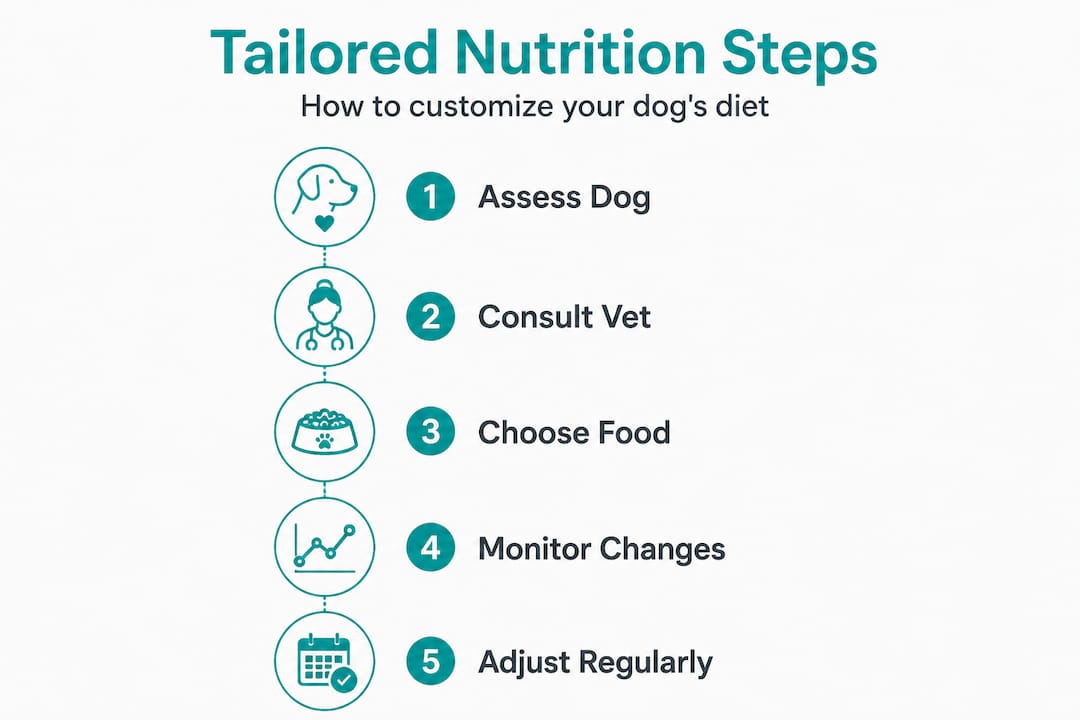
The most common mistake is what we call “set and forget.” An owner does the research, chooses a great food, and then feeds the same amount of the same product for the next five years without a second thought. Meanwhile, their dog ages, slows down, gains weight, and develops a joint problem that a dietary adjustment could have helped manage far sooner.
Long-term health depends on continuous, evidence-led adjustments, not static formulas. The dog who thrived on a high-energy working formula at two years old may be heading towards obesity on that same food at seven. Responsiveness is everything.
We have spoken with many dog owners who made significant improvements simply by shifting their mindset from “I feed my dog a good food” to “I actively monitor and adjust my dog’s diet.” One owner of a six-year-old Golden Retriever noticed gradual weight gain and dull coat over eighteen months. After reassessing BCS, reducing portions, and switching to a lower-fat, omega-3 enriched recipe, the dog lost the excess weight and the coat transformed within eight weeks. No vet intervention was needed. Just observation and action.
The smartest approach combines three things: your own daily observation of your dog, evidence-based guidance from a vet or canine nutritionist, and a food that is genuinely formulated with quality ingredients. Explore science-backed nutrition for dogs to understand how ingredient quality and formulation science translate into real health outcomes.
Trusting your instincts as an owner matters too. You know your dog better than anyone. If something feels off, it probably is. The key is pairing that intuition with evidence and being willing to adapt.
Where to find high-quality, tailored nutrition options
You now have the knowledge to approach your dog’s nutrition with real clarity and confidence. The next step is finding food that is genuinely built to support individual needs, not just branded to sound like it does.
At Ultimate Pet Foods, we offer a carefully curated range of grain-free, natural dog foods designed to support dogs at every life stage and for a wide range of health needs. Whether your dog needs a hypoallergenic single-protein formula, a high-energy working dog recipe, or a gentle senior blend, our range is built around real ingredients and genuine nutritional thinking. Browse our complete grain-free range, explore breed-appropriate options, or request a sample to see how your dog responds. Great nutrition is not a luxury. It is the foundation of every happy, healthy wag. 🐾
Frequently asked questions
How often should I adjust my dog’s diet?
You should review and potentially adjust your dog’s diet at every major life stage or whenever you notice changes in health, weight, or activity. Continuous monitoring is key to optimal long-term health.
Is grain-free food always better for my dog?
Grain-free food can be highly beneficial for dogs with allergies or sensitivities, but the best choice always depends on your individual dog’s specific needs and health profile.
Do all dogs of the same breed need the same diet?
No. Dogs of the same breed can have very different nutritional needs based on their size, activity level, and health status. Tailoring is guided by measurable factors that go well beyond breed alone.
What is the most important factor in customising my dog’s diet?
Your dog’s individual health status, including their activity level and body condition score, is the most important driver of dietary decisions. Individual needs outweigh breed as the primary nutritional consideration.
Can my vet help create a tailored diet?
Absolutely. Regular veterinary guidance ensures your dog’s diet remains the best possible fit as their needs evolve over time. Veterinarians can assist in building evidence-based, personalised feeding plans.