
How nutrition shapes dog health: life stage, grain-free and beyond
TL;DR:
- Proper canine nutrition requires tailoring diets to each dog’s age, breed, and health status rather than following trends.
- Evidence-based, stage-specific diets support energy, longevity, and overall wellness, while broad trends like grain-free diets have nuanced benefits and risks.
The grain-free debate has left many dog owners genuinely confused, and we understand why. One week the headlines praise grain-free diets as a breakthrough in canine wellness; the next, they link them to heart disease. Navigating these contradictions is exhausting, especially when you care deeply about your dog’s wellbeing. The truth is, nutrition is one of the most powerful tools you have to protect and extend your dog’s life, but it only works when it is tailored to your dog’s age, breed, and health status rather than driven by trends.
Table of Contents
- Why nutrition is central to dog health
- Life stage and breed: customising nutrition for every dog
- Grain-free diets: pros, cons, and practical realities
- Home-prepared, raw, and premium: navigating modern dog food options
- Custom diets for special health needs
- A practical perspective: evidence over trends for lasting health
- How Ultimate Pet Foods supports your dog’s best nutrition
- Frequently asked questions
Key Takeaways
| Point | Details |
|---|---|
| Nutrition is life-stage specific | Puppies, adults, and seniors require different nutrients for optimal health. |
| Grain-free isn’t always best | Grain-free diets can help some dogs but may present risks and are not universally required. |
| Vet guidance is essential | Consulting a vet for special diets or health issues prevents deficiencies and ensures safety. |
| Obesity involves hidden dangers | Excess weight raises the risk of diabetes and heart disease in dogs. |
| Evidence beats marketing | Choose diets designed around science and your dog’s unique needs, not trends. |
Why nutrition is central to dog health
Every wag, every sprint across the garden, and every contented snooze on the sofa is underpinned by what your dog eats. Nutrition is not simply about filling a bowl; it is about fuelling a living system that changes constantly. Tailored nutritional requirements shift dramatically across life stages, from the rapid cellular growth of puppyhood to the lean mass preservation priorities of senior years, and they shift again when a dog faces conditions like cancer or obesity.
Poor nutrition does not always show up immediately. It can quietly erode immunity, slow wound healing, dull the coat, and reduce energy over months or years. By the time owners notice something is wrong, the deficit has often been building for a long time. This is why proactive, evidence-driven feeding matters so much.
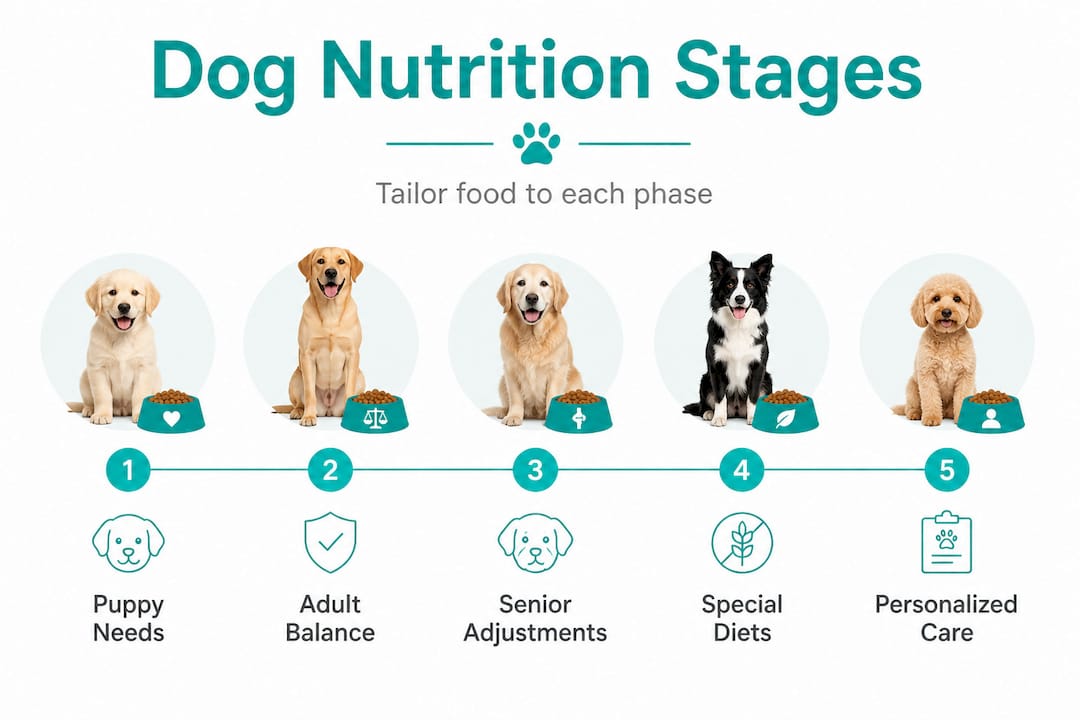
Understanding nutrition by age is the first step. Here is a quick overview of how nutritional priorities shift across a dog’s life:
| Life stage | Key nutritional priorities | Common risks of poor diet |
|---|---|---|
| Puppy | High protein, calcium, phosphorus, calories | Skeletal deformities, poor immunity |
| Adult | Balanced macronutrients, calorie control | Obesity, nutrient imbalance |
| Senior | Lean protein, omega-3s, antioxidants | Muscle loss, cognitive decline |
| Health condition | Condition-specific formulation | Disease progression, reduced lifespan |
The key takeaway here is simple: no single diet suits every dog at every stage of life. Blanket diet trends, however popular, cannot replace a thoughtful, stage-appropriate approach.
“Nutrition is essential for maintaining dog health across life stages, with tailored requirements for puppies, adults, seniors, and specific conditions like cancer or obesity.” — Research published in PMC
When you commit to tailored life stage feeding, you are not just following a feeding fad. You are making a science-backed decision that pays dividends in energy, longevity, and quality of life.
Life stage and breed: customising nutrition for every dog
Having established nutrition’s foundational importance, we now examine how to refine your choices based on your individual dog’s needs. Age and genetics are the two most powerful variables in any feeding decision.
Nutritional requirements across life stages are not minor variations on the same theme. They represent genuinely different metabolic priorities. A Border Collie puppy and a retired Greyhound are not simply different sizes of the same animal; they have distinct energy demands, joint support needs, and digestive sensitivities.
Here is how to think about each stage:
-
Puppies need significantly more calories per kilogramme of body weight than adults. They require higher levels of calcium and phosphorus for bone development, and elevated protein to support rapid muscle and organ growth. Underfeeding or overfeeding at this stage can cause lasting skeletal issues.
-
Adult dogs shift into a maintenance phase. The goal is to provide complete, balanced nutrition without excess calories that lead to weight gain. This is the stage where many owners inadvertently overfeed, particularly with treats and table scraps.
-
Senior dogs face a different challenge. Muscle mass naturally declines with age, so lean, highly digestible protein becomes critical. Omega-3 fatty acids support joint health and cognitive function, and antioxidants help counter cellular ageing. Explore our guide to senior dog nutrition for a detailed breakdown.
-
Working and high-energy breeds such as Spaniels, Huskies, and Collies require more calories and often benefit from enhanced joint support. Their digestive systems may also be more sensitive to low-quality ingredients.
-
Large and giant breeds are particularly prone to joint issues and need carefully controlled calcium-to-phosphorus ratios during growth to avoid developmental orthopaedic disease.
Pro Tip: If you are unsure where your dog sits nutritionally, start with a Body Condition Score (BCS) assessment. Your vet can show you how to assess this at home. A BCS of 4 to 5 out of 9 is ideal for most adult dogs. Anything above 6 signals it is time to reassess caloric intake.
Breed-specific nutrition is not marketing fluff. It is grounded in genuine physiological differences. You can read more about breed-specific food explanations to understand how these differences translate into practical feeding decisions. Choosing food based on your dog’s breed and life stage, rather than a trending ingredient, is the most reliable route to lasting health.

Grain-free diets: pros, cons, and practical realities
One of the biggest debates in dog nutrition today centres on grain-free diets. Are they a genuine health upgrade, or are they a marketing story with hidden risks? The honest answer is: it depends on your dog.
Research on grain-free diets shows a nuanced picture. For some dogs, particularly those with genuine grain sensitivities, digestive issues, or diabetes, grain-free formulas can offer real benefits including better digestibility, a lower glycaemic impact, and higher palatability. For others, the evidence is less clear.
Here is what the science actually tells us:
- Grain allergies are rare. Most food allergies in dogs are triggered by animal proteins, not grains. Beef, dairy, and chicken are far more common culprits than wheat or corn.
- The DCM link is real but not fully understood. Dilated cardiomyopathy (DCM), a serious heart condition, has been associated with grain-free, legume-heavy diets in certain breeds, particularly Golden Retrievers. The FDA noted a correlation but no proven causation has been established.
- Some cases improve with diet change. Studies show that certain DCM cases show cardiac improvement after switching back to grain-inclusive diets, which suggests diet plays a role even if the mechanism is not yet fully understood.
- Legume-heavy grain-free diets can alter heart function markers including reduced ejection fraction and elevated phosphorus levels within weeks in some dogs.
“Grain-free diets show potential benefits for sensitive and diabetic dogs, but carry risks including association with non-hereditary DCM, especially in breeds like Golden Retrievers.” — Veterinary Sciences, MDPI
So who genuinely benefits from grain-free? Dogs with confirmed grain sensitivities, those with diabetes who need lower glycaemic nutrition, and dogs with certain digestive conditions may all see real improvements. For the average healthy adult dog, the evidence does not strongly favour grain-free over a high-quality grain-inclusive diet.
Pro Tip: Before switching to grain-free, check the ingredient list carefully. A grain-free food that replaces grains with large quantities of peas, lentils, or chickpeas may carry its own risks. Look for named meat proteins as the primary ingredient, and consult your vet if your dog is a breed known to be susceptible to DCM.
You can read our detailed breakdown of grain-free safety facts and the grain-free diet benefits for a fuller picture of where this diet genuinely adds value.
Home-prepared, raw, and premium: navigating modern dog food options
With commercial trends covered, we now explore what happens when owners go the extra mile with home-prepared or raw diets, and why expert formulation matters more than good intentions.
Many owners believe that cooking for their dog or feeding raw is automatically healthier than commercial food. It is a caring instinct, but the reality is more complicated. Home-prepared and raw diets carry a genuine risk of nutritional deficiencies unless they are formulated by a qualified veterinary nutritionist. Calcium deficiencies, for example, can lead to skeletal fractures in growing dogs. Vitamin and mineral imbalances can impair immunity and organ function over time.
Here are the key risks to be aware of:
- Calcium and phosphorus imbalance is one of the most common issues in home-prepared diets and can cause developmental bone disease in puppies.
- Vitamin D deficiency affects bone density and immune function and is difficult to achieve through food alone without careful formulation.
- Caloric miscalculation is extremely common. Many owners underestimate how calorie-dense home-cooked meals can be, leading to gradual weight gain.
- Bacterial contamination in raw diets poses a risk not just to dogs but to the humans handling the food, particularly in households with young children or immunocompromised individuals.
Treats deserve a special mention here. Treats should comprise no more than 10 to 15% of your dog’s daily caloric intake, yet most owners significantly underestimate how many treats they give. Obesity is now one of the most widespread health problems in domestic dogs, increasing the risk of diabetes, heart disease, and joint deterioration.
Premium commercial dog foods, when genuinely well-formulated, offer something home-prepared diets often cannot: consistent, complete, and balanced nutrition backed by feeding trials and nutritional science. Read our raw food safety guide if you are considering a raw approach and want to understand the full risk picture.
Pro Tip: If you want to add variety to your dog’s diet without compromising nutritional balance, consider using a premium complete food as the base and adding small amounts of fresh, vet-approved toppers rather than switching entirely to home-prepared meals.
Custom diets for special health needs
From diet trends and pitfalls, we now move to how to feed dogs with unique or complex health challenges. Some dogs need more than a good general diet. They need a plan.
-
Dogs with diabetes benefit from lower glycaemic index foods that prevent blood sugar spikes. Grain-free options with controlled carbohydrate sources can be genuinely helpful here, but must be used in partnership with your vet to monitor glucose levels and adjust insulin if needed.
-
Dogs with cancer have elevated protein requirements because the disease itself accelerates muscle breakdown. Higher protein and increased omega-3 fatty acids are clinically supported priorities for oncology patients, alongside antioxidants to support immune function.
-
Obese dogs need controlled caloric intake combined with higher dietary fibre to support satiety. Simply reducing portion size of a standard food is rarely sufficient; a specifically formulated weight management diet is far more effective.
-
Dogs with joint disease benefit from elevated omega-3 levels, particularly EPA and DHA from marine sources, which have genuine anti-inflammatory properties supported by research.
-
Dogs with skin and coat issues often respond well to diets rich in omega-6 fatty acids, zinc, and biotin. These nutrients support the skin barrier and reduce inflammatory responses that manifest as itching or flaking.
Pro Tip: Ask your vet for a formal nutritional assessment, including a Body Condition Score and a diet history, before making any significant dietary change for a dog with a health condition. What works brilliantly for one dog may be entirely wrong for another with a similar diagnosis.
The principle that ties all of this together is personalisation. Grain-free by life stage is a useful starting point, but the most effective feeding decisions always account for the whole dog: age, breed, health status, activity level, and individual sensitivities.
A practical perspective: evidence over trends for lasting health
Here is something we have observed consistently: the owners who get the best long-term results for their dogs are not the ones who follow every new trend. They are the ones who learn to read their dog’s actual response to food and make decisions based on evidence rather than fear or marketing.
The grain-free debate is a perfect example. Fear-based messaging in both directions, either “grain-free is dangerous” or “grains are toxic,” has led many owners to make reactive decisions that do not serve their dog’s individual needs. The truth, as the research shows, is far more nuanced. Evidence on grain-free diets supports their use in specific contexts, not as a universal upgrade.
What we would encourage every dog owner to do is resist the one-size-fits-all mindset. A diet that transformed a Labrador’s coat may cause digestive upset in a Spaniel. A feeding plan that kept a working Collie lean and energetic may lead to weight gain in a retired Greyhound. Your dog is an individual, and their diet should reflect that.
Work closely with your vet. Track real health markers: coat condition, energy levels, stool quality, weight, and muscle tone. These are far more reliable indicators of nutritional success than any ingredient label claim. Feeding trials and nutritional assessments are the gold standard, not marketing buzzwords.
How Ultimate Pet Foods supports your dog’s best nutrition
If this article has shown you anything, it is that great nutrition is not about following the loudest trend. It is about making thoughtful, evidence-based choices that fit your dog’s unique needs. That is exactly the philosophy behind everything we do at Ultimate Pet Foods. 🐾
Our recipes are built around real science and genuine ingredients, not fads. Whether your dog needs grain-free benefits explained in practical terms or you want to understand the role of each ingredient through our grain-free ingredients guide, we have the resources and the recipes to support you. From breed-specific formulas to life-stage-appropriate complete foods, every product we offer is designed to give your dog the best possible foundation for a long, healthy, and happy life. Explore our range today and find the right fit for your dog.
Frequently asked questions
Do all dogs need grain-free food to be healthy?
No, most dogs do well on grain-inclusive diets. True grain allergies are rare, and animal proteins are far more commonly the trigger for food sensitivities than grains.
How often should I adjust my dog’s diet based on age?
Adjust your dog’s diet at each major life stage transition: puppy to adult, and adult to senior. Nutritional needs shift significantly at each stage, and any significant health change also warrants a dietary review.
Are home-prepared and raw diets automatically healthier for dogs?
Not necessarily. Both can lead to serious nutritional deficiencies including calcium imbalances and vitamin shortfalls unless the diet is planned by a veterinary nutritionist.
Does obesity have serious health effects on dogs?
Yes. Obesity increases the risk of diabetes, heart disease, and joint deterioration, and it measurably shortens a dog’s lifespan.
What is the safest way to change my dog’s food?
Always transition over 5 to 7 days by gradually increasing the proportion of new food while reducing the old. Monitor for digestive upset throughout and consult your vet for personalised guidance, especially if your dog has an existing health condition.