
Is raw food suitable for dogs? A science-based guide
TL;DR:
- Raw food diets for dogs can pose nutritional and safety risks unless carefully formulated, verified by laboratory analysis, and managed with strict hygiene. Scientific research shows many raw products are deficient in essential minerals and may carry pathogens that threaten household health, especially for vulnerable people. For reliable, balanced nutrition, high-quality cooked dry foods formulated to standards offer a safer and more consistent alternative.
Raw food diets for dogs, formally known as raw meat-based diets (RMBDs), can be suitable for some dogs but only when precisely formulated, rigorously handled, and supported by veterinary oversight. The appeal is understandable. Many owners report shinier coats, firmer stools, and leaner body condition in their dogs after switching. Yet anecdotal owner observations are not yet strongly supported by clinical evidence, and the nutritional and safety risks are well documented. If you are asking whether a raw diet for dogs is right for your pet, the honest answer is: it depends entirely on how well it is planned and executed.
Is raw food suitable for dogs? What the science says
The science on raw feeding has sharpened considerably in recent years, and the findings deserve your full attention before you make any changes to your dog’s bowl.
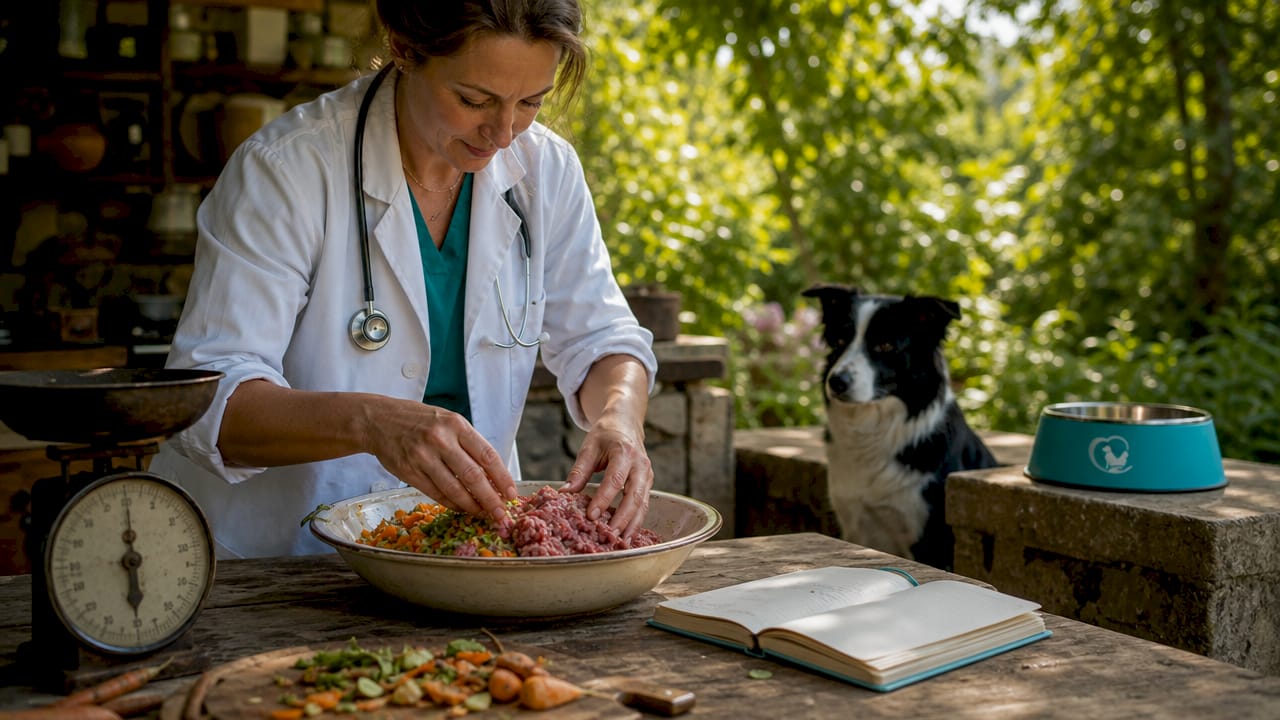
A 2026 study published in BMC Veterinary Research examined 104 dogs and found that RMBD-fed dogs had lower body condition scores and deficiencies in calcium, phosphorus, sodium, and key micronutrients including iodine, copper, zinc, and manganese compared to dogs fed commercial complete diets. This matters because these minerals are not optional extras. Calcium and phosphorus govern bone density, zinc supports immune function, and iodine regulates thyroid health. A shortfall in any one of them, sustained over months, creates real health consequences.
The calcium-to-phosphorus ratio is a particularly telling indicator. The same BMC study recorded a Ca:P ratio of 1.0 in RMBD-fed dogs versus the recommended 1.4:1, a gap that signals genuine skeletal risk, especially in growing puppies. Correcting this through home preparation alone is difficult without laboratory-verified recipes and precise supplementation.
A separate 2025 analysis published in Scientific Reports tested 33 commercially prepared raw dog foods labelled as complete. None met full mineral requirements under FEDIAF standards, selenium deficiency was universal across all samples, and some products exceeded safe lead limits. That result is striking because these are products marketed as nutritionally complete. It tells you that the label alone is not a reliable guarantee of what is actually in the bowl.
Pro Tip: Before choosing any raw product, ask the manufacturer for independent laboratory mineral analysis. If they cannot provide it, treat the nutritional claims with caution.
| Nutrient concern | What the research shows |
|---|---|
| Calcium-to-phosphorus ratio | RMBD-fed dogs averaged 1.0 vs the recommended 1.4:1 ratio |
| Selenium | Deficient in all 33 commercially prepared raw products tested |
| Iodine, zinc, copper, manganese | Statistically lower in RMBD-fed dogs versus commercial diet group |
| Lead contamination | Some raw products exceeded safe limits in Scientific Reports testing |
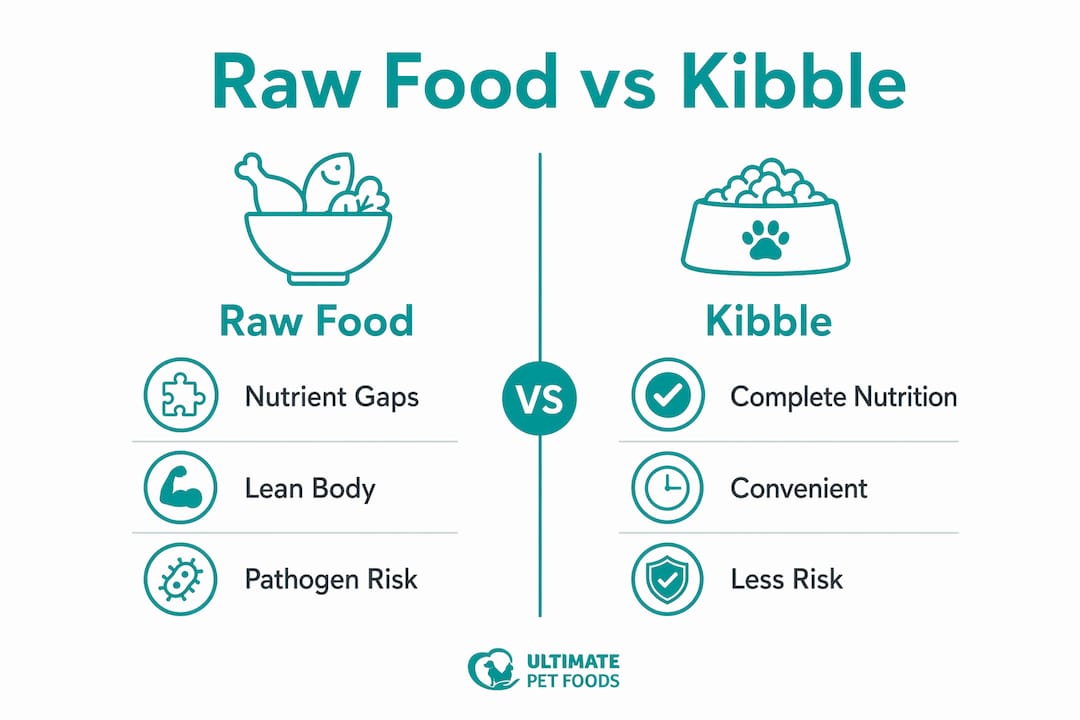
The picture that emerges is not that raw feeding is inherently harmful, but that nutrient completeness must be verified by data rather than packaging claims. Many raw products on the market simply do not meet established nutritional standards, and the gap between what a label says and what a laboratory confirms can be significant.
What are the safety risks of raw food for dogs?
Raw food safety is as much a human health issue as it is a canine nutrition question. The Cornell University Riney Canine Health Center is direct on this point: raw pet foods pose a public health risk due to the presence of pathogens including Salmonella, Listeria, and E. coli. These bacteria do not only threaten your dog. They transfer to surfaces, hands, feeding bowls, and anyone who comes into close contact with the dog or its environment.
One detail that surprises many owners is that a dog can carry and shed these pathogens in its saliva and stool while appearing completely healthy. Your dog may show no signs of illness whatsoever, yet still be a source of bacterial transmission to people in your household. This is not a theoretical risk. It is a documented pathway that Cornell’s veterinary team flags as a primary concern.
Freeze-dried raw products are not a safe workaround. Freeze-drying preserves bacteria and parasites rather than eliminating them, and pathogens can remain viable for decades in dried form. Many owners assume the drying process makes these products safe to handle casually. It does not. The same precautions that apply to raw meat in your kitchen apply to freeze-dried pet food.
Key safety practices if you do feed raw include:
- Wash hands thoroughly with soap and water after handling raw food, feeding bowls, and your dog
- Use separate chopping boards, utensils, and storage containers for raw pet food
- Disinfect all surfaces that come into contact with raw food after every meal preparation
- Store raw food in sealed containers, away from human food, at the correct refrigeration temperature
- Prevent contact with vulnerable household members, including young children, elderly people, pregnant women, and anyone who is immunocompromised
Pro Tip: Treat your dog’s raw food exactly as you would handle raw chicken in your kitchen. If you would not leave raw chicken on the counter for an hour, do not leave your dog’s raw meal out either. You can find more detail in our raw dog food safety guide.
Raw food vs kibble: how do they compare?
The raw food vs kibble debate is often framed as a choice between natural and processed, but that framing misses the point. The real question is which approach reliably delivers complete nutrition with manageable safety risk.
Commercial dry dog foods formulated to AAFCO or NRC standards are designed to meet every macro and micronutrient requirement across life stages. At Ultimatepetfoods, our recipes use freshly prepared meat or fish, gently cooked at 82°C to lock in nutrients and eliminate pathogen risk without stripping the food of its natural goodness. The ingredients are human-grade, and every recipe is enhanced with prebiotics, specifically MOS and FOS, to support digestive health and a balanced gut microbiome. That combination of safety, nutritional completeness, and digestive support is difficult to replicate consistently with a home-prepared raw diet.
| Factor | Raw meat-based diet | Ultimatepetfoods dry food |
|---|---|---|
| Nutritional completeness | Requires precise formulation; often incomplete in practice | Complete and balanced to AAFCO/NRC standards |
| Pathogen risk | High without strict hygiene protocols | Eliminated through gentle cooking at 82°C |
| Convenience | Time-intensive preparation and storage | Ready to serve, shelf-stable, no cross-contamination risk |
| Gut health support | Variable depending on formulation | Added MOS and FOS prebiotics in every recipe |
| Ingredient quality | Varies widely by source and product | Human-grade freshly prepared meat or fish |
Raw diets do offer some genuine advantages. Leaner body condition and perceived coat and stool improvements are commonly reported by owners, and some dogs with specific sensitivities may respond well to minimally processed proteins. The challenge is that these benefits come packaged with real nutritional and safety risks that require active management. A high-quality dry food removes those risks while still delivering the fresh, natural nutrition your dog needs every day. You can explore how our approach compares in our raw vs kibble overview.
How to safely evaluate or implement a raw food diet
If you have weighed the evidence and still want to explore raw feeding, doing it properly requires more than buying a bag of mince and adding vegetables. Here is a structured approach that reduces the risks.
-
Consult a veterinary nutritionist. A general vet can offer guidance, but a board-certified veterinary nutritionist has the expertise to calculate precise nutrient targets, account for your dog’s life stage, and identify gaps before they cause harm. This step is non-negotiable for puppies, senior dogs, and any dog with an existing health condition.
-
Choose lab-verified products or scientifically formulated recipes. Given that none of 33 commercially prepared raw foods met full mineral requirements in recent testing, product selection requires scrutiny. Ask for third-party laboratory data, not just manufacturer assurances.
-
Apply strict hygiene protocols from day one. Treat every aspect of raw food handling as you would raw meat for human consumption. Separate equipment, thorough cleaning, and careful disposal of packaging are all part of the commitment. Our pet food safety tips cover this in practical detail.
-
Monitor your dog’s health closely. Schedule regular veterinary check-ups and blood panels to catch micronutrient deficiencies early. Weight, coat condition, energy levels, and stool quality are useful day-to-day indicators, but they do not replace laboratory testing.
-
Consider lightly cooked or fresh alternatives. Gently cooked diets offer many of the benefits associated with minimally processed food while eliminating pathogen risk. They represent a practical middle ground for owners who want to move away from conventional kibble without taking on the full complexity of raw feeding. A balanced raw vs cooked comparison can help you decide which approach suits your household.
Key takeaways
A raw diet for dogs can work, but nutritional completeness and pathogen safety must be actively managed through veterinary oversight, lab-verified products, and strict hygiene protocols.
| Point | Details |
|---|---|
| Nutritional gaps are common | Most raw products, including commercial ones, fail to meet full mineral requirements. |
| Ca:P ratio is a key marker | RMBD-fed dogs averaged a Ca:P ratio of 1.0 versus the recommended 1.4:1. |
| Pathogens survive freeze-drying | Bacteria and parasites remain viable in dried raw products and require the same handling as raw meat. |
| Vulnerable people face real risk | Young children, elderly, pregnant, and immunocompromised household members are at elevated risk from raw-fed dogs. |
| Cooked complete diets remove the guesswork | High-quality dry food formulated to AAFCO/NRC standards delivers consistent nutrition without pathogen risk. |
My honest view on raw feeding after years in dog nutrition
I have spent a long time reading the research on raw feeding, and my position has shifted from scepticism to something more nuanced. Raw diets are not inherently wrong. The instinct behind them, feeding dogs something closer to what their ancestors ate, is not unreasonable. But the gap between the idea and the execution is where most owners run into trouble.
The 2026 BMC Veterinary Research findings confirmed what I had suspected for a while. Even well-intentioned raw feeders frequently end up with dogs that are deficient in iodine, zinc, or copper, not because they are careless, but because balanced raw diets require careful calculation of mineral ratios, bioavailability, and vitamin inclusion that goes well beyond most owners’ resources. The fact that no commercially prepared raw food in the Scientific Reports study met full mineral standards is not a minor footnote. It is a structural problem with how the category operates.
What I find most underappreciated is the household safety dimension. Raw feeding is a food safety commitment for the whole family, not just a diet choice for your dog. If you have young children or anyone with a compromised immune system at home, the risk calculus changes significantly.
My view is this: if you want to feed your dog a diet that is natural, minimally processed, and nutritionally complete, a high-quality cooked dry food made with freshly prepared meat is the most reliable way to get there. Save the raw feeding experiment for when you have veterinary nutritionist support, laboratory-verified recipes, and the time to maintain the hygiene protocols it genuinely demands.
— Glenn
Why Ultimatepetfoods is a trusted everyday alternative
If the evidence around raw feeding has you looking for a safer, simpler way to give your dog genuinely natural nutrition, we think you will find what you need here.
At Ultimatepetfoods, every recipe starts with freshly prepared, human-grade meat or fish, gently cooked at 82°C to lock in nutrients and eliminate pathogen risk. Our complete and balanced dry dog food is formulated for all breeds and life stages, with added MOS and FOS prebiotics to support healthy digestion from the inside out. For dogs with specific needs, our Ultimate+ Functional Health range uses hydrolysed proteins to support Digestive Care, Skin and Coat Care, Weight Control and Joint Care, Dental Care, and Healthy Living. Explore our full dry dog food range and find the right everyday feed for your dog.
FAQ
Is raw food safe for dogs to eat every day?
Raw food can be fed daily, but it carries consistent risks of pathogen exposure and nutritional imbalance. Without lab-verified formulation and strict hygiene, daily raw feeding poses ongoing risks to both your dog and your household.
What are the main benefits of raw food for dogs?
Owners commonly report leaner body condition, improved coat quality, and firmer stools. However, scientific evidence for these benefits remains limited, and nutritional deficiencies are frequently observed in raw-fed dogs.
How does raw food compare to dry dog food nutritionally?
Commercial dry dog food formulated to AAFCO or NRC standards consistently meets full macro and micronutrient requirements. Most raw products, including commercially prepared ones, fail to meet these standards, particularly for selenium and key minerals.
Can freeze-dried raw food be treated as safe?
No. Freeze-drying preserves bacteria and parasites rather than destroying them. Freeze-dried raw products require the same careful handling as fresh raw meat and should not be considered a pathogen-free alternative.
Should I consult a vet before switching to a raw diet?
Yes, and ideally a board-certified veterinary nutritionist rather than a general practitioner. Precise nutrient calculations, life stage considerations, and product verification all require specialist expertise to get right.