
Switching from raw to dry dog food: a complete guide
TL;DR:
- Switching from raw to dry dog food involves a gradual process that benefits canine digestion and hygiene. Quality dry recipes use freshly cooked ingredients, prebiotics, and provide complete, balanced nutrition, especially for sensitive dogs. Proper transition, portion management, and storage are essential to ensure your dog adapts comfortably and maintains optimal health.
Switching from raw to dry dog food is defined as the process of gradually replacing a raw meat diet with a complete, nutritionally balanced kibble, allowing your dog’s digestive system to adapt without upset. Many owners make this change for practical reasons, such as improved hygiene, simpler storage, and greater nutritional consistency. High-quality dry foods, like those from Ultimatepetfoods, use freshly prepared meat or fish gently cooked at 82°C to lock in nutrients, with added prebiotics MOS and FOS to support gut health. For dogs with sensitivities, the arrival of hydrolysed grain-free recipes means there is now a dry food option that raw feeding simply cannot replicate.
Why switch from raw to dry dog food?
The nutritional case for high-quality dry dog food is stronger than many raw feeding advocates acknowledge. A complete dry recipe delivers precisely calibrated levels of protein, fat, fibre, vitamins, and minerals in every single bowl, something that home-prepared raw diets frequently fall short of without careful supplementation. Ultimatepetfoods recipes use freshly prepared meat and fish as the primary protein source, gently cooked at 82°C to preserve amino acids and natural flavour while meeting complete and balanced standards for all breeds and life stages.
The addition of prebiotics MOS (mannan-oligosaccharides) and FOS (fructo-oligosaccharides) is a meaningful difference between premium dry food and raw feeding. These prebiotics feed beneficial gut bacteria, supporting firmer stools, better nutrient absorption, and a more resilient digestive system. Every wag, bounce, and cuddle really does start with great gut health, and these two ingredients are doing quiet but important work behind the scenes.
Convenience and household hygiene are also genuine benefits, not just marketing points. Raw feeding carries zoonotic risks from pathogens such as Salmonella, which dogs can shed even when they appear perfectly healthy. Switching to dry food removes the need for rigorous raw meat handling protocols across your kitchen and feeding area.
One nutritional advantage that surprises many owners is calorie density. Dry food is more calorie dense than raw, so you will likely feed a smaller volume per meal. This means portion recalibration within two to four weeks of completing the transition is not optional. It is how you protect your dog’s body condition score.
Pro Tip: Check your dog’s body condition score at the two-week mark after completing the transition. Run your hands along their ribs. You should feel them easily but not see them. Adjust portions accordingly rather than relying solely on the feeding guide on the pack.
- Complete and balanced nutrition in every meal, without supplementation
- Freshly prepared meat or fish cooked at 82°C to retain nutrients
- Prebiotics MOS and FOS for digestive health and firmer stools
- Reduced zoonotic pathogen risk compared to raw feeding
- Simpler storage, portioning, and daily feeding routines
How to transition your dog from raw to dry food safely
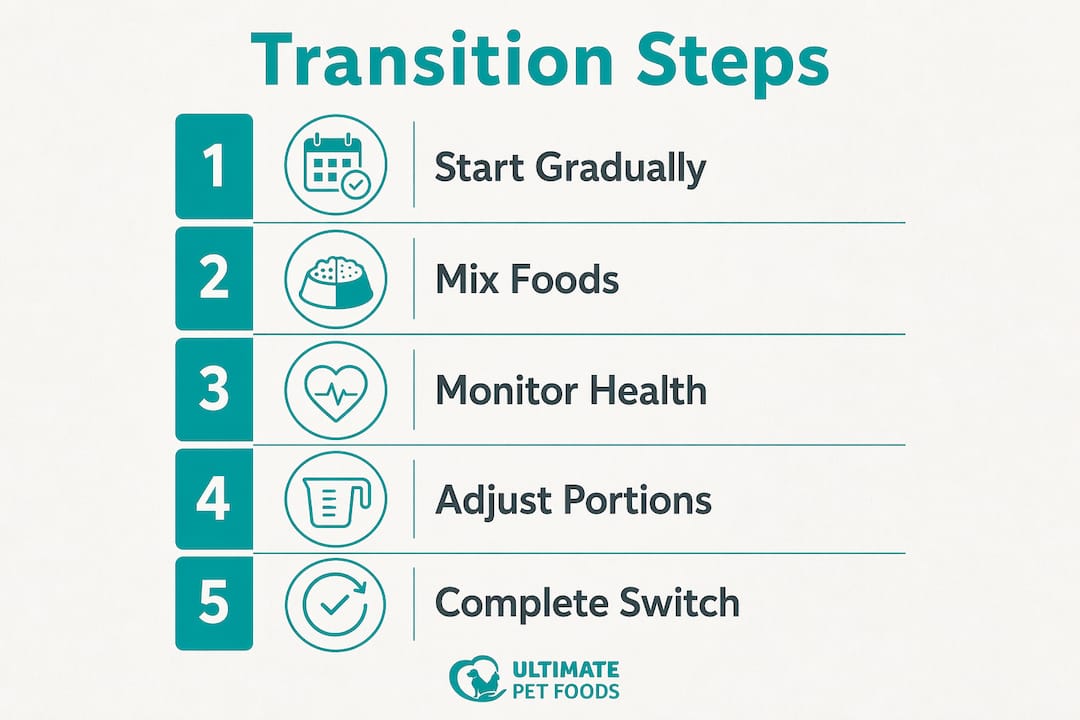
The raw to kibble switch works best when it is gradual, giving your dog’s gut microbiome time to adjust to a new protein source and fibre profile. The AKC recommends a 7-day stepwise transition starting at 25% dry food mixed with 75% raw, increasing the dry proportion every two days until your dog is eating 100% dry by day seven. This is the industry-standard approach to diet transition, and it works because the digestive system adapts incrementally rather than facing a sudden change.
Follow this schedule as your baseline:
- Days 1 and 2: 25% dry food, 75% raw. Observe stool consistency and appetite at every meal.
- Days 3 and 4: 50% dry food, 50% raw. Look for any softening of stools or signs of flatulence.
- Days 5 and 6: 75% dry food, 25% raw. Most dogs pass through this stage without issue.
- Day 7 onwards: 100% dry food. Monitor for a further seven days before considering the transition complete.
Gastrointestinal upset does not always appear on day one. GI symptoms often emerge several days into the transition, which is why consistent feeding schedules and avoiding any other dietary changes simultaneously are so important. If you introduce a new treat or chew at the same time, isolating the cause of any upset becomes very difficult.
“If vomiting or diarrhoea occur during the transition, slow down or revert to the previously tolerated ratio and seek veterinary advice if problems persist.” — AKC (2022)
Hydration matters more than most guides mention. Dry food contains significantly less moisture than raw meat, so your dog’s water intake needs to increase. Keep fresh water available at all times and consider adding a small amount of warm water to the kibble during the first week to ease the adjustment.
Pro Tip: Sensitive dogs often need a 10 to 14-day transition rather than seven days. There is no prize for speed. A slower, carefully observed change is far more likely to result in a settled stomach and a dog who genuinely enjoys their new food.
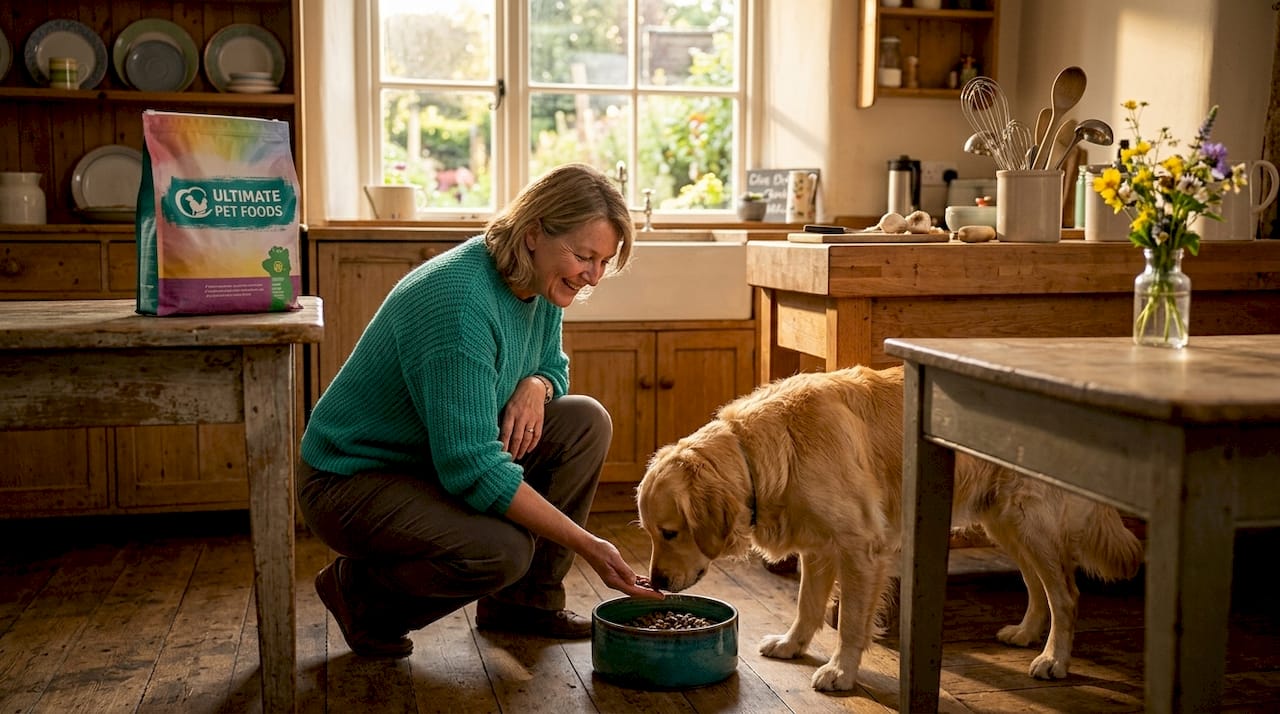
For dogs with a history of sensitive digestion, we recommend reading our full guide on transitioning dog foods successfully before you begin.
What are hydrolysed grain-free recipes, and why does it matter?
Hydrolysed protein diets are a specialised category of dry dog food where proteins are broken down into smaller fragments through a controlled cooking and enzymatic process. This makes the protein molecules too small for the immune system to recognise as a threat, which is why hydrolysed recipes are the gold standard for dogs with confirmed food allergies or intolerances. The critical point for raw feeders to understand is this: hydrolysed dog food can only be produced as cooked dry food. The hydrolysis process requires heat and controlled manufacturing conditions that raw feeding cannot replicate. There is no such thing as a raw hydrolysed diet.
This matters because it means that if your dog has a genuine food sensitivity, switching from raw to dry is not just a lifestyle choice. It may be the only way to access the dietary support your dog actually needs.
Ultimatepetfoods’ Ultimate+ Functional Health range addresses this directly with five targeted hydrolysed grain-free formulas:
| Formula | Primary benefit |
|---|---|
| Digestive Care | Supports gut health and stool quality in sensitive dogs |
| Skin & Coat Care | Addresses itching, dryness, and coat condition linked to food sensitivity |
| Weight Control & Joint Care | Manages calorie intake while supporting mobility |
| Dental Care | Promotes oral hygiene through texture and targeted ingredients |
| Healthy Living | Everyday support for dogs needing a gentle, functional diet |
Each formula uses hydrolysed protein to minimise allergenic response, combined with grain-free ingredients to reduce common dietary triggers. For dogs who have been on raw diets and still show signs of skin irritation, loose stools, or joint stiffness, these recipes offer a structured, science-backed alternative that raw feeding simply cannot provide.
Feeding and storage best practices after switching
Proper storage of dry dog food is straightforward but non-negotiable for maintaining freshness and safety. FDA-aligned guidance recommends keeping dry food in its original bag, stored inside a sealed container, in a cool and dry place below 80°F (approximately 27°C). The original bag matters because it contains an oxygen barrier that a standard plastic bin does not replicate. Our full guide on storing dry dog food covers this in more detail.
The hygiene improvements after leaving raw feeding are real and significant. Moving away from raw feeding reduces zoonotic risk and removes the need for the strict surface decontamination protocols that responsible raw feeding requires. That said, bowl and scoop hygiene remains non-negotiable regardless of diet format.
Follow these daily practices to keep your dog’s feeding area safe:
- Wash food bowls with hot water and washing-up liquid after every meal
- Clean the measuring scoop weekly and allow it to dry fully before returning it to the bag
- Dispose of any uneaten dry food after 30 minutes rather than leaving it out
- Store the food bag off the floor, away from direct sunlight and humidity
- Check the best-before date on the bag and never feed food past its expiry
One practical note on portion sizes: because dry food is calorie dense, the volume you serve will look smaller than a raw meal. This can feel counterintuitive at first. Trust the feeding guide, monitor body condition, and adjust based on your individual dog rather than visual comparison with their previous raw portions.
Key takeaways
Switching from raw to dry dog food succeeds when you follow a gradual 7-day transition, choose a complete recipe made with freshly prepared ingredients, and monitor your dog’s digestion and body condition throughout.
| Point | Details |
|---|---|
| Use a 7-day transition plan | Start at 25% dry food and increase every two days to avoid digestive upset. |
| Monitor beyond day one | GI symptoms often appear mid-transition, so observe your dog for at least two weeks. |
| Recalibrate portion sizes | Dry food is more calorie dense than raw, so adjust quantities within two to four weeks. |
| Choose hydrolysed for sensitivities | Hydrolysed grain-free dry food is the only format that supports dogs with confirmed food allergies. |
| Maintain bowl and storage hygiene | Wash bowls after every meal and store dry food in its original bag in a cool, dry place. |
What I have learned from watching dogs make this switch
I have seen a lot of dogs go through this transition, and the pattern that stands out most is how quickly owners underestimate the calorie density difference. They switch their dog to dry food, keep feeding the same volume they were used to with raw, and then wonder why their dog is gaining weight or becoming lethargic four weeks later. The food is doing its job. The portion size is not.
The other thing I would push back on is the idea that raw feeding is inherently superior for digestion. In my experience, dogs fed on well-formulated dry food with added prebiotics like MOS and FOS often produce firmer, more consistent stools than dogs on raw. The gut microbiome responds well to consistent, prebiotic-enriched nutrition. That is not a knock on raw feeding as a concept. It is an honest observation about what quality dry food can achieve.
For sensitive dogs, the hydrolysed route genuinely changes things. I have seen dogs with years of skin flare-ups and loose stools settle down within three to four weeks of moving onto a hydrolysed grain-free recipe. Raw feeding cannot offer that, because the hydrolysis process requires cooking. If your dog has unresolved sensitivities, this transition is worth taking seriously.
My honest advice: go slower than you think you need to, watch your dog rather than the calendar, and partner with your vet if anything looks off. The raw vs cooked dog food guide on the Ultimatepetfoods blog is also worth reading before you begin.
— Glenn
Discover Ultimatepetfoods dry dog food for everyday health
At Ultimatepetfoods, we have built our dry dog food range around one principle: every bowl should be genuinely good for your dog, every single day. Our recipes use freshly prepared meat or fish, gently cooked at 82°C to preserve nutrients, with added prebiotics MOS and FOS to support digestion from the inside out. Every recipe is complete and balanced, suitable for all breeds and life stages, and made with human-grade ingredients you can feel confident about.
For dogs with sensitivities, our Ultimate+ Functional Health range offers hydrolysed grain-free formulas covering Digestive Care, Skin & Coat Care, Weight Control & Joint Care, Dental Care, and Healthy Living. These are not short-term fixes. They are designed for everyday feeding, giving your dog the targeted support they need to thrive long-term. Explore our full dry dog food range and find the recipe that fits your dog best.
FAQ
How long does the raw to kibble switch take?
The standard transition takes 7 days, starting at 25% dry food and increasing every two days. Sensitive dogs may need 10 to 14 days for a comfortable adjustment.
Will my dog’s stools change after switching to dry food?
Yes. Stool volume typically decreases and consistency often improves with quality dry food, particularly recipes containing prebiotics MOS and FOS. Some softening is normal in the first few days of transition.
Can I mix raw and dry food long-term?
Mixing is not recommended as a permanent feeding method because the two formats digest at different rates, which can cause digestive inconsistency. A complete transition to dry food is the more reliable approach.
Why can’t hydrolysed dog food be fed raw?
Hydrolysed protein requires a controlled heat and enzymatic process to break proteins into smaller, non-allergenic fragments. This process is only achievable through cooking, making hydrolysed dry food the only viable format for dogs with confirmed food allergies.
How do I know if my dog is struggling with the transition?
Watch for vomiting, loose stools, reduced appetite, or excessive flatulence. If any of these appear, revert to the previous mixing ratio and slow the transition down. Consult your vet if symptoms persist beyond 48 hours.