

Can Dogs Eat Raw Vegetables – Health Impacts Explained

Most British dog owners are surprised to learn that nearly one in five grain-free diet dogs develop new allergies without proper nutritional support. For households focused on healthy, grain-free feeding, the hunt for safe raw vegetables is full of questions about digestive health and balanced nutrition. This guide highlights which raw vegetables can actually benefit your British dog, improve immune function, and support a happier, less itchy life.
Table of Contents
- Raw Vegetables For Dogs: Vital Facts
- Nutritional Benefits And Drawbacks Explained
- Safe And Unsafe Raw Vegetables For Dogs
- Allergies, Digestion, And Health Considerations
- Practical Tips For Feeding Raw Vegetables
Key Takeaways
| Point | Details |
|---|---|
| Raw Vegetables Can Be Beneficial | Certain vegetables like carrots, green beans, and cucumbers are nutritious and can support canine health when introduced correctly. |
| Avoid Toxic Vegetables | Always avoid harmful vegetables such as onions, garlic, and raw potatoes that can be toxic to dogs. |
| Introduce Gradually | New vegetables should be introduced slowly in small amounts to monitor for digestive issues or allergic reactions. |
| Keep Vegetables as a Supplement | Raw vegetables should only make up about 10% of a dog’s daily diet, ensuring that protein remains the primary nutritional source. |
Raw Vegetables for Dogs: Vital Facts
Dogs are primarily carnivorous animals, but they can benefit from carefully selected raw vegetables in their diet. Understanding which vegetables are safe and nutritionally advantageous requires careful research and consideration. While some raw vegetables offer excellent health benefits, others can pose potential digestive challenges for our canine companions.
Certain raw vegetables provide remarkable nutritional advantages for dogs. Vegetables like carrots, green beans, and cucumber are excellent low-calorie options that can support canine nutrition. These vegetables contain essential vitamins and minerals that complement a balanced diet. They are particularly beneficial because they offer fibre, which supports healthy digestion and can help maintain optimal gut health in dogs. Green vegetables especially contain antioxidants that may support immune function and overall wellness.
However, not all raw vegetables are suitable for dogs. Some vegetables like onions, garlic, and raw potatoes can be toxic and should be completely avoided. When introducing raw vegetables, it is crucial to chop them into small, manageable pieces to prevent choking and aid digestion. Portion control is key, as vegetables should only constitute a small supplementary component of a dog’s diet, not the primary nutrition source. Always introduce new foods gradually and monitor your dog for any adverse reactions.
Pro tip: Start with small quantities of dog-safe raw vegetables and observe your pet’s individual response, as every dog’s digestive system can react differently.
Nutritional Benefits and Drawbacks Explained
Raw vegetables can provide significant nutritional advantages for dogs, but their introduction requires careful consideration and understanding. When incorporated thoughtfully, vegetables can serve as an excellent supplementary source of essential nutrients, offering health benefits beyond standard dietary requirements. Nutritional research indicates that vegetables contain vital vitamins, minerals, and antioxidants that support immune function, skin health, and digestive processes.
The specific nutritional profile of raw vegetables varies considerably. Carrots, for instance, are rich in beta-carotene and can support eye health, while green vegetables like spinach provide iron and calcium. However, not all vegetables are equally beneficial. Some, such as onions and garlic, can be toxic to dogs and must be strictly avoided. The key is moderation and understanding each vegetable’s unique nutritional composition. Dogs require primarily protein-based diets, so vegetables should complement rather than replace their main nutritional intake.
Potential drawbacks of raw vegetable consumption include digestive challenges and potential nutrient absorption issues. Some dogs may experience bloating, gas, or diarrhoea when introduced to new vegetables too quickly. Raw vegetables can be harder to digest compared to cooked alternatives, and some dogs might have difficulty breaking down certain fibrous vegetables. It is crucial to introduce new vegetables gradually, in small quantities, and always monitor your dog’s individual response. Understanding holistic dog nutrition helps pet owners make informed decisions about dietary supplementation.
Pro tip: Consult with a veterinary nutritionist to develop a personalised vegetable feeding strategy tailored to your dog’s specific breed, age, and health requirements.
Safe and Unsafe Raw Vegetables for Dogs
Navigating the world of raw vegetables for dogs requires careful understanding of which options are nutritionally beneficial and which could potentially harm your canine companion. Understanding which foods to avoid becomes crucial when considering vegetable additions to your dog’s diet. Dogs have unique digestive systems that respond differently to various vegetables, making informed choices essential for their overall health and wellbeing.
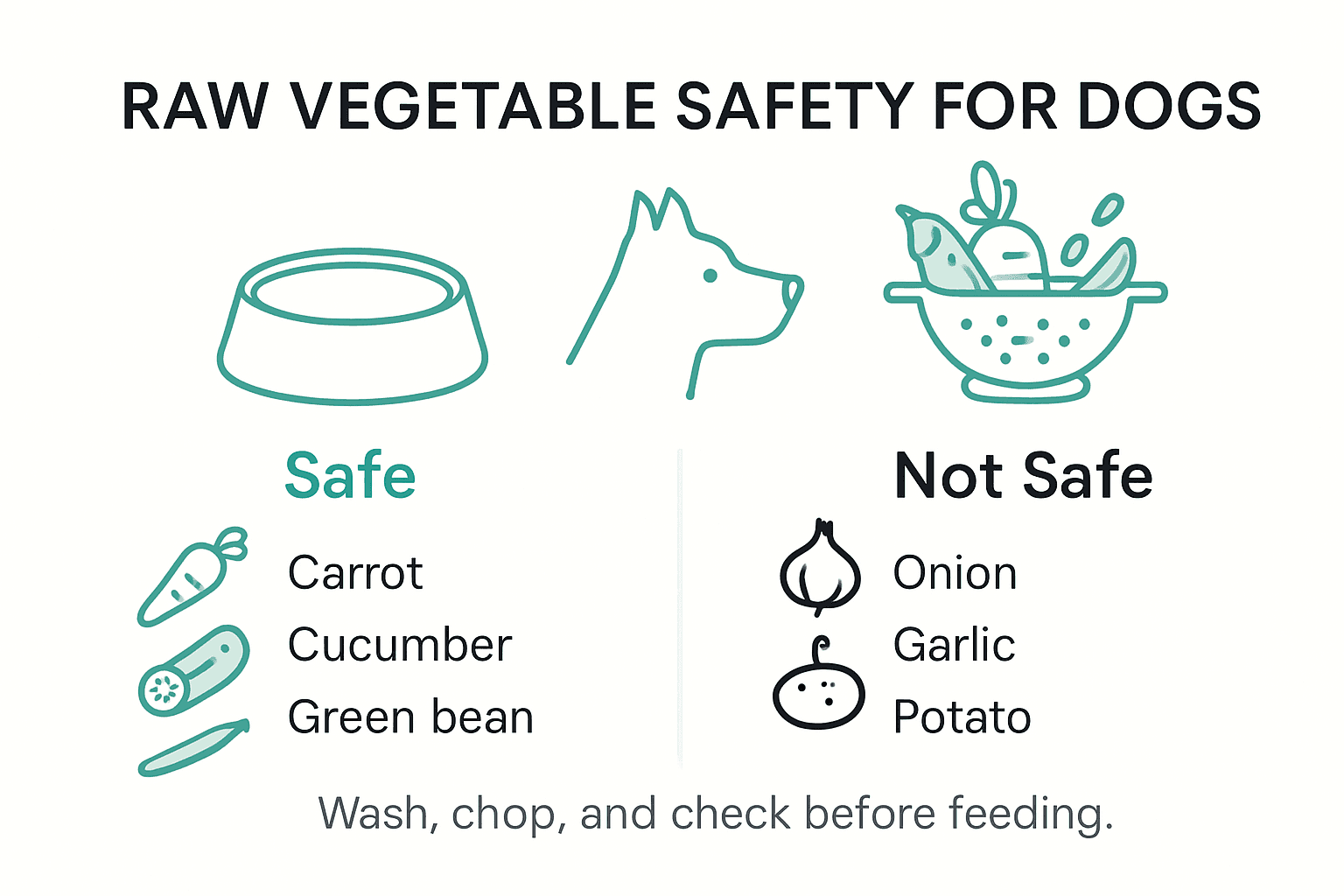
Safe raw vegetables for dogs include carrots, cucumbers, green beans, and small amounts of pumpkin. These vegetables offer numerous nutritional benefits: carrots provide beta-carotene and support dental health by naturally cleaning teeth, while cucumbers are low in calories and high in hydration. Green beans serve as an excellent source of iron and can be a fantastic low-calorie snack. Conversely, some vegetables pose significant risks. Onions, garlic, and raw potatoes contain compounds that can be toxic to dogs, potentially causing serious health complications such as anaemia and digestive distress.

Here is a comparison of common raw vegetables for dogs highlighting benefits, possible drawbacks, and notes for safe feeding:
| Vegetable | Key Benefits | Potential Drawbacks | Safe Preparation Tip |
|---|---|---|---|
| Carrot | Rich in beta-carotene, fibre | May cause mild gas in excess | Chop finely for safe chewing |
| Green bean | Low calorie, contains iron | Can cause loose stool if overfed | Serve raw or lightly steamed |
| Cucumber | High hydration, few calories | May result in mild digestive upset | Slice into thin rounds |
| Pumpkin | Supports digestion, contains fibre | Overfeeding can trigger diarrhoea | Use small amounts, finely chopped |
| Celery | Contains vitamins, low calorie | Stringy texture can cause choking | Cut into small, manageable pieces |
| Spinach | Provides iron, calcium | May reduce calcium absorption if overused | Limit frequency and amount |
| Onion | None for dogs—dangerous | Highly toxic, can cause anaemia | Avoid entirely |
| Garlic | None for dogs—dangerous | Highly toxic, leads to health issues | Avoid entirely |
| Raw potato | Contains solanine, toxic | Can cause digestive distress, toxicity | Never feed raw potatoes |
Preparing raw vegetables for dogs requires meticulous attention to detail. Vegetables should be thoroughly washed to remove potential pesticides, then chopped into small, bite-sized pieces to prevent choking hazards. It is recommended to introduce new vegetables gradually, starting with tiny portions and observing your dog’s digestive response. Some dogs might experience mild gastrointestinal upset when first consuming raw vegetables, which is why careful introduction through human food guidelines can be incredibly helpful for pet owners.
Pro tip: Consult with your veterinarian to create a personalised vegetable feeding plan that considers your dog’s specific breed, age, and individual health requirements.
Allergies, Digestion, and Health Considerations
Raw vegetables can significantly impact a dog’s digestive system and overall health, making it crucial to understand potential allergic reactions and nutritional implications. Identifying allergen-free food options becomes essential for pet owners seeking to optimise their dog’s dietary intake while minimising potential health risks. Each dog’s digestive system is unique, with some breeds and individuals demonstrating greater sensitivity to dietary changes.
Allergic reactions to raw vegetables can manifest through various symptoms, including skin irritations, gastrointestinal distress, and respiratory challenges. Dogs with pre-existing food sensitivities may experience more pronounced reactions, necessitating careful monitoring during dietary introductions. Certain vegetables like celery, cucumber, and pumpkin are generally well-tolerated, while others such as onions and garlic can trigger severe inflammatory responses. Digestive considerations are equally important, as raw vegetables contain complex fibres that some dogs struggle to break down effectively.
Pet owners must approach vegetable introduction with a systematic and cautious methodology. Understanding dog food ingredients to avoid provides crucial insights into potential dietary risks. Recommended strategies include gradual introduction, portion control, and close observation of your dog’s individual response. Some dogs may benefit from lightly steaming vegetables to improve digestibility, while others might require complete elimination of certain vegetable types from their diet. Blood tests and veterinary consultations can help identify specific sensitivities and develop personalised nutritional plans.
Pro tip: Keep a detailed food diary when introducing new vegetables, documenting any physiological changes or potential allergic reactions to support targeted dietary management.
Practical Tips for Feeding Raw Vegetables
Successful incorporation of raw vegetables into a dog’s diet requires strategic planning and careful implementation. Transitioning dog foods successfully demands a methodical approach that considers the individual dog’s specific nutritional needs and digestive capabilities. Pet owners must understand that each dog will respond differently to dietary modifications, making personalised strategies essential.
Preparing raw vegetables for canine consumption involves several critical steps. First, thoroughly wash all vegetables to remove potential pesticides and contaminants. Chop vegetables into small, bite-sized pieces to prevent choking hazards and facilitate easier digestion. Some vegetables, like carrots and green beans, can be served raw, while others might benefit from light steaming to improve digestibility. A recommended technique involves introducing new vegetables gradually, starting with minute quantities and observing your dog’s physiological response.
Portioning plays a crucial role in vegetable feeding. Dog food serving sizes provide critical guidance for maintaining balanced nutrition. Vegetables should constitute no more than 10% of a dog’s daily caloric intake, ensuring that primary protein sources remain the dietary foundation. Some dogs may require additional preparation techniques, such as puréeing or finely grating vegetables to enhance digestibility. Always monitor your dog for any signs of digestive discomfort, allergic reactions, or changes in appetite when introducing new vegetable varieties.
The following table summarises best practices to help dog owners safely introduce raw vegetables:
| Step | Why It Matters | Expert Guidance |
|---|---|---|
| Start with small portions | Reduces risk of digestive upset | Begin with a teaspoon-sized serving |
| Monitor dog’s response | Detects allergies or intolerance | Watch for itching, vomiting, diarrhoea |
| Gradually increase variety | Builds digestive adaptation | Add one new vegetable every fortnight |
| Limit to 10% of diet | Maintains nutritional balance | Protein should remain the focus |
| Prepare vegetables properly | Prevents choking, boosts absorption | Chop finely or purée if needed |
Pro tip: Create a vegetable rotation schedule to provide varied nutrients and prevent potential dietary sensitivities, introducing one new vegetable every two weeks while closely monitoring your dog’s response.
Enhance Your Dog’s Nutrition with Balanced, Natural Feeding
Feeding your dog raw vegetables can provide supplementary health benefits but also requires careful selection and portion control to avoid digestive issues or toxicity. If you want to ensure your dog gets the best nutrition without the guesswork, explore our range of premium, natural, grain-free dog foods made with fresh ingredients designed to support overall wellness and digestive health. These carefully formulated diets consider breed-specific needs, life stages, and sensitivities to help keep your canine companion happy and thriving.
Discover the benefits of expertly crafted nutrition by browsing our Salmon Dog Food – Premium, Healthy, Hypoallergenic & Omega-Rich collection that complements a balanced diet including safe natural additions. For puppies starting their journey or dogs requiring tailored feeding strategies, check out our Dry Puppy Food – Optimal Health & Nutrition range. Visit Ultimate Pet Foods today and take the next step toward a healthier, happier life for your dog with natural, thoughtfully sourced nutrition.
Frequently Asked Questions
Can dogs eat all raw vegetables?
Not all raw vegetables are safe for dogs. While vegetables like carrots, green beans, and cucumber are healthy options, others like onions, garlic, and raw potatoes can be toxic and should be avoided.
What are the health benefits of raw vegetables for dogs?
Raw vegetables can provide essential vitamins, minerals, and antioxidants that support immune function, skin health, and digestion. They can also be low-calorie snacks that help maintain a healthy weight.
How should I introduce raw vegetables to my dog’s diet?
Introduce raw vegetables gradually, starting with small portions to monitor your dog’s digestive response. Chop the vegetables into small, manageable pieces to prevent choking and aid in digestion.
Can raw vegetables cause digestive issues in dogs?
Yes, some dogs may experience digestive challenges such as bloating, gas, or diarrhoea when introduced to new vegetables too quickly. It is essential to start with small quantities and observe your dog’s reactions closely.


