

Grain-free puppy nutrition: safer choices for a healthy start

TL;DR:
- A recent study found no adverse cardiac effects or taurine deficiencies in healthy dogs fed balanced grain-free diets.
- Grain-free diets exclude grains like wheat and corn, using alternative carbs such as sweet potato and peas.
- Properly formulated grain-free puppy foods are safe when they meet complete nutritional standards and are introduced gradually.
If you’ve been feeding your puppy a grain-free diet while quietly worrying about whether you’re making the right call, you’re not alone. The mixed messages around grain-free nutrition have left many caring owners second-guessing perfectly sound choices. Here’s the reassuring part: a recent clinical study found no adverse cardiac outcomes or taurine deficiencies in healthy dogs fed grain-free diets over 18 months. That’s significant. This guide walks you through what grain-free puppy nutrition actually means, what the science really says, how to choose the right product, and how to transition your puppy safely and confidently.
Table of Contents
- Understanding grain-free diets for puppies
- Science update: Are grain-free puppy diets linked to health risks?
- Choosing the best grain-free nutrition for your puppy
- Transitioning your puppy to a grain-free diet safely
- Our view: What most owners miss about grain-free puppy nutrition
- The next step: Find the best grain-free nutrition for your puppy
- Frequently asked questions
Key Takeaways
| Point | Details |
|---|---|
| Balanced grain-free is safe | Recent studies show balanced grain-free puppy diets do not cause heart risks or taurine deficiency. |
| Quality matters most | Prioritise complete and balanced foods, avoiding those high in legumes or lacking vet approval. |
| Transition gradually | Switch to grain-free slowly, monitor for changes, and consult your vet for tailored advice. |
| Breed and health count | Some breeds or sensitivities benefit most from grain-free, while others may not need it. |
Understanding grain-free diets for puppies
The term ‘grain-free’ gets used a lot, but it’s worth being clear about what it actually means for your puppy’s bowl. A grain-free diet simply excludes traditional grains like wheat, corn, barley, and rice. Instead, grain-free diets use alternative carbohydrate sources like potato or pea to provide energy and structure to the recipe.
This matters because not all carbohydrates are equal. Grains can trigger sensitivities in some dogs, leading to itchy skin, loose stools, or poor coat condition. For owners who’ve noticed these signs, switching to grain-free often brings visible relief. That’s one of the biggest reasons grain-free puppy foods have grown so popular among health-conscious owners.
But popularity isn’t the only driver. Many owners are simply choosing to feed more naturally, prioritising ingredients that feel closer to what a dog’s body is designed to process. Our grain-free puppy food guide covers this in more detail, but the core principle is straightforward: fewer processed fillers, more recognisable, functional ingredients.
For puppies specifically, nutritional balance is non-negotiable. Understanding puppy nutrition requirements helps explain why a grain-free recipe must still deliver adequate protein, fat, calcium, phosphorus, and essential vitamins for healthy growth. Grain-free doesn’t mean low-carb or low-calorie. It means the energy comes from different sources.
Here’s a quick overview of what typically distinguishes grain-free puppy diets:
- Carbohydrate sources: Sweet potato, white potato, tapioca, or peas instead of wheat or corn
- Protein focus: Higher emphasis on named meat proteins like chicken, salmon, or duck
- Digestibility: Often easier on sensitive digestive systems due to fewer common allergens
- Ingredient transparency: Premium grain-free brands tend to list clear, recognisable ingredients
- Breed and size suitability: Formulations can be tailored to small, medium, or large breed puppies
Breed, age, and any existing health conditions all play a role in which grain-free formula suits your puppy best. A large breed puppy has very different calcium-to-phosphorus needs compared to a toy breed, and a puppy with a known food sensitivity needs even more careful ingredient scrutiny.
Science update: Are grain-free puppy diets linked to health risks?
Once we understand what goes into grain-free diets, let’s address the big health question: are they risky for your puppy?
The concern started around 2018, when the FDA in the United States flagged a potential link between grain-free diets and dilated cardiomyopathy (DCM), a serious heart condition. This understandably alarmed owners worldwide. The worry centred on boutique-style diets high in legumes, particularly those using peas or lentils as primary ingredients.
Here’s what’s crucial to understand: that early concern was based on association, not proven causation. In other words, researchers noticed a pattern but couldn’t confirm grain-free diets were directly causing DCM. The dogs affected were often eating highly specific formulations from smaller, less regulated brands.
The science has moved on considerably since then. An 18-month study found no adverse cardiac outcomes or taurine deficiencies in healthy dogs fed grain-free versus grain-inclusive diets. This is one of the most reassuring findings for owners who have been feeding grain-free with confidence.
“No significant differences in cardiac function or taurine levels were detected between dogs fed grain-free and grain-inclusive diets over 18 months.” This is the kind of clinically supported evidence that should guide your choices, not headlines.
To put the risk picture in perspective, here’s a simple comparison:
| Factor | Balanced grain-free diet | High-legume boutique diet |
|---|---|---|
| Cardiac risk (DCM) | No evidence of increased risk | Theoretical association noted |
| Taurine levels | Normal in clinical studies | May be lower in some formulations |
| Digestive tolerance | Often improved in sensitive dogs | Variable, depends on ingredients |
| Nutritional completeness | High, if properly formulated | Inconsistent across brands |
Many owners also report fewer digestive issues with grain-free diets, which aligns with what the research shows about digestibility. For a fuller picture of grain-free safety facts, the evidence increasingly supports well-formulated grain-free diets as a safe and beneficial choice.
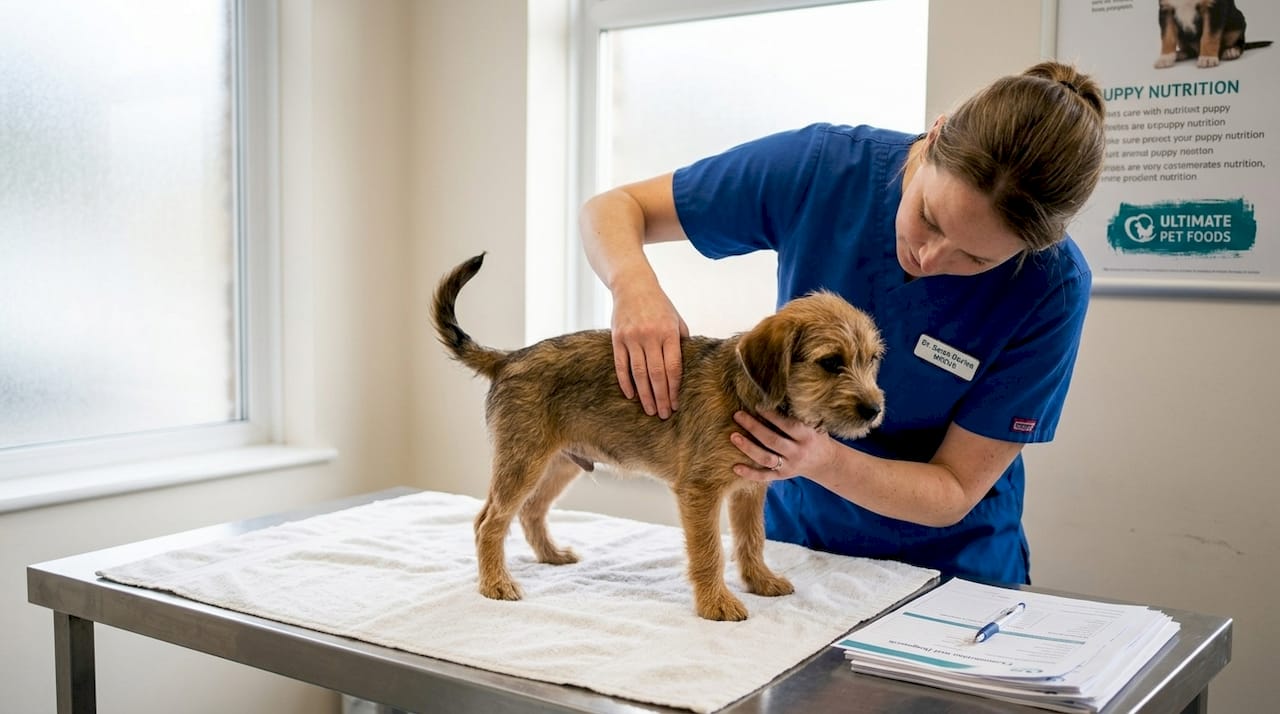
The key takeaway: the risk isn’t grain-free itself. It’s poorly balanced, legume-heavy formulations from brands that don’t invest in proper nutritional science.
Choosing the best grain-free nutrition for your puppy
Knowing health risks is only half the story. Making the right nutritional choices for your puppy is just as vital.
A quality grain-free puppy food must be labelled as ‘complete and balanced,’ meaning it meets all the nutritional standards set for growing dogs. This isn’t just marketing language. It’s a meaningful indicator that the recipe has been formulated to cover every developmental need your puppy has.
Balanced grain-free diets are safe, but those high in legumes, especially where pea or lentil appears in the first three ingredients, may carry a theoretical risk based on current associations. This is the single most important label check you can do.
Here’s a practical checklist for choosing a grain-free puppy food:
- Check the protein source first. A named meat (chicken, salmon, lamb) should be the first ingredient.
- Look at the carbohydrate base. Sweet potato or tapioca are preferable to pea or lentil as primary carbs.
- Confirm ‘complete and balanced’ labelling. This ensures the recipe covers all growth-stage nutritional needs.
- Research the brand’s formulation standards. Do they use nutritionists? Are feeding trials conducted?
- Consider your puppy’s breed and size. Large breeds need controlled calcium levels; small breeds need calorie-dense recipes.
- Avoid vague ingredient listings. ‘Meat and animal derivatives’ without specification is a red flag.
Pro Tip: If you’re unsure whether a recipe is right for your puppy’s breed or sensitivity, start with a sample size before committing to a full bag. Many premium brands offer this option.
Here’s a quick comparison to help you distinguish quality options:
| Feature | Well-balanced grain-free | High-legume/boutique option |
|---|---|---|
| First ingredient | Named meat protein | Peas or lentils |
| Carbohydrate source | Potato, sweet potato, tapioca | Pea flour, chickpeas |
| Nutritional completeness | Certified complete and balanced | Often unclear |
| Suitability for puppies | Formulated for growth stages | Not always breed-specific |
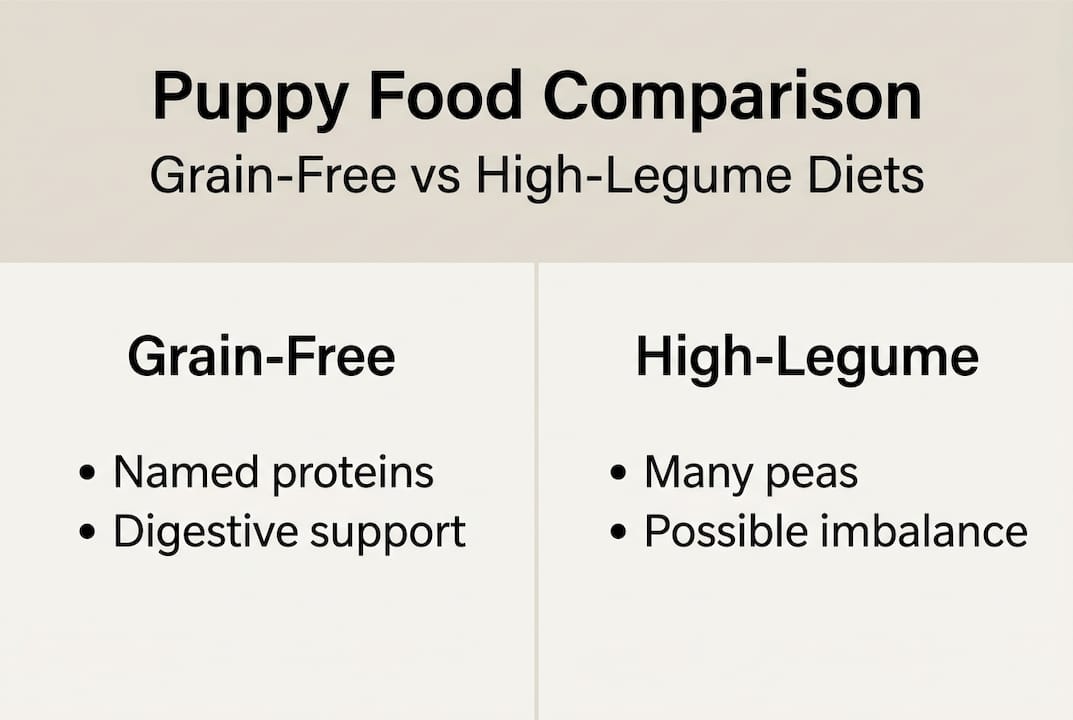
Exploring the grain-free diet benefits in more detail can help you feel even more confident, and our grain-free feeding guide offers practical portion and feeding advice once you’ve chosen a recipe.
Transitioning your puppy to a grain-free diet safely
Now that you know how to identify top grain-free options, here’s how to ensure a smooth, safe transition for your puppy.
The golden rule is gradual introduction. Switching food too quickly is one of the most common causes of digestive upset in puppies, regardless of diet type. A slow, steady swap gives your puppy’s gut bacteria time to adjust.
A typical transition schedule looks like this:
- Days 1 to 2: 75% old food, 25% new grain-free food
- Days 3 to 4: 50% old food, 50% new food
- Days 5 to 6: 25% old food, 75% new food
- Day 7 onwards: 100% new grain-free food
Monitor your puppy’s stools, energy levels, and appetite throughout. Loose stools for a day or two are normal during any transition. Persistent vomiting, lethargy, or blood in stools are reasons to pause and consult your vet.
Clinically, no negative cardiac effects have been found when moving to balanced grain-free diets in healthy dogs, which is reassuring. But every puppy is an individual, and sensitive breeds or those with known health conditions deserve extra care.
Pro Tip: Introducing grain-free treats a few days before you start the main food transition is a gentle way to familiarise your puppy’s digestive system with the new ingredient profile.
Here’s a quick dos and don’ts list to keep the transition on track:
- ✅ Do transition gradually over at least seven days
- ✅ Do monitor stools, coat, and energy daily
- ✅ Do consult your vet if your puppy has a known sensitivity or heart condition
- ❌ Don’t switch cold turkey, even if your puppy seems eager for the new food
- ❌ Don’t ignore persistent digestive changes beyond three days
- ❌ Don’t assume all grain-free foods are interchangeable
For owners of breeds with known sensitivities, our guide on best breeds for grain-free diets is worth reading before you begin.
Our view: What most owners miss about grain-free puppy nutrition
After working with health-conscious dog owners for years, we’ve noticed a pattern worth naming directly. Most owners who switch to grain-free do so for the right reasons. But many focus on the label rather than the formulation behind it.
‘Grain-free’ has become a quality signal in people’s minds, but it’s not automatically a guarantee of nutritional excellence. We’ve seen owners choose a grain-free food because it sounds premium, without checking whether the protein source is named, the legume content is reasonable, or the recipe is genuinely complete for a growing puppy.
The real question isn’t ‘is this grain-free?’ It’s ‘is this the right, complete nutrition for my specific puppy?’ Those are very different questions.
“Ask for evidence and proven formulation, not just a clean-looking label. Your puppy’s health deserves more than a marketing trend.”
We also see owners skip vet input entirely, assuming grain-free is always the safest path. For most healthy puppies, it absolutely can be. But breed-specific risks, existing sensitivities, and developmental needs all deserve professional input alongside your own research. Staying informed about 2026 grain-free diet trends is helpful, but it should complement, not replace, evidence-led choices.
The next step: Find the best grain-free nutrition for your puppy
Ready to put your new knowledge into action? We’ve made it straightforward to explore the best, evidence-backed choices for your puppy. 🐾
Start with our dedicated page on best grain-free diet choices to understand why so many health-conscious owners trust grain-free nutrition. If you want to go deeper on what’s actually in your puppy’s bowl, our grain-free ingredients guide breaks down every key component clearly. And for puppies with sensitive tummies or those needing extra digestive support, our advanced digestive care grain-free formula is a gentle, clinically considered option worth exploring. Every wag starts with the right foundation.
Frequently asked questions
Is grain-free food suitable for all puppies?
Grain-free food is suitable for most puppies when it’s complete, balanced, and not heavily reliant on legumes. Always factor in your puppy’s breed and consult your vet, as no adverse cardiac effects have been found from balanced grain-free diets in healthy dogs.
What ingredients should I avoid in grain-free puppy food?
Avoid recipes where peas, lentils, or chickpeas appear as primary ingredients, and always look for a clearly named meat protein at the top of the list. High-legume boutique-style diets have been associated with potential health concerns in some studies.
How do I safely switch my puppy to grain-free food?
Transition gradually over seven days, mixing increasing amounts of the new food with the old, and monitor your puppy’s digestion and energy throughout. No negative cardiac effects have been found with balanced grain-free diets, but always consult your vet if your puppy has any underlying health conditions.
Are there any proven health benefits to grain-free diets for puppies?
Grain-free diets can reduce digestive issues and sensitivities, and a recent study showed no difference in cardiac health outcomes between grain-free and grain-inclusive diets, supporting their safety and suitability for healthy puppies.


