
Dog walking safety tips: your complete guide for 2026
TL;DR:
- Safe dog walking involves choosing the right gear, routes, and weather-aware practices to protect both owner and dog. Proper equipment, route planning, and alertness ensure a safe, enjoyable outdoor experience for dogs of all ages. Effective walking routines include weather considerations, mental enrichment, and balanced nutrition to support overall health and safety.
Safe dog walking means maintaining control, preparedness, and situational awareness to protect both you and your dog from harm during every outdoor walk. The American Humane Society recommends that healthy adult dogs receive 30 to 60 minutes of daily exercise, with adjusted durations for puppies and senior dogs. That guidance forms the foundation of every good walking routine. Dog walking safety tips cover far more than just clipping on a lead. They include the right gear, smart route choices, weather awareness, and the kind of focused attention that keeps your dog out of harm’s way. At Ultimatepetfoods, we believe every walk should be as nourishing for your dog’s body and mind as the food in their bowl.
What essential equipment ensures safe dog walking?
The right gear is the first line of defence on any walk. A standard 6-foot non-retractable leash gives you consistent control and keeps your dog close enough to react quickly. Retractable leads allow too much slack, which makes it harder to pull your dog away from hazards like traffic or aggressive animals.
A well-fitted harness or collar matters just as much as the lead itself. A harness distributes pressure across the chest and shoulders, which is gentler on dogs prone to pulling or those with neck sensitivities. A flat collar works well for calm, trained dogs, but always check the fit: you should be able to slide two fingers underneath comfortably. A collar that is too loose can slip off; one that is too tight restricts breathing.
ID tags and microchipping are non-negotiable. Your dog’s tag should display your current phone number. Microchipping provides a permanent backup if the tag is lost or damaged. Check both regularly to confirm the details are up to date.
Essential gear checklist:
- Non-retractable 6-foot lead in good condition
- Well-fitted harness or flat collar
- Current ID tag with your phone number
- Microchip registered to your current address
- Poo bags
- Water bottle and portable bowl for warm weather
- High-visibility vest or light-up collar for low-light walks
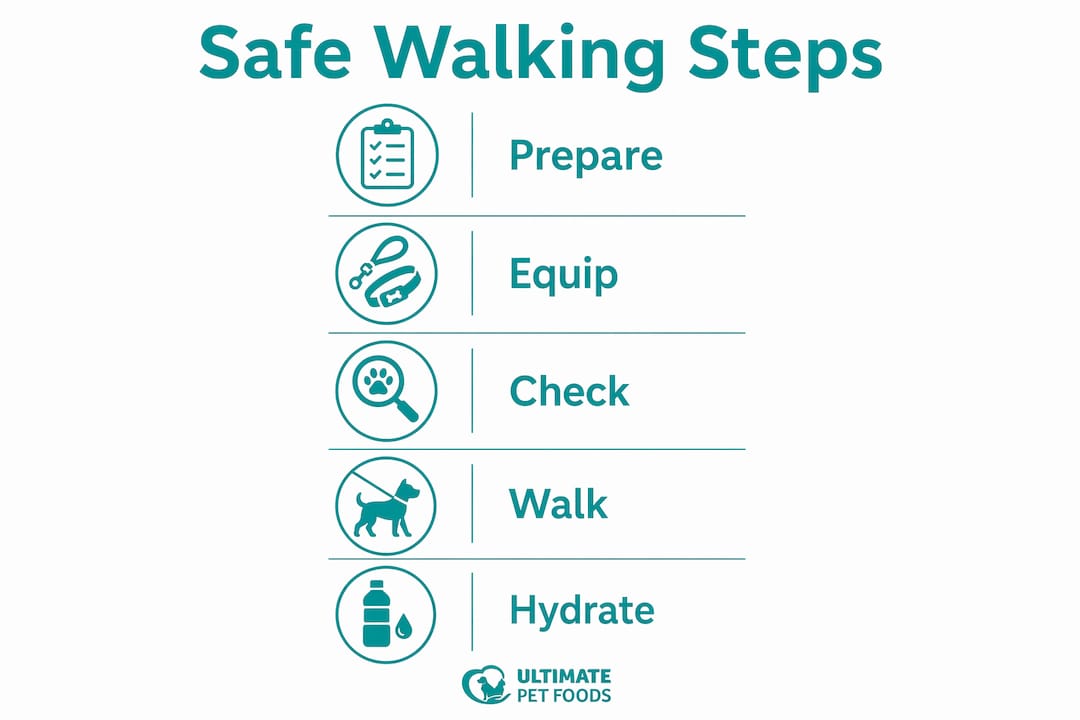
Pro Tip: Before every walk, spend 30 seconds checking your lead for fraying, your collar or harness for worn buckles, and your dog’s ID tag for legibility. Worn equipment fails at the worst possible moment.
How do you choose safe routes for dog walks?
Route selection is one of the most underrated dog walking precautions. A traffic-light hierarchy makes the decision straightforward: green routes (parks, quiet residential streets) are ideal; yellow routes (calm suburban streets with light traffic) are acceptable; red routes (busy arterial roads) are best avoided entirely or walked only during low-traffic periods.
| Route type | Safety level | Key hazards | Best for |
|---|---|---|---|
| Park or green space | Green (ideal) | Off-lead dogs, wildlife | Daily walks, sniff time |
| Quiet residential street | Green (ideal) | Occasional vehicles | Training walks, puppies |
| Calm suburban road | Yellow (acceptable) | Moderate traffic, cyclists | Varied routes |
| Busy arterial road | Red (avoid) | Heavy traffic, noise stress | Avoid where possible |
| Mixed terrain trail | Green to yellow | Uneven ground, wildlife | Active adult dogs |
Surface variety also matters for your dog’s physical health. Mixing grass, dirt, and pavement reduces the risk of repetitive stress injuries and gives your dog richer sensory stimulation. Aim for a mix of soft and hard surfaces across the week rather than the same pavement loop every day.
Loop routes are safer than linear out-and-back paths because they offer multiple exit points. If your dog becomes distressed, you encounter an aggressive animal, or the weather turns, you can cut the walk short without retracing the entire route. When you try a new route, always do so in daylight and in good weather. Poor visibility removes your ability to assess hazards and retreat safely if needed. You can read more about building natural, enjoyable exercise routines for dogs that complement safe route planning.
Best practices during the walk for dog safety and wellbeing
Staying alert is the single most effective safe dog walking practice. Even well-trained dogs can be startled by unexpected triggers such as cyclists, wildlife, or sudden loud noises. Putting your phone away removes the most common distraction and lets you spot hazards before your dog reacts to them.
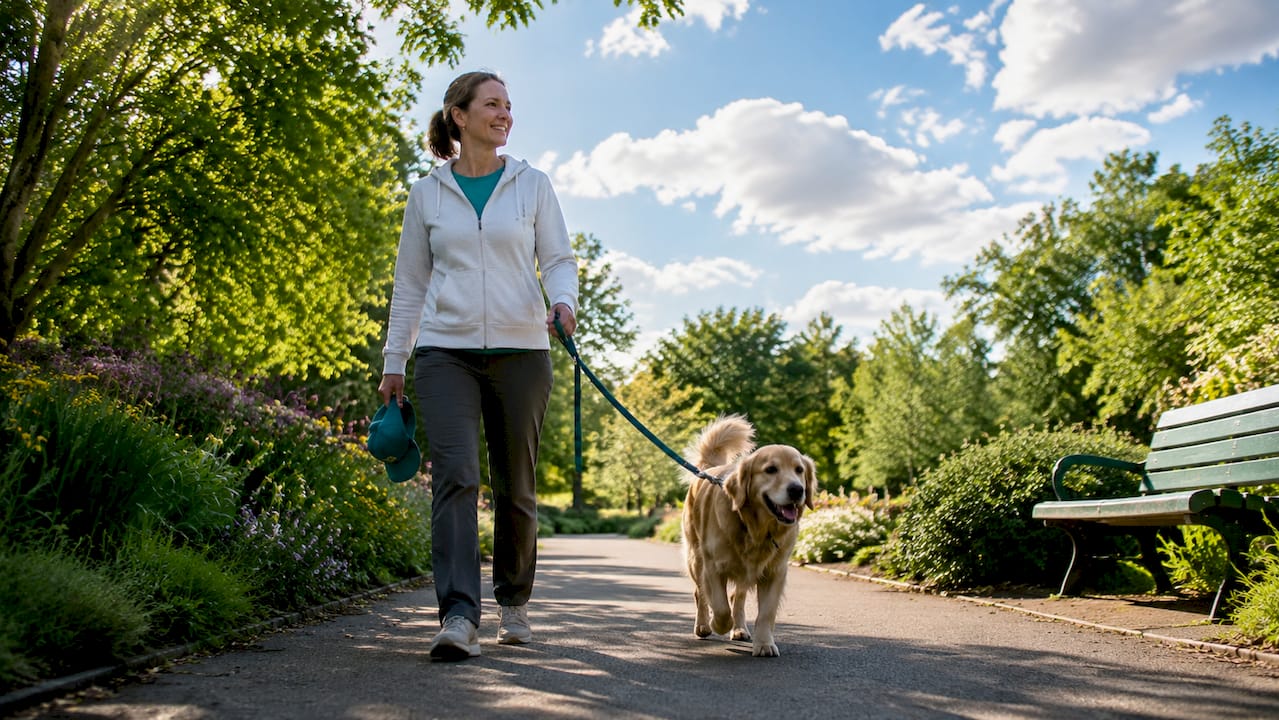
Hydration is a practical priority, not an optional extra. In warm weather, offer water every 15 to 20 minutes to prevent dehydration. A collapsible silicone bowl takes up almost no space in a pocket or bag and makes this easy to do consistently.
One insight that surprises many dog owners: sniffing lowers a dog’s arousal more effectively than a brisk pace walk of the same distance. Letting your dog stop and sniff a lamppost or hedgerow is not a loss of control. It is active mental enrichment that leaves your dog calmer and more satisfied at the end of the walk.
Walk safety checklist:
- Check gear before leaving the house (lead, collar, ID tag, water)
- Choose a green or yellow route appropriate for conditions
- Keep your phone in your pocket and stay focused on your surroundings
- Watch for cyclists, vehicles, and off-lead dogs approaching
- Offer water every 15 to 20 minutes in warm weather
- Allow dedicated sniff stops at safe points along the route
- Practise recall commands regularly so your dog responds reliably
- Return home promptly if your dog shows signs of fatigue or distress
Pro Tip: Practise a solid recall command at home before relying on it outdoors. A dog that responds to “come” in the garden is far more likely to respond near a road. Consistent training at home builds the habits that keep walks safe.
How do weather and seasonal changes affect dog walking safety?
Weather is one of the most serious and most overlooked dog walking hazards. Heatstroke can develop quickly in dogs, particularly in flat-faced breeds such as French Bulldogs and Pugs. Avoid walking between 10 a.m. and 4 p.m. during hot weather, when pavement temperatures can reach levels that burn paw pads within seconds.
The hand test is a reliable check: press your palm flat on the pavement for seven seconds. If it is too hot for your hand, it is too hot for your dog’s paws. Grass and shaded paths are far safer choices during summer months.
Cold weather brings its own risks. Ice melt chemicals and road salt irritate paw pads and are toxic if licked. Rinse your dog’s paws after every winter walk. Dogs with short coats or low body fat, such as Greyhounds and Whippets, may need a coat in temperatures below 5°C. In extreme heat or cold, shorter and more frequent walks protect your dog better than one long outing.
Seasonal safety reminders:
- Summer: Walk before 9 a.m. or after 6 p.m. to avoid peak heat
- Summer: Carry water and a portable bowl on every walk
- Summer: Check paw pads after walks on hot pavement for redness or blistering
- Winter: Rinse paws after walks to remove road salt and ice melt chemicals
- Winter: Use a reflective lead or light-up collar in low-light conditions
- Winter: Shorten walks during frost or ice to reduce the risk of slips for both of you
- All seasons: Watch for seasonal hazards such as conkers, acorns, and fallen berries, which can be toxic
Nutrition plays a supporting role in seasonal resilience too. A complete and balanced diet, fed consistently year-round, helps maintain your dog’s energy levels, coat condition, and joint health through every season. Ultimatepetfoods recipes are made with freshly prepared meat or fish, gently cooked at 82°C to lock in nutrients, and include added prebiotics MOS and FOS to support gut health and digestion throughout the year. The canine health benefits of regular walking are maximised when your dog is well-nourished from the inside out.
Key takeaways
Safe dog walking requires the right equipment, a well-chosen route, consistent situational awareness, and weather-appropriate adjustments to keep both dog and owner protected on every outing.
| Point | Details |
|---|---|
| Use a 6-foot non-retractable lead | A fixed-length lead gives you reliable control and faster reaction time near hazards. |
| Apply the traffic-light route system | Choose green routes daily; avoid red arterial roads or walk them only at low-traffic times. |
| Stay off your phone during walks | Distraction prevents you from spotting cyclists, vehicles, and off-lead dogs in time. |
| Avoid peak heat hours in summer | Walk before 9 a.m. or after 6 p.m. and offer water every 15 to 20 minutes in warm weather. |
| Allow sniffing as mental enrichment | Sniff stops lower your dog’s arousal and provide stimulation beyond physical exercise alone. |
Why I think most dog owners underestimate route planning
Most of the dog walking advice I see focuses on leads and recall commands. Both matter. But in my experience, the decision you make before you leave the house, which route to take, is where most preventable incidents begin.
I have watched confident, well-equipped owners walk their dogs along busy arterial roads simply out of habit. The dog is on a good lead, wearing a harness, and has a solid recall. But the environment is working against all of that. A lorry backfiring, a cyclist cutting close, a dog barking from behind a fence: any one of these can cause a reactive lunge that no amount of training fully eliminates in the moment.
The traffic-light hierarchy changed how I think about this. It is not about avoiding all risk. It is about choosing environments where the risk is manageable. A green route with occasional off-lead dogs is a problem you can see coming and respond to. A red route with fast-moving traffic gives you almost no margin.
I also think we underestimate sniffing. Owners often tug their dogs along, treating a sniff stop as a delay. The research is clear: a walk with dedicated sniff time leaves dogs calmer and more satisfied than a brisk march of the same length. Letting your dog lead the nose occasionally is not losing control. It is good walking.
Finally, combine safe walks with good nutrition. Ultimatepetfoods recipes, made with human-grade ingredients and complete, balanced nutrition for lifelong daily feeding, give your dog the physical foundation to enjoy every walk fully. A dog that is well-nourished, with healthy joints and a strong digestive system supported by prebiotics MOS and FOS, is a dog that walks better, recovers faster, and stays happier outdoors.
— Glenn
How Ultimatepetfoods supports your dog on every walk
Every great walk starts with a dog that feels well from the inside. Ultimatepetfoods grain-free dry dog food is made with freshly prepared meat or fish, gently cooked at 82°C to lock in nutrients and flavour. Our recipes use human-grade ingredients and are complete and balanced for daily feeding across all breeds and life stages.

Our Ultimate+ Functional Health range goes further, using hydrolysed proteins for targeted everyday support across five areas: Digestive Care, Skin & Coat Care, Weight Control & Joint Care, Dental Care, and Healthy Living. Whether your dog is a daily park sprinter or a gentle senior stroller, the right nutrition keeps them moving comfortably. Explore our grain-free dog food range and find the recipe that supports your dog’s health for life, not just for now.
FAQ
How long should I walk my dog each day?
Healthy adult dogs need 30 to 60 minutes of daily exercise. Puppies and senior dogs require shorter, gentler outings adjusted to their age and physical condition.
What type of lead is safest for dog walks?
A non-retractable 6-foot lead is the safest choice for most dogs. It provides consistent control and allows you to react quickly to hazards compared to a retractable lead.
When should I avoid walking my dog in summer?
Avoid walking between 10 a.m. and 4 p.m. during hot weather to reduce the risk of heatstroke and paw pad burns. Walk early in the morning or in the evening instead.
Is sniffing during walks actually beneficial for dogs?
Yes. Sniffing is a form of mental enrichment that lowers a dog’s arousal level more effectively than a brisk walk of the same distance. Allowing regular sniff stops makes walks more satisfying for your dog.
How do I know if a walking route is safe?
Use the traffic-light system: green routes such as parks and quiet streets are ideal; yellow routes with light traffic are acceptable; red routes along busy arterial roads are best avoided. Always test new routes in daylight and good weather.