

Pet proofing your home: a complete safety guide

TL;DR:
- Pet proofing your home requires ongoing effort to identify and mitigate hazards from your pet’s perspective.
- Effective safety measures include secure storage of toxins, room-by-room hazard inspections, and appropriate containment like crates and gates.
Bringing a pet into your home is one of life’s genuine joys. But that same curious nose sniffing every corner, and those paws padding into every room, can quickly turn ordinary household objects into real dangers. Pet proofing your home is not a one-afternoon task you tick off and forget. It is an ongoing commitment to understanding your environment from your pet’s perspective, and adjusting it so they can thrive safely. In this guide, we walk you through every stage: assessing risks, setting up containment, managing toxins, choosing durable furnishings, and using training to reinforce it all.
Table of Contents
- Key takeaways
- Pet proofing your home: the room-by-room walkthrough
- Crates, gates, and safe containment
- Safe storage and cleaning practices
- Durable furnishings and ongoing safety audits
- Training as the missing layer of pet safety
- My honest take on why this never really ends
- Nourishing your pet from the inside out
- FAQ
Key takeaways
| Point | Details |
|---|---|
| Audit room by room | Walk through each space at your pet’s eye level to spot hazards you would otherwise miss. |
| Use layers of protection | Combine physical barriers like gates and crates with behavioural commands for the strongest safety net. |
| Secure all toxic substances | Lock away cleaners, medications, and human foods such as chocolate, grapes, and xylitol. |
| Build a monthly audit habit | Regular checks of latches, fences, plants, and floor-level objects keep your proofing effective as circumstances change. |
| Nutrition matters too | A safe home and a balanced, natural diet work hand in hand for a healthy, happy pet. |
Pet proofing your home: the room-by-room walkthrough
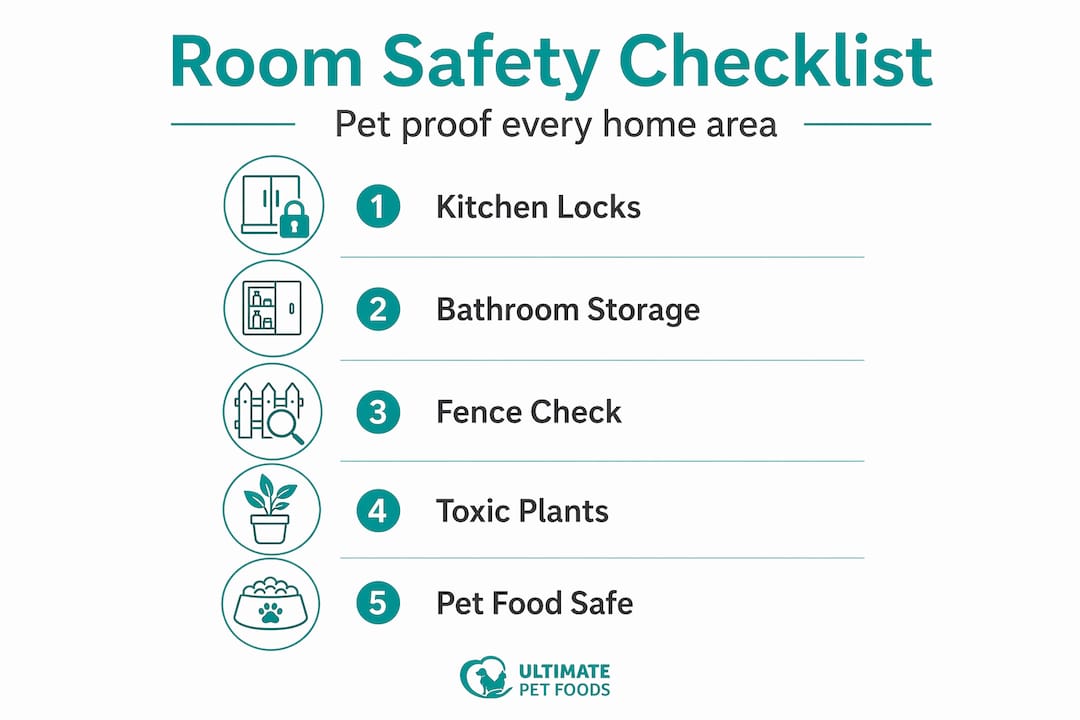
The most useful thing you can do before spending a penny on safety products is get down on your hands and knees. Literally. At floor level, your home looks completely different. You will notice dangling cables behind the television, the gap under the kitchen sink where cleaning products live, and the decorative plant you never thought twice about. This low-level perspective is where pet proofing begins.
Start in the kitchen. Worktops may feel safe, but cats jump and larger dogs rear up. Childproof locks on cabinets and secured bin lids significantly reduce access to hazardous foods and chemicals. Move to the living room next, where trailing lamp cords and remote control batteries are within easy reach of a bored puppy.
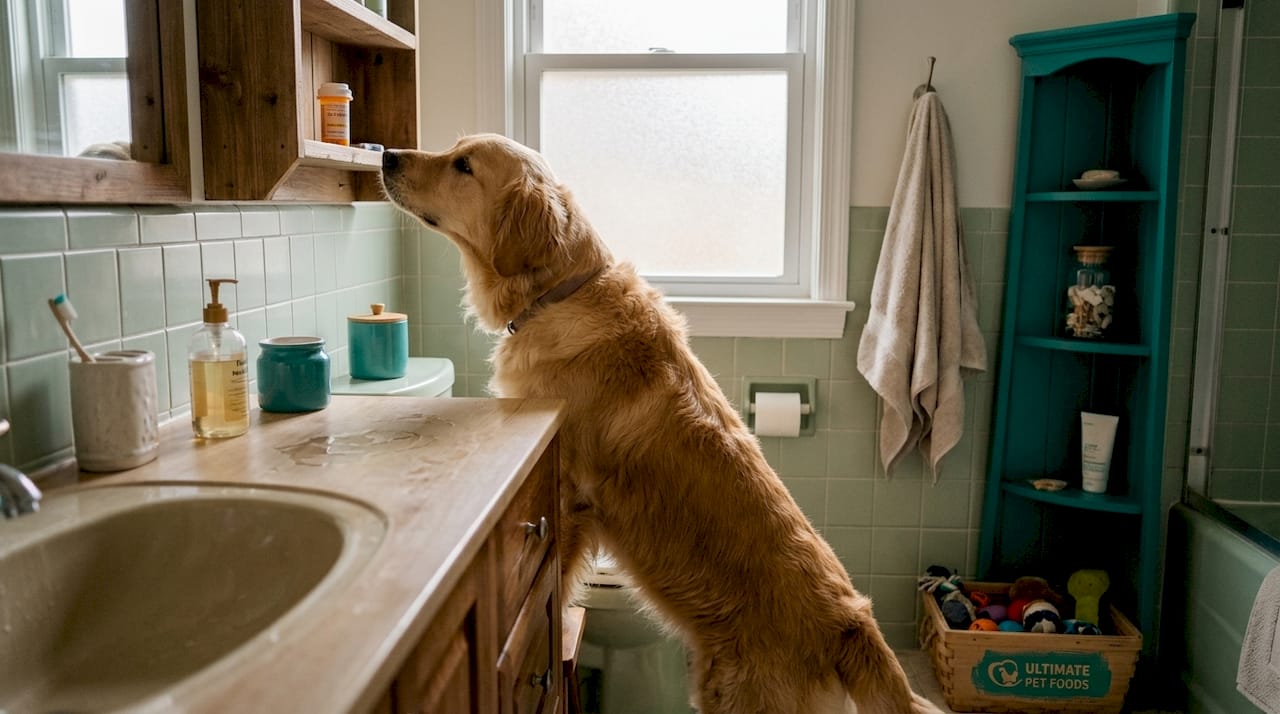
In the bathroom, medications left on the side of the sink are a serious risk. Dogs are attracted to pill coatings, and even a single paracetamol tablet can be fatal. Bedrooms present their own hazards: hair ties, earrings, and coins dropped on the carpet are precisely the kind of small floor-level items that cause gastrointestinal obstructions. In the garage, antifreeze is particularly dangerous because its sweet taste attracts dogs.
When you move outdoors, check your fencing carefully. For larger breeds, garden fences should be at least 6 feet tall and extend underground to prevent digging escapes. Check for gaps at ground level and assess whether gates self-close and latch securely.
Your pet proofing checklist should also cover toxic plants. Common culprits include sago palm, azalea, and oleander, as well as popular houseplants like peace lily and pothos. If you are unsure about a plant, photograph it and look it up before assuming it is safe.
Pro Tip: Save the ASPCA Animal Poison Control number and the Pet Poison Helpline in your phone today. Having emergency numbers instantly accessible in a genuine crisis can make a real difference to your pet’s outcome.
Crates, gates, and safe containment
Physical containment is one of the most practical and underused tools in the pet safe home toolkit. Done well, it gives your pet a secure, comfortable space and gives you genuine peace of mind when you cannot supervise directly.
Crate training, introduced with positive reinforcement, works best when the crate is treated as a den rather than a penalty. Place a familiar blanket inside, feed meals near the entrance at first, and let your pet explore at their own pace. Once they are comfortable, the crate becomes a genuinely calming retreat.
When choosing a crate, size matters. Your dog should be able to stand, turn around, and lie down comfortably. Too large and it loses its den-like quality. Too small and it becomes stressful. Placement is equally worth thinking about. A corner of the living room where your dog can still see and hear the household activity tends to work better than an isolated spot.
Baby gates are excellent for blocking stairwells, keeping pets out of the kitchen during cooking, and separating multiple animals when needed. Look for gates that are pressure-mounted for temporary use, or screw-fixed for high-traffic areas where a determined dog might push through.
Here is what to prioritise when setting up your containment approach:
- Choose a crate sized appropriately for your dog’s adult weight, not their current size
- Position the crate away from direct sunlight and draughts
- Use pressure-mounted gates for doorways and screw-fixed gates at the top of stairs
- Monthly inspections of crates and kennels for damaged parts or broken latches keep the equipment genuinely safe
- Never use containment as a response to unwanted behaviour. It must always carry positive associations
Pro Tip: Pair your gate or crate with a consistent verbal cue like “bedtime” or “your place.” Pets learn patterns quickly, and a predictable routine reduces anxiety around containment significantly.
Safe storage and cleaning practices
This is the area of pet safety at home that most people underestimate, because the hazards are invisible until something goes wrong. Your cleaning cupboard and kitchen are, statistically, where many poisoning incidents begin.
Cleaners containing ammonia, bleach, or phenols are toxic to pets and should never be stored where a pet can access them, or used in enclosed spaces without ventilation. Enzyme-based cleaners are a much safer alternative. They break down organic waste at a molecular level rather than masking it with chemicals, which makes them particularly good for households with pets.
Common household foods present another layer of risk. Chocolate, grapes, onions, and xylitol are among the most dangerous. Xylitol, found in chewing gum, peanut butter, and some baked goods, can cause rapid blood sugar drops in dogs and is often overlooked because it sounds unfamiliar.
Here is a practical comparison to help guide your choices:
| Substance | Risk level | Safer alternative |
|---|---|---|
| Bleach-based cleaners | High | Enzyme-based or plant-derived cleaners |
| Ammonia sprays | High | White vinegar and water solution |
| Phenol disinfectants | High (especially for cats) | Pet-safe disinfectant sprays |
| Human medications | Critical | Locked medicine cabinet |
| Xylitol-containing foods | Critical | Keep all human food out of reach |
Beyond chemicals, daily hygiene habits matter enormously. Stainless steel and ceramic bowls washed daily prevent bacterial buildup that can affect your dog’s digestive health. Bedding should be laundered weekly. For those with cats, litter boxes should be scooped at least once daily and positioned in a spot where dogs cannot access them.
Pro Tip: Store all cleaning products in a single locked lower cabinet rather than spreading them across multiple cupboards. It is far easier to maintain one secure point than to check five different locations every day.
Durable furnishings and ongoing safety audits
A pet-friendly interior is not just about aesthetics. It is about choosing materials and routines that hold up over time and keep risks low as your pet grows and changes.
For flooring, luxury vinyl tile and sealed hardwood are popular choices because they resist scratching, are easy to wipe clean, and do not harbour pet hair the way carpet does. If you have rugs, secure them with non-slip pads to prevent both slipping and bunching, which can become a trip hazard for older dogs.
Furniture deserves careful thought too. Sofas in tightly woven fabrics or genuine leather are generally easier to clean than loose weaves. More practically, heavy bookshelves and freestanding units should be anchored to walls to prevent tipping if a dog leans, jumps, or a cat climbs. This is a step many people skip until an accident nearly happens.
Your monthly safety audit is where long-term pet proofing lives. Build a quick check into your routine:
- Walk each room at pet level and collect any small objects: hair ties, coins, earbuds, or bottle caps
- Test all cabinet locks and gate latches for integrity
- Inspect fencing for new gaps, rust, or loosened posts
- Check that houseplants have not been replaced with something toxic
- Reassess whether your current barriers still suit your pet’s size and capability
This habit matters because pet proofing is an ongoing process that needs updating as pets grow and household situations change. A puppy who could not reach the kitchen bench at six months will absolutely be able to at twelve months. A kitten who ignored the top of the wardrobe becomes a cat who treats it as a launching pad.
Here is a simple audit schedule:
| Check | Frequency |
|---|---|
| Floor-level hazard scan | Weekly |
| Cabinet and gate latches | Monthly |
| Fencing and outdoor barriers | Monthly |
| Toxic plant review | Seasonally (when purchasing new plants) |
| Crate and bedding condition | Monthly |
Learning how to store pet food safely is also part of this audit, since improperly stored food can become a health risk in its own right.
Training as the missing layer of pet safety
No amount of physical barriers will fully replace behavioural training as a companion to proofing. The two work best together. Think of your home modifications as reducing the opportunity for accidents, and training as teaching your dog what to do when an opportunity still presents itself.
Two commands stand out as particularly valuable for safety:
- “Leave it” teaches your dog to back away from something on the ground or in reach. It is the command most likely to prevent ingestion of something dangerous, and it takes consistent daily practice to become reliable under distraction
- “Drop it” tells your dog to release something already in their mouth. Pair this with a high-value treat reward so the exchange feels genuinely worthwhile to them
- “Off” is useful for keeping dogs away from furniture, worktops, or restricted areas without a physical gate in place
- “Place” or “bed” redirects a dog to a specific spot, which is helpful during cooking, cleaning, or when visitors arrive
Positive reinforcement is the method that actually works. Punishment for investigating something creates anxiety without teaching your dog what you want instead. Reward the behaviour you need: calm disengagement, a reliable recall, a settled “place.” If you are working on this at home, our step-by-step training guide covers these commands with clear, practical instructions.
Consistency between all household members is non-negotiable. If one person rewards counter-surfing with attention and another corrects it, the behaviour will persist. Agree on the rules and hold to them as a household.
My honest take on why this never really ends
I have spoken with enough pet owners over the years to know that most people approach pet proofing as a project with a finish line. They buy the gates, lock the cupboards, move the plants, and feel satisfied. And then six months later, their dog discovers the recycling bin, their cat figures out the airing cupboard, or a new houseplant arrives as a gift and nobody checks whether it is toxic.
In my experience, the owners whose pets consistently stay out of trouble are the ones who treat safety as a habit rather than a project. They do the five-minute floor scan on a Sunday. They check the latch on the gate before they leave the house. They update their approach as their pet grows rather than assuming what worked at eight weeks still works at eight months.
The other thing I have come to believe strongly is that a calm, well-fed dog is genuinely easier to keep safe. A dog who is under-stimulated, anxious, or nutritionally deficient is far more likely to chew, investigate, and get into things. The physical environment and the animal’s inner state are connected. Proofing your home matters. But so does what goes into that dog’s bowl every single day.
— Glenn
Nourishing your pet from the inside out

A safe home sets the foundation, and great nutrition builds on it. At Ultimatepetfoods, our grain-free dry dog food is made with freshly prepared meat or fish, gently cooked at 82°C to lock in nutrients and natural flavour. We use human-grade ingredients and include added prebiotics MOS and FOS to support your dog’s digestion and gut health every day. Our recipes are complete and balanced, suitable for all breeds and life stages, and designed for everyday feeding. For dogs needing more targeted support, our Ultimate+ Functional Health range uses hydrolysed proteins to address digestion, skin and coat, weight and joint health, dental care, and healthy living. Explore our full dry dog food range and find the right fit for your dog.
FAQ
What are the most dangerous household items for pets?
The most dangerous household items include cleaning products containing ammonia, bleach, or phenols; human foods such as chocolate, grapes, and xylitol; medications; and small objects like coins, hair ties, and earbuds that can cause gastrointestinal obstructions.
How do I pet proof my home on a budget?
Start with what you already have: move toxic plants and cleaning products out of reach, secure bins with a bungee cord, and block stairways with a repurposed barrier. Targeted purchases like childproof cabinet locks and a single pressure-mounted gate address the highest-risk areas for very little cost.
Is crate training cruel?
No, when introduced with positive reinforcement, crate training provides a safe den and supports stress reduction. The crate should never be used as punishment and should always carry positive associations through treats, meals, and a comfortable blanket.
How often should I update my pet proofing?
A monthly audit of latches, gates, floor-level hazards, and fencing is recommended. You should also reassess your setup whenever your pet reaches a new life stage, after any household changes such as new furniture or plants, and after seasonal outdoor work that may affect fencing.
Which training commands help most with home safety?
“Leave it” and “drop it” are the two most protective commands for pet safety at home. Paired with positive reinforcement and practised consistently, they give you a reliable way to redirect your dog away from hazards even when barriers are not in place.


