
How to introduce a new pet: a calm, step-by-step guide
TL;DR:
- Preparing the environment carefully and using gradual, supervised introductions helps pets transition smoothly. A patient, stepwise approach based on observing body language reduces stress and promotes positive relationships. Consistent training, appropriate nutrition, and ongoing supervision are essential for long-term pet harmony.
Bringing a new pet home is exciting, but if you already have a dog, it’s completely natural to feel a knot of worry in your stomach. Will they get along? Will your resident dog feel threatened? Will the new arrival settle in? These are questions we hear all the time, and the reassuring truth is that most multi-pet households do find their rhythm. The key is not leaving those early introductions to chance. This guide walks you through a proven, stepwise approach — from the moment you start preparing your home to the weeks beyond that very first sniff.
Table of Contents
- Before you begin: Essential prep for smooth introductions
- Step-by-step: How to introduce a new dog to your resident dog
- Introducing your dog to a new cat: slow and steady wins
- Troubleshooting, transition period, and keeping progress on track
- Why the slow, patient approach outperforms quick fixes
- Support your pets’ transition with optimum nutrition and advice
- Frequently asked questions
Key Takeaways
| Point | Details |
|---|---|
| Plan ahead | Prepare spaces, remove triggers, and set roles before introducing a new pet. |
| Go slowly | Move at the pets’ pace, using gradual, stepwise introductions with plenty of supervision. |
| Adjust as needed | Be ready to pause or regress if stress or tension appears—rushing causes lasting problems. |
| Expect an adjustment period | Transition can take weeks or months; patient supervision keeps pets safe and happy. |
| Support with expert advice | Use professional resources and appropriate nutrition to smooth the process for both pets. |
Before you begin: Essential prep for smooth introductions
Now you know why careful introductions matter, let’s look at what needs sorting before the big day arrives.
Preparation is genuinely the most underrated part of the whole process. Many owners focus entirely on the first meeting itself, but the environment you create beforehand sets the emotional tone for everything that follows. Think of it like stage-setting. If the scene is calm, controlled, and clear, both animals stand a much better chance of starting on the right paw.
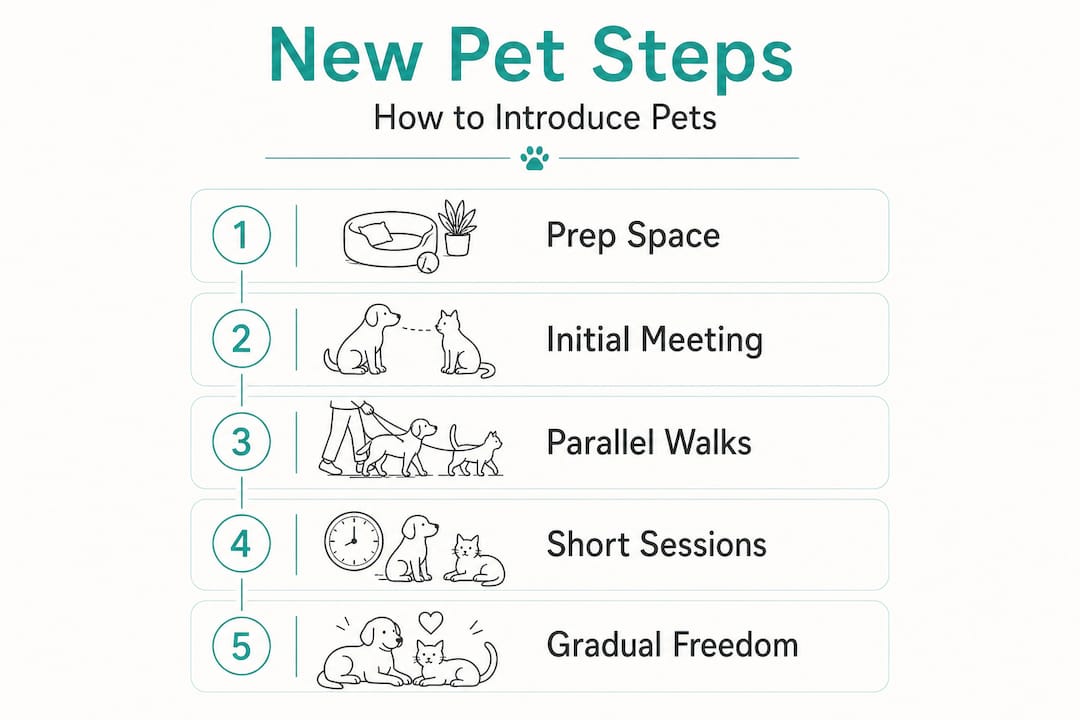
One of the most important steps is removing resources that could trigger conflict. As Preventive Vet advises, you should remove or separate items that could trigger resource guarding — food bowls, toys, beds — and use baby gates, crates, or leash control to prevent conflict before it has a chance to start. Resource guarding is one of the most common causes of early inter-pet aggression, and it is surprisingly easy to prevent simply by tidying these items away temporarily.
Here is a quick checklist of what to have ready before your new pet arrives:
- Baby gates for doorways and stairways to create separation zones
- Crates or playpens so each pet has their own secure retreat
- Separate feeding stations in different rooms, even for the first few weeks
- Long leads or house leads for controlled indoor movement
- High-value treats for rewarding calm behaviour throughout
- A written plan detailing who handles which pet, where, and in what order
The table below shows what you need and why each item matters:
| Preparation item | Purpose |
|---|---|
| Baby gate | Creates visual access without physical contact |
| Crate (padded and inviting) | Safe retreat reducing anxiety for each pet |
| Separate bedding zones | Prevents territorial marking and guarding |
| Long lead | Allows controlled movement without pressure |
| High-value treats | Reinforces calm, positive associations |
| Escape routes (cat-specific) | Ensures cat can retreat if overwhelmed |
Your demeanour matters just as much as the physical setup. Dogs are remarkably attuned to human stress. If you are anxious and tense, your dog will pick up on it and escalate their own alertness. Keep your voice low, your movements slow, and your body language open.
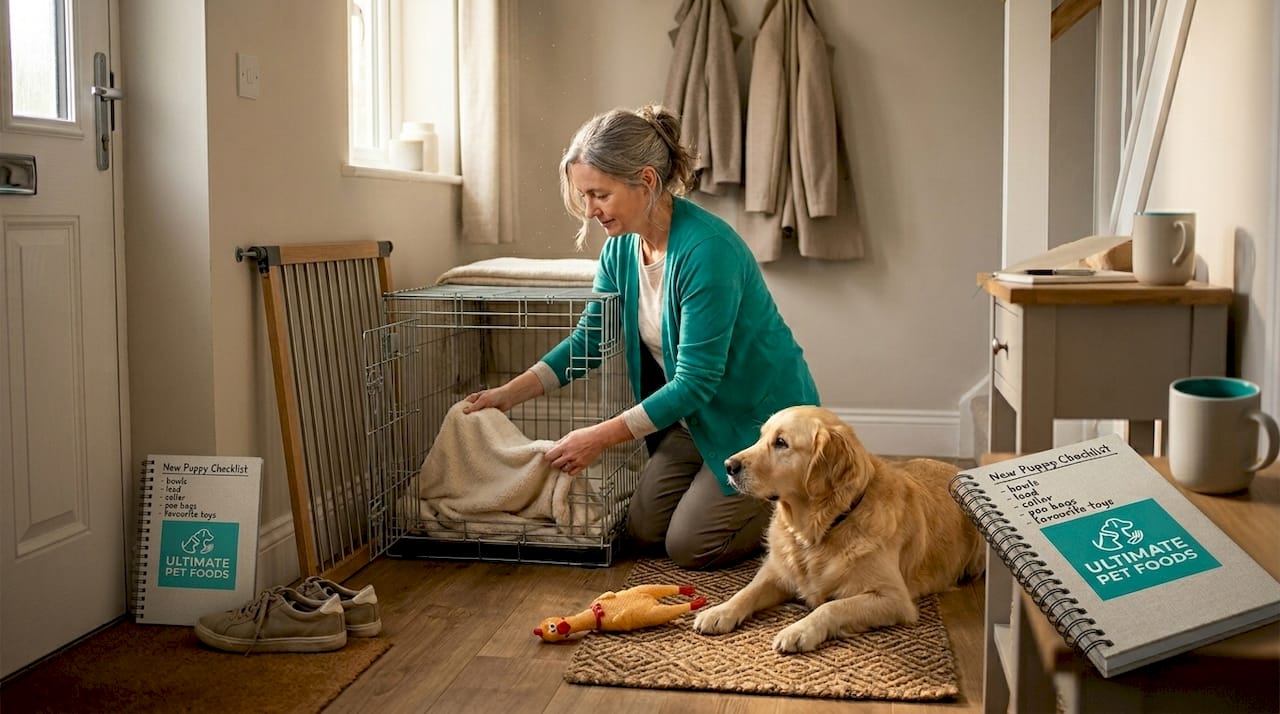
Pro Tip: Write your introduction plan down in advance, including who handles which dog, what route you take on the first walk together, and who manages the gate when you move indoors. Having roles defined removes confusion on the day and keeps everything calmer for the animals.
If you are also managing a change in diet alongside a new pet, reading our guide on transitioning dog foods can help you avoid added digestive stress during an already unsettled period. You might also find our thoughts on pet adoption benefits helpful if you are still in the decision-making stage.
Step-by-step: How to introduce a new dog to your resident dog
With your preparation done, follow these evidence-based steps for the smoothest dog-to-dog transition.
As Nebraska Humane Society recommends, established organisations advise starting with a neutral-location introduction — not in your resident dog’s home or garden, where territorial behaviour is far more likely to surface. A quiet corner of a park or a calm residential street works well.
-
Choose neutral ground. Both handlers should arrive separately with their dogs on loose leads. A taut lead communicates tension to your dog, so keep it slack even if you feel nervous.
-
Approach in parallel. Walk side-by-side at a comfortable distance rather than heading straight toward each other. Let the dogs acknowledge one another without forcing a face-to-face sniff, which can feel confrontational for some dogs.
-
Watch body language carefully. Soft, wiggly body movements, relaxed tails, and loose posture are all positive signals. Stiffness, a hard stare, raised hackles, or a tucked tail are signs to increase distance and slow down.
-
Allow brief, positive interactions. Keep initial greetings to a few seconds, then walk on. Controlled, stepwise introductions with distance management and short sessions should only progress if both dogs remain relaxed, according to AKC guidance.
-
Progress to the garden before indoors. Once the dogs are reliably relaxed on walks together, move to your garden (if you have one) before bringing the new dog inside. Remove any toys or bowls from the garden first.
-
Move indoors with gates in place. Use baby gates to give each dog their own zone initially. Allow sniffing under the gate before removing it. Short, supervised sessions in shared space can then gradually extend.
| Stage | Location | Duration | Signs to stop |
|---|---|---|---|
| First meeting | Neutral (park/street) | 5 to 10 minutes | Stiffness, growling, hard stare |
| Parallel walks | Public areas | 20 to 30 minutes | Persistent pulling toward or away |
| Garden session | Your outdoor space | 10 to 15 minutes | Guarding, chasing, mounting |
| Indoor supervised | Shared living space | 10 minutes, gradually increasing | Hiding, aggression, resource guarding |
Pro Tip: If either dog shows leash reactivity or a history of anxiety around other dogs, consult a qualified behaviourist before starting introductions. Professional guidance early is far more effective than trying to fix entrenched problems later.
🚨 Safety note: Never force a greeting. If either dog is leash-reactive, fearful, or has a history of aggression, seek support from a certified clinical animal behaviourist before proceeding. Pushing forward with introductions when a dog is clearly distressed can cause lasting damage to their relationship.
For practical support on training calm companions, our at-home training guide offers useful techniques to reinforce the calm, settled behaviour you want to see. If you are wondering about feeding both dogs, our article on mixing dog food brands covers what to keep in mind.
Introducing your dog to a new cat: slow and steady wins
If your new pet is a cat, the pace and process look quite different — here is what works best for peaceful dog-to-cat cohabitation.
The most important thing to understand upfront is that cats and dogs communicate very differently. A dog bounding forward with excitement reads as an extreme threat to most cats, even if the dog has zero harmful intent. This mismatch is why welfare-oriented guidance from the RSPCA emphasises safety-first, gradual introduction, ensuring the cat can always retreat, and accepting that this process can take weeks or even months. Rushing it is the single biggest mistake owners make.
Here is the process we recommend:
-
Scent swapping first. Before any visual contact, swap bedding between the two pets for several days. This allows each animal to process the other’s scent safely and without pressure.
-
Visual introduction with a barrier. Use a baby gate, a slightly ajar door, or a glass door to allow the cat to see the dog from a safe distance. The cat must always be able to leave.
-
Dog on lead, cat free to move. Your dog should always be on lead or in a crate during early shared-space sessions. The cat must never feel cornered.
-
Short, frequent sessions with rewards. Reward your dog for calm, disengaged behaviour around the cat. Reward the cat too, using dog-friendly treats for your dog and appropriate feline treats for your cat.
-
Expand slowly and monitor for weeks. Do not interpret a single calm session as success. Continue monitoring daily for subtle stress signals — a cat that stops eating or grooming may be more anxious than they appear.
| Week | Goal | Watch for |
|---|---|---|
| Week 1 | Scent swapping only | Hissing at bedding, refusal to eat |
| Week 2 to 3 | Visual contact via barrier | Fixation, lunging, hiding |
| Week 3 to 4 | Shared space, dog on lead | Stress posturing, loss of appetite |
| Week 4 onwards | Gradual free access | Chasing, prolonged staring |
Common warning signs that you are moving too fast:
- Cat stops using litter tray or eating in shared areas
- Dog fixates obsessively on the cat’s location
- Cat hisses or spits at every encounter rather than just occasionally
- Dog whines constantly when separated from the cat’s room
💡 Remember: Never rush this process. Forced early interaction can create long-term tension between pets that becomes very difficult to unpick later. If either pet shows persistent distress, pause and seek professional advice.
Troubleshooting, transition period, and keeping progress on track
Even with a perfect start, the adjustment phase takes ongoing effort — here is how to keep things steady after the first introductions.
Research from the University of Florida Shelter Medicine Program found that early post-adoption periods often include behavioural and care challenges even when overall adoption satisfaction is high. This is a really important finding because it tells us that hiccups are not a sign that you have made a mistake — they are simply a predictable part of the process.
Common issues to plan for in the first few months:
- House soiling: A new pet in the home can trigger regression in a previously house-trained dog. Clean accidents without fuss and maintain consistent toilet routines.
- Play biting and rough play: Especially common when a puppy joins an adult dog. Interrupt before it escalates and redirect with a toy.
- Anxiety and restlessness: Some dogs become unsettled, pace more, or sleep less. Short, calm interactions and soothing anxious dogs techniques can help settle nerves.
- Leash pulling on joint walks: The presence of a new dog can temporarily undo lead manners. Return to basics with individual walks and rejoin gradually.
Pro Tip: Even after a great first week, keep using separation tools like baby gates and crates for at least the first month. Overnight separation is wise until you are genuinely confident in the relationship. Short, positive shared sessions daily are far more sustainable than long, unsupervised stretches too soon.
If you notice a plateau or regression, always go back a step rather than pushing forward. The goal is a relationship built on security, not speed.
Why the slow, patient approach outperforms quick fixes
With the main steps and troubleshooting covered, here is our hard-won take from helping families succeed over the years.
We see it regularly — owners who do everything right in the first week, then feel confident enough to remove all barriers on day eight. Suddenly both pets are tense, one is hiding under the bed, and the owner is deflated wondering what went wrong. The honest truth is that nothing went wrong. The timeline just ran ahead of what the animals were ready for.
There is a real temptation to interpret a single good day as the end of the introduction process. It is not. Behavioural science is clear that animals need repeated, positive experiences to form genuine comfort with one another. One calm meeting builds a memory. Twenty calm meetings builds a relationship.
Skipping steps does not save time in the long run. It frequently creates entrenched behavioural problems that take months to unpick, and in some cases leads to rehoming, which is distressing for everyone involved. The slow path genuinely is the fast path when you consider the bigger picture.
The biggest lesson we have learned is to listen to the dog in front of you. Your resident dog’s comfort signals are data. If they are stiff, avoiding, or over-aroused, that is communication worth honouring. Pausing or “going backwards” for a week is not failure — it is skilled, empathetic ownership. We always encourage owners to revisit their approach to transitioning to new routines as a reminder that gradual change, whether in diet or lifestyle, always yields the most stable outcomes.
Support your pets’ transition with optimum nutrition and advice
When you are ready to put these evidence-based steps into practice, expert nutritional choices and support can help every pet settle in faster. 🐾

Stress and change affect digestion as well as behaviour. During the introduction period, keeping both pets on a consistent, high-quality diet supports overall wellbeing and reduces one potential source of discomfort. Our grain-free diet benefits page explains how natural, easily digestible ingredients can support calmer digestion and healthier skin and coat, which matters even more during unsettled periods. You can explore our full range using our handy dry dog food ranges comparison tool, or head straight to our online shop to find the right formula for your dog’s breed, age, and lifestyle. We are here to support the whole journey, not just mealtime. 🌿
Frequently asked questions
How long does it take for pets to adjust to each other?
Adjustment can take several weeks or more than four months for many pets, so patience is essential. Regress to an earlier step if either pet shows persistent stress rather than pushing forward.
What if my dog reacts badly during the first meeting?
Separate the pets calmly and without drama, then try again later with greater distance and lower expectations. Welfare guidance consistently emphasises regressing rather than repeating a distressing encounter.
Should I let the pets work things out on their own after a good first meeting?
No — keep supervision and separation tools in place for at least several weeks, even after a positive start. Leaving pets unsupervised too soon is one of the most common reasons early progress unravels.
Can I use treats to help introductions go better?
Absolutely. Rewarding calm behaviour during introductions helps both pets build positive associations with each other’s presence. Choose high-value rewards and use them consistently rather than just in moments of concern.