
Benefits of Pet Adoption – Transforming Lives and Health
Caring for a sensitive dog means every decision feels important, especially when considering adoption or choosing the right nutrition. Many British families worry that shelter pets are challenging or lack clear medical histories, but modern rehoming centres provide thorough assessments and ongoing support to ensure a perfect match. This guide explores how pet adoption can bring unique emotional rewards and why selecting high-quality food makes a real difference for your dog’s wellbeing.
Table of Contents
- Pet Adoption Defined And Common Myths
- Different Types Of Dog Adoption Routes
- Emotional And Health Benefits For Owners
- How Adoption Supports Animal Welfare
- Responsibilities, Costs, And Legal Considerations
Key Takeaways
| Point | Details |
|---|---|
| Understanding Adoption Myths | Many misconceptions about rescue pets discourage potential adopters, leading to the belief that shelter animals have unmanageable issues, which is not the case. |
| Diverse Adoption Routes | Potential adopters should explore various pathways to find the right match for their lifestyles, including rescue centres, local shelters, and online platforms. |
| Health Benefits of Dog Ownership | Adopting a dog not only offers companionship but also provides significant emotional and physical health advantages to the owner. |
| Legal and Financial Responsibilities | Prospective adopters must prepare for the long-term commitment and costs associated with dog ownership, including veterinary care and legal obligations under the Animal Welfare Act 2006. |
Pet Adoption Defined and Common Myths
Pet adoption represents a profound opportunity for both animals and humans to create meaningful connections, challenging many preconceived notions about rescue pets. Debunking common adoption myths requires understanding the nuanced realities of animal shelters and rehabilitation.
Contrary to popular belief, shelter pets are not inherently “damaged” or problematic. Many misconceptions persist about their backgrounds and behavioural traits. Key myths that frequently discourage potential adopters include:
- Shelter pets have unmanageable behavioural issues
- Only older animals are available for adoption
- Rescue pets come with uncertain medical histories
- All shelter animals are mixed breeds
These assumptions often prevent wonderful animals from finding loving homes. In reality, rehoming centres provide comprehensive support to help match pets with suitable families. Professional behaviourists and veterinary teams carefully assess each animal’s individual needs, ensuring successful adoptions.
Shelters today offer remarkable diversity in pet options. They house not just adult animals, but also puppies, kittens, and even pedigree breeds. Many centres conduct thorough medical screenings, provide initial vaccinations, and offer detailed background information about each animal’s temperament and history.
Behavioural Rehabilitation is a critical aspect of modern animal shelters. Trained professionals work diligently to understand each pet’s unique personality, helping to address potential challenges and prepare them for healthy, happy home environments.
Adoption is about building trust, establishing routines, and creating lasting bonds between humans and animals.
Pro tip: Before adopting, spend quality time interacting with potential pets at the shelter to understand their individual personality and compatibility with your lifestyle.
Different Types of Dog Adoption Routes
Navigating the world of dog adoption requires understanding the diverse pathways available to potential pet owners. Comprehensive rehoming processes offer multiple routes for bringing a furry companion into your life, each with unique characteristics and support mechanisms.
Typically, dog adoption routes can be categorised into several key approaches:
- Rescue Centre Adoption: Structured programmes through established animal welfare organisations
- Breed-Specific Rescue: Specialised rehoming for particular dog breeds
- Local Shelter Adoption: Community-based animal welfare centres
- Online Adoption Platforms: Digital matchmaking services connecting pets with potential owners
- Foster-to-Adopt Programmes: Temporary care arrangements that can lead to permanent adoption
Rehoming centres like Dogs Trust offer sophisticated matching processes that go beyond simple selection. These organisations conduct thorough assessments to ensure compatibility between dogs and potential owners, considering factors like lifestyle, living environment, and personal preferences.
The Traditional Shelter Route remains the most common adoption pathway. Here, potential owners visit physical locations, interact with available dogs, and complete comprehensive application processes. Shelters typically provide:
- Full veterinary health checks
- Initial vaccination records
- Behaviour assessments
- Detailed animal background information
- Post-adoption support services
Breed-Specific Rescues offer a more targeted approach for individuals seeking particular dog types. These specialised organisations focus on specific breeds, providing nuanced understanding of breed-specific needs and characteristics.
Here is a summary of the main dog adoption routes and the support each typically offers:
| Adoption Route | Assessment Process | Typical Support Available |
|---|---|---|
| Rescue Centre Adoption | Comprehensive screening | Long-term follow-up and advice |
| Breed-Specific Rescue | Breed-focused evaluation | Guidance on breed requirements |
| Local Shelter Adoption | Basic compatibility checks | Post-adoption community resources |
| Online Adoption Platform | Remote vetting | Aftercare dependent on platform |
| Foster-to-Adopt Programme | Home environment review | Support throughout trial period |
Successful dog adoption is about finding the right match, not just selecting the first available animal.
Pro tip: Research multiple adoption routes and spend time understanding each dog’s unique personality before making a final commitment.
Emotional and Health Benefits for Owners
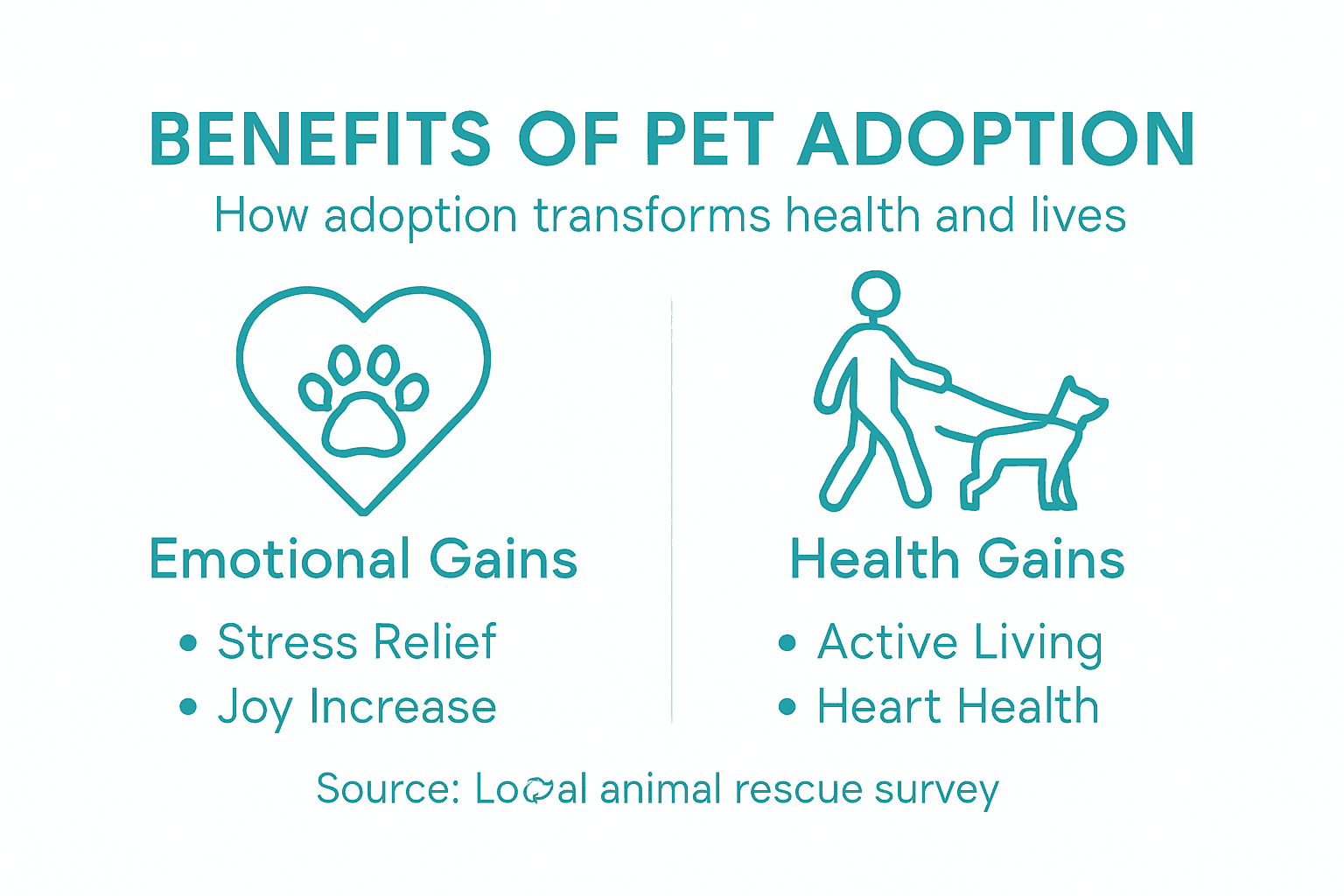
Adopting a dog transcends mere companionship, offering profound emotional and physical health benefits that can transform an owner’s quality of life. These remarkable animal companions provide more than unconditional love - they actively contribute to holistic human wellness.
The emotional advantages of dog ownership are multifaceted and scientifically substantiated:
- Stress Reduction: Dogs provide immediate emotional comfort and anxiety mitigation
- Mood Enhancement: Regular interaction increases serotonin and dopamine levels
- Social Connection: Pets facilitate interactions and reduce feelings of isolation
- Psychological Resilience: Companionship helps owners navigate challenging life periods
- Emotional Stability: Consistent animal bonds promote mental health regulation
Physical Health Transformations are equally impressive. National dog surveys consistently demonstrate that dog owners experience significant lifestyle improvements through increased physical activity and outdoor engagement.
The daily requirements of dog ownership - walking, playing, and caring - naturally integrate exercise into routine life. These activities combat sedentary behaviours, improve cardiovascular health, and enhance overall fitness. Regular dog walks typically result in owners achieving recommended daily activity levels, with some studies suggesting a 30-50% increase in physical movement compared to non-dog owners.
Owning a dog is not just about having a pet - it’s about gaining a partner in health and happiness.
Pro tip: Choose a dog breed that matches your activity level and lifestyle to maximise the mutual health benefits of your relationship.

How Adoption Supports Animal Welfare
Adoption is a powerful mechanism for addressing critical challenges in animal welfare, transforming individual animal lives while supporting broader systemic improvements. Blue Cross rehabilitation services highlight the profound impact of responsible rehoming across multiple dimensions of animal protection and care.
The key welfare benefits of adoption include:
- Population Control: Reducing stray and homeless animal numbers
- Breaking Breeding Cycles: Discouraging unethical breeding practices
- Resource Allocation: Enabling shelters to support more animals
- Medical Care: Providing veterinary intervention for vulnerable animals
- Social Rehabilitation: Offering behavioural support and training
Animal welfare policies emphasise the critical role of adoption in creating sustainable solutions for companion animal protection. By choosing adoption, individuals directly contribute to reducing animal abandonment, preventing unnecessary euthanasia, and supporting comprehensive welfare strategies.
Shelter organisations play a crucial role in this ecosystem, providing comprehensive support that extends far beyond simple rehoming. They offer critical services including medical screening, behavioural assessment, rehabilitation programmes, and ongoing support for both animals and adopters. These interventions ensure that rescued animals receive necessary care and have the best possible chance of successful integration into new homes.
Adoption is not just about saving one animal - it’s about transforming entire welfare systems.
Pro tip: Research local shelters and understand their specific support programmes before adopting to ensure you’re making the most informed and compassionate choice.
Responsibilities, Costs, and Legal Considerations
Adopting a dog represents a significant commitment involving financial, legal, and ethical responsibilities. Blue Cross adoption processes highlight the comprehensive considerations potential dog owners must carefully evaluate before bringing a new companion home.
Financial responsibilities encompass multiple ongoing expenses:
- Initial Adoption Fees: Ranging from £100-£300 depending on shelter and animal
- Veterinary Care: Annual check-ups, vaccinations, and potential medical treatments
- Food and Nutrition: High-quality diet tailored to dog’s age and health needs
- Equipment: Bed, collar, lead, toys, training accessories
- Insurance: Recommended to cover unexpected medical expenses
Legal pet ownership requirements establish clear expectations for animal welfare. The Animal Welfare Act 2006 mandates owners provide:
- Suitable living environment
- Balanced nutrition
- Protection from pain and suffering
- Veterinary care when needed
- Opportunities for natural behaviours
Legal considerations extend beyond basic care. Owners must comply with local regulations including microchipping, potential breed restrictions, and public space behaviour. Failure to meet these obligations can result in significant financial penalties and potential legal consequences.
The table below highlights key financial and legal responsibilities for dog adopters in the UK:
| Responsibility Type | Example Expenses/Requirements | Impact of Non-Compliance |
|---|---|---|
| Financial | Annual check-ups, quality food, insurance | Risk of poor pet health, debt |
| Legal | Microchipping, adhering to welfare laws | Fines, loss of pet ownership |
| Ethical | Consistent care, respecting pet needs | Detrimental to animal wellbeing |
Responsible dog ownership is a privilege that comes with carefully defined legal and ethical obligations.
Pro tip: Create a comprehensive monthly budget that includes all potential dog-related expenses before bringing your new companion home.
Nourish Your New Best Friend With Optimal Nutrition
Adopting a dog brings incredible emotional and physical health benefits but also presents the challenge of providing the best care for your new companion. Ensuring your adopted dog receives premium nutrition supports their wellbeing and helps overcome common health or behavioural issues highlighted in the adoption process. Explore our full range of Grain Free Dry Dog Food crafted from natural ingredients designed to promote vitality and happiness from the very first meal.
Start your adoption journey with confidence by choosing nutrition tailored to your dog’s unique life stage and needs. Visit Ultimate Pet Foods today to discover how our nutrient-rich, hypoallergenic options can transform your pet’s health and happiness after adoption. Don’t wait to give your rescued companion the quality of life they deserve—explore our collections and make the healthy change now.
Frequently Asked Questions
What are the emotional benefits of pet adoption?
Adopting a pet provides emotional advantages like stress reduction, mood enhancement, and improved social connections, helping to foster psychological resilience and emotional stability in owners.
How does dog adoption contribute to physical health?
Dog ownership encourages regular physical activity through walking and play, resulting in increased fitness levels and improved cardiovascular health for owners compared to those without pets.
What responsibilities do pet owners have when adopting a dog?
Pet owners are responsible for providing a suitable living environment, regular veterinary care, balanced nutrition, and opportunities for natural behaviours, as mandated by animal welfare laws.
How does adopting a pet help animal welfare?
Adoption plays a crucial role in reducing the population of stray and homeless animals, breaks breeding cycles, reallocates resources to shelters, and supports broader efforts to rehabilitate and care for animals in need.