

Choosing the Right Dog Breed – Impact on Health and Lifestyle

Most British households consider a dog’s personality even more than its looks when choosing a new companion. Finding the right match matters because a breed’s age, size, and temperament can change daily life in surprising ways. With over 200 recognized breeds, understanding what sets each one apart helps avoid common mistakes and improves the bond between you and your future pet. Nearly half of all British owners cite lifestyle compatibility as their top concern when welcoming a dog into their family.
Table of Contents
- What Choosing a Dog Breed Really Means
- Breed Groups and Key Distinctions
- Matching Breed Traits to Your Lifestyle
- Breed-Specific Health and Nutrition Needs
- Common Pitfalls When Selecting a Breed
Key Takeaways
| Point | Details |
|---|---|
| Comprehensive Commitment | Selecting a dog breed involves a significant long-term commitment that aligns with your lifestyle and care capacity. |
| Breed Characteristics | Each breed has specific traits and health predispositions; understanding these is crucial for a successful match. |
| Lifestyle Compatibility | Conduct an honest self-assessment of your living situation and daily routine to ensure compatibility with the breed’s needs. |
| Avoid Common Pitfalls | Resist impulse decisions based on appearance or marketing; thorough research on the breed’s health and temperament is essential. |
What Choosing a Dog Breed Really Means
Choosing a dog breed is far more nuanced than simply selecting an adorable puppy. It represents a comprehensive commitment that intersects your lifestyle, living environment, and long-term capacity for care. When considering a canine companion, prospective owners must understand that selecting the right breed involves careful research and compatibility assessment.
Breed selection goes beyond aesthetic preferences. Each dog breed carries distinct genetic predispositions towards energy levels, behaviour patterns, health considerations, and temperamental traits. While breed standards provide general guidance, individual dogs demonstrate remarkable variation. Understanding breed characteristics does not guarantee predictable behaviour, as an individual dog’s personality is significantly influenced by upbringing and training.
The decision requires holistic evaluation across multiple dimensions. Key factors include:
- Living space requirements
- Exercise and activity needs
- Grooming complexity
- Potential inherited health conditions
- Financial investment for care
- Compatibility with family dynamics
Successful dog ownership emerges from thoughtful matching between breed traits and your personal circumstances. Our Freshly Prepared Meat or Fish kibble, which is gentle cooked at 82°C to preserve nutrients, supports dogs across different breeds by providing balanced, high-quality nutrition tailored to individual needs.
Breed Groups and Key Distinctions
The Kennel Club’s systematic approach to categorizing dog breeds provides crucial insights into understanding canine diversity. These seven distinct groups - Working, Pastoral, Gundog, Hound, Terrier, Utility, and Toy - represent more than administrative classifications. They reflect centuries of selective breeding, highlighting how different breeds evolved to serve specific human purposes.
Understanding breed groups helps prospective dog owners predict potential traits and behaviours. Each group carries unique characteristics shaped by historical functions. Working dogs demonstrate strength and utility, Pastoral breeds excel in herding, Gundogs showcase retrieving skills, Hounds possess remarkable tracking abilities, Terriers exhibit tenacious personalities, Utility breeds offer versatile capabilities, and Toy breeds provide companionship.
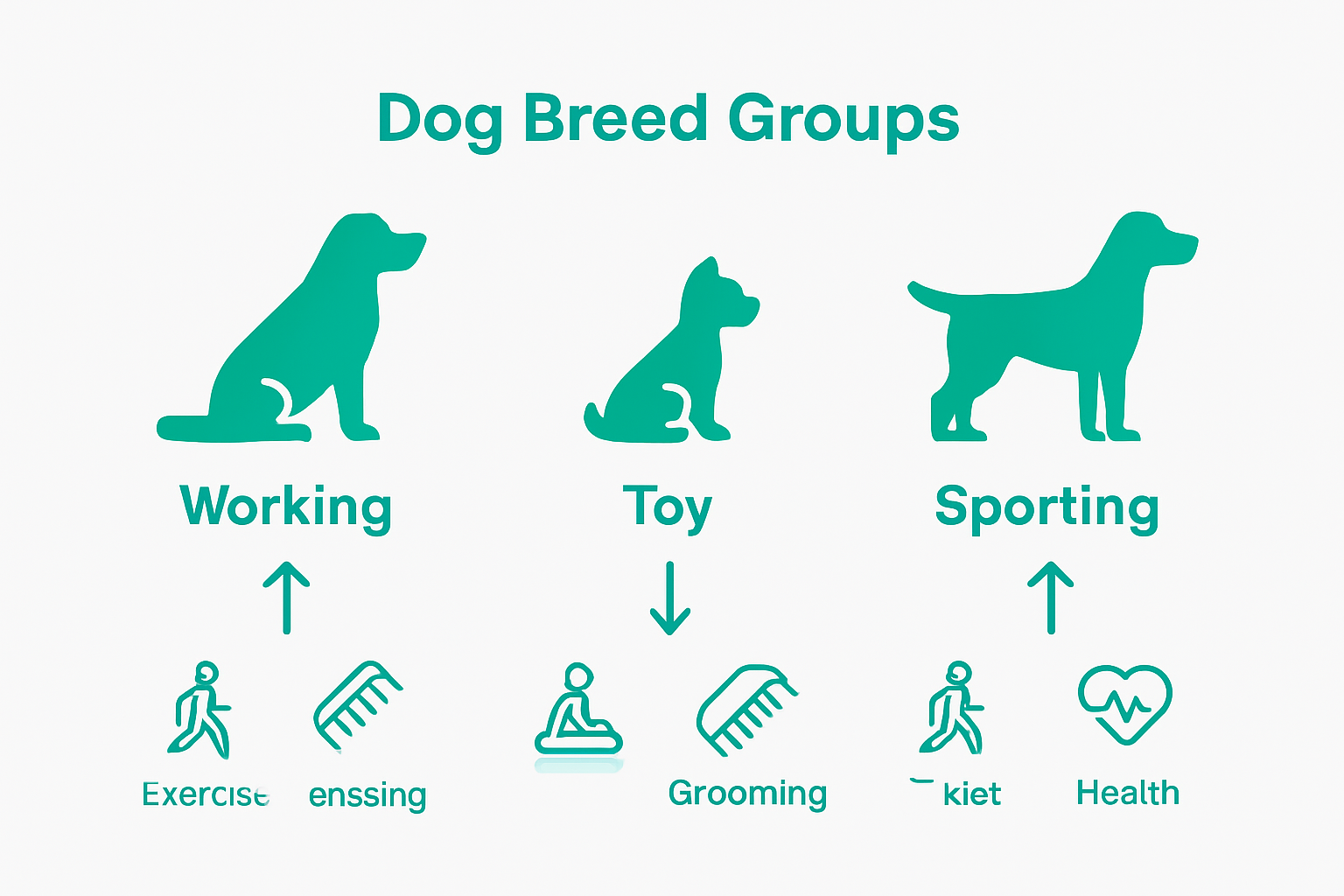
However, it’s essential to recognise that breed characteristics provide general guidance rather than definitive personality predictions. Individual dogs can significantly deviate from group stereotypes, with environment and training playing pivotal roles in development.
Key considerations when exploring breed groups include:
- Physical exercise requirements
- Potential inherited health conditions
- Typical temperament traits
- Space and living environment compatibility
- Grooming and maintenance needs
- Potential training complexities
Our Freshly Prepared Meat or Fish kibble, carefully cooked at 82°C to preserve essential nutrients, offers tailored nutritional support for dogs across all breed groups, ensuring balanced health and vitality.
Matching Breed Traits to Your Lifestyle
Selecting the right dog breed requires a comprehensive evaluation of your personal lifestyle and the breed’s inherent characteristics. This process goes beyond aesthetic preferences, demanding a nuanced understanding of how a dog’s energy levels, exercise requirements, and temperament will integrate with your daily routine and living environment.

Potential dog owners must conduct an honest self-assessment. Consider your work schedule, living space, physical activity level, and emotional capacity for training and socialisation. High-energy working breeds like Border Collies or Australian Shepherds require extensive daily exercise and mental stimulation, making them unsuitable for sedentary individuals or those with limited outdoor access. Conversely, smaller companion breeds might better suit apartment dwellers or individuals with more restricted mobility.
Understanding a breed’s specific exercise, training, and socialisation needs is crucial for establishing a successful human-canine relationship. Different breeds have dramatically varied requirements that can significantly impact your daily life. A Labrador Retriever might demand multiple long walks and active play sessions, while a Greyhound paradoxically requires shorter, intense bursts of activity despite its athletic appearance.
Key lifestyle compatibility factors include:
- Living space dimensions
- Available time for exercise
- Work schedule flexibility
- Financial resources for care
- Existing family dynamics
- Tolerance for potential noise and disruption
Our Freshly Prepared Meat or Fish kibble, gently cooked at 82°C to preserve essential nutrients, provides tailored nutritional support that complements the unique dietary needs of different breed types, ensuring optimal health across varied lifestyles.
Breed-Specific Health and Nutrition Needs
Understanding the intricate relationship between breed characteristics and potential health vulnerabilities represents a critical aspect of responsible dog ownership. Different breeds possess unique physiological structures that predispose them to specific health challenges, making informed breed selection paramount for long-term canine wellness.
Brachycephalic breeds like Bulldogs and Pugs, characterised by their distinctive flat faces, frequently encounter respiratory complications and temperature regulation difficulties. Giant breeds such as Great Danes and Saint Bernards are prone to joint issues and shorter lifespans, while smaller breeds like Dachshunds can experience spinal problems due to their elongated body structures. Breed conformation significantly influences potential health vulnerabilities, necessitating careful consideration beyond aesthetic appeal.
Nutritional requirements also vary dramatically across breed types. Working dogs demand higher protein and calorie intake, while less active companion breeds require carefully managed portion control to prevent obesity. Genetic predispositions further complicate dietary needs, with some breeds demonstrating increased susceptibility to allergies, digestive sensitivities, or metabolic disorders.
Key breed-specific health considerations include:
- Genetic screening potential
- Inherited disease risks
- Metabolic rate variations
- Typical body composition
- Exercise tolerance
- Immune system characteristics
Our Freshly Prepared Meat or Fish kibble, gentle cooked at 82°C to preserve essential nutrients, provides tailored nutritional support that addresses these nuanced breed-specific health requirements, ensuring comprehensive dietary management.
Common Pitfalls When Selecting a Breed
Selecting a dog breed involves navigating numerous potential misconceptions and marketing traps that can lead prospective owners astray. Many individuals fall into predictable patterns of decision-making that prioritise superficial characteristics over substantive health and temperament considerations.
One prevalent mistake is becoming entranced by aesthetically pleasing but potentially problematic breed characteristics. Breeders often exploit consumer fascination with ‘rare’ coat colours or exotic physical traits, using these as marketing strategies to inflate prices. Such approaches can mask underlying genetic health issues or breed-specific vulnerabilities that may significantly impact the dog’s quality of life.
Responsible breed selection demands thorough investigation of the puppy’s origin, including direct observation of breeding conditions and parental health. Unethical breeders frequently prioritise profit margins over animal welfare, producing dogs with compromised genetic profiles or insufficient early socialisation. Potential owners must resist impulse decisions and commit to comprehensive background research.
Common breeding selection pitfalls include:
- Prioritising appearance over health
- Falling for marketing gimmicks
- Overlooking genetic predispositions
- Ignoring temperament compatibility
- Underestimating maintenance requirements
- Buying from unverified breeding sources
Our Freshly Prepared Meat or Fish kibble, gentle cooked at 82°C to preserve essential nutrients, provides nutritional support that helps mitigate potential health challenges across different breed types.
Tailor Your Dog’s Nutrition to Their Unique Breed and Lifestyle
Choosing the right dog breed means understanding their specific health needs and lifestyle requirements. This article highlights the challenges of matching a dog’s temperament, exercise needs, and potential health vulnerabilities with your personal circumstances. Finding the perfect balance involves more than just picking a breed — it requires carefully tailored nutrition to support your dog’s well-being through every stage of life.
Discover our range of premium natural dog foods crafted from fresh ingredients at Ultimate Pet Foods. Our grain-free blends support diverse breed types with gentle cooking at 82°C, preserving vital nutrients for optimal health. For dogs with special needs, explore our specially formulated options like the Blends for our Senior Dogs – Ultimate Pet Foods that cater to ageing companions with sensitive health requirements.
Are you ready to provide your dog with nutrition as carefully chosen as their breed itself  Explore our full collections – Ultimate Pet Foods today and take advantage of our Discount 15% Offer for Our Sample customers. – Ultimate Pet Foods. Visit Ultimate Pet Foods now and give your dog the tailored care they deserve.
Frequently Asked Questions
What factors should I consider when choosing a dog breed?
Key factors include living space requirements, exercise and activity needs, grooming complexity, potential inherited health conditions, financial investment for care, and compatibility with family dynamics.
How do breed characteristics affect a dog’s health and behaviour?
Each breed has unique genetic predispositions that can influence energy levels, temperament, and susceptibility to specific health issues. Understanding these characteristics helps ensure a good match between the dog and your lifestyle.
What are the common health issues associated with specific dog breeds?
Certain breeds may face unique health challenges, such as brachycephalic breeds having respiratory issues, giant breeds being prone to joint problems, and some small breeds experiencing spinal disorders. It’s important to research the specific vulnerabilities of the breed you are considering.
Why is it important to avoid superficial traits when selecting a breed?
Focusing on appearance can lead to choosing a breed that may have underlying health issues or temperament problems. Responsible breed selection requires considering the dog’s health and compatibility with your lifestyle, rather than just aesthetic features.


