
Dog park etiquette: the responsible owner's guide
TL;DR:
- Dog park etiquette emphasizes owner responsibility, active supervision, and reading canine signals to ensure safety. Proper preparation includes vaccinations, training, and choosing suitable times to prevent conflicts. Responsible owners observe and leave early when their dog shows stress, promoting safer socialization.
Dog park etiquette is the essential framework of behaviours and responsibilities that keeps off-leash parks safe, respectful, and genuinely enjoyable for every dog and owner present. Getting it right means more than picking up after your dog. It means understanding canine social behaviour, following local regulations, and staying actively engaged throughout every visit. Organisations such as the American Veterinary Medical Association (AVMA) and the American Kennel Club consistently emphasise that owner responsibility is the single greatest factor in preventing dog park incidents. Your dog’s safety, and the safety of every dog around them, starts with you.
What are the core rules of dog park etiquette?
Good pet park manners begin with knowing the rules before you arrive. Municipal policies typically restrict entry to dogs aged 4–6 months or older, require full vaccination and licensing, limit handlers to a maximum of four dogs, and require handlers to be at least 16 years old. Owners carry legal liability for their dog’s behaviour, and no park supervisor is provided. That means you are the safety net.
The foundational dog park rules every owner must follow include:
- Vaccinations and licensing: Your dog must be fully vaccinated before entering any shared off-leash space. This protects your dog and every other dog in the park.
- Active supervision: Watch your dog constantly. The park is a high-stimulation environment, not a place to check your phone.
- Waste disposal: Bag and bin every deposit immediately. Leaving waste is the fastest way to create conflict with other owners and spread disease.
- No food or high-value treats: Food in off-leash areas triggers resource-guarding and is a leading cause of dog bite injuries. Leave treats in the car.
- Voice control: Your dog must respond reliably to recall before you visit a dog park. If they ignore you when distracted, they are not ready.
- Age and handler rules: Children under 16 should not handle dogs in the park without an adult present. Young children should be supervised closely around unfamiliar dogs.
Pro Tip: Visit the park without your dog first. Walk the perimeter, check the gate condition, and observe how other dogs and owners behave. You will spot potential problems before your dog is in the middle of them.
How can you read canine body language to prevent conflicts?
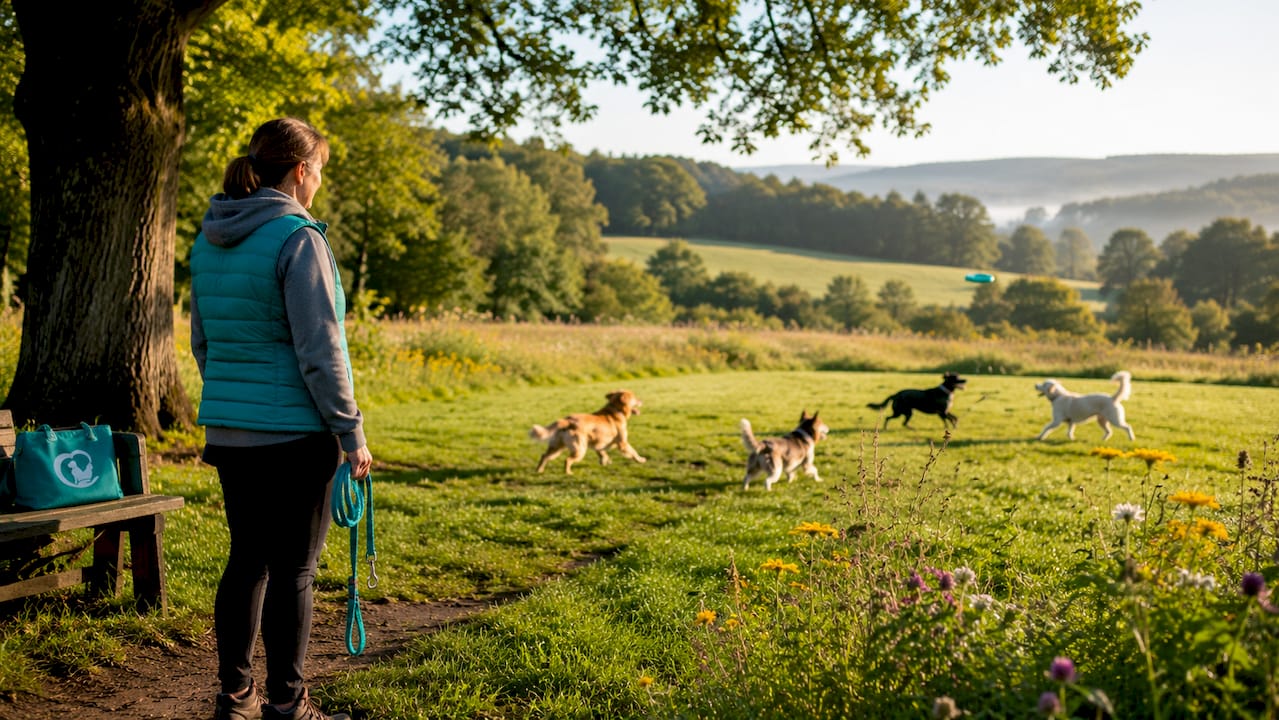
Reading your dog’s signals accurately is the most underrated skill in responsible pet ownership. Most park incidents do not start with a sudden attack. They build through a sequence of ignored signals that escalate over minutes.
Healthy, relaxed play looks like loose, bouncy movement, role reversal (the chaser becomes the chased), and regular pauses. Stress and discomfort look very different:
- Tucked tail or low carriage: Your dog feels threatened or anxious.
- Lip licking and yawning: Classic calming signals indicating stress, not tiredness.
- Freezing: Subtle withdrawal or freezing is a low-risk coping response that owners frequently mistake for calm behaviour. It is not calm. It is a dog managing an overwhelming situation.
- Hard stare with stiff body: A precursor to aggression. Remove your dog from the interaction immediately.
- Excessive mounting or persistent chasing: These behaviours cross from play into harassment when they continue without pause or mutual role reversal.
The most practical tool for managing these moments is the 3-second rule: if mounting or chasing continues for more than three seconds without a natural break, intervene calmly and redirect. Waiting for a full confrontation before acting is too late.
Research on canine social predictability shows that dogs regulate their emotions far better when interacting with familiar dogs in consistent settings. A crowded park full of strangers is genuinely stressful for many dogs, even those who appear to cope. Owners who build small, regular social circles for their dogs, sometimes called micro-communities, report fewer incidents and calmer overall behaviour than those who rely on random park encounters.
Pro Tip: Film your dog’s interactions on your phone during a quiet visit. Watching the footage back at home, without the distraction of managing the moment, reveals stress signals you almost certainly missed in real time.
What practical steps prepare you and your dog for a safe visit?
Preparation is what separates a positive park experience from a stressful one. Dogs should complete at least one full obedience training course before their first park visit, mastering sit, stay, come, and leave it. These commands are not optional extras. They are the tools you use to manage your dog when things get unpredictable.
Follow these steps to prepare properly:
- Complete vaccinations first. No exceptions. Puppies under 4 months must not enter shared dog areas. A full vaccination series protects against parvovirus, distemper, and kennel cough, all of which spread easily in high-contact environments. Our guide on exercising with your dog covers readiness markers worth reviewing before your first visit.
- Train core commands. Recall is the most critical. If your dog does not come back reliably in a low-distraction environment, they will not come back in a park full of dogs. Review essential training tips to build this foundation before you visit.
- Choose off-peak times. Early mornings on weekdays are quieter. Fewer dogs mean less stimulation, less competition, and a far better first experience for a nervous or inexperienced dog.
- Use the double gate correctly. Unclip your dog’s lead only once you are inside the neutral zone and the entrance is clear of other dogs. Leashing and unleashing at the gate while other dogs press against the fence creates barrier frustration and can trigger a fight before your dog has even entered.
- Know when to skip the park. Dogs with a history of fear-based aggression, resource guarding, or persistent anxiety do not benefit from off-leash parks. For these dogs, structured one-to-one socialisation with familiar, calm dogs is far more effective. Planning pet-friendly outings that suit your dog’s temperament is a sign of good ownership, not failure.
Pro Tip: Arrive five minutes before the park opens. The first dogs in set the social tone for the session. Arriving into an already-crowded park with an excitable dog is a recipe for a chaotic entrance.
What mistakes do owners most commonly make at dog parks?
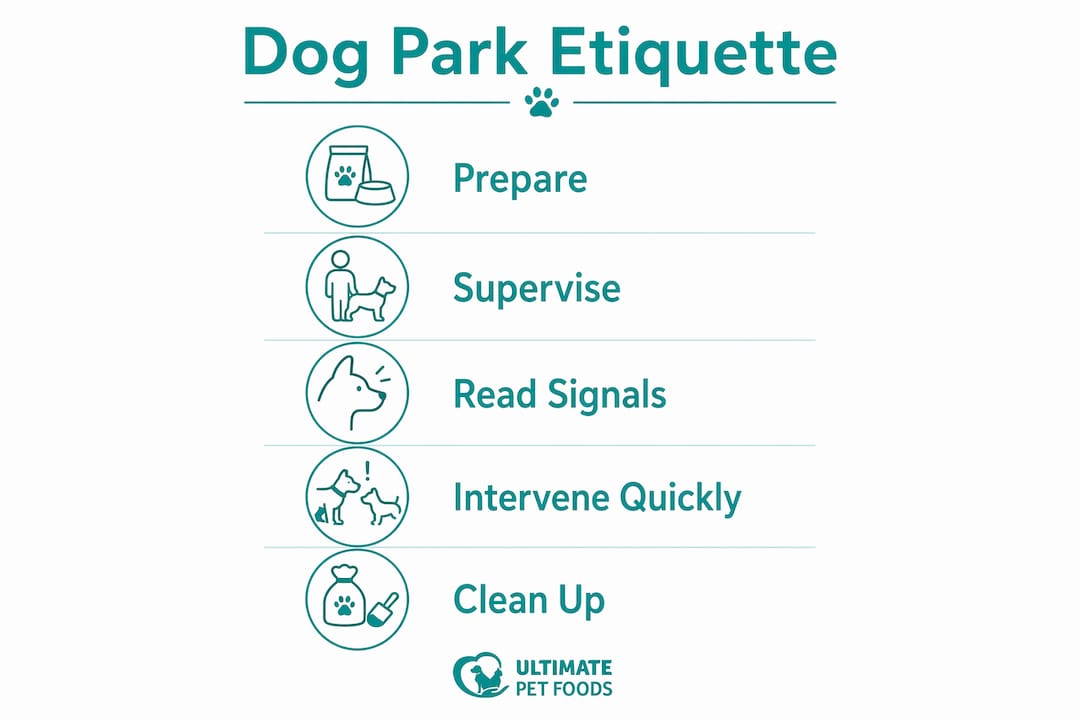
Owner distraction is the leading cause of dog park incidents. A dog park is not a social space for humans. It is a high-stimulation canine environment that demands your full attention. The moment you stop watching, situations escalate.
The most common mistakes owners make include:
- Using a phone or socialising with other owners instead of watching their dog. Thirty seconds of inattention is enough for a minor tension to become a serious altercation.
- Bringing unvaccinated or visibly unwell dogs. This is irresponsible and potentially dangerous to every dog in the park.
- Bringing food, toys, or high-value items into the shared space. Even a treat in your pocket can trigger resource-guarding if another dog smells it.
- Ignoring mounting or persistent chasing beyond the three-second threshold. Many owners assume this is normal play. It is not, once it becomes one-sided.
- Misreading withdrawal as contentment. Recognising subtle stress signals such as freezing or social shutdown is as important as spotting overt aggression. A dog standing still at the edge of the park is not relaxed. They are coping.
- Ignoring size and age mismatches. A boisterous adolescent Labrador playing with a small elderly terrier is not a balanced interaction. Separate them before the smaller dog is hurt or frightened.
Good dog walking safety practices extend directly into the park environment. The same attentiveness you apply on a lead walk applies here, with the added complexity of multiple unpredictable dogs.
Key takeaways
Responsible dog park behaviour depends on preparation, active supervision, and the ability to read your dog’s signals accurately before situations escalate.
| Point | Details |
|---|---|
| Vaccinations are non-negotiable | All dogs must be fully vaccinated and licensed before entering any shared off-leash area. |
| Active supervision prevents incidents | Owner distraction is the leading cause of dog park conflicts; keep your eyes on your dog at all times. |
| Use the 3-second rule | Interrupt mounting or chasing that continues beyond three seconds without a natural pause or role reversal. |
| Read withdrawal as a warning | Freezing or social shutdown signals stress, not calm; remove your dog from the situation promptly. |
| Preparation determines the outcome | Obedience training, correct gate use, and off-peak timing make the difference between a positive and a stressful visit. |
What I have learned from watching owners at dog parks
After years of observing dogs and their owners in off-leash environments, the pattern that stands out most is this: the owners who struggle most are not the ones with difficult dogs. They are the ones who underestimate how much the park asks of them personally.
A dog park visit is not passive. You are not there to relax while your dog exercises. You are there as an active guardian, reading the room, managing your dog’s interactions, and making calm decisions in real time. The owners who do this well tend to have one thing in common: they know their dog deeply. They know which dogs their dog enjoys, which ones make them tense, and when to call it a day and leave before things go wrong.
I have also noticed that not every dog enjoys dog parks, and that is perfectly fine. Socialisation is best achieved through controlled, positive experiences where dogs feel safe and can manage their own interactions, not through repeated exposure to overwhelming crowds. For some dogs, a regular walk with one trusted canine companion is worth ten chaotic park sessions.
The owners I respect most are the ones who leave early when their dog is tired or stressed, even when the dog “seems fine.” They trust their knowledge of their dog over social pressure to stay. That is what responsible pet ownership actually looks like.
— Glenn
Fuel your dog’s park days with the right nutrition
A dog that is well-nourished from the inside out handles the physical and mental demands of social outings far better. At Ultimatepetfoods, our dry dog food recipes are made with freshly prepared meat or fish, gently cooked at 82°C to lock in nutrients and freshness. Every recipe is complete and balanced for daily feeding, suitable for all breeds and life stages.
We add prebiotics MOS and FOS to every recipe to support digestion and gut health, because a settled stomach means a calmer, more comfortable dog. For dogs with specific everyday needs, our Ultimate+ Functional Health range uses hydrolysed proteins to support Digestive Care, Skin & Coat Care, Weight Control & Joint Care, Dental Care, and Healthy Living. If your dog is active and social, their diet should match that energy. Find out why a grain-free diet supports the kind of everyday vitality your dog needs to thrive at the park and beyond.
FAQ
What vaccinations does my dog need before visiting a dog park?
Your dog must be fully vaccinated against parvovirus, distemper, and kennel cough before entering any shared off-leash area. Puppies under 4 months old must not attend dog parks, as their vaccination series will not yet be complete.
How do I know if my dog is ready for a dog park?
Your dog is ready when they respond reliably to recall, sit, and stay in distracting environments, and have completed at least one obedience training course. Dogs with a history of fear-based aggression or persistent anxiety are better suited to structured one-to-one socialisation.
What is the 3-second rule in dog park behaviour?
The 3-second rule means you should intervene calmly if mounting or chasing continues for more than three seconds without a natural pause or role reversal. Calm, early intervention prevents minor tensions from escalating into physical conflict.
Why should I avoid bringing food to a dog park?
Food and high-value treats trigger resource-guarding behaviour in off-leash environments, which is a significant cause of dog bite injuries and emergency veterinary visits. Leave all food, including treats in your pockets, outside the park.
Is a dog park right for every dog?
No. Some dogs manage stress far better in small, familiar social groups than in large, crowded parks. Research on canine social predictability shows that repeated positive interactions with known dogs improve emotional regulation more effectively than random park encounters.