
Dog food for small breeds: tailoring nutrition for vitality
TL;DR:
- Small breeds need higher calorie, protein, and fat content due to faster metabolism.
- Grain-free diets exclude grains but require careful ingredient choice to avoid health risks.
- Proper feeding frequency, portion control, and regular health monitoring are essential for small dog vitality.
Small breeds are often treated as miniature versions of larger dogs, but that assumption can quietly undermine their health. Your Chihuahua, Pomeranian, or Shih Tzu has a metabolism that works at a completely different pace to a Labrador’s, and their food needs to keep up. Feeding a generic, one-size-fits-all dog food to a small breed is a bit like fuelling a sports car with regular petrol and wondering why performance suffers. In this guide, we’ll walk you through exactly what small breeds need nutritionally, what grain-free really means, and how to make confident, informed choices for your dog’s long-term vitality.
Table of Contents
- Why small breeds need specialised nutrition
- Understanding grain-free options for small breeds
- How to choose the best grain-free food for your small breed
- Key feeding practices and health tips for small breeds
- Our perspective: Why grain-free isn’t always the automatic best choice
- Find high-quality grain-free small breed food
- Frequently asked questions
Key Takeaways
| Point | Details |
|---|---|
| Unique nutritional needs | Small breeds burn energy quickly and require higher calorie, protein, and fat content than larger dogs. |
| Grain-free diet caution | Not all grain-free foods are equal—avoid those high in peas and lentils and choose trusted brands. |
| Portion and feed routine | Frequent small meals and strict portion control help prevent hypoglycaemia and obesity in small dogs. |
| Label reading matters | Carefully review product labels for protein, taurine, and overall ingredient balance to meet your dog’s needs. |
| Dental and health checks | Prioritise dental health with the right kibble and regular checks—key for long-term wellbeing in small breeds. |
Why small breeds need specialised nutrition
Now that you see why not all dogs have the same dietary requirements, let’s explore why small breeds truly stand apart.
Small breeds, generally those weighing up to around 10kg, have a metabolic rate that burns energy significantly faster than larger dogs. In fact, small breeds require higher calorie density, elevated protein, and fats due to their faster metabolism. This isn’t a minor difference. It shapes everything from how often your dog needs to eat to what their food should actually contain.
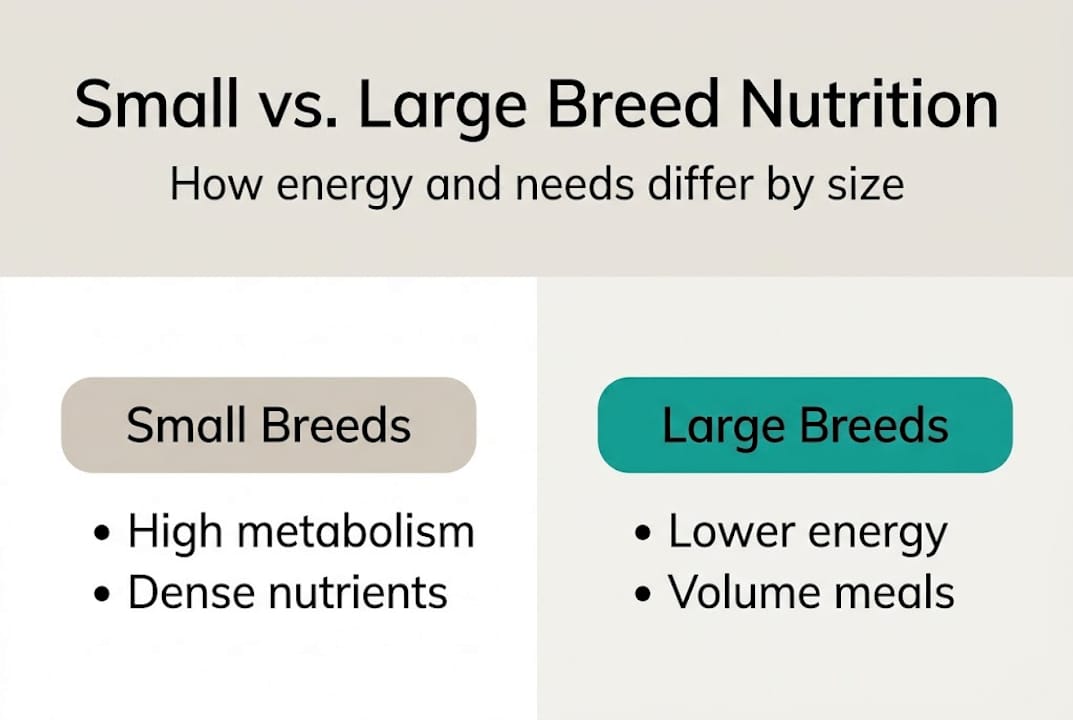
To put it simply, your small dog needs more fuel per kilogram of body weight than a Great Dane does. Calorie recommendations for small breeds sit at roughly 40 to 50 kcal per pound of body weight, with protein levels ideally between 25% and 38%, and a higher fat content than standard adult formulas provide.
What happens when these needs aren’t met? Quite a lot, and none of it is good. Toy breeds are particularly vulnerable to hypoglycaemia (low blood sugar), especially when meals are spaced too far apart. A small dog running on an insufficient or poorly matched diet may seem lethargic, lose muscle tone, or struggle to maintain a healthy weight despite appearing to eat regularly.
Nutritional specifics for small breeds also highlight the importance of micronutrient density. Because small dogs eat smaller volumes, every bite needs to count. A food that’s nutritionally dilute simply won’t deliver what they need.
Here’s a quick overview of how small breed needs compare:
| Nutrient | Small breeds | Large breeds |
|---|---|---|
| Calories per kg body weight | Higher (40–50 kcal/lb) | Lower (20–30 kcal/lb) |
| Protein (% dry matter) | 25–38% | 18–26% |
| Fat content | Higher | Moderate |
| Meal frequency | 2–3 times daily | 1–2 times daily |
For practical guidance on what to feed, explore our best foods for small breeds and our tips on healthy food for small dogs.
Key risks of using generic dog food for small breeds:
- 🐾 Hypoglycaemia in toy breeds due to low calorie density
- 🐾 Muscle wasting from insufficient protein
- 🐾 Poor coat condition linked to inadequate fat intake
- 🐾 Digestive upset from large kibble sizes or hard-to-digest grains
- 🐾 Weight gain from fillers that provide calories without nutrition
Pro Tip: If your small dog seems restless, shaky, or unusually tired between meals, it may be a sign their food isn’t delivering enough sustained energy. Consider splitting daily portions across three meals rather than two.
Understanding grain-free options for small breeds
Given the calorie and nutrient needs, many owners turn to grain-free formulas, but what does that really mean for your small dog?
Grain-free dog food simply means the recipe excludes grains such as wheat, corn, barley, and rice. Instead, it uses alternative carbohydrate sources like sweet potato, tapioca, or chickpeas. For small breeds with food sensitivities or allergies, this can be genuinely beneficial. Grains are a common trigger for itchy skin, digestive issues, and loose stools in sensitive dogs.
Many owners also choose grain-free foods because they tend to be higher in animal protein, which aligns well with small breeds’ elevated protein requirements. A well-formulated grain-free food can support lean muscle, a healthy coat, and sustained energy throughout the day.
However, it’s important to separate fact from marketing. A notable concern emerged when the FDA began investigating a potential link between grain-free diets and dilated cardiomyopathy (DCM), a heart condition. The good news is that the FDA found no direct link between grain-free diets and DCM in dogs. The risk appears to be associated with diets heavily loaded with legumes such as peas and lentils, not with the absence of grain itself.
This distinction matters enormously. It means the grain-free dog food debate isn’t black and white. A grain-free food that relies heavily on peas as a primary ingredient may carry more risk than a grain-inclusive food with quality protein sources.
“The quality of the protein source and the overall formulation matters far more than whether a food contains grain or not. A grain-free label is not a guarantee of nutritional excellence.”
Grain-free vs. traditional dog food: a comparison
| Feature | Grain-free | Traditional (grain-inclusive) |
|---|---|---|
| Primary carb source | Sweet potato, tapioca, chickpeas | Rice, barley, oats |
| Protein content | Typically higher | Varies |
| Allergy suitability | Better for grain-sensitive dogs | May trigger reactions |
| DCM risk | Low if legume content is controlled | Generally lower concern |
| Digestibility | High with quality ingredients | Moderate to high |
For a deeper look at grain-free diet benefits and whether grains in dog diets are actually harmful, our blog covers both sides thoroughly. You might also find our grain-free vs regular foods comparison useful when weighing your options.
How to choose the best grain-free food for your small breed
Armed with what grain-free really means, let’s get practical on how to select the best possible food for your small breed.
Choosing the right food doesn’t have to feel overwhelming. Follow these steps and you’ll be reading labels with confidence in no time.
-
Check calorie density first. Look for foods that provide at least 350 to 400 kcal per 100g of dry matter. Small dogs need energy-dense food because they eat smaller portions. The AKC small breed nutrition guide recommends prioritising calorie density alongside protein quality.
-
Assess protein and fat levels. Aim for a minimum of 25% crude protein and adequate fat content (around 15% or higher). Named meat sources like chicken, salmon, or duck should appear at the top of the ingredient list.
-
Check for taurine and balanced amino acids. Taurine supports heart health and is sometimes deficient in grain-free diets that are heavy in legumes. Look for foods that include it explicitly or use meat-based proteins that naturally provide it.
-
Limit pea and lentil content. If peas, lentils, or chickpeas appear in the first three ingredients, consider a different formula. These can be used in moderation, but overreliance on legumes is where nutritional concerns arise, as feeding guides for small breeds confirm.
-
Look for feeding trial evidence. Reputable brands invest in feeding trials and nutritional testing. This is a far stronger indicator of quality than a premium-looking package.
-
Keep treats under 10% of daily calories. Treats are often overlooked but can tip the nutritional balance significantly. Use them sparingly and factor them into your dog’s daily intake.
Pro Tip: Don’t be swayed by “label appeal” such as words like “natural” or “wholesome” on the front of the pack. Always flip to the ingredient list and guaranteed analysis panel on the back. That’s where the truth lives.
For more tailored guidance, our grain-free nutrition tips and best foods for small breeds articles go into even greater detail.
Key feeding practices and health tips for small breeds
Making the right food choice is only half the battle. Consistent feeding and health routines are just as vital.
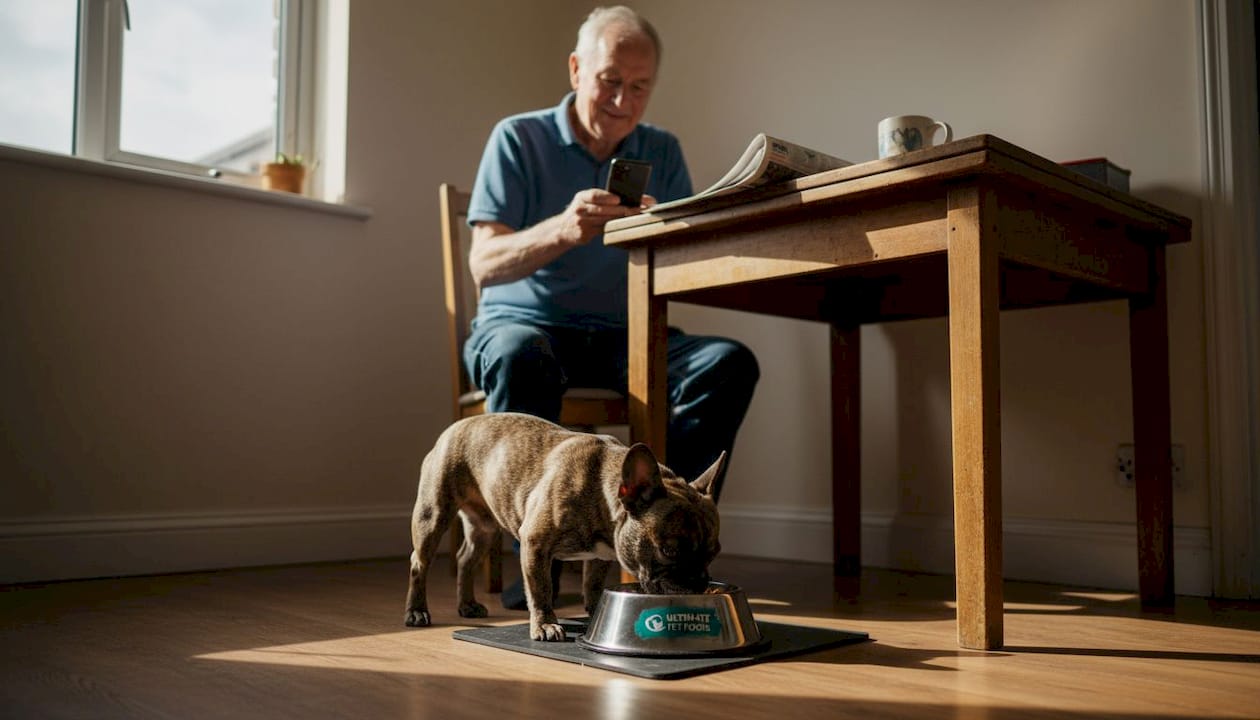
Even the best grain-free food won’t deliver its full potential if feeding habits aren’t right. Here’s what we recommend for small breed owners:
Meal frequency matters more than you think. Feed small breeds 2 to 3 meals per day, with toy breeds and puppies under 12lb benefiting from three meals to prevent blood sugar dips. Spreading meals throughout the day keeps energy levels stable and reduces the risk of hypoglycaemia.
Watch for these common health risks in small breeds:
- 🦷 Dental disease: Small dogs are disproportionately affected by dental problems due to their crowded teeth. Choosing appropriately sized kibble and incorporating teeth cleaning chews can make a real difference. Our dog food for dental care tips offer practical advice on this.
- ⚖️ Obesity: Despite their energy levels, small breeds can gain weight quickly if portions aren’t controlled. Even a few extra grams per day adds up.
- 🩸 Hypoglycaemia: Particularly in toy breeds, skipping meals or feeding low-calorie food can cause dangerous blood sugar drops.
Monitor body condition monthly. You should be able to feel your dog’s ribs without pressing hard, but not see them clearly. This is known as a Body Condition Score (BCS), and checking it monthly helps you adjust portions before weight becomes a problem. Small breed nutrition advice consistently highlights BCS monitoring as one of the most practical tools available to owners.
📊 Statistic: Treats should account for no more than 10% of your dog’s daily caloric intake. For a 4kg dog eating roughly 200 kcal per day, that’s just 20 kcal from treats, equivalent to one or two small biscuits.
If you’re ever unsure whether your dog’s weight or energy levels are appropriate, a conversation with your vet is always worth having. Proactive care is far gentler on your dog than reactive treatment.
Our perspective: Why grain-free isn’t always the automatic best choice
With so much noise and marketing around the topic, what’s the real takeaway for owners of small breeds?
We’ve seen a lot of trends come and go in pet nutrition, and grain-free is one that deserves a measured, honest look. Our view is this: ingredient quality and biological appropriateness matter far more than any label. A grain-free food packed with peas and lentils as primary protein substitutes is not automatically better than a thoughtfully formulated food that includes oats or brown rice.
The FDA caution on high legume content and the preference for established brands with proper feeding trials reinforces something we believe deeply. Don’t let marketing do the nutritional thinking for you.
For dogs with genuine grain sensitivities, a well-formulated grain-free diet can be transformative. For dogs without sensitivities, the priority should be overall ingredient quality, not the absence of grain. Individual needs, known sensitivities, and professional guidance should always steer the decision. When in doubt, grain-free for sensitive dogs may be the right path, but it’s a choice worth making with eyes open.
Find high-quality grain-free small breed food
If you’re ready to put these nutritional insights into action, reliable grain-free choices are within reach.
At Ultimate Pet Foods, we understand that small breeds deserve food that truly works for their unique biology. Every product we offer is carefully formulated with ingredient quality at the forefront, not just a grain-free label.
Explore why a grain-free diet benefits your dog and get a clear picture of what sets quality formulas apart. Our grain-free dog food ingredients guide breaks down exactly what’s in your dog’s bowl. Ready to compare options? Our dry dog food comparison makes it easy to find the right fit for your small breed’s needs. Every wag and bounce deserves the right fuel behind it. 🐾
Frequently asked questions
How many times a day should I feed my small breed dog?
Small breed dogs should typically be fed 2 to 3 meals daily, with toy breeds or puppies under 12lb benefiting from three meals to maintain stable blood sugar and prevent hypoglycaemia.
Are grain-free diets safe for small breed dogs?
Grain-free diets are generally safe when properly formulated. The FDA found no direct link between grain-free food and DCM, but choose brands that avoid overloading recipes with peas or lentils.
What ingredients should I look for in small breed grain-free food?
Prioritise high protein and balanced fats from named meat sources, look for taurine, and check that peas or lentils are not among the first three ingredients listed.
How do I prevent obesity in my small dog?
Use precise daily portions, limit treats to 10% of total daily calories, and check your dog’s body condition score every month to catch any weight changes early.