

Complete dog food explained: choosing balanced, premium diets

TL;DR:
- ‘Complete and balanced’ guarantees minimum nutrients but does not ensure ingredient quality or digestibility.
- Validated through feeding trials, foods tested on dogs provide better assurance of real-world health benefits.
- Choosing tailored, natural, and ingredient-transparent diets supports your dog’s specific life stage and health needs.
Not all dog foods labelled ‘complete and balanced’ are created equal. That phrase on the bag is only the starting point, not the finish line. Many health-conscious owners assume that any food carrying this label will give their dog everything they need to thrive, but the reality is more nuanced. Ingredient quality, validation method, and life stage suitability all play a huge role in whether a food truly supports your dog’s health. In this guide, we walk you through what ‘complete’ really means, how it’s verified, and how to choose a diet that goes well beyond the minimum.
Table of Contents
- What does ‘complete dog food’ actually mean?
- How is complete dog food validated?
- Life stage and dietary needs: Why one size doesn’t fit all
- Premium, natural, grain-free and grain-inclusive: Sorting the science from marketing
- Our take: What truly matters when choosing complete dog food
- Find your dog’s ideal complete diet today
- Frequently asked questions
Key Takeaways
| Point | Details |
|---|---|
| Complete label is baseline | ‘Complete’ means all essential nutrients for a given life stage, but not always highest quality ingredients. |
| Feeding trials are gold standard | Dog foods validated through feeding trials are more reliable than those meeting only lab-based standards. |
| Match food to your dog’s needs | Choose food according to age, breed size, and any health concerns for optimal nutrition. |
| Grain-free isn’t always better | Reserve grain-free diets for dogs with proven allergies, and prioritise ingredient quality over trends. |
| Premium means proven and natural | Look for premium diets with named meat ingredients, feeding trial validation, and clear life stage labelling. |
What does ‘complete dog food’ actually mean?
The term ‘complete and balanced’ is a regulated claim. In the UK and across much of the world, it signals that a food has been formulated to meet established nutrient profiles for a specific life stage. These profiles are largely based on standards set by AAFCO (the Association of American Feed Control Officials), which define the minimum and sometimes maximum levels of nutrients a dog food must contain.
But here’s what many owners don’t realise: meeting these standards is the floor, not the ceiling. As AAFCO dog food standards confirm, ‘complete’ means all essential nutrients as defined for specific life stages, yet ingredient quality can vary significantly between products that carry the exact same label.
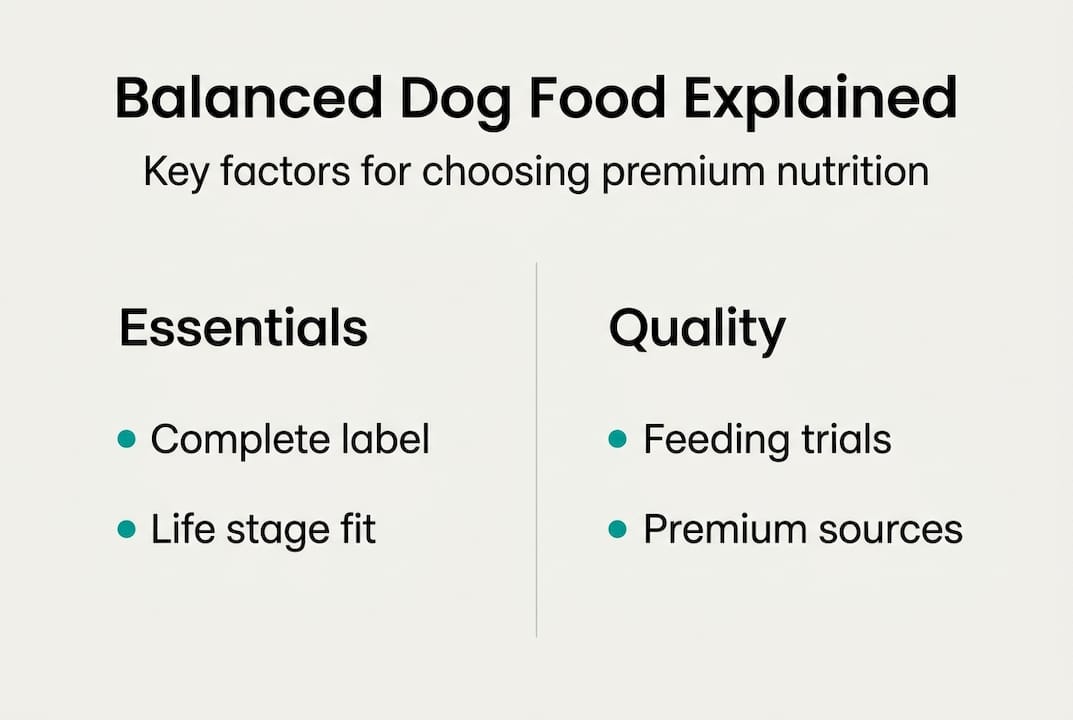
Consider two foods both labelled ‘complete for adult dogs.’ One uses named fresh chicken as its primary protein source. The other relies on unspecified meat meal and synthetic nutrient top-ups to hit the numbers. Both may pass the regulatory threshold, but the bioavailability, digestibility, and long-term health impact of those two foods are worlds apart. Understanding the key factors of premium dog food helps you see beyond the label.
| Nutrient | AAFCO minimum (adult) | AAFCO minimum (puppy) |
|---|---|---|
| Protein | 18% (DM basis) | 22.5% (DM basis) |
| Fat | 5% (DM basis) | 8% (DM basis) |
| Calcium | 0.5% | 1.0% |
| Phosphorus | 0.4% | 0.8% |
‘Complete and balanced’ guarantees a nutrient floor, not ingredient quality or real-world digestibility.
What the label does not tell you is whether those nutrients come from highly digestible, natural sources or from synthetic additives bolted on at the end of manufacturing. It also doesn’t tell you whether the food has been tested on real dogs or simply calculated on paper. Choosing natural dog food ingredients from named, whole-food sources is one of the clearest ways to ensure your dog benefits from genuinely high-quality nutrition.
Key things the ‘complete’ label does and does not guarantee:
- ✅ Meets minimum nutrient levels for the stated life stage
- ✅ Has been reviewed against a recognised nutrient profile
- ❌ Does not guarantee ingredient quality or source
- ❌ Does not confirm digestibility or bioavailability
- ❌ Does not mean the food is appropriate for your dog’s specific health needs
How is complete dog food validated?
Knowing what the ‘complete’ label can and cannot promise, the next question is how this status is verified. There are two main routes a manufacturer can take, and the difference between them matters enormously for health-focused owners.
The first is formulation validation. This involves calculating nutrient levels based on the known composition of each ingredient. If the numbers add up on paper to meet AAFCO minimums, the food can carry the ‘complete’ claim. It’s quick, cost-effective, and widely used. But it doesn’t account for how well a dog’s body actually absorbs those nutrients.
The second is feeding trial validation. Real dogs are fed exclusively on the food for a set period, typically 26 weeks, and their health is monitored throughout. Blood work, weight, coat condition, and digestive health are all assessed. This is widely considered the gold standard because it measures real-world outcomes, not just theoretical nutrient sums.
| Validation method | Cost | Accuracy | Measures digestibility |
|---|---|---|---|
| Formulation | Low | Moderate | No |
| Feeding trial | High | High | Yes |
As AAFCO validation methods outline, foods proven ‘complete’ by feeding trials provide evidence of digestibility and real-world health that formulation alone simply cannot match.
When choosing natural dog food for your dog, it’s worth asking brands directly whether their products have undergone feeding trials. Most premium manufacturers are proud to share this information.
Here’s what to look for on the label:
- ‘Animal feeding tests using AAFCO procedures’ confirms a feeding trial was conducted
- ‘Formulated to meet AAFCO nutrient profiles’ indicates calculation-based validation only
- Named protein sources (e.g. ‘fresh chicken’) suggest higher ingredient quality
- Life stage specificity (puppy, adult, senior) shows tailored nutritional intent
- WSAVA-compliant branding signals a commitment to research-backed nutrition
Pro Tip: Contact the brand and ask specifically whether their food has been validated through feeding trials. A genuinely premium manufacturer will have a clear, confident answer. If they can’t tell you, that tells you something too. Understanding what makes dog food premium goes beyond price point and packaging.
Life stage and dietary needs: Why one size doesn’t fit all
But nutritional needs aren’t static, and choosing based on life stage is critical for health. A food that’s perfect for your adult Labrador could be actively harmful for a growing Great Dane puppy or an ageing Cocker Spaniel.

Nutritional requirements differ significantly across life stages. Puppies require at least 22.5% protein and 8% fat on a dry matter basis. Adults need a minimum of 18% protein and 5% fat. But it’s not just about hitting those numbers. Large-breed puppies, for instance, need a carefully controlled calcium to phosphorus ratio to support healthy bone development without triggering rapid growth that stresses joints.
Seniors present a different challenge. Despite a common belief that older dogs need less protein, recent research suggests seniors may actually benefit from higher protein levels to maintain muscle mass, alongside increased fibre for digestive health. Yet AAFCO does not currently have a separate nutrient profile for senior dogs, meaning many ‘senior’ foods are simply adult formulas with minor tweaks.
Life stage considerations at a glance:
- 🐶 Puppies: High protein and fat, controlled calcium and phosphorus, DHA for brain development
- 🐕 Adults: Balanced macronutrients, moderate calories, joint and coat support
- 🦴 Large-breed puppies: Lower calcium density, controlled energy to prevent rapid growth
- 🐾 Seniors: Higher protein to preserve muscle, increased fibre, joint-supportive nutrients
- 💊 Dogs with health conditions: Tailored formulas for digestion, weight, skin, and coat
Pro Tip: Always check that the food explicitly states the life stage it’s formulated for. ‘All life stages’ sounds convenient, but it’s usually formulated to puppy standards, which means excess protein and fat for a sedentary adult dog. Exploring nutrition by dog age helps you make a genuinely informed decision for your dog’s current needs.
Premium, natural, grain-free and grain-inclusive: Sorting the science from marketing
Once life stage and basic nutrition are sorted, it’s time to dig into the biggest decisions: ingredient quality, grain-free hype, and the science behind it all.
The words ‘premium’ and ‘natural’ on a dog food bag have no strict legal definition in the UK. That means any brand can use them freely, regardless of what’s actually inside. Genuinely high-quality food is identifiable by named meat sources listed first in the ingredients, the absence of vague terms like ‘meat and animal derivatives,’ and a clear, transparent manufacturing process.
Grain-free is one of the most debated topics in dog nutrition right now. The grain-free dog food guide explains that grain-free diets often replace grains with legumes such as peas, lentils, and chickpeas. The FDA investigated 524+ reported DCM cases in dogs eating grain-free diets, though no direct causal link was established. The concern centres on diets heavy in legumes potentially affecting taurine metabolism.
‘The FDA found no causal link between grain-free diets and DCM, but recommended caution in diets high in legumes and pulses.’
So when is grain-free actually warranted? It’s genuinely beneficial for dogs with confirmed grain sensitivities or allergies, where removing grains reduces inflammation and digestive upset. For these dogs, the grain free diet benefits are real and meaningful. But for dogs without these sensitivities, a well-formulated grain-inclusive diet using whole grains like brown rice or oats can be equally nutritious and arguably lower risk.
Checklist for a genuinely premium, natural dog food:
- ✅ Named meat or fish listed as the first ingredient
- ✅ Whole vegetables and natural botanicals included
- ✅ No artificial colours, flavours, or preservatives
- ✅ Transparent sourcing and manufacturing information
- ✅ Life stage-specific formulation
- ❌ Avoid vague terms like ‘meat derivatives’ or ‘cereals’
The grain-free pros and cons page offers a balanced view that helps you weigh this decision for your specific dog, rather than following trends.
Our take: What truly matters when choosing complete dog food
After years of working with health-conscious dog owners, we’ve seen the same pattern repeat. A well-meaning owner picks a food with a beautiful bag, a compelling story, and a ‘complete and balanced’ stamp, only to find their dog’s coat dulls, digestion struggles, or energy dips. The label passed every test. The dog told a different story.
Here’s our honest view: ‘complete’ is the baseline, not the benchmark. The brands we respect most are the ones that go further. They invest in feeding trials. They name every ingredient. They formulate for specific life stages rather than hiding behind ‘all life stages’ convenience. They don’t use grain-free as a marketing hook; they use it when it’s genuinely right for the dog.
As prioritising feeding trial validation confirms, health-conscious owners should focus on natural, premium ingredient lists and tailor choices to their dog’s unique needs, considering grain-free only when a medical reason exists.
We always say: ask for evidence, not just enthusiasm. And if you’re wondering is grain free better for your dog specifically, the answer starts with your vet and your dog’s individual health profile, not the latest trend.
Find your dog’s ideal complete diet today
Ready to apply this knowledge? Everything you’ve read here points to one truth: your dog deserves food that goes beyond the minimum. Whether you’re exploring grain-free options for a sensitive dog or simply want to upgrade to a diet backed by real science and quality ingredients, we’ve made it easy to find the right fit.
Explore our guide to grain-free dog food benefits to understand when and why this approach genuinely works. Dive into our grain-free ingredient guide to see exactly what goes into our recipes. Or use our dry dog food comparison to find the best match for your dog’s life stage, size, and dietary needs. Every wag starts with the right bowl. 🐾
Frequently asked questions
Does ‘complete’ dog food mean it’s suitable for all dogs?
No. ‘Complete’ as defined by AAFCO means it meets basic nutrient standards for a stated life stage, but factors like breed, age, weight, and health conditions still require you to choose a tailored diet.
Is grain-free dog food safer or healthier than grain-inclusive?
Not necessarily. Grain-free may genuinely help dogs with allergies or sensitivities, but the FDA’s DCM investigation advises caution with diets high in legumes. For most dogs without sensitivities, a well-formulated grain-inclusive diet is a sound choice.
What is the protein requirement for adult and puppy food?
Adult foods require a minimum of 18% protein on a dry matter basis, while puppies need at least 22.5% to support healthy growth and development.
How can I tell if a dog food is genuinely premium?
Look for feeding trial validation on the label, named meat or fish as the primary ingredient, life stage-specific formulation, and transparent sourcing. Marketing claims alone are not enough.
Recommended
- What makes premium dog food: key factors for owners
- Premium dog food nutrition: science-backed choices for 2026
- What Makes Dog Food Premium: The Key Factors
- Dog Food Comparison: Ultimate Pet Foods vs Supermarket Brands
- Leitfaden für gesunde Hundediät: Schritt für Schritt zur optimalen Ern – Blake & Benson


