
Chicken free dog diets: a complete guide for owners
TL;DR:
- Chicken free dog diets exclude all chicken proteins to help manage allergies and sensitivities in dogs.
- Strict adherence to elimination protocols, including avoiding cross-contamination, is necessary for accurate diagnosis.
- Available options include novel proteins like venison or fish and hydrolysed diets, which offer high diagnostic accuracy and safety.
Chicken free dog diets are specially formulated feeding plans that exclude all chicken proteins to manage food allergies or sensitivities in dogs, supporting their comfort and long-term health. Chicken is one of the most common protein allergens in dogs, alongside beef and dairy, making it a frequent target in veterinary elimination protocols. The gold standard for diagnosing a chicken allergy is a strict 8-week elimination diet trial, supervised by a vet. Whether you are managing a confirmed allergy or simply exploring chicken-free options for a sensitive dog, understanding how these diets work will help you make confident, informed choices.
How does a chicken free elimination diet work?
The elimination diet trial is the only validated diagnostic approach for confirming food allergies in dogs. It works by removing all suspected allergens, including chicken, and feeding a single, controlled diet for a defined period. Any clinical improvement is then confirmed by reintroducing the original food to see if symptoms return.
Here is how the process works in practice:
- Choose a suitable diet. Select either a novel protein diet or a hydrolysed protein diet that contains no chicken or chicken derivatives. Your vet will guide this choice based on your dog’s history.
- Feed exclusively for 8 weeks. The trial must last at least 8 weeks with no deviation. No treats, no table scraps, no flavoured medications unless approved by your vet.
- Monitor clinical signs. Track changes in skin condition, coat quality, digestion, and general comfort throughout the trial. Keep a simple daily log.
- Assess improvement. If your dog’s symptoms improve significantly, the next step is a dietary challenge.
- Reintroduce the original food. The challenge phase lasts 10 to 14 days. If symptoms return, a chicken allergy is confirmed. This step is what separates a true diagnosis from a guess.
“The critical factor is strict exclusion of all competing protein antigens, not merely choosing a ‘chicken-free’ labelled food.” — Dermatology Consult
Cross-contamination is a serious concern that many owners underestimate. Flavoured parasite preventatives, dental chews, and even certain supplements can contain hidden chicken derivatives that invalidate weeks of careful effort. Check every product your dog encounters during the trial, not just their food bowl.
Pro Tip: Ask your vet for an unflavoured version of any monthly parasite treatment before starting the trial. Flavoured chewable tablets are a surprisingly common source of hidden chicken protein.
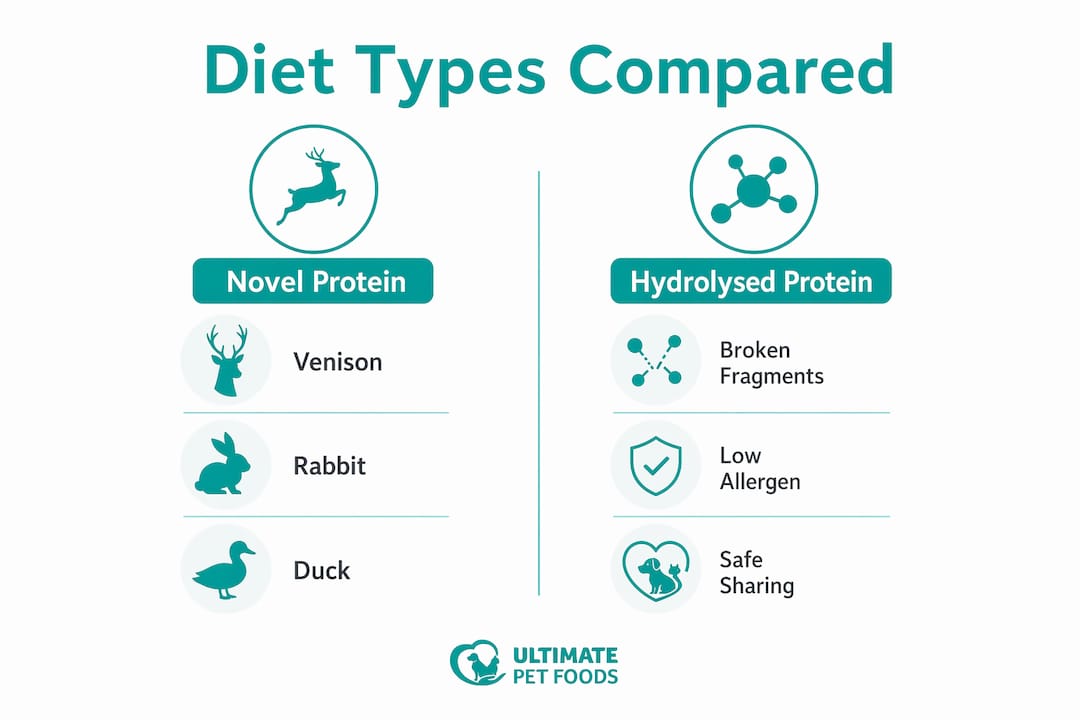

Novel protein vs hydrolysed protein: what should you choose?
Chicken-free diets fall into two main categories used in veterinary elimination protocols: novel protein diets and hydrolysed protein diets. Each has distinct advantages, and the right choice depends on your dog’s history and your household situation.
| Feature | Novel protein diet | Hydrolysed protein diet |
|---|---|---|
| How it works | Uses a protein your dog has never eaten before | Breaks proteins below 5 kDa so the immune system cannot recognise them |
| Diagnostic accuracy | High, if prior exposures are known | Very high, regardless of dietary history |
| Palatability | Generally good | Can be lower; some dogs find it less appealing |
| Cross-contamination risk | Moderate, depends on manufacturing | Lower, due to controlled processing |
| Cost | Moderate | Typically higher |
| Best suited for | Dogs with a clear, documented diet history | Dogs with complex or unknown food histories |
Novel protein diets use proteins such as venison, rabbit, duck, or fish that your dog has genuinely never eaten. The challenge is that this approach relies entirely on an accurate diet history. If your dog has previously eaten a treat containing venison, that protein is no longer truly novel and the trial may fail. Novel protein diets can fail if prior exposure to purportedly novel proteins exists, which is why a thorough history is non-negotiable before selecting this route.
Hydrolysed protein diets offer a different kind of reliability. The proteins are broken down into fragments so small that the immune system cannot mount a reaction, making them immunologically invisible. This means hydrolysed diets offer stronger diagnostic accuracy and reduce cross-contamination concerns compared to novel protein options. They are particularly useful when a dog’s dietary history is incomplete or when multiple proteins are suspected.
Pro Tip: If you have a multi-dog household where food sharing is likely, a hydrolysed diet is the safer choice. It removes the risk of your dog sneaking a mouthful of another pet’s novel protein food.
What makes a chicken free commercial dry dog food nutritionally complete?
Switching to a dog food without chicken does not mean compromising on nutrition. A well-formulated dry dog food can deliver everything your dog needs for lifelong health, provided it meets FEDIAF guidelines for complete and balanced nutrition.
Here is what to look for in a quality chicken-free dry dog food:
- High-quality alternative proteins. Common protein alternatives include lamb, venison, rabbit, fish, and duck. Each brings its own amino acid profile, and a good recipe will use a named, single protein source rather than a blend of unnamed meats.
- Freshly prepared meat or fish. At Ultimatepetfoods, our recipes use freshly prepared meat or fish gently cooked at 82°C. This gentle cooking process helps lock in nutrients and flavour, delivering a quality that your dog can taste and your hands can feel.
- Human-grade ingredients. Using human-grade meat means the raw material starts at a higher standard before it ever reaches the bowl. This matters for digestibility and for your peace of mind.
- Added prebiotics for gut health. Our recipes include MOS (mannan-oligosaccharides) and FOS (fructo-oligosaccharides), two well-studied prebiotics that support a healthy gut microbiome and improve stool quality. Every wag and bounce starts with great gut health.
- Suitable for all life stages and breeds. A complete and balanced recipe is appropriate for puppies, adults, and seniors alike, removing the guesswork around life-stage transitions.
- Functional health variants. The Ultimatepetfoods Ultimate+ Functional Health range uses hydrolysed proteins and is designed for targeted everyday support across five areas: Digestive Care, Skin & Coat Care, Weight Control & Joint Care, Dental Care, and Healthy Living. These are not short-term fixes. They are designed for daily, lifelong feeding.
Grain-free chicken-free dog food is a popular combination for sensitive dogs. Removing both chicken and common grains like wheat reduces the total allergen load and can be particularly helpful for dogs with multiple sensitivities. You can explore the benefits of grain-free feeding to understand why so many owners choose this approach for their dogs.
How to transition your dog to a chicken free diet successfully
A successful transition to a dog food without chicken and grain requires patience, consistency, and a sharp eye for hidden ingredients. Rushing the process is the most common mistake owners make, and it often leads to digestive upset that gets blamed on the new food rather than the speed of change.
Follow these steps for a smooth transition:
- Start with a 7 to 10 day mix. Begin by replacing 25% of your dog’s current food with the new chicken-free recipe. Increase the proportion every two to three days until you reach 100% new food.
- Read every label, every time. Chicken can appear as “poultry,” “poultry meal,” “poultry fat,” “poultry digest,” or “animal derivatives.” During an elimination trial, any of these invalidates the process.
- Remove all treats and chews. This is non-negotiable during a diagnostic trial. Even a single inadvertent chicken exposure can invalidate weeks of effort. Replace treats with small pieces of the elimination diet kibble if needed.
- Measure portions consistently. Use a kitchen scale rather than a cup. Consistent portions support stable digestion and make it easier to spot genuine improvements in your dog’s condition.
- Keep a symptom diary. Note skin condition, stool quality, energy levels, and any scratching or licking behaviour. This record is invaluable when you report back to your vet.
- Troubleshoot failures methodically. If your dog shows no improvement after 8 weeks, the first step is to audit every source of potential chicken exposure, including household contamination from other pets’ food, shared bowls, or children’s snacks.
Pro Tip: Photograph your dog’s skin or coat condition at the start of the trial and every two weeks after. Visual comparisons are far more reliable than memory when you are assessing gradual improvement.
Once the trial is complete and a chicken-free diet is confirmed as beneficial, Ultimatepetfoods dry dog food is designed to support your dog for life. It is not a temporary measure. It is everyday nutrition that your dog can thrive on from puppyhood through to their senior years.
Chicken free dog food options: what is available in the UK?
The UK market for allergen-free dog foods has grown considerably, giving owners genuine choice when selecting a limited ingredient dog diet. Understanding the differences between available options helps you select the right product with confidence.
Common protein alternatives in UK chicken-free recipes:
- Lamb: Widely available, highly palatable, and a good source of zinc and B vitamins. A reliable first choice for many sensitive dogs.
- Salmon and white fish: Rich in omega-3 fatty acids, which actively support skin and coat health. Particularly useful for dogs with concurrent skin conditions.
- Venison: A genuinely novel protein for most UK dogs, making it well-suited to elimination trials. Lean and highly digestible.
- Rabbit: Another novel protein option with a low allergen profile and excellent digestibility.
- Duck: Growing in popularity as a palatable alternative, though less novel than venison or rabbit for dogs with varied dietary histories.
| Format | Pros | Considerations |
|---|---|---|
| Dry kibble | Convenient, cost-effective, long shelf life, supports dental health | Requires accurate measuring; check for cross-contamination in manufacturing |
| Wet food | High moisture content, often more palatable | Higher cost per serving; shorter shelf life once opened |
| Fresh or raw | Minimal processing | Requires careful handling; higher risk of cross-contamination during preparation |
Dry kibble remains the most practical format for most owners, particularly for lifelong feeding. The dry dog food comparison at Ultimatepetfoods makes it straightforward to identify which recipes are free from chicken and suitable for your dog’s specific needs.
Key takeaways
Chicken free dog diets work best when they are nutritionally complete, strictly maintained, and chosen based on your dog’s individual history and health needs.
| Point | Details |
|---|---|
| Elimination trial is the gold standard | An 8-week strictly controlled trial is the only validated method for diagnosing chicken allergy in dogs. |
| Strict exclusion is non-negotiable | Treats, flavoured medications, and cross-contaminated products can all invalidate the trial. |
| Two main diet types exist | Novel protein diets suit dogs with known histories; hydrolysed diets suit complex or unknown cases. |
| Nutritional completeness matters | Choose a complete and balanced recipe with named proteins, prebiotics, and human-grade ingredients for lifelong feeding. |
| Transition slowly and monitor carefully | A 7 to 10 day gradual transition with a symptom diary gives the best chance of a clear, useful result. |
What I have learned from years of working with sensitive dogs
By Glenn
After years of working alongside dog owners managing food sensitivities, the single biggest lesson I have taken away is this: the trial only works if it is truly strict. Most owners start with the best intentions, but it is the small things that trip them up. A flavoured worming tablet here, a well-meaning neighbour offering a treat there, and suddenly eight weeks of careful feeding means nothing.
I have also seen owners invest in expensive hydrolysed diets when a well-chosen novel protein recipe would have served them just as well, and vice versa. The choice between the two is not about which is “better.” It is about which fits your dog’s history and your household reality. If you have three dogs eating different foods, hydrolysed is almost always the more practical route.
What I find genuinely reassuring is that once a chicken-free diet is confirmed as the right fit, it does not have to be complicated or restrictive. A high-quality dry dog food made with freshly prepared meat, added prebiotics, and human-grade ingredients gives sensitive dogs everything they need to thrive every single day. That is not a compromise. That is just good nutrition.
My honest advice: work closely with your vet, keep your symptom diary religiously, and do not underestimate how much a well-formulated everyday kibble can transform a sensitive dog’s quality of life.
— Glenn
Discover Ultimatepetfoods chicken free recipes for your dog
At Ultimatepetfoods, we know how much you want your dog to feel their best, every single day. Our chicken-free dry dog food recipes are made with freshly prepared meat or fish, gently cooked at 82°C to lock in nutrients and natural flavour. Every recipe uses human-grade ingredients and is complete and balanced for all breeds and life stages. We add MOS and FOS prebiotics to every recipe to support healthy digestion from the inside out. For dogs with more targeted needs, our Ultimate+ Functional Health range offers hydrolysed protein options across Digestive Care, Skin & Coat Care, Weight Control & Joint Care, Dental Care, and Healthy Living. Explore our full grain-free dog food range and find the recipe your dog deserves.
FAQ
What is a chicken free dog diet?
A chicken free dog diet is a feeding plan that excludes all chicken proteins, including chicken meal, poultry fat, and poultry derivatives. It is used to manage food allergies or sensitivities in dogs where chicken has been identified or suspected as a trigger.
How long does a chicken free elimination trial take?
The trial must last at least 8 weeks, with no deviation from the selected diet. If improvement occurs, a dietary challenge of 10 to 14 days follows to confirm the diagnosis.
Can I give treats during a chicken free elimination trial?
No. All treats, chews, flavoured medications, and supplements must be removed during the trial. A single inadvertent exposure to chicken can invalidate the entire 8-week process.
What proteins can replace chicken in my dog’s diet?
Lamb, salmon, venison, rabbit, and duck are all common and well-tolerated alternatives. The best choice depends on your dog’s dietary history and whether you are conducting a diagnostic trial or simply maintaining a chicken-free diet long-term.
Is grain free chicken free dog food better for allergic dogs?
Removing both chicken and common grains reduces the total allergen load, which can be helpful for dogs with multiple sensitivities. A grain-free, chicken-free recipe is a practical choice for many sensitive dogs, provided it is complete and balanced for daily feeding.