
Canine digestion and food: your complete 2026 guide
TL;DR:
- Canine digestion involves rapid breakdown of food into nutrients, significantly influenced by diet quality. Proper feeding with high-quality, easily digestible ingredients and prebiotics supports gut health and stool consistency. Gradual food transitions and elimination diets help identify sensitivities and manage digestive issues effectively.
Canine digestion is the process by which a dog’s body breaks down food into nutrients that fuel every wag, bounce, and cuddle. Unlike human digestion, a dog’s gastrointestinal system is built for speed and efficiency, with a shorter transit time and a different enzymatic profile. What your dog eats directly shapes how well that system works. Poor food choices lead to loose stools, flatulence, and chronic discomfort. The right diet, built on fresh ingredients, added prebiotics like MOS and FOS, and carefully selected proteins, supports a healthy gut microbiome and consistent stool quality. Ultimatepetfoods formulates every recipe with exactly that in mind.
How does canine digestion work?
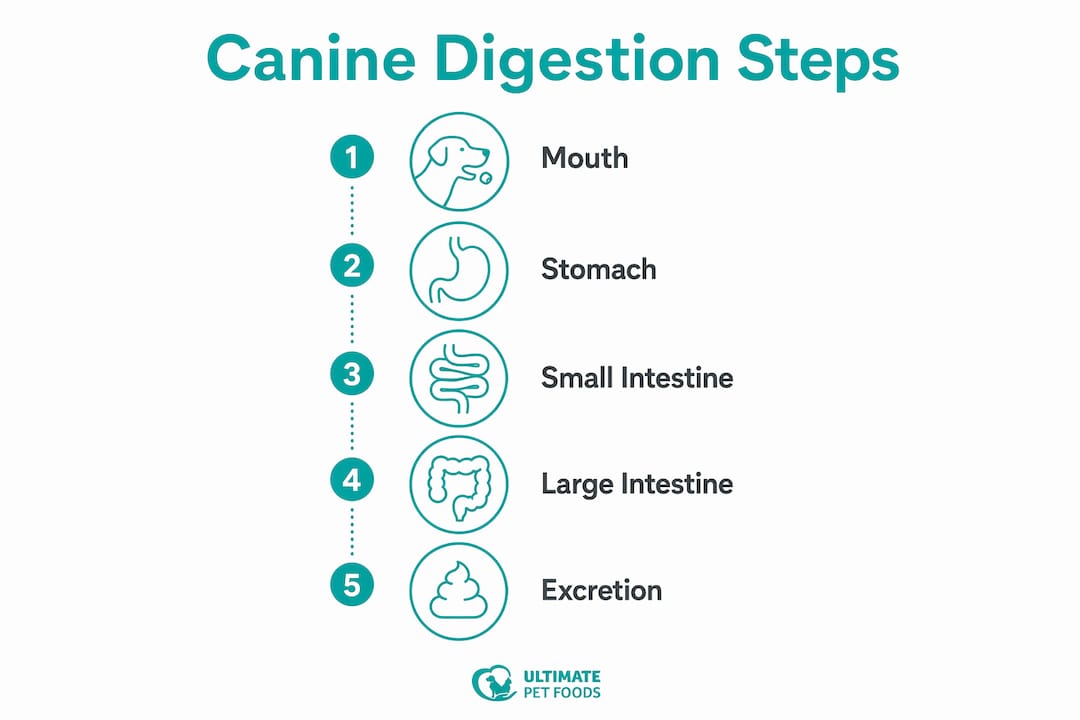
Canine digestion begins in the mouth, but dogs chew far less than humans do. Their teeth are designed to tear and crush, not grind. The real work starts in the stomach, where powerful acids and enzymes begin breaking down protein and fat.
The small intestine is where most nutrients are absorbed. Enzymes from the pancreas and bile from the liver work together to process proteins, fats, and carbohydrates into forms the body can use. The large intestine then absorbs water and shapes the remaining waste into stool. Diet quality has a direct effect on every stage of this process.
Canine vs Human Digestion: Key Differences
| Aspect | Dogs | Humans |
|---|---|---|
| Chewing | Minimal, tear and swallow | Extensive, mechanical breakdown |
| Stomach acid pH | Very low (highly acidic) | Moderately acidic |
| Transit time | 8–10 hours | 24–72 hours |
| Salivary amylase | Absent | Present, begins starch digestion |
| Gut microbiome diversity | Lower, protein-adapted | Higher, carbohydrate-adapted |
Dogs produce no salivary amylase, which means starchy ingredients are harder for them to process than they are for us. This is one reason grain-free, meat-first diets tend to suit dogs so well. The gut microbiome, the community of bacteria living in the large intestine, plays a significant role in digestive comfort and immune function. Prebiotics like FOS (fructooligosaccharides) and MOS (mannanoligosaccharides) feed beneficial bacteria and help maintain a balanced microbiome.
Pro Tip: Feed textures and ingredients that suit your dog’s anatomy. Highly digestible, meat-based dry food is gentler on a dog’s gut than heavily processed, grain-heavy alternatives.
What types of dog food impact digestion?
The ingredients in your dog’s bowl have a direct effect on digestive health. Freshly prepared meat and fish, gently cooked at 82°C, preserve natural nutrients and are easier for dogs to absorb than heavily rendered meat meals. Ultimatepetfoods uses this gentle cooking method across its recipes to lock in both flavour and nutritional value.
Prebiotics are another key factor. MOS and FOS, added to Ultimatepetfoods recipes, support the growth of beneficial gut bacteria and help maintain stool consistency. A 28-day prebiotic and postbiotic supplementation study found that 65% of dog owners reported improved digestive health, with improvements visible as early as day 7. That is a meaningful result for any dog owner dealing with mild but persistent gut issues.
How different food types affect digestion:
- Freshly prepared meat or fish: High digestibility, supports lean muscle and gut lining integrity
- Hydrolysed proteins: Proteins broken into tiny fragments, reducing immune reactivity in sensitive dogs
- Novel proteins (e.g. duck, venison, salmon): Useful for dogs with reactions to common proteins like chicken or beef
- Grain-free recipes: Remove common irritants like wheat, corn, and soy, which can trigger sensitivities
- High-fibre diets: Support stool formation and feed beneficial bacteria, but excess fibre can cause loose stools
- Low-quality fillers (wheat, corn, soy): Linked to food sensitivities and poor digestibility in predisposed dogs
The Ultimatepetfoods Ultimate+ Functional Health range includes a dedicated Digestive Care formula using hydrolysed proteins for dogs with sensitive stomachs. This range is designed for everyday feeding, not just short-term recovery.
Pro Tip: Read the ingredient list, not just the front of the pack. The first three ingredients tell you the most about a food’s quality. Look for a named meat source first, followed by digestible carbohydrates and added prebiotics.
How to recognise and manage dog food sensitivities
Signs of digestive upset in dogs are often diet-related and include vomiting, diarrhoea, flatulence, soft or mucus-coated stools, and skin itching. Many owners assume these are random or seasonal, but food is frequently the root cause.
The gold standard for diagnosing a food allergy or sensitivity is an 8-week elimination diet trial. This means feeding one carefully selected diet with no other foods, treats, or flavoured medications for the full duration. About 95% of dogs respond to this approach when it is followed strictly. Lab tests for food allergies have limited accuracy, particularly for delayed immune reactions, so dietary trials remain the most reliable method.
Clinical signs of adverse food reactions typically appear between days 2 and 6 after exposure, with an average time to flare of 4.1 days. Some delayed reactions can take up to 12 days to appear. This means monitoring your dog for at least two weeks after any dietary change is sound practice.
Step-by-step elimination diet process:
- Choose a novel protein or hydrolysed protein diet your dog has never eaten before.
- Remove all current food, treats, chews, and flavoured supplements.
- Feed only the new diet for 8 weeks with no exceptions.
- Keep treats below 10% of daily calorie intake if they are made from the same protein source.
- Monitor and record stool quality, skin condition, and energy levels daily.
- If symptoms resolve, reintroduce the original food to confirm the reaction.
- If symptoms return on reintroduction, the original diet is the likely trigger.
Chronic enteropathy in dogs often improves within 10–14 days on a hydrolysed or novel protein diet. If the first trial fails, that does not mean dietary management will not work. A second or third well-run trial with a different protein source frequently succeeds. Persistence matters here.
For guidance on identifying triggers, the Ultimatepetfoods blog covers how to identify food allergies in practical, step-by-step detail.
What are best practices for feeding and transitioning?
A safe diet transition takes 7–10 days and follows a structured proportion shift. Switching too quickly is one of the most common causes of preventable digestive upset in dogs.
Recommended transition schedule:
| Days | Old Food | New Food |
|---|---|---|
| Days 1–3 | 75% | 25% |
| Days 4–5 | 50% | 50% |
| Days 6–7 | 25% | 75% |
| Day 8 onwards | 0% | 100% |
During any transition or diet trial, keep treats below 10% of your dog’s daily energy intake. Treats introduce dietary noise and can skew your assessment of how well the new food is working.
For mild diarrhoea, a short-term bland diet of boiled chicken and white rice, fed in small portions every 6–8 hours for 3–5 days, can settle the gut. After that, transition back to a complete, balanced food over 5–7 days. Bland diets are not nutritionally balanced for long-term feeding. If your dog needs more than a week of gut support, a commercial gastrointestinal or hydrolysed diet is the better choice.
Feeding routine characteristics that support good digestion:
- Feed at consistent times each day to regulate gut motility
- Avoid large single meals; two smaller meals reduce bloat risk in larger breeds
- Use a slow-feeder bowl if your dog eats quickly
- Always provide fresh water alongside dry food
- Avoid vigorous exercise immediately after meals
Pro Tip: Your dog’s stool is the most honest feedback you will get on their diet. Firm, well-formed stools that are easy to pick up signal good digestibility. Loose, pale, or very dark stools suggest something needs to change. Our stool quality guide explains what to look for.
How do supplements and specialised diets support gut health?
Prebiotics and probiotics are not the same thing, and understanding the difference helps you make better choices. Prebiotics are non-digestible fibres that feed beneficial gut bacteria. Probiotics are live bacteria that add directly to the gut microbiome. Both have a role in digestive health, but they work differently.
Prebiotic and postbiotic supplementation over 28 days reduced vomiting and flatulence and normalised stool consistency in dogs with mild gastrointestinal disturbances. This is why Ultimatepetfoods adds MOS and FOS prebiotics to its complete dry food recipes as a standard feature, not an optional extra.
Common supplement ingredients and their digestive roles:
- MOS (mannanoligosaccharides): Binds harmful bacteria in the gut and supports immune function
- FOS (fructooligosaccharides): Feeds beneficial Lactobacillus and Bifidobacterium species
- Probiotics (e.g. Lactobacillus acidophilus): Restore microbial balance after illness or antibiotics
- Digestive enzymes: Support breakdown of proteins and fats in dogs with pancreatic insufficiency
- Psyllium husk: Soluble fibre that firms loose stools and feeds gut bacteria
Hydrolysed protein diets take a different approach. The proteins are broken down into fragments so small that the immune system does not recognise them as allergens. This makes them particularly useful for dogs with confirmed food allergies or chronic enteropathy. The Ultimatepetfoods hydrolysed dog food range requires no prescription and is formulated for everyday feeding.
Before adding any supplement to your dog’s diet, speak to your vet. Supplements work best alongside a complete and balanced diet, not as a replacement for one. The Ultimatepetfoods Ultimate+ Functional Health range covers five targeted areas: Digestive Care, Skin & Coat Care, Weight Control & Joint Care, Dental Care, and Healthy Living. Each formula is designed for lifelong daily feeding, not short-term fixes.
For a deeper look at how probiotics work in practice, the Ultimatepetfoods guide to dog food with probiotics is worth reading alongside this article.
Key takeaways
The most effective way to improve your dog’s digestive health is to feed a complete, balanced diet built on high-quality, digestible ingredients with added prebiotics, and to transition foods gradually over 7–10 days.
| Point | Details |
|---|---|
| Diet drives digestion | Food quality directly affects stool consistency, gut microbiome balance, and nutrient absorption. |
| Prebiotics matter daily | MOS and FOS in complete dry food support beneficial gut bacteria as part of everyday feeding. |
| Transition slowly | Shift from old to new food over 7–10 days to avoid preventable digestive upset. |
| Elimination diets diagnose allergies | An 8-week strict dietary trial is the most reliable way to identify food sensitivities in dogs. |
| Hydrolysed proteins help sensitive dogs | Hydrolysed diets reduce immune reactivity and suit dogs with chronic digestive issues or confirmed allergies. |
What i have learned from years of watching dogs eat
The most common mistake I see dog owners make is assuming that digestive problems are just part of their dog’s personality. “He’s always had a sensitive stomach” is something I hear regularly. In most cases, the stomach is not the problem. The food is.
What I have found, time and again, is that switching to a diet built on freshly prepared meat, with no grain fillers and added prebiotics, resolves the majority of mild digestive complaints within two to three weeks. The science backs this up, but so does the practical experience of watching dogs go from gassy, uncomfortable, and producing poor stools to thriving on a diet that actually suits their physiology.
The elimination diet process requires patience. Most owners give up after a week because they do not see instant results. But delayed reactions can take up to 14 days to appear, and the same is true of improvement. Stick with it. Keep a daily log of stool quality, energy, and skin condition. The data you collect will be more useful than any single vet visit.
One thing I feel strongly about: do not rely on bland diets for more than a few days. Boiled chicken and rice is a short-term fix, not a feeding plan. Long-term bland feeding causes nutritional gaps that create new problems. Get your dog back onto a complete, balanced food as quickly as possible, and choose one formulated for digestive support if they need ongoing help.
If you are unsure where to start, the Ultimatepetfoods transitioning guide is a practical first step. And if symptoms persist beyond two weeks of dietary change, see your vet. Some conditions need clinical support, and there is no shame in asking for it.
— Glenn
Feed your dog’s gut with Ultimatepetfoods
Every Ultimatepetfoods dry dog food recipe is made with freshly prepared meat or fish, gently cooked at 82°C to preserve natural nutrients. Our recipes include added MOS and FOS prebiotics as standard, supporting a healthy gut microbiome with every meal. For dogs with sensitive stomachs or confirmed food allergies, our Ultimate+ Functional Health range offers targeted everyday support, including our Digestive Care formula and hydrolysed dog food with no prescription required. All our recipes are complete and balanced, designed for lifelong daily feeding across all breeds and life stages.
If you are exploring grain-free options, our guide to grain-free dog food benefits explains exactly what to look for and why it matters for your dog’s digestion.
FAQ
What is canine digestion and why does food matter?
Canine digestion is the process by which a dog’s body breaks down food to absorb nutrients. Food quality directly affects how efficiently this process works, influencing stool quality, energy levels, and gut microbiome balance.
How long does a dog food elimination diet take?
An elimination diet trial takes a minimum of 8 weeks, with about 95% of dogs responding when the protocol is followed strictly. Reactions and improvements can both be delayed by up to 14 days, so monitoring throughout the full period is necessary.
What are the signs of dog food sensitivities?
Common signs include vomiting, diarrhoea, flatulence, soft or mucus-coated stools, and skin itching. These symptoms often appear within 2–6 days of exposure to a trigger ingredient.
How do i transition my dog to a new food safely?
Transition over 7–10 days by gradually increasing the proportion of new food while reducing the old food. Keep treats below 10% of daily calorie intake during the transition to avoid confounding your dog’s digestive response.
Are hydrolysed protein diets only for allergic dogs?
Hydrolysed protein diets suit any dog with a sensitive digestive system, not just those with confirmed allergies. They are particularly useful for chronic enteropathy and dogs that have not responded to novel protein trials.