
High meat content dry dog food: what owners need to know
TL;DR:
- High meat content dry dog food contains at least 30% crude protein from named animal sources. The quality and digestibility of protein matter more than just the percentage, with gentle cooking preserving nutrients effectively. Pet owners should prioritize ingredient transparency and manufacturing methods for optimal nutrition.
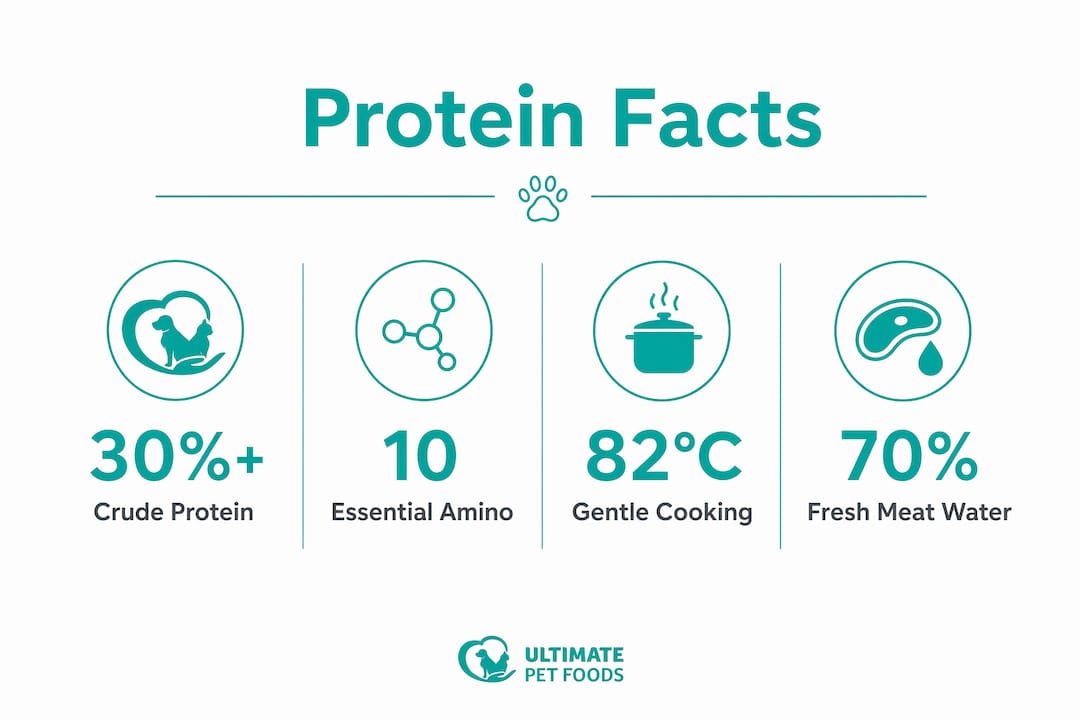
High meat content dry dog food is defined as kibble containing 30% or more crude protein on a dry matter basis, sourced primarily from named animal proteins such as chicken, salmon, or lamb. This is the industry standard threshold that separates genuinely meat-rich recipes from standard commercial formulas. For dog owners wanting to give their pet the best possible nutrition every day, understanding what sits behind that percentage is just as important as the number itself. We have put together this guide to help you cut through the marketing noise and make a genuinely informed choice for your dog.
What protein levels qualify as high meat content dry dog food?
FEDIAF guidelines set the minimum crude protein requirement at 18% on a dry matter basis for adult dog maintenance, rising to 25% for puppies. These are the regulatory floor, not a quality target. Most commercial dry foods sit comfortably between 24% and 32% protein, while recipes marketed as high-protein typically exceed 35%.
The phrase “high meat content” is not a legally defined term in the UK, but it is widely understood in the industry to mean 30% or more crude protein, with named animal sources listed prominently. UK labelling law adds a useful layer of transparency here. A product labelled “chicken dog food” must contain at least 26% chicken, while one labelled “dog food with chicken” requires only 4%. That is a significant difference, and it is one many dog owners do not realise when scanning a bag on a shelf.
Named meat sources matter for two reasons: consistency and reliability. When a label says “freshly prepared chicken,” you know exactly what protein your dog is getting. Vague terms like “meat and animal derivatives” offer no such guarantee. Ingredient transparency is the first quality signal to look for when choosing a premium dry dog food.
What to look for on the label:
- Named animal protein in the first ingredient position (e.g., freshly prepared chicken, salmon, or lamb)
- A declared crude protein percentage of 30% or above on a dry matter basis
- No ingredient splitting (e.g., maize, maize flour, and maize gluten listed separately to push grains down the list)
- Clear distinction between fresh meat and meat meal, with both named by species
Does protein quality matter more than the percentage?
Protein quality and digestibility have a greater nutritional impact than crude protein percentage alone. A recipe with 28% protein from high-quality named animal sources is more beneficial nutritionally than one with 35% from low-grade derivatives. This is the insight that most marketing conveniently leaves out.

Amino acid profile is the key measure of protein quality. Dogs require ten essential amino acids, including lysine, methionine, and tryptophan, which must come from food. Named animal proteins deliver a complete and balanced amino acid profile. Generic meat meals or derivatives often do not, and their digestibility varies considerably between batches.
Ingredient splitting is a common industry practice that artificially inflates the appearance of meat content. When a manufacturer lists maize, maize flour, and maize gluten as three separate ingredients, each appears lower on the list individually. Combined, they may outweigh the meat. Your dog ends up eating far less protein than the label implies.
Fresh meat also contains around 70% water, so its raw weight does not directly reflect the protein it delivers after processing. Meat meals are more concentrated protein sources on an as-fed basis, which is why a recipe listing “freshly prepared chicken” alongside “chicken meal” can still deliver excellent protein density. The key is that both are named by species, so you know what you are feeding.
Pro Tip: Always check the crude protein percentage on the guaranteed analysis panel, not just the ingredient list. A recipe with named chicken as the first ingredient but a 22% crude protein figure is not a high meat content food.
How does the manufacturing process affect protein nutrition?
The way a dry dog food is cooked has a direct impact on the nutrients your dog actually absorbs. Gentle cooking at around 82–90°C preserves heat-sensitive amino acids such as lysine and B vitamins far better than high-heat extrusion or retort processing, which operates at 121–130°C.
High-heat retort processing causes significant degradation of essential nutrients and produces higher levels of Maillard reaction by-products. These compounds, formed when proteins and sugars react under intense heat, can increase inflammatory compounds in pet food and affect long-term health. Gentle cooking at lower temperatures avoids this problem, delivering food that is both safe and nutritionally intact.
High-heat extrusion is the standard method for most commercial kibble. It is efficient and cost-effective, but it destroys a meaningful proportion of the vitamins and amino acids present in the raw ingredients. Manufacturers then add synthetic supplements back in to meet minimum nutritional standards. This is why the “complete” label on a bag guarantees minimum nutrient requirements but does not guarantee digestibility or the quality of those nutrients.
Ultimatepetfoods uses freshly prepared meat and fish, gently cooked at 82°C to lock in freshness and nutrients. Recipes include human-grade ingredients and added prebiotics, specifically MOS (mannan-oligosaccharides) and FOS (fructo-oligosaccharides), to support gut health and digestion. This approach means your dog benefits from nutrients in their most natural and bioavailable form, every single day.
Which dogs benefit most from a meat-rich diet?
High-protein diets of 30% or more benefit active, working, and senior dogs most directly. Working dogs burn through protein to fuel muscle repair and sustained energy output. Senior dogs need adequate protein to maintain muscle mass as their bodies become less efficient at processing it. For both groups, a meat-rich kibble is not a luxury. It is a practical nutritional requirement.
Here is a practical guide to matching your dog’s needs to the right formula:
- Active and working dogs. Dogs in regular physical work, such as gundogs, agility dogs, or farm dogs, need high protein working dog food to support muscle recovery and sustained energy. Look for 30–38% crude protein from named sources.
- Puppies and growing dogs. Puppies require at least 25% crude protein for healthy development, with a focus on calcium and phosphorus balance alongside protein. A recipe designed as the best dog food for growth will specify suitability for all life stages.
- Senior dogs. Older dogs often need more protein, not less, to counter age-related muscle loss. A nutrient-dense food with high digestibility is more important than a high crude protein figure alone.
- Dogs with sensitive digestion or allergies. A dry dog food for allergies should use a single named protein source and avoid common allergens such as wheat, soya, and artificial additives. Grain-free dry dog food with hydrolysed proteins, such as those in the Ultimatepetfoods Ultimate+ Functional Health range, offers targeted support for dogs with skin, coat, or digestive sensitivities.
- Dogs with kidney disease or pancreatitis. These dogs require vet-managed protein restriction. A high meat diet is not appropriate without professional guidance. Always consult your vet before switching a dog with a diagnosed health condition.
Pro Tip: Fat content matters as much as protein when choosing a meat-rich kibble. A high-protein, high-fat recipe fed to a sedentary dog will cause weight gain. Match the calorie density of the food to your dog’s actual activity level.
Ultimatepetfoods’ protein digestibility guide explains how to assess whether your dog is actually absorbing the protein in their current food, which is the most practical starting point for any diet review.
Key takeaways
High meat content dry dog food delivers genuine nutritional value only when it combines a 30%+ crude protein level with named animal sources, high digestibility, and a gentle cooking process.
| Point | Details |
|---|---|
| Protein threshold | Look for 30% or more crude protein on a dry matter basis from named animal sources. |
| Label transparency | Named meats (e.g., chicken, salmon) guarantee consistency; vague derivatives do not. |
| Quality over quantity | 28% protein from quality sources outperforms 35% from low-grade derivatives. |
| Cooking method | Gentle cooking at 82–90°C preserves amino acids and vitamins lost in high-heat extrusion. |
| Dog suitability | Active, working, and senior dogs benefit most; dogs with kidney disease need vet guidance first. |
Why I think most dog owners are looking at the wrong number
The question I hear most often is: “What percentage protein should I be looking for?” It is the wrong question. After years of looking closely at dog nutrition, the number that matters far more is digestibility, not the crude protein figure on the back of the bag.
A food with 35% crude protein from feather meal or unnamed derivatives delivers far less usable nutrition than one with 28% from freshly prepared chicken. Your dog’s body cannot use what it cannot absorb. The crude protein figure tells you what went into the food. Digestibility tells you what your dog actually gets out of it.
The other thing I see owners get wrong is confusing “high-protein” marketing with quality. Brands use the term freely, and there is no legal definition stopping them. The real indicators are named protein sources, a declared digestibility figure where available, and a manufacturing process that does not destroy the nutrients before your dog even eats them.
Ultimatepetfoods reflects what I consider best practice: freshly prepared meat cooked gently at 82°C, human-grade ingredients, and added prebiotics for gut health. These are not marketing claims. They are measurable differences in how the food is made. For lifelong, everyday feeding, that is the standard worth holding other foods to.
— Glenn
Ultimatepetfoods: premium dry dog food built for daily nutrition
At Ultimatepetfoods, every recipe starts with freshly prepared meat or fish, gently cooked at 82°C to lock in nutrients and freshness. Our formulas are complete and balanced, suitable for all breeds and life stages, and designed for lifelong daily feeding rather than short-term fixes.
Added prebiotics MOS and FOS support healthy digestion and gut function in every bag. For dogs with specific needs, our Ultimate+ Functional Health range uses hydrolysed proteins to deliver targeted everyday support across five areas: Digestive Care, Skin & Coat Care, Weight Control & Joint Care, Dental Care, and Healthy Living. Our high meat chicken recipe is a great starting point for owners wanting a genuinely meat-rich kibble. You can also explore our full grain-free dog food range to find the right fit for your dog.
FAQ
What percentage of protein counts as high meat content?
High meat content dry dog food typically contains 30% or more crude protein on a dry matter basis, sourced from named animal proteins. FEDIAF guidelines set the adult maintenance minimum at 18%, so 30%+ represents a meaningful step above the regulatory floor.
Is grain-free dry dog food the same as high meat content food?
Not necessarily. Grain-free dry dog food removes grains such as wheat and maize but does not automatically deliver higher meat content. A grain-free recipe can still use plant-based proteins as fillers, so always check the named protein sources and crude protein percentage separately.
Can all dogs eat a high meat diet safely?
Most healthy dogs process high-protein diets without issue. Dogs with kidney disease or pancreatitis require vet-managed protein levels and should not switch to a high meat diet without professional advice.
How do I know if the meat content on a label is genuine?
Look for named animal proteins (e.g., freshly prepared chicken, salmon) in the first ingredient position and check for ingredient splitting, where grains appear multiple times under different names. UK law requires “X dog food” products to contain at least 26% of that named meat, which is a useful benchmark.
Does cooking method affect the quality of high meat dry dog food?
Yes. Gentle cooking at 82–90°C preserves heat-sensitive nutrients such as lysine and B vitamins. High-heat extrusion at 121–130°C degrades these nutrients significantly, requiring synthetic supplementation to meet minimum standards.