
The truth about meat meals in dog food for better health
TL;DR:
- Meat meals are concentrated protein powders made by grinding or reducing meat in size, not just fillers. Proper processing and sourcing significantly influence their digestibility and nutritional value, impacting your dog’s health. Combining quality meat meals with fresh ingredients creates a balanced, nutrient-rich dog food tailored to individual needs.
If you’ve ever turned over a bag of dog food and spotted “chicken meal” or “salmon meal” on the ingredients list, you may have felt a flicker of doubt. Is that a good thing or a filler ingredient to avoid? Many dog owners assume that anything labelled “meal” is a second-rate substitute for real meat, but that assumption can actually lead you away from some genuinely nutritious options. Understanding what meat meals really are, how they’re made, and what separates a quality meal from a poor one is one of the most powerful things you can do for your dog’s long-term health.
Table of Contents
- What are meat meals and how are they defined?
- How processing affects meat meal nutrition
- Comparing meat meal and whole meat in dog food
- Choosing the best meat meal for your dog’s health
- The uncomfortable truth most experts won’t tell you about meat meals
- Discover premium, grain-free dog food with healthy meat meals
- Frequently asked questions
Key Takeaways
| Point | Details |
|---|---|
| Meat meal is a defined ingredient | Regulators identify meat meal by its physical form, not by quality alone. |
| Processing impacts nutrition | The way meat meals are cooked or rendered changes their protein and digestibility. |
| Whole meat often offers higher digestibility | Fresh, unprocessed meat can deliver more bioavailable nutrition than heavily processed meal. |
| Grain-free diets depend on ingredient transparency | Premium grain-free options prioritise clear sourcing and gentle preparation of meat meals. |
| Owners must read labels closely | Choosing quality dog food means understanding ingredient lists and sourcing information. |
What are meat meals and how are they defined?
Now that we’ve set the stage, let’s define exactly what a “meat meal” is according to regulators and ingredient science.
The word “meal” on a dog food label refers to a specific physical form of an ingredient, not a quality judgement. According to the AAFCO Official Publication, “Meal” is defined as “an ingredient which has been ground or otherwise reduced in particle size,” regardless of whether it’s meat meal or another meal type. So when you see “chicken meal,” you’re reading about a form of chicken that has been processed into a fine, concentrated powder, not a mysterious by-product.
This distinction matters enormously. Whole fresh chicken, for example, contains roughly 70% water. Once that moisture is removed during rendering, what remains is a protein-dense powder. That’s meat meal. Our meal in dog food guide explains this in detail, but the core point is simple: meal is concentrated nutrition.
Common types of meat meal found in premium grain-free dog foods:
- Chicken meal: High protein, widely used, excellent amino acid profile
- Salmon meal: Rich in omega-3 fatty acids, supports skin and coat health
- Lamb meal: Gentle on digestion, often used in hypoallergenic formulas
- Duck meal: A novel protein, ideal for dogs with sensitivities to common meats
- Turkey meal: Lean protein source, supports muscle maintenance
Here’s a quick comparison of the protein content difference between whole meat and its meal equivalent:
| Ingredient | Approximate moisture content | Approximate protein (dry matter) |
|---|---|---|
| Fresh chicken | 70% | 18% as fed |
| Chicken meal | 10% | 65% as fed |
| Fresh salmon | 75% | 20% as fed |
| Salmon meal | 10% | 60% as fed |
As you can see, meal forms deliver considerably more protein per gram than their whole meat counterparts. For owners focused on building lean muscle, supporting an active lifestyle, or managing a dog’s weight, that protein density is genuinely valuable. The key is knowing which meals are made well, and that comes down to processing.
How processing affects meat meal nutrition
Having understood what meat meals are, let’s examine how their preparation can transform their nutritional value.
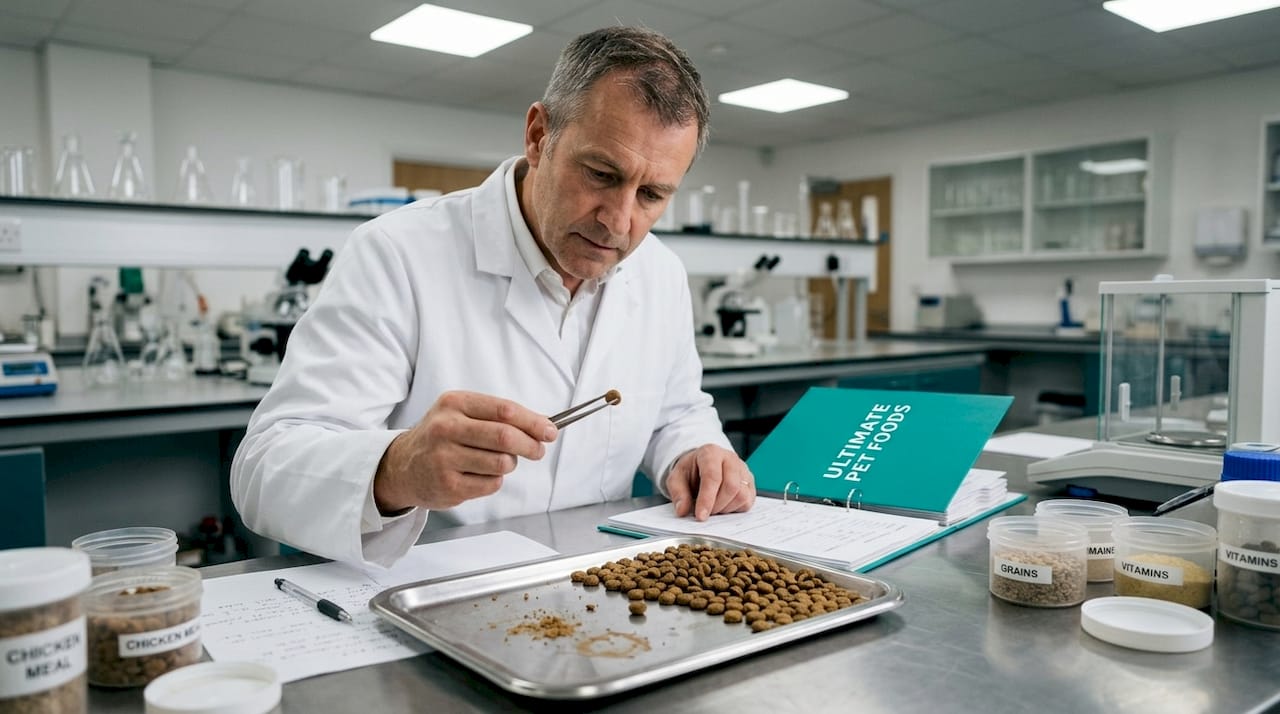
Rendering is the process used to create meat meal. Raw meat, bone, and tissue are cooked at high temperatures to remove moisture and fat, leaving behind a concentrated protein powder. This sounds straightforward, but the conditions of that cooking process make an enormous difference to what ends up in your dog’s bowl.
Research from the University of Illinois found that processing conditions, especially temperature and duration of heating, affect protein denaturation. Mild thermal processes can increase digestibility, while more intensive heat treatments can decrease it. In plain terms: gentle cooking can actually make protein easier for your dog to absorb, but pushing the heat too high or cooking for too long breaks down amino acids and reduces the meal’s nutritional value.
“The difference between a well-rendered meat meal and an over-processed one isn’t visible on the label. It lives in the manufacturing process, and that’s exactly why sourcing transparency matters so much.”
This is why we always encourage owners to look beyond the ingredient name and ask about the brand’s manufacturing standards. A chicken meal made at a carefully controlled temperature from quality, traceable sources is nutritionally superior to one produced at extreme heat from unspecified origins.
How does this connect to digestibility?
Digestibility refers to how much of a nutrient your dog’s body can actually absorb and use. A food can look impressive on paper with 30% protein, but if that protein has been denatured through excessive heat, your dog’s digestive system may only absorb a fraction of it. This is why we’re passionate about hydrolysed dog food protein as an option for dogs with sensitivities, and why understanding common ingredients in hydrolysed dog food helps owners make genuinely informed choices.
Pro Tip: When evaluating a dog food brand, look for those that publish their digestibility scores or openly discuss their rendering processes. Transparency here is a strong indicator of quality.
Comparing meat meal and whole meat in dog food
With processing impacts clear, we can now compare how meat meals and whole meat stack up side by side.
One of the most common questions we hear is: “Isn’t fresh, whole meat always better?” It’s a fair question, and the honest answer is: it depends on the context. Both forms have genuine strengths, and the best dog foods often use a combination of both.
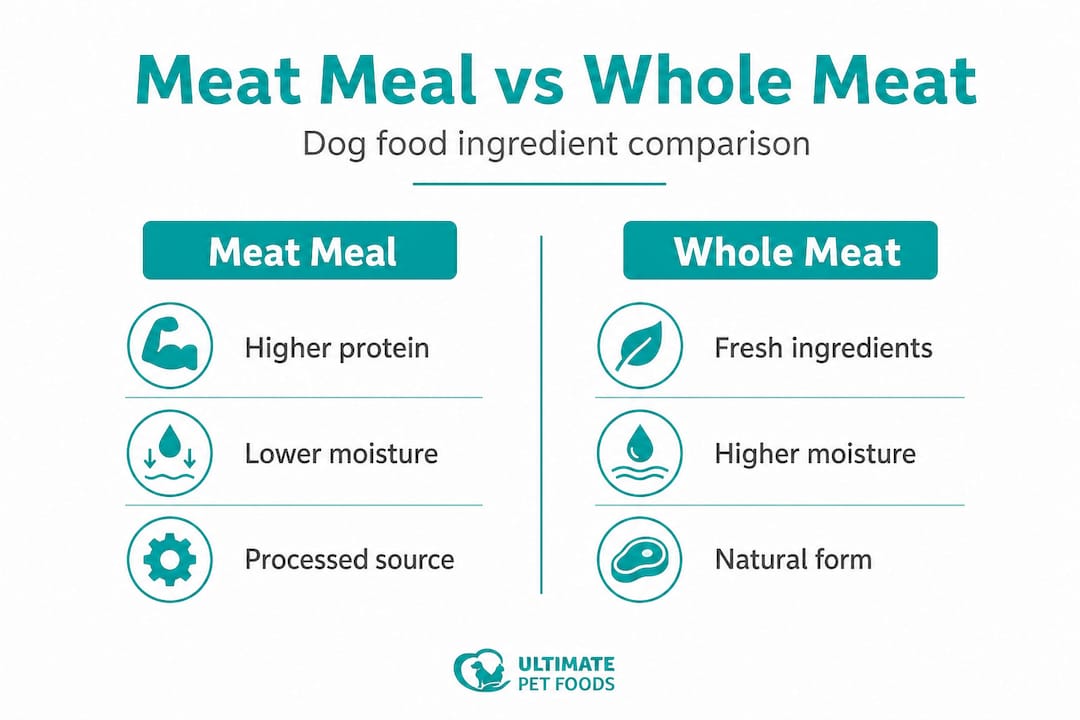
As noted by the AAFCO Official Publication, AAFCO’s meal definition applies equally to meat meals and other meal types, distinguishing solely by physical form. Neither form is inherently superior. What matters is quality, sourcing, and how the two are used together in a complete recipe.
Advantages of whole fresh meat:
- Retains natural moisture, which supports hydration
- Preserves heat-sensitive vitamins and enzymes
- Provides a more bioavailable form of certain nutrients
- Appeals to dogs’ natural palatability preferences
- Contributes to a more natural ingredient profile
Advantages of quality meat meal:
- Significantly higher protein concentration per gram
- Longer shelf stability without preservatives
- Consistent protein delivery across batches
- Cost-effective way to achieve high protein targets
- Works well in dry kibble formulations
Our guide on fresh vs meat meal explores this balance beautifully. The short version: fresh ingredients bring vitality and palatability, while quality meat meals bring protein density and consistency. Used together thoughtfully, they create a nutritionally complete food that genuinely supports your dog’s health.
For dogs with sensitive digestion or allergies, the choice of protein source matters as much as the form. Our real meat dog food guide walks through how to match protein types to your dog’s individual needs, and the fresh ingredient benefits for dogs page explains why freshness in the base recipe matters so much for long-term wellbeing.
Pro Tip: If your dog has a sensitive stomach or skin, prioritise single-source meat meals such as lamb meal or salmon meal. These are easier to track for allergy elimination diets and tend to be gentler on digestion.
Choosing the best meat meal for your dog’s health
Having examined pros and cons, let’s walk through how you can choose the right meat meal for your dog’s unique needs.
Reading an ingredient label is a skill, and it’s one worth developing. The order of ingredients matters: ingredients are listed by weight before processing, which means a food listing “chicken” first may actually contain less protein than one listing “chicken meal” further down, because the fresh chicken loses most of its weight as moisture during cooking. Understanding this “ingredient maths” helps you see past marketing language.
Here’s a practical step-by-step approach to evaluating meat meal quality:
- Check the species name. “Chicken meal” is more informative than “poultry meal.” Named species indicate traceability and consistency.
- Look for a single protein source. Mixed meat meals can be harder to track if your dog has sensitivities.
- Research the brand’s sourcing. Do they publish where their meat comes from? UK-sourced or EU-certified ingredients typically meet higher welfare standards.
- Ask about rendering temperature. Brands committed to quality will often share this information or describe their process as “gently cooked” or “low-temperature rendered.”
- Check digestibility claims. Some premium brands publish digestibility percentages. Aim for 80% or above for protein digestibility.
- Look at the full recipe. Quality meat meals should sit alongside other premium ingredients, not be padded out with fillers, artificial preservatives, or low-grade cereals.
Research from the University of Illinois confirms that processing and sourcing make a measurable difference in digestibility and energy quality for dog food. This isn’t just marketing language. It’s measurable science that directly affects your dog’s energy levels, coat condition, muscle tone, and digestive comfort.
When exploring top protein sources for dogs, you’ll find that salmon, chicken, lamb, and duck consistently rank highly for digestibility and amino acid completeness. And if you’re curious about what “freshly prepared” really means on a label, our page on freshly prepared protein sources gives you an honest, clear explanation.
A useful benchmark: premium grain-free dog foods typically contain 28% to 40% protein on a dry matter basis, with digestibility scores above 80%. If a brand can’t or won’t share these figures, that itself tells you something important.
The uncomfortable truth most experts won’t tell you about meat meals
Here’s something we don’t see said often enough in the pet food world: a high protein percentage on a label means very little without knowing how that protein was made.
We’ve spoken with many dog owners who switched to a food boasting 35% protein, only to find their dog’s coat became dull, their energy dropped, or their digestion became unpredictable. The food looked impressive on paper. But the protein was over-rendered, poorly sourced, and ultimately not bioavailable in the way that mattered.
The industry has a quiet problem: “natural” and “grain-free” are marketing terms as much as they are nutritional descriptors. A food can be grain-free and still be built around low-quality meat meals rendered at extreme temperatures from unspecified sources. The absence of grain doesn’t guarantee the presence of quality. We say this not to alarm you, but because we believe you deserve honesty.
What do seasoned pet nutritionists actually look for? They look at the rendering method, the named species, the digestibility data, and the brand’s willingness to be transparent. They also look at the dog in front of them: bright eyes, a glossy coat, firm stools, and sustained energy are the real indicators of good nutrition.
Our guide on real meat dog food for sensitive dogs takes this perspective further, especially for dogs whose bodies are telling them something isn’t right. Sensitivity isn’t always about allergies. Sometimes it’s simply about poor-quality protein that the gut can’t efficiently process.
The most important thing you can do is stop reading labels as a list of ingredients and start reading them as a story about how a food was made. The ingredients are characters. The processing is the plot. And your dog’s health is the outcome.
Discover premium, grain-free dog food with healthy meat meals
We know that navigating ingredient labels, rendering methods, and protein digestibility can feel overwhelming. That’s exactly why we’ve built Ultimate Pet Foods around one simple promise: every ingredient we use is chosen with your dog’s health at the centre.
Our grain-free recipes feature carefully sourced, named meat meals alongside freshly prepared proteins, giving your dog the best of both worlds: protein density and nutritional vitality. We’re transparent about our sourcing, our cooking methods, and our digestibility standards because we believe you have every right to know what goes into your dog’s bowl. Explore our full range of grain-free dog food options and discover formulas designed to support digestion, coat health, weight management, and long-term wellbeing. Your dog deserves food that works as hard as they do. 🐾
Frequently asked questions
What exactly is a meat meal in dog food?
A meat meal is an ingredient made by grinding or reducing meat particles in size, as defined by pet food standards. The AAFCO definition states it is simply “an ingredient which has been ground or otherwise reduced in particle size,” making it a concentrated form of protein rather than a filler.
Does processing meat meal impact its nutritional value?
Yes, significantly. Research from the University of Illinois confirms that processing conditions, especially temperature and duration, directly affect digestibility and nutrient availability, with gentle methods generally preserving more nutritional value.
Is meat meal suitable for grain-free dog diets?
Absolutely, when sourced and processed well. AAFCO definitions clarify that ingredient forms, including meat meals, can be used across various diet formulations including grain-free, provided the overall recipe meets nutritional standards.
How can I tell if a meat meal is high quality?
Look for named species (such as “chicken meal” rather than “poultry meal”), transparency around sourcing and rendering methods, and brands that publish or discuss their digestibility standards openly.
Are all meat meals the same in dog food?
Not at all. The nutritional quality of meat meals varies considerably depending on the species used, the rendering temperature, the sourcing standards, and how the meal is incorporated into the wider recipe.