
Enhance your dog's hydration with the right food choices
TL;DR:
- Your dog’s water bowl provides only part of the hydration story, as food moisture content greatly influences total intake. High-moisture diets, such as wet or fresh food, enable dogs to hydrate more effectively without relying solely on drinking from their bowls. Prioritizing foods with adequate moisture levels and meeting nutritional standards can support overall health and hydration for dogs.
You fill the water bowl every morning, your dog takes a few sips, and you assume all is well. But here is the thing: that bowl tells only part of the story. Research shows that what your dog eats can have a far greater influence on total daily water intake than how often they visit the bowl. For health-conscious owners choosing natural, grain-free diets, understanding this connection is genuinely powerful. This guide walks you through the science, clears up common misconceptions, and gives you practical steps to keep your dog properly hydrated every single day.
Table of Contents
- Why hydration matters for your dog’s health
- How food moisture content impacts your dog’s hydration
- Are grain-free and natural diets better for hydration?
- Best practices for feeding to support your dog’s hydration
- Our perspective: why a holistic approach to dog hydration works best
- Support your dog’s hydration with tailored nutrition
- Frequently asked questions
Key Takeaways
| Point | Details |
|---|---|
| Food moisture matters | High-moisture foods contribute more to your dog’s daily water intake than dry kibble. |
| Grain-free isn’t a hydration fix | The absence of grains does not guarantee better hydration; focus on food format instead. |
| Total intake is key | Hydration depends on both water from food and bowl, so monitor your dog’s total intake. |
| Read labels for adequacy | Choose foods with a ‘complete and balanced’ statement and prefer those with feeding trials. |
Why hydration matters for your dog’s health
Having introduced the overlooked role of food in hydration, it is important to understand why staying hydrated matters so much for your dog’s health. Water is not just a thirst-quencher. It is the foundation of nearly every biological process your dog relies on to feel well and stay strong.
Good hydration directly supports kidney function, helping to flush waste and prevent the build-up of minerals that can lead to urinary stones. It keeps digestion moving smoothly, aids in nutrient absorption, and plays a vital role in regulating body temperature, particularly during warmer months or after vigorous exercise. Even your dog’s joints and cushioning cartilage depend on adequate fluid levels. You can find more practical hydration tips for dogs on our blog.
Some dogs are at higher risk of dehydration than others. Active breeds that run and play throughout the day, older dogs with reduced kidney efficiency, and dogs managing chronic illness all have elevated water needs. Puppies are also vulnerable because their smaller bodies lose water more quickly.
Signs your dog may be dehydrated:
- Lethargy or reduced energy during normal activities
- Dry or tacky gums instead of a healthy, moist feel
- Loss of appetite or reluctance to eat
- Sunken or dull-looking eyes
- Skin that stays tented when gently pinched rather than springing back immediately
- Dark or strong-smelling urine
“Increased water intake from high-moisture diets supports hydration above basic requirements, with benefits for urinary and kidney health.”
Proper hydration may meaningfully lower the risk of urinary stones and chronic kidney stress. When dogs consistently consume enough water through both food and drinking, their kidneys work more efficiently and their overall well-being reflects it. Every wag, bounce, and burst of enthusiasm starts with cells that are properly fuelled and hydrated.
How food moisture content impacts your dog’s hydration
Now that you know why hydration is vital, it is time to look at how food types can make a measurable difference to how much water your dog actually gets each day.
The format of your dog’s food matters enormously. Dry kibble typically contains just 6 to 12% moisture, whilst wet and canned foods sit at 70 to 80% moisture. Fresh dog food lands in a similar range to wet food. That gap is not trivial. A dog eating dry kibble takes in very little water through food and must compensate entirely by drinking from their bowl. A dog eating fresh or wet food receives a substantial portion of their daily water requirement with every meal.
| Food format | Typical moisture content | Water contribution per meal |
|---|---|---|
| Dry kibble | 6–12% | Very low |
| Semi-moist | 25–35% | Low to moderate |
| Wet/canned food | 70–80% | High |
| Fresh dog food | 65–75% | High |
Research makes this strikingly clear. Fresh dog food at 71.1% moisture increased total daily water intake significantly compared to dry kibble at just 6.1% moisture. Interestingly, dogs eating fresh food actually drank less from their bowls, yet their overall water intake was higher than dogs relying solely on dry kibble plus a water bowl.
This is a genuinely counter-intuitive finding for many owners. Seeing your dog drink less from the bowl might feel like a cause for concern. In reality, if they are eating a high-moisture food, it is a sign they are getting what they need. Total water intake, not bowl visits, is the accurate measure of hydration.
You can learn more about the role of fresh ingredients and hydration and explore a deeper breakdown of wet vs dry dog food formats on our blog.
Pro Tip: If your dog is a reluctant drinker or prone to urinary issues, try mixing a portion of wet or fresh food with their usual dry kibble. Even a partial switch can meaningfully increase their total daily water intake without requiring a full diet change overnight.
Are grain-free and natural diets better for hydration?
After distinguishing how food moisture influences hydration, it is crucial to clarify popular beliefs about grain-free and natural diets in relation to water intake. This is one of the most common areas where well-meaning owners make assumptions that the science does not always support.
Grain-free and natural diets are genuinely popular, and for good reason. Many owners choose them to support better digestion, manage food sensitivities, or reduce the risk of allergic reactions. These are valid and well-documented benefits, which you can explore further in our guide to grain-free diet benefits.
However, when it comes specifically to hydration, the picture is more nuanced. No direct evidence shows that removing grains from a dog’s diet improves hydration on its own. The moisture content of the food is what drives hydration benefit, not the grain-free label. A dry grain-free kibble at 8% moisture will not hydrate your dog any better than a standard dry kibble with grains.
| Feature | Grain-free dry kibble | Grain-free wet/fresh food | Standard wet/canned food |
|---|---|---|---|
| Moisture content | 6–10% | 65–75% | 70–80% |
| Hydration benefit | Low | High | High |
| Allergy support | Yes | Yes | Depends on ingredients |
| Digestibility | Good to very good | Very good | Good |
| Suitable for urinary health | Moderate | High | High |
So what should you focus on? Prioritise moisture content alongside the grain-free label. A grain-free, high-moisture food offers the best of both: digestive and allergy support, plus meaningful hydration. Our grain-free diet advantages guide explains this balance clearly, and our grain-free food guide is a great resource for owners who are newer to this style of feeding.
What grain-free diets genuinely offer:
- Reduced exposure to common allergens like wheat, barley, and rye
- Easier digestion for dogs with grain sensitivities
- Often made with higher-quality protein sources
- Typically free from artificial additives and fillers
- Can support healthier skin and coat condition when combined with good fats
Pro Tip: For dogs with kidney disease, urinary tract conditions, or chronic digestive problems, prioritise foods that are both high in moisture and labelled as complete and balanced, ideally supported by AAFCO or WSAVA nutritional standards. Grain-free alone will not meet these clinical needs.
Best practices for feeding to support your dog’s hydration
With the key misunderstandings addressed, here is how you can put this knowledge into daily practice for your pet’s health. Small, consistent changes to how and what you feed your dog can make a real and lasting difference to their hydration and overall vitality.
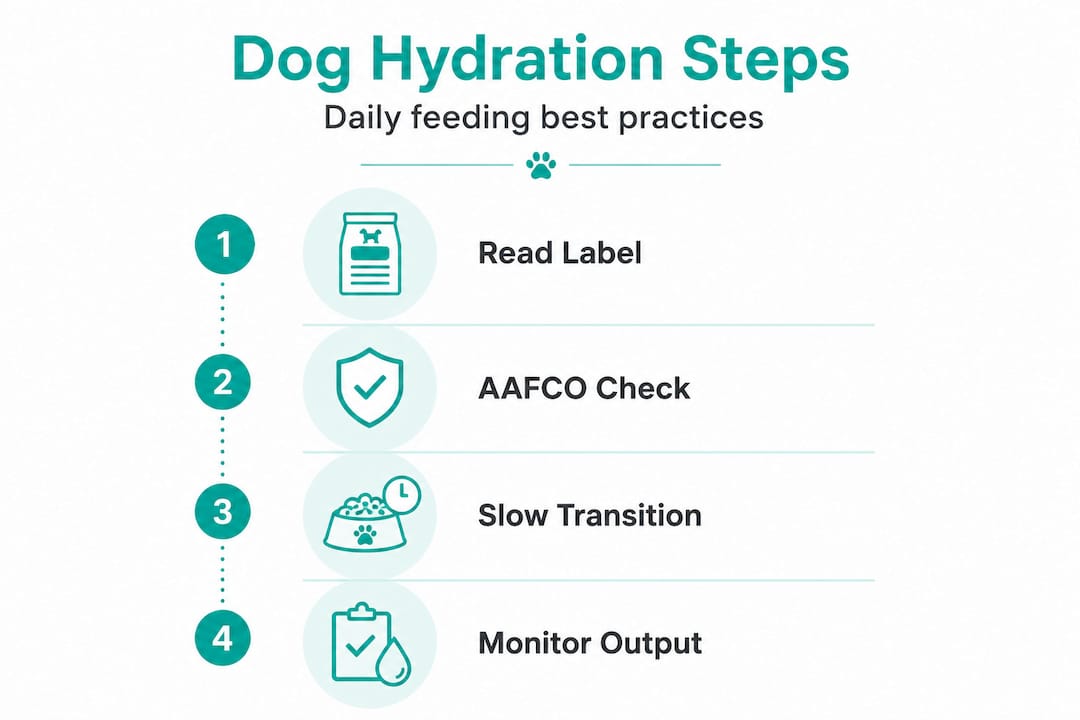
1. Read the label carefully
Every good quality dog food will carry a moisture percentage on the packaging. Look for it in the guaranteed analysis section. Anything below 15% is considered dry, whilst 65% and above indicates a genuinely high-moisture food. Also check for a “complete and balanced” statement, which tells you the food meets recognised nutritional standards.
2. Choose foods that meet AAFCO standards
Foods that have undergone AAFCO feeding trials and carry nutrient adequacy statements provide the best assurance that your dog is getting everything they need, not just water. This is especially important for dogs with special dietary requirements, including seniors, puppies, or those managing health conditions. A diet high in moisture but nutritionally incomplete does more harm than good.
3. Transition diets slowly
Moving from a dry kibble to a high-moisture food should be done gradually over 7 to 10 days. Start by replacing around 20% of the old food with the new option, then increase the proportion every two to three days. This gives your dog’s digestive system time to adjust and significantly reduces the risk of loose stools or stomach upset.
4. Monitor your dog’s output and behaviour
Healthy hydration shows up in your dog’s urine, which should be pale yellow and not strong-smelling, as well as in their energy levels, skin condition, and appetite. Keep an eye on any changes when you introduce a new food. Improvement in these markers is a positive sign that the new diet is working well.
5. Always provide fresh water
Even if your dog is eating a high-moisture food and drinking less from the bowl, fresh water should always be freely available. Needs can change with the weather, activity levels, and health status. Refer to our grain-free feeding guide for more detailed feeding advice tailored to natural diets.
“The goal is not simply to get dogs to drink more, but to ensure total water intake from all sources meets their physiological needs consistently.”
Signs your dog’s hydration is improving:
- Brighter, more alert eyes
- Moist and pink gums
- Consistent, light-coloured urine
- Improved skin elasticity
- Better energy and enthusiasm for walks and play
Our perspective: why a holistic approach to dog hydration works best
After walking through the practical guidance, it is worth stepping back to share a broader viewpoint, because we believe the real lesson here is one many pet food conversations miss entirely.
The debate around dry versus wet, grain-free versus grain-inclusive, often generates more heat than light. What truly matters for your dog’s hydration is total water intake from all sources, not any single format or fashionable label. Total daily water intake, combining food moisture and drinking, is the real measure of hydration health. No single format is universally best for every dog.
We have seen owners switch to grain-free dry kibble expecting a hydration boost, only to find their dog’s urinary issues persist. We have also seen dogs thrive beautifully on a mixed feeding approach, part high-moisture food, part dry kibble, with a consistently full water bowl. The evidence supports flexibility, not dogma.
Grain-free and natural diets absolutely have genuine value, and we are proud to support owners who choose them. But the magic is not in the absence of grains. It is in the quality of ingredients, the moisture content of the food, and the nutritional completeness of the recipe. These factors together, explored thoughtfully through resources like our fresh food insights, lead to genuinely better outcomes.
Our honest advice? Avoid extremes. Do not feel pressured to overspend on a single trendy format if it does not suit your dog’s needs or your lifestyle. Instead, focus on evidence, choose complete and balanced recipes with appropriate moisture content, and always consult your vet if your dog has a medical history that affects their nutritional requirements. Gentle on the inside, strong on the outside. That is the goal, and it is absolutely achievable. 🐾
Support your dog’s hydration with tailored nutrition
Understanding how food moisture shapes your dog’s health is the first step. The next is finding recipes that actually deliver on that promise, with the quality ingredients, correct moisture levels, and complete nutrition your dog deserves.
At Ultimate Pet Foods, we carefully formulate our grain-free and high-moisture ranges to support exactly this kind of proactive, whole-body care. Whether you are new to natural feeding or looking to fine-tune your current approach, our resources and product guides make it easy to choose with confidence. Explore the grain-free dog food benefits to understand what sets these recipes apart, and take a closer look at grain-free ingredients to see exactly what goes into every bowl. If you are weighing up formats, our dry dog food comparison is a great starting point. Every meal is a chance to do something wonderful for your dog. 💙
Frequently asked questions
Does grain-free dog food improve hydration for my pet?
Hydration is determined mainly by food moisture content, not the absence of grains. No direct evidence shows that removing grains from a diet independently improves water intake.
How much water should my dog get daily?
Ideal water intake includes both moisture from food and what your dog drinks from the bowl. Fresh-fed dogs show higher total daily water intake than kibble-fed dogs, even when they drink less from the bowl directly.
Is wet or fresh food always better for hydration?
Wet and fresh foods contain significantly more moisture, but any format works well if your dog’s total water intake is adequate and the food is complete and balanced. Both dry and wet foods are appropriate as long as nutritional needs are met and fresh water is always available.
What does ‘complete and balanced’ mean when picking dog food?
It means the diet meets nutritional profiles verified by established standards or feeding trials. AAFCO nutrient profiles and feeding trials underpin adequacy statements, giving you confidence that the food supports your dog’s full nutritional needs.