
Why choose grain free for allergies: a dog owner's guide
TL;DR:
- A grain-free diet removes wheat, corn, barley, rye, and oats, replacing them with alternative carbohydrate sources. It benefits dogs with confirmed grain sensitivities by reducing gut irritation and improving skin health, but true grain allergies are rare in dogs. Ingredient quality and proper diagnosis are crucial for effective allergy management and maintaining overall health.
A grain-free diet is defined as a feeding approach that removes wheat, corn, barley, rye, and oats, replacing them with alternative carbohydrate sources such as sweet potato, peas, or lentils. For dogs with a confirmed grain sensitivity, this switch can reduce itching, digestive upset, and skin inflammation. The question of why choose grain free for allergies is one we hear often at Ultimatepetfoods, and the honest answer is: it depends entirely on what your dog is actually reacting to. This guide separates the evidence from the marketing noise, so you can make a genuinely informed decision for your dog.
Why choose grain free for allergies: what the evidence says
The first thing worth knowing is that true grain allergies are rare. Veterinary dermatology research shows fewer than 1% of dogs have a genuine grain allergy. That figure matters because it means the vast majority of itchy, sensitive dogs are reacting to something else entirely.
The most common dietary allergens in dogs are animal proteins, not grains. Beef, chicken, and dairy top the list. So if your dog is scratching, losing coat condition, or suffering from recurring ear infections, a grain-free switch alone may not resolve the problem. You could be removing the wrong ingredient entirely.
That said, grain-free diets do have a legitimate place. When a dog has been properly tested and a grain sensitivity confirmed, removing those grains is a direct and logical response. The benefits of a grain-free diet in these cases include reduced gut irritation, improved stool quality, and calmer skin. The key phrase is “confirmed sensitivity.” Without that confirmation, you are guessing.
How common are grain allergies in dogs, and what triggers them?
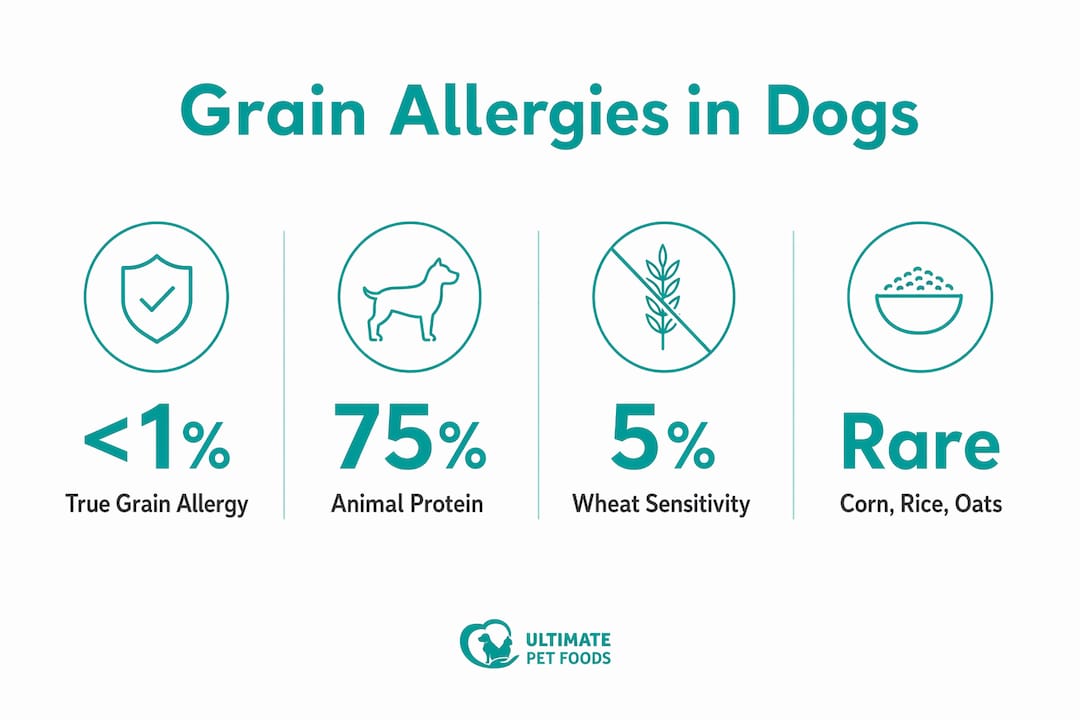
Grain allergies and food sensitivities are often confused, but they are not the same thing. A true allergy triggers an immune response. A sensitivity causes digestive discomfort without the same immune involvement. Both can produce similar outward signs, which is why accurate diagnosis matters so much.
The most common food allergens in dogs, ranked by frequency in veterinary studies, are:
- Beef (the single most common food allergen in dogs)
- Dairy products
- Chicken
- Wheat (the most common grain allergen, though still rare overall)
- Lamb and soy
Wheat appears on this list, but its prevalence is far lower than beef or chicken. Corn, rice, and oats rarely cause allergic reactions in dogs. Dogs have evolved to digest starch through multiple copies of the amylase gene, meaning grains are not inherently harmful or inflammatory for most dogs.
Pro Tip: If your dog shows signs of food allergy, ask your vet about a strict elimination diet before switching foods. This is the only reliable method for identifying the actual trigger, and it typically takes 8–12 weeks to produce clear results.

Veterinary elimination diets are the gold standard for allergy diagnosis, not guesswork diet changes. A supervised elimination trial removes all current proteins and carbohydrates, then reintroduces them one at a time to identify the offender. Skipping this step risks months of unnecessary diet changes and continued discomfort for your dog.
What nutritional risks and benefits come with grain-free diets?
Grain-free diets are not without controversy, and we believe you deserve the full picture. The FDA conducted an investigation from 2018 to 2022 that linked certain grain-free, legume-heavy diets with an increased incidence of non-hereditary dilated cardiomyopathy (DCM) in dogs. DCM is a serious heart condition. The cases observed were largely reversible when dogs were moved off the implicated diets.
The diets flagged were those very high in peas, lentils, and potatoes as primary ingredients, not grain-free diets as a whole category. This distinction is important. A well-formulated grain-free recipe that uses quality animal protein as its first ingredient, with vegetables in supporting roles, carries a very different nutritional profile to a legume-heavy budget product.
| Feature | Well-Formulated Grain-Free | Poorly Formulated Grain-Free |
|---|---|---|
| Primary ingredient | Named meat or fish | Peas, lentils, or potato |
| Protein source | Freshly prepared animal protein | Plant-based or unnamed derivatives |
| Taurine status | Adequate via quality meat content | Potentially deficient |
| DCM risk | Low when WSAVA-compliant | Elevated in legume-heavy recipes |
| Nutritional oversight | Veterinary nutritionist formulated | No feeding trial evidence |
WSAVA guidelines recommend choosing brands that employ board-certified veterinary nutritionists and conduct feeding trials. This is the clearest way to separate safe, balanced grain-free products from those that simply remove grains without replacing the nutrients properly.
Beyond heart health, managing a sensitive dog also requires attention to omega-3 fatty acids. Omega-3s support the skin barrier directly, reducing inflammation and improving coat condition. A grain-free diet that lacks omega-3s from fish oil or similar sources will underperform for allergic dogs regardless of what grains it excludes.
Pro Tip: Check the ingredient list for a named fish oil or salmon oil in the first five ingredients. This signals that the recipe actively supports skin health, not just avoids grains.
Grain-free vs grain-inclusive diets: which is better for sensitive dogs?
The honest answer is that neither diet type is universally superior. Grain-free is not a synonym for hypoallergenic, and switching without a diagnosis can delay correct allergy identification by months. A high-quality grain-inclusive diet with a novel protein source may outperform a poorly formulated grain-free product for many sensitive dogs.
What actually drives allergy management benefits is ingredient quality and processing method, not grain presence alone. A grain-free recipe built on freshly prepared meat, with minimal processing and no artificial additives, will support skin and gut health far more effectively than a grain-free product built on cheap plant proteins and synthetic nutrients.
Here is what to compare when choosing between the two approaches:
- Protein source: Named, single-source animal protein is preferable for sensitive dogs in both diet types.
- Carbohydrate quality: Sweet potato and butternut squash offer a lower glycaemic index than refined wheat or corn. Replacing high-glycaemic grains with low-glycaemic vegetables benefits dogs prone to weight gain or blood sugar fluctuations.
- Processing method: Gentle cooking preserves more natural nutrients than high-temperature extrusion. Minimally processed recipes retain more of the nutrients that support allergic dogs’ skin and energy.
- Additive profile: Artificial colours, flavours, and preservatives can trigger sensitivities independently of grains. A clean ingredient list matters in both grain-free and grain-inclusive options.
The guide to grain-free diets for dogs with allergies at Ultimatepetfoods explores this comparison in more depth, including how to read ingredient labels with confidence.
How to transition your dog to a grain-free diet safely
Once your vet has confirmed a grain sensitivity, the transition to a grain-free diet should be gradual. A sudden switch is one of the most common causes of digestive upset in dogs, even when the new food is nutritionally superior.
- Days 1–3: Feed 75% current food and 25% new grain-free food.
- Days 4–6: Move to a 50/50 split.
- Days 7–9: Feed 25% current food and 75% new grain-free food.
- Day 10 onwards: Feed the new grain-free food exclusively.
Monitor your dog throughout this period for loose stools, vomiting, or changes in energy. Some dogs with sensitive digestion benefit from an even slower transition over three to four weeks.
When selecting a grain-free food, look for these formulation features:
- Freshly prepared meat or fish as the first named ingredient
- Gentle cooking process (Ultimatepetfoods cooks at 82°C to lock in freshness and nutrients)
- Human-grade ingredients throughout the recipe
- Added prebiotics such as MOS (mannan-oligosaccharides) and FOS (fructo-oligosaccharides) to support gut health
- No artificial colours, flavours, or preservatives
For dogs with more complex needs, the Ultimatepetfoods Ultimate+ Functional Health range uses hydrolysed proteins, which are broken down into smaller fragments that the immune system is less likely to recognise as allergens. This range includes dedicated Skin & Coat Care and Digestive Care formulas, designed for targeted everyday support rather than short-term fixes.
Pro Tip: Ask your vet to check taurine levels if your dog has been on a legume-heavy grain-free diet for more than six months. Early detection of any deficiency allows for straightforward dietary correction.
Key takeaways
A grain-free diet is the right choice for dogs with a confirmed grain sensitivity, but ingredient quality and veterinary guidance matter far more than grain absence alone.
| Point | Details |
|---|---|
| Grain allergies are rare | Fewer than 1% of dogs have a true grain allergy; most react to beef, chicken, or dairy. |
| Diagnosis before switching | A vet-supervised elimination diet is the only reliable way to identify the actual allergen. |
| Formulation quality matters | Choose grain-free recipes with named meat as the first ingredient and WSAVA-compliant formulation. |
| DCM risk is formulation-specific | Legume-heavy grain-free diets carry higher DCM risk; quality recipes with adequate taurine do not. |
| Omega-3s and prebiotics support recovery | Skin barrier health and gut function both require active nutritional support beyond grain removal. |
The grain-free conversation needs more honesty
I have spent years watching the grain-free trend grow from a niche veterinary recommendation into a mainstream marketing category. That growth has produced some genuinely excellent products. It has also produced a lot of noise that makes it harder for owners to make clear decisions.
The uncomfortable truth is that most dogs sold grain-free food do not need it. Their owners made the switch based on a hunch, a recommendation from a pet shop, or a label that implied grains were harmful. For those dogs, the switch may do nothing at all. It might even introduce a new problem if the replacement formula is legume-heavy and poorly balanced.
Where I have seen grain-free diets make a real difference is in dogs with confirmed sensitivities, particularly those with chronic skin issues or recurring digestive problems that did not respond to protein changes alone. In those cases, removing wheat or another grain trigger, combined with a recipe built on quality animal protein and active nutritional support, produces visible results within weeks.
My advice is always the same: test first, then choose. If your vet confirms a grain sensitivity, look for a recipe that is genuinely built around nutrition, not marketing. Ultimatepetfoods recipes use freshly prepared meat and fish, cooked gently at 82°C, with human-grade ingredients and added prebiotics. That is the kind of formulation that supports a sensitive dog every single day, not just during a flare-up.
— Glenn
Grain-free dog food from Ultimatepetfoods: built for sensitive dogs
If your dog has been diagnosed with a grain sensitivity, we have built our entire range around exactly that need. Every Ultimatepetfoods recipe starts with freshly prepared meat or fish, gently cooked at 82°C to preserve natural nutrients and flavour. We use human-grade ingredients throughout, and every recipe is complete and balanced for daily, lifelong feeding.
Our recipes include added prebiotics MOS and FOS to support healthy digestion from the inside out. For dogs with more targeted needs, our Ultimate+ Functional Health range uses hydrolysed proteins to support Digestive Care, Skin & Coat Care, Weight Control & Joint Care, Dental Care, and Healthy Living. Explore our grain-free benefits guide to find the right recipe for your dog today.
FAQ
What does grain free actually mean for dogs?
A grain-free diet removes wheat, corn, barley, rye, and oats, replacing them with alternative carbohydrates such as sweet potato or lentils. It does not automatically mean hypoallergenic or low-carbohydrate.
Are grain allergies common in dogs?
True grain allergies affect fewer than 1% of dogs. Most food allergies in dogs are triggered by animal proteins such as beef, chicken, or dairy, not grains.
Is grain-free dog food safe for all dogs?
Grain-free food is safe when properly formulated by veterinary nutritionists following WSAVA guidelines. Diets very high in peas and lentils have been linked to DCM in some dogs, so ingredient quality and formulation matter greatly.
How do i know if my dog needs a grain-free diet?
A vet-supervised elimination diet is the most reliable method for identifying food allergens. Switching to grain-free without a diagnosis risks missing the actual trigger and delaying effective treatment.
Can grain-free food help with itchy skin in dogs?
It can, if wheat or another grain is the confirmed trigger. For most itchy dogs, skin barrier support through omega-3 fatty acids and high-quality animal protein has a greater impact than grain removal alone.