
Senior dogs: choosing safe, balanced grain-free diets
TL;DR:
- Dog food labels like “senior” and “grain-free” are largely marketing tools, not strict nutritional standards.
- Understanding your senior dog’s evolving nutritional needs—such as regulated calories and high-quality protein—is essential for health.
You pick up a bag labelled “senior formula,” notice it says “grain-free,” and feel reassured that someone has done the hard thinking for you. Most owners do. The uncomfortable reality is that senior dog labelling varies enormously between brands, with no single regulatory standard defining what a senior recipe must contain. Add grain-free into the mix and the decisions become genuinely complex. This guide cuts through the noise so you can choose food that truly serves your older dog, rather than simply sounding like it does.
Table of Contents
- Understanding your senior dog’s true nutritional needs
- The truth behind ‘senior’ and ‘grain-free’ dog food labels
- Grain-free diets for older dogs: benefits, risks, and evidence
- How to choose a safe, balanced diet for your senior dog
- What most owners get wrong about senior dog diets
- Explore tailored grain-free senior dog diets
- Frequently asked questions
Key Takeaways
| Point | Details |
|---|---|
| Senior food labels vary | ‘Senior’ dog foods are not standardised and can differ dramatically in nutrient content across brands. |
| Grain-free diets require caution | Grain-free foods might be linked to heart risks and need vet supervision for older dogs. |
| Focus on core nutrients | Prioritise high-quality protein, controlled calories, and fibre for your senior dog’s health. |
| Vet guidance is critical | Always consult your vet when choosing or changing your senior dog’s diet, especially with medical issues. |
Understanding your senior dog’s true nutritional needs
Having framed the confusion about labels, it is vital to clarify what your senior dog’s body actually needs as it ages. The changes are real, they are measurable, and they matter far more than whatever phrase appears on a packet front.
As dogs move into their senior years, typically from around seven years old depending on breed size, their metabolism slows noticeably. Maintenance energy requirements decrease over a dog’s lifetime, which means feeding the same calorie load you offered at three years old risks steady, silent weight gain. Obesity in older dogs accelerates joint wear, burdens the heart, and worsens many age-related conditions. Calorie management is genuinely one of the most impactful dietary decisions you can make.
At the same time, muscle mass becomes harder to maintain. Lean body mass loss, sometimes called sarcopenia in veterinary circles, is a normal part of ageing but can be slowed with adequate high-quality protein. The key word is quality, not just quantity. A food boasting high protein from poor sources will not support your dog’s muscles the way a food built around digestible, named meat proteins will. This is one area where reasons senior dogs require special food become especially clear.
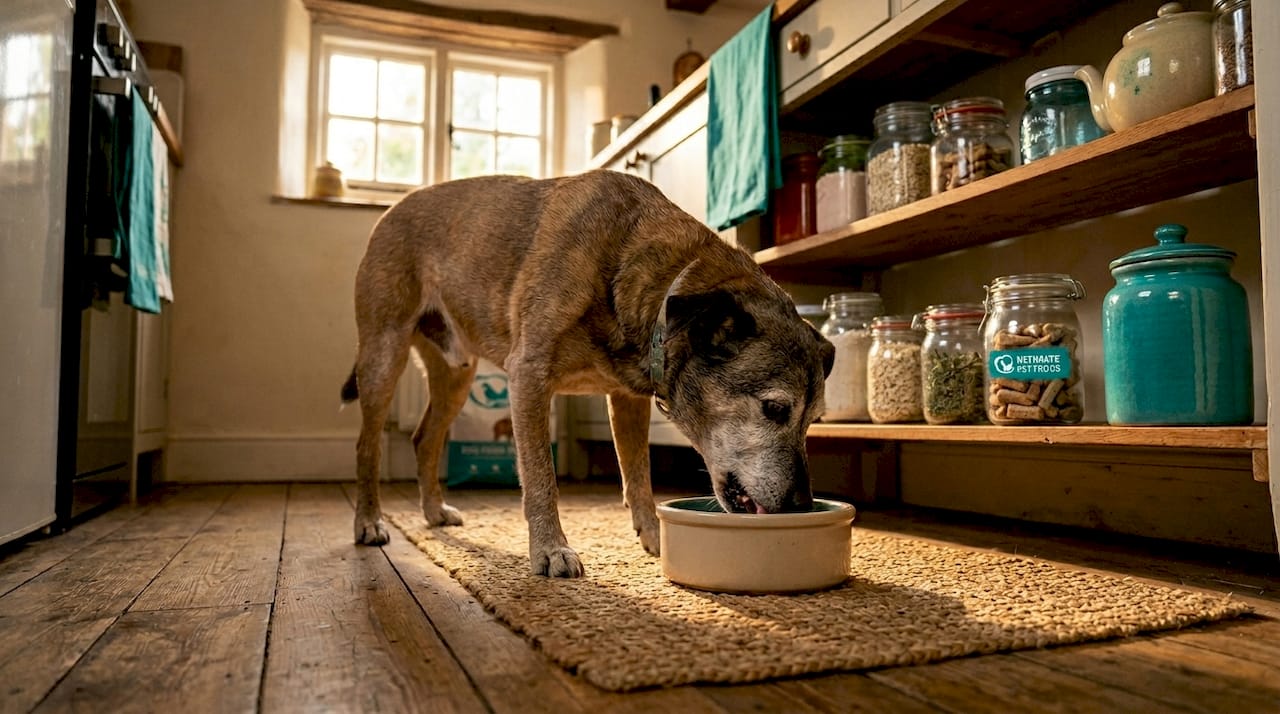
Fibre is another nutrient that earns its keep in older dogs. Digestive motility tends to slow with age, and a well-formulated fibre source supports gut regularity, feeds beneficial bacteria, and helps moderate calorie absorption. Think of fibre as the quiet workhorse of a senior diet.
Here is what a senior dog’s daily nutritional priorities often look like:
- Controlled calorie density to manage weight without compromising satiety
- High-quality, digestible protein from named meat sources to preserve lean muscle
- Appropriate fibre for digestive health and weight management
- Omega-3 fatty acids to support joints, coat, and cognitive function
- Balanced minerals including phosphorus and sodium, particularly if kidney or heart disease is a concern
- Antioxidants such as vitamin E and C to support immune function as it naturally declines
“If an older dog is at risk of or has heart disease, kidney disease, or other medical problems, nutrition targets should be personalised rather than relying on general senior or grain-free marketing. Blanket label claims simply cannot account for individual health status.”
Understanding these needs is the foundation. From here, you can approach understanding senior dog nutrition with genuine confidence rather than relying on front-of-pack promises.
The truth behind ‘senior’ and ‘grain-free’ dog food labels
After understanding what your dog needs physically, it is time to challenge assumptions about what commercial labels actually promise. The gap between marketing language and nutritional reality can be surprisingly wide.
Here is a fact that surprises many owners: AAFCO and NRC do not define a senior life stage for dogs. There is no standardised senior nutrient profile that brands must meet. Most senior-labelled products are simply formulated to adult maintenance or all life stages standards. That means two bags sitting side by side in the shop, both labelled “senior,” could have meaningfully different protein levels, calorie densities, and fibre contents.
Senior vs adult food: what labels actually tell you
| Label claim | What it might mean | What to look for instead |
|---|---|---|
| “Senior formula” | Usually adult maintenance standard | AAFCO adequacy statement |
| “Grain-free” | No cereal grains; may use pulses | Named protein source first ingredient |
| “Light” or “lite” | Lower calorie density | Defined kcal per 100g |
| “Natural” | Minimal artificial additives | Full, transparent ingredient list |
| “Supports joints” | May contain glucosamine/chondroitin | Declared inclusion levels |
The single most important piece of text on any dog food bag is the AAFCO nutritional adequacy statement. Look for this statement rather than the marketing headline, as it tells you whether the food meets a recognised nutritional standard for adult dogs. If it only says “intended for intermittent or supplemental feeding,” it is not a complete diet.
🔎 Statistic to know: Because there is no regulatory senior nutrient profile, a food can legally describe itself as a “senior” recipe simply by including a joint supplement or reducing calorie density slightly, with no obligation to demonstrate broader suitability for ageing physiology.
Now consider grain-free claims. Grain-free has become shorthand for “healthier” in the pet food world, but this requires careful thought when selecting food for a dog with already-changing health needs. We explore this further when discussing grain-free vs grain-inclusive dog food in depth, but the headline is this: grain-free does not automatically mean better, particularly for older dogs.
Pro Tip: Before buying any senior food, flip the bag and find the AAFCO adequacy statement. If it is absent or vague, put the product back on the shelf regardless of what the front promises.
Grain-free diets for older dogs: benefits, risks, and evidence
Now that we have clarified the risks of label marketing, a closer look at the real-world guidance on grain-free options is needed. There are genuine scenarios where grain-free makes excellent sense. There are also situations where it adds unnecessary risk.
When grain-free genuinely helps
Some senior dogs have documented grain sensitivities or confirmed food allergies. In these cases, removing grains can reduce inflammatory responses, ease digestive discomfort, and improve coat and skin quality. Dogs with diagnosed coeliac-like sensitivity to gluten-containing grains benefit directly. Natural, grain-free recipes built around fresh meat, sweet potato, or root vegetables can be genuinely gentler on sensitive systems.
The DCM concern you should know about
The benefits come with a significant caveat. The FDA has investigated a possible link between certain grain-free diets, particularly those rich in pulses such as peas and lentils, and canine dilated cardiomyopathy (DCM), a serious heart condition. This investigation has been ongoing since 2018. While causation has not been definitively established, the association appeared frequently enough that veterinary guidance shifted toward caution.
For senior dogs, whose cardiovascular risk is already naturally elevated, this is not a risk to dismiss. Older dogs have less physiological reserve, meaning they are less able to compensate if a dietary imbalance begins to affect cardiac function.
Grain-free diet considerations at a glance
| Factor | Grain-inclusive | Grain-free |
|---|---|---|
| DCM risk | Lower | Possible if pulse-rich |
| Suitable for allergies | Depends on grain tolerance | Yes, if confirmed grain allergy |
| Senior dog suitability | Generally safe | Vet supervision advised |
| Digestibility | Variable by recipe | Variable by ingredient source |
| Regulatory oversight | Standard AAFCO | Standard AAFCO |
Key guidance for owners considering grain-free for an older dog:
- Only use grain-free if your vet has confirmed a grain sensitivity or allergy
- Choose recipes where pulses and legumes are not the primary carbohydrate source
- Opt for formulas where benefits of grain-free diets are supported by a named, quality protein as the lead ingredient
- Monitor your dog’s energy levels, weight, and coat condition after any diet change
- Revisit the choice at least annually with your vet, as older dogs’ needs shift
Pro Tip: Ask your vet whether your senior dog has ever been formally assessed for a grain intolerance before committing to grain-free long term. Many owners assume sensitivity without a confirmed diagnosis, which means taking on unnecessary risk for no clinical benefit. Read more about is grain-free safe for dogs to understand the full picture.
How to choose a safe, balanced diet for your senior dog
With risks and recommendations explored, you need a practical framework for confident food selection. Here is a clear, step-by-step approach we recommend for every owner making this decision.
1. Check the AAFCO adequacy statement first
This is non-negotiable. The label must state the food is “complete and balanced” for adult maintenance or all life stages. If this statement is missing, the food may not meet your dog’s daily nutritional needs regardless of how natural or grain-free it sounds.
2. Assess calorie density against your dog’s current weight
Calorie management is central to senior health. Look for the kcal per 100g figure, usually listed in small print. If your dog is already carrying extra weight, a lower-calorie-density recipe with added fibre will help manage body condition without leaving your dog feeling hungry.
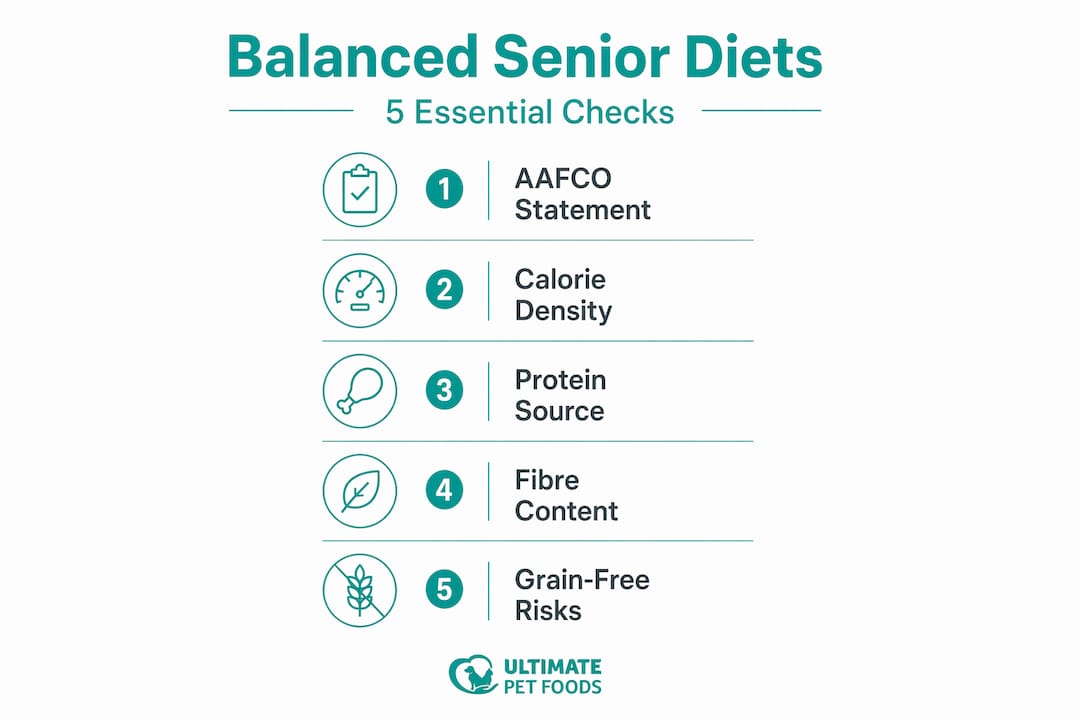
3. Confirm a high-quality, named protein source
The first ingredient should be a specific meat, for example “fresh chicken” or “deboned salmon,” not a vague category like “poultry derivatives.” High-quality, digestible protein supports lean mass preservation, which is one of the most meaningful things your senior dog’s diet can do.
4. Look at the fibre content and sources
Beet pulp, chicory root, and sweet potato are all examples of fibre sources that support digestive health in older dogs. A recipe with a thoughtful blend of soluble and insoluble fibre supports both gut transit and a healthy microbiome.
5. If grain-free, apply extra scrutiny
Treat grain-free as a higher-stakes choice and discuss it with your vet before switching. Ask specifically about the DCM risk, look at whether pulses dominate the carbohydrate profile, and consider whether the senior dog nutrition guide for the recipe you are considering supports safe long-term feeding.
6. Transition gradually over ten to fourteen days
A sudden diet change in an older dog can cause digestive upset, loose stools, and appetite disruption. Start with roughly 25% new food mixed into 75% existing food, and shift the ratio every two to three days. Slow and steady keeps digestion comfortable and makes it easier to identify any adverse reactions early. More choosing senior dog food tips are available if you want detailed transition support.
“Senior diets work best when they match the individual dog, not just the life stage category. Decreased energy requirements, fibre needs, and lean body mass preservation all point to personalised choices rather than a one-size label.”
What most owners get wrong about senior dog diets
We see this often, and it is worth saying plainly: the biggest mistake is trusting the label without reading it critically. An owner picks up a bag with a greying muzzle on the front and “specially formulated for seniors” across the top and feels the decision is made. It is not.
The “senior” label is largely a marketing category, not a nutritional guarantee. We have worked with dog owners whose pets were eating a so-called senior grain-free recipe while steadily gaining weight, losing muscle tone, and showing signs of digestive sensitivity, all because the food was energy-dense with poor-quality protein sources, despite the claims on the front.
What frustrates us most is the assumption that natural or grain-free automatically means safer. A grain-free food built around pea protein isolate and canola oil is not inherently more suited to a senior dog than a carefully crafted grain-inclusive recipe using whole oats, fresh salmon, and balanced fibre. The ingredients matter infinitely more than the label category.
The dogs who do best in their senior years are those whose owners approach nutrition as an ongoing conversation with their vet rather than a one-time purchase decision. Body condition scoring, muscle condition scoring, and regular blood panels tell you far more about whether a food is working than any marketing claim.
Grain-free diets genuinely benefit sensitive dogs in specific, confirmed circumstances. Outside of those circumstances, they demand extra vigilance. For older dogs especially, that vigilance is not optional.
Explore tailored grain-free senior dog diets
Navigating senior dog nutrition feels far more manageable when you have clearly formulated, transparently labelled options to work with. At Ultimate Pet Foods, we believe every senior dog deserves food that truly serves their changing physiology, not just a label that sounds right.
Our recipes are built around named, high-quality protein sources with carefully balanced fibre and calorie profiles suited to older dogs. Whether you are exploring the grain-free diet benefits for a sensitive senior, wanting to understand exactly what goes into your dog’s bowl through our guide on understanding grain-free ingredients, or ready to do a proper dry dog food comparison to find the best fit, we have the resources and the products to support you. Your senior dog has earned the best. Let us help you find it. 🐾
Frequently asked questions
How do I know if my senior dog’s food is complete and balanced?
Check the AAFCO nutritional adequacy statement on the packaging; it should confirm the food is “complete and balanced” for adult maintenance or all life stages, which is the only reliable indicator of nutritional completeness.
Are grain-free diets safe for senior dogs?
Grain-free diets carry an investigated link to DCM in some dogs, so they should only be used for confirmed grain allergies or intolerances, and always with veterinary oversight rather than as a general lifestyle choice.
What nutrients should I prioritise for my older dog’s health?
Focus on moderate calorie density, high-quality digestible protein, fibre for gut health, and balanced vitamins and minerals. Prioritising these nutrients supports lean muscle, healthy weight, and digestive regularity as your dog ages.
Should I always switch to a senior-labelled dog food?
Not necessarily. Since no official senior nutrient profile exists for dogs, many senior-labelled foods are nutritionally similar to adult recipes, and dogs with specific health conditions will benefit more from a vet-guided personalised diet than from any label category.