
Count Treats Into 10%: Vet backed low glycaemic checks for UK dogs
For a diabetic dog, the safest approach is a vet‑recommended therapeutic diet, or a consistent, complete moderate‑starch, low‑glycaemic diet fed at fixed times and synchronised with insulin. Count treats into the daily carbohydrate total, log meals and glucose readings, and never change food without your vet’s input. Ultimate Pet Foods’ dry recipes can suit everyday feeding alongside that plan, though they are not a therapeutic substitute.
TL;DR:
- Diabetic dogs should be fed a vet‑recommended therapeutic or moderate‑starch, low‑glycaemic diet, with fixed meal times and insulin synchronization.
- Complex starches like barley and sorghum produce steadier blood sugar responses, while rice and rice flour tend to cause sharper spikes.
- Treats should always be counted within daily carbohydrate limits, avoiding sugars and high‑glycaemic ingredients like honey or glycerin.
- Homemade diets require veterinary review, as balancing nutrition and glycaemic impact without lab testing can be risky for diabetic dogs.
- Consistency in feeding routine and close monitoring of glucose levels are more crucial than specific food ingredients for managing diabetes.
Table of Contents
- What to feed: checking labels for genuinely low glycaemic dog foods
- Ingredients and treats that spike blood sugar, and what to give instead
- Getting meal timing and insulin in sync
- Homemade meals: what’s safe and when to get expert help
- Why vet‑aligned nutrition and everyday food quality both matter
- Side effects and nutritional gaps to watch for on a low‑GI diet
- What I’d tell a worried owner
- Try a sample pack before committing to a new diet
- Sources
- FAQ
What to feed: checking labels for genuinely low glycaemic dog foods
Carbohydrate management sits at the heart of diabetic feeding, but it’s the type of starch that matters more than a simple low or high label. Complex carbohydrate sources such as barley, sorghum, and certain pulses tend to produce a gentler post‑meal glucose rise than rice, according to the IVIS encyclopedia of canine clinical nutrition. Rice, particularly white rice, digests quickly and can trigger a sharper spike, which is why many veterinary nutritionists steer diabetic owners away from it.
Fibre plays a supporting role. A blend of soluble and insoluble fibre, often from sources like soya or beet pulp, slows glucose absorption without over‑diluting the diet’s nutritional density. The evidence here is genuinely mixed. High‑fibre diets haven’t consistently outperformed moderate‑fibre maintenance diets in trials, so more fibre isn’t automatically better for every dog, according to the same IVIS clinical nutrition guidance. What works well for one diabetic dog may need adjusting for another, which is exactly why veterinary review matters before you settle on a formula.
When you’re reading a bag or checking a product page, look for:
- Starch percentage, where the manufacturer publishes it
- Fibre content expressed as grams per 1,000 kcal, not just a percentage
- The guaranteed analysis for protein, fat, and moisture
- The carbohydrate source named specifically, not just “cereals”
Here’s the part most owners miss: “low glycaemic” is not a regulated term on pet food packaging. Processing method, particularly extrusion, can gelatinise starch in ways that change how quickly a dog absorbs it, sometimes cancelling out an ingredient’s expected benefit. PetfoodIndustry reports that labelling claims can mislead unless backed by actual feeding trials in diabetic dogs. A peer‑reviewed comparison of commercial diets found that grain‑free, grain‑based, and vegan formulas produced varied glycaemic index results, with no consistent pattern tied to ingredient list alone. Our guide on healthy carbohydrate sources for dogs breaks down which starches tend to behave more predictably.
Ingredients and treats that spike blood sugar, and what to give instead
Some ingredients are worth avoiding altogether in a diabetic dog’s bowl, and some treats deserve a second look even when they seem harmless.
- Skip simple sugars entirely — honey, glycerin, corn syrup, and any “human sweets” have no place in a diabetic dog’s diet.
- Watch for rice and rice flour in commercial treats, since they digest fast and raise glucose quickly.
- Read jerky treat labels carefully — many contain added sugar or glycerin to improve texture and shelf life.
- Offer freeze‑dried meat in small portions as a near‑zero‑carbohydrate reward.
- Choose low‑starch vegetables such as green beans or broccoli florets, given sparingly.
- Ask your vet about specific low‑carb treats formulated for diabetic dogs, and count every one into the day’s carbohydrate allowance.
Treats should never exceed around 10% of daily calories, and each one needs to be logged against the day’s total, not treated as a freebie. A single sugary biscuit can undo careful planning at the next insulin dose. Hidden sugars are the real trap: manufacturers often list them under names like “molasses” or “cane syrup”, so scan full ingredient panels rather than trusting front‑of‑pack claims.
Getting meal timing and insulin in sync
Consistency is the single biggest lever owners have. Feeding the same amount, at the same times, every day gives your vet a stable baseline to dose insulin against, and it removes the guesswork that causes dangerous glucose swings, according to Whiskers Vets’ guidance on diabetic dog care.
A workable routine usually looks like this:
- Feed at the same two times daily, roughly 12 hours apart
- Inject insulin at the first bite of food, unless your vet has instructed otherwise
- Avoid feeding between meals, including treats, to prevent unpredictable spikes
- Ask your vet about a glucose curve or continuous glucose monitoring system (CGMS) if dosing feels inconsistent
- Log meal time, insulin dose and time, any treats given, and glucose readings each day
BSAVA’s clinical guidance recommends regular veterinary review during stabilisation, using serial glucose curves or CGMS data to fine‑tune both diet and dose together, not separately. Our piece on mastering dog food portion control covers practical ways to keep portions exact, even with multiple people feeding the same dog.
Pro Tip: If your dog skips a meal or seems off their food, don’t give the usual insulin dose blind. Call your vet first. A mismatch between insulin and food intake is one of the most common causes of hypoglycaemia in diabetic dogs.
Homemade meals: what’s safe and when to get expert help
Preparing meals at home gives you full control over ingredients, but it comes with real risk. Homemade diets are notoriously difficult to balance for complete nutrition, and the glycaemic effect of a recipe can shift dramatically depending on cooking method and ingredient ratios. This is why veterinary nutritionist review matters for anything beyond occasional treats, not just a well‑meaning recipe found online.
If you do want to supplement with home‑prepared extras, safer swaps include:
- Cooked lean meat bites (chicken breast, turkey, white fish) with no seasoning
- Steamed low‑starch vegetables like courgette or green beans
- Small amounts of plain cottage cheese, checked with your vet first
For long‑term feeding, though, a prescription diet or a nutritionist‑formulated plan is usually the safer route. These diets are tested in feeding trials for glucose response, something a home recipe simply cannot replicate without laboratory support, as product and clinical summaries for prescription diabetic diets demonstrate.
Why vet‑aligned nutrition and everyday food quality both matter
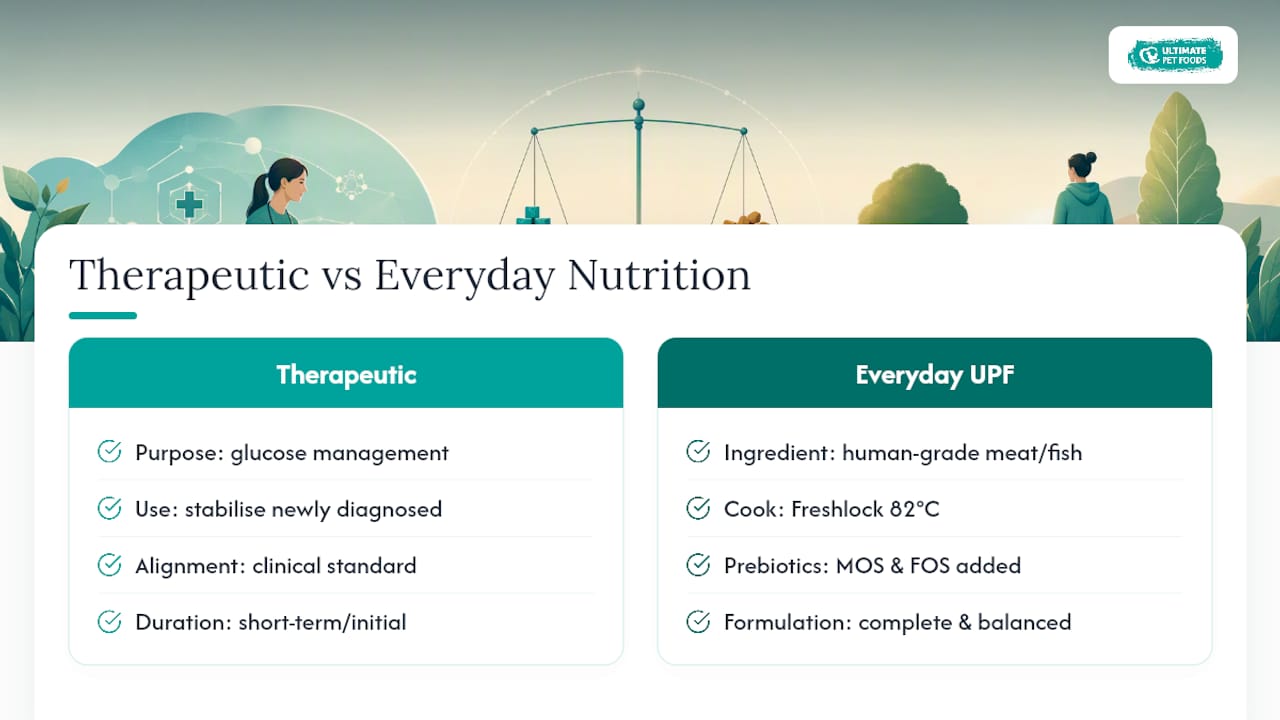
Veterinary therapeutic diets remain the clinical standard for stabilising a newly diagnosed diabetic dog, because they’re formulated and tested specifically for glucose management. That said, once a dog is stable, a consistent, complete everyday diet, chosen with your vet, can be entirely appropriate for daily life.
This is where ingredient quality genuinely counts. Ultimate Pet Foods prepares its recipes from freshly prepared meat or fish, gently cooked at 82°C through our Freshlock process to help retain nutrients, using human‑grade ingredients throughout. Every recipe includes added prebiotics, MOS and FOS, to support digestive and gut health, and our recipes are complete and balanced for daily feeding across all breeds and life stages where stated. For dogs needing extra targeted support, our Ultimate+ Functional Health range uses hydrolysed proteins across Digestive Care, Skin & Coat Care, Weight Control & Joint Care, Dental Care, and Healthy Living formulas, all designed for everyday, ongoing feeding rather than short‑term use.
Side effects and nutritional gaps to watch for on a low‑GI diet
A well‑formulated low‑glycaemic diet is generally safe, but poorly balanced ones can create their own problems. Excessive fibre, pushed too far in pursuit of glucose control, can reduce the absorption of certain minerals and cause loose stools or reduced palatability, putting some dogs off their food entirely.
Weight loss is another risk worth watching. Diets built around bulking fibre and reduced fat sometimes leave active dogs under‑fuelled, so monitor body condition score alongside blood glucose, not instead of it. Protein quality also deserves attention: moderate protein is usually fine for diabetic dogs without kidney concerns, but a poorly digestible protein source can compound gut upset when combined with a fibre‑heavy formula.
Watch for these signs when transitioning:
- Soft stools or excessive gas in the first one to two weeks
- Unexpected weight loss or gain despite stable feeding amounts
- Reduced appetite, which can complicate insulin timing
- Dull coat or flaking skin, which sometimes signals a nutrient imbalance
Any transition to a new diet should happen gradually, over seven to ten days, blending old and new food while watching glucose readings closely. Sudden changes are one of the fastest ways to destabilise a previously well‑controlled dog, so involve your vet before, during, and after the switch. Our guide to feeding dogs with diabetes naturally walks through a gentler transition timeline in more detail.
What I’d tell a worried owner
The biggest mistake I see isn’t food choice, it’s inconsistency. Owners chase the “perfect” low‑GI ingredient list while feeding at different times each day, which undoes far more than any single ingredient could fix. Routine, vet partnership, and careful monitoring do more heavy lifting than any bag’s marketing claims. Start small: book a vet review, log three days of feeding and glucose readings, and try a sample pack or vet‑recommended diet before committing long term.
— Glenn
Try a sample pack before committing to a new diet
Ultimate Pet Foods gives diabetic dog owners a genuinely low‑risk way to test a new diet: sample packs, so you can check palatability and tolerance before buying in bulk or unsettling a stable routine.
Rather than guessing whether a full bag will suit your dog, order a free grain‑free sample pack and introduce it gradually alongside your current food, always with your vet’s input on timing and portions. If your dog has sensitivities alongside diabetes, our Hydrolysed Dog Food range offers a functional option built on hydrolysed protein, while the broader Grain Free Dog Food collection covers everyday complete recipes made with freshly prepared meat, gently cooked at 82°C, and finished with MOS and FOS prebiotics for gut support. Talk to your vet, order a sample, and watch how your dog responds over the following week.
This article is general information, not a substitute for advice from a qualified doctor. Consult a qualified healthcare professional about your own circumstances before acting on anything here.
Sources
- Caring for your diabetic dog (Whiskers Vets, 2024)
- Low‑glycemic dog food labels may mislead consumers | PetfoodIndustry
- What to feed diabetic dogs — IVIS encyclopedia of canine clinical nutrition
- Glycaemic responses to different commercial dog foods — peer‑reviewed study (PMC)
- BSAVA chapter on diabetes mellitus in dogs (2023)
FAQ
What is the best food to feed a dog with diabetes?
The best option is a diet your vet has recommended for diabetic management, ideally a prescription therapeutic formula or a consistent, complete moderate‑starch diet with low‑GI carbohydrate sources like barley or sorghum. Feeding it at fixed times, synchronised with insulin, matters as much as the recipe itself, according to IVIS guidance. Ultimate Pet Foods’ complete dry recipes can suit everyday feeding within that plan, alongside veterinary advice.
What should you not feed a diabetic dog?
Avoid simple sugars, honey, glycerin, sugary jerky treats, and large amounts of rice or rice flour, since these all raise blood glucose quickly. Human sweets and snacks are off the table entirely, and any treat given should be counted into the day’s carbohydrate allowance.
Can a diabetic dog have scrambled eggs?
Plain scrambled eggs, cooked without butter, salt, or added fat, are low in carbohydrate and generally considered a reasonable occasional addition for diabetic dogs. Always check portion size and total daily calories with your vet, since fat content still needs managing alongside glucose control.
What are the lowest glycaemic foods for dogs?
Complex carbohydrate sources such as barley, sorghum, and certain pulses tend to produce a gentler glucose response than rice in controlled comparisons, according to IVIS clinical nutrition data. Bear in mind that processing method also affects the outcome, so even a good ingredient list needs feeding‑trial evidence behind it, not just a “low glycaemic” label.